As we come to the end of May, two things with huge implications have shown themselves.
THE FIRST was the Wall Street Journal’s faux pas, trying to force a set of rules on their journalists who’ve started adopting social media into their work flow. Just one of the rules, that ‘Business and pleasure should not be mixed on services like Twitter‘ sounds like it was written by someone who woke up yesterday. Or didn’t hear about the ‘95 Theses‘ published ten years ago. Not this one, but in this book!
THE SECOND was the launch of a company called Blink.lk. It’s a new media company in Sri Lanka, launched by a former journalist and longtime friend Tyron Devotta. (Full disclosure: I am partly involved in it, at least in sentiment.)
One of their first posts on the blog –that has fittingly preceded the main web site–was called “Mainstream No More.” It’s written by a staffer, a former reporter. She expresses the struggle this switch involves. Today, anyone in the storytelling business has to get under the hood of social media and see what makes it so compelling to the audience. Or as Jay Rosenaptly called them, “the people formerly known as the audience.”
“He texts during dinner at restaurants and while walking down the street and twitters at red lights while driving.”
Reader at New York Times, commenting on how people who who would never be so rude as to talk on the phone at a restaurant, have different rules for using Twitter
“Britain’s mums told us where to stick the artificial ingredients. And it wasn’t in the bottle.”
Ad for Sunny Delight, running in Britain’s newspapers, as recointed by Jonah Bloom of AdAge, who suggests marketers need to apologize first. To which one reader responded:
“The first financial institution that apologizes will be apologizing for an entire industry for years of greedy pay packages, excessive “innovation”, disregard of risk, tricky offers & excessive political lobbying. Their customers will likely not be so forgiving as the Brits when they chuckle about Marks & Sparks reducing the price of big bras.”
“It’s hard to understand how Cheney and Kyl could make statements like this with a straight face…”
Steven R Corman, at ASU’s Hugh Downs School of Communication, commenting on the former vice president and the senator from Arizona’s dismissal of Guantanamo prison being a strategic communication tool for Al Qaeda
“We used to call people who embraced this sort of behavior workaholics. Now we call them crackberries.”
Jim Shea, on how Boomers make way for ‘weisure’ time –fitting fun around work, rather than the other way around.
“…it most definitely wasn’t named for Bing Crosby.”
Fast Company, on Microsoft’s new search engine, Bing, that is positioned as a ‘decision engine’
Happy to learn, from the U.S. Embassy blog in Colombo, that the American Center is celebrating its 60th birthday.
In the eighties, the AC was a part of my growing up. I would ride my bike on Sunday afternoons and settle down in the Communications section of the library. This was where I would catch a week’s worth of pre-recorded ABC News with Peter Jennings. I am sure there are thousands of others to whom this was a portal into a variety of interests.
But as President Crow addresses the 70,000 plus audience here, I can imagine the other light bulbs go off. He gave a huge shout out to K-12 teachers, and I can see how this resonates with Obama as he reaches out to get a ground-up movement going to fix education.
Watch the Blueprint for Education video on this site! It is the speech where he says “if you want to make your mark, with a legacy that will endure, then join the teaching profession.”
Happy to note that I am part of the social media ‘swat’ team at today’s commencement at Arizona State University, where president Barack Obama will speak. (Sun Devil Stadium, 7 PM Mountain Time, 63,000 people).
Now unofficially called the ‘Tweam‘ (in the tradition of making horrible words to describe anyone also using Twitter as a communication tool) about 20 of us will provide a different type of coverage from what the major networks will bring: multiple angles, twitpics and more uploaded to Flickr, perspectives and commentary on several blogs, podcasts etc. Befitting, of course Obama’s and the White House’s use of social media.
Last Monday, when I conducted a workshop for the Scottsdale Job Network, I used Better Publicker as a test case. The idea was to show that, given the right things in place –passion, goals and a decent internet connection — anyone could start a blog in 15 minutes.
This group was special –largely baby boomers. A lot of them are quite confused and skeptical about what a blog can do. Just like me, five years ago. Bette asked the usual questions, signed up at WordPress.com and while the class was in session, had a blog. Take a look at it today. Just 10 days after the event.
The best part was, Bette was featured in an article about how boomers are taking to blogging -see today’s Arizona Republic. The first paragraph that she typed in, from the podium, was the lead quote in the article by Chad Graham. How often does that happen to a blogger?
She writes well:
Now that I am looking for new job and business opportunities ‘social networking skills’ seem to be as necessary as a resume, business cards and gumption. In every networking event I am asked about websites, Inkedin, and my Facebook. Now perhaps my eyes won’t glaze over and I won’t have to fake cough an answer.
When I spoke to Bette today she was still fixing things. I know how infuriating the first few days of trying out anything can be. But once you get past that, the care and feeding of your blog becomes routine.
This morning I was sitting in the control room of a KJZZ, the local NPR station here in Phoenix, watching a live radio call-in show in progress. It suddenly hit me like a ton of bricks : a control room in radio is anything but.
(This happened when the guy in the control room was told that one of the mics was dead, even though all the buttons had been punched.)
I’ve been in and out of control rooms . We do have one at the Decision Theater; many years back I trained as a radio producer at the BBC. But in an environment where we require people to interact, a control room is a misnomer. We control the feeds but not the outcomes. We control the back-timing but it’s left to the audience to fill the dead air. We control the lights but not the light bulb moments…
To this end, radio is a lot more elastic than we give it credit for. The best producers and hosts want you to loosen up and even ‘break’ the format. To me as a listener, that’s what makes it such a great experience, when it is not scripted all the way. When Bill O’Reilly stormed out of an interview with NPR’s Terry Gross, she lost control of the show, bit it made great radio. (She rebroadcast it.) When the guests take over, something’s working.
So back to the studio. Before the show the producer, Paul Atkinson, told us to make sure we treat this like a conversation, not an interview.Think about that for a second.
A conversation, not an interview. Where have you heard of this before? That’s right, by those (like me) who promote social media tools. The phrase is actually ‘a conversation, not a lecture‘ heavily influenced by the Cluetrain Manifesto. Since 1999, this has been infecting other one-way media as well.
Yes, there are still talk shows like this and this, that are built around the cult of the show host lecturing -hectoring– the audience. Public Radio, on the other hand, has interactivity in its DNA. The callers can change the channel, but they keep calling in to change the direction of the show.
Just two random examples of where this radio virus has spread:
KCNN– a station that has embraced citizen journalism
BlogTalk Radio — the uber example of citizen-powered, citizen produced radio, in a new skin
Sidebar: Since Sunday the 3rd was World Press Freedom Day, I would like to tip my hat to radio for being the medium that has brought a rich spectrum of voices into the conversation.
“If you’re out in the middle of a field and someone sneezes, that’s one thing. If you’re in a closed aircraft or a closed container or closed car or closed classroom, it’s a different thing.”
“Yes. And NO NO NO. Recently we’ve all been guilty of cheap and dirty!”
Lilamani Dias, CEO of LOwe, Sri Lanka, asked whether advertising standards have inproved over the past five years, on the occasion of the annual creative awards, The Chillies
“Social colonization is when every web experience will be social.”
Bottom line, Carnival should have been ready sooner with a statement and made it easily accessible on its web site. Surely it has a crisis communications plan?
Len Gutman, Editor of ValleyPRBlog, on the the potential cancellation of a crusie to the Mexican Riviera
I’ve been doing a lot of data-gathering on the swine flu since we were alerted to the outbreak last Friday. We are a visualization center and decision-lab that happened to hold pandemic flu exercises, so while we are not public health experts, we know a thing or two about emergency planning.
Apart from talking to the media, managing new media efforts and outreach, my work involves being the eyes and ears of the Decision Theater.
A few years ago this would have taken an enormous amount or work. Today, time-crunch notwithstanding, being plugged into social media has made it easier to stay on top of things. It’s all about being connected to the sources and monitoring the monitors.
Is it live, or is it ‘public?’ Sometimes when I brief the media on a story, what I assume to be public knowledge, is not. When the WHO raises a threat level, when a state epidemiologist confirms a new case, when the governor releases a new document or the state health officials hold a web conference … all these go public as they hit the wires. But unless we have an effective monitoring mechanism, or have hired a media monitoring agency, critical data can get buried in the clutter –and chatter. I subscribe to some news services via SMS, and of course follow a few organizations, on my phone via Twitter. I can now ping a reporter using the Twitter with direct message to confirm something.
Direct from the source. I know, all this tweeting, re-tweeting, Facebooking and blog angst (some of which I have referred to) is precisely what adds to that chatter. But rather than throw the baby out with the bathwater, I think that we are better off with more information, if we know how to use it well. Many who have good data are now not limited to squeezing it through the old pipes (cable) and intermediaries (wire services). They do issue press releases, but they also give us a direct feed. And we are better off for that.
Here are a handful that do a good job of it. An expanded list is on our Decision Theater Blog, Lightbulb Moments.
The latter is worth elaborating on. HealthMap is an interesting project. The two people behind it (John S. Brownstein, an instructor at Harvard Medical School and Clark Freifeld, a software engineer) grab several feeds and lay them out to help us make sense of all that data.
TMI? We can deselect categories in HealthMap if we so wish. In an emergency, few seem to complain about too much information. If at all, there would be an uproar had any organization inadvertently held back some information.
The blogging 101 workshop, at Jobing.com on Monday was quite an experience. As always, I ended up having a great learning experience myself. More on that later.
The topic, Using Blogging and Social Networking to Support Your Job Search, comes with a bunch of disclaimers. At the risk of seeming repetitive, I have to say that a blog will not and should not replace a resume. It may enhance your resume, but better still it gives you a way to rethink how you work on your resume. Or your reputation out there.
A resume, after all is a way to capture your reputation system on a sheet of paper, which is an odd thing to have to do in this day and age. That sheet of paper needs to become a living document, and not something that lives in a folder.
I happen to think that a blog is easier to maintain than a resume. Certainly much easier than a web site. (A few people in the audience had personal web sites. I do, too, and it’s a royal pain to update.) Indeed, a blog requires more care and feeding at the initial stage, but once you set up some good blogging habits, use a few simple tools and tricks, it’s not a huge chore.
Once you compare how limited you are with some of the existing tactics you use to define who you are, and what your potential is, a blog becomes a no-brainer.
 As we come to the end of May, two things with huge implications have shown themselves.
 “He texts during dinner at restaurants and while walking down the street and twitters at red lights while driving.”
 The light bulbs go off like strobes.
 Happy to note that I am part of the social media ‘swat’ team at today’s commencement at Arizona State University, where president
 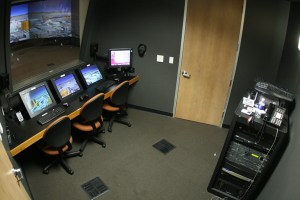 I’ve been in and out of control rooms . We do have one at the
  “If you’re out in the middle of a field and someone sneezes, that’s one thing. If you’re in a closed aircraft or a closed container or closed car or closed classroom, it’s a different thing.”
 The blogging 101 workshop, at
 Hoipolloireport