Creating an eBook from a PDF – Cool tool!

I am testing a book creation tool called YouBlisher. The goal is to learn how it works so I could teach my students next year how to ‘publish’ in more ways than one! Test it out and let me know what you think.

Click on the icon to view a digital book that lets you flip pages. Then read below the pros and cons:
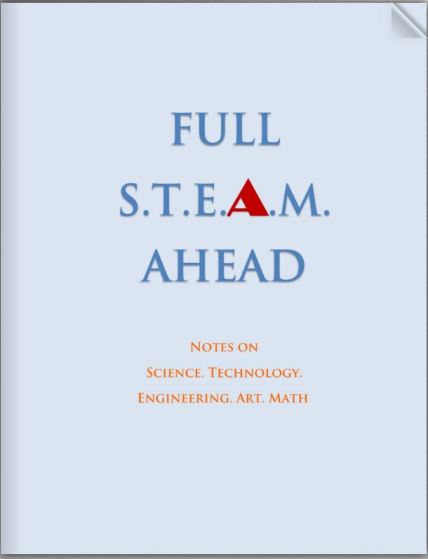
eBook Experiment - YouBlisher


What’s good about Youblisher:

  1. It’s free, so I don’t have to download any software.
  2. The content has to be created on a local computer, and not on the provider’s website.
  3. You need to convert your document into a PDF to upload it. Which means you create your book as a Microsoft Word doc, or Publisher. Alternatively, you could create a photo book using Photoshop or Powerpoint. As long as you save it as a PDF.
  4. The pages flip like a professional ebook.
  5. YouBlisher gives you a link to embed (which is not what I did here – I just linked an image of the cover, back to the site.) They also give you a Facebook embed code.

What I wish was possible:

  • A way to download the entire ebook, and save it on any device
  • A custom URL would be terrific! Right now it’s www.youblisher.com/p/1391665-Full-STEAM-Ahead. But hey!
  • I wish the links within the content worked. There may be a way to fix this…

Note: The content for this eBook was culled from several posts on this blog. It took me just 20 minutes.

Baxter, Sawyer, Tina, SIRI. Is this our future?

Baxter and Sawyer are brothers in arms, so to speak. They are collaborative, follow instructions, and adaptable to their surroundings.

They also happen to be robots. I find it interesting that they have human names, although they are industrial bots. No mistake they are meant for the factory floor, and not cute or friendly robots that are also coming of age elsewhere. Rethink Robotics, which manufactured them says they are “trained not programmed.” It quotes a professor who says his “long range aim is to try to achieve human level artificial intelligence. So the Baxter would be like a person, maybe not a full-fledged adult.”

  • Baxter is a 2-armed bot, and is described as “the safe, flexible, affordable alternative to outsourced labor and fixed automation.”  It weighs 165 pounds.
  • Sawyer is a one-armed fellow, and is called a “collaborative robot designed to execute machine tending, circuit board testing and other precise tasks.” It weighs just 42 pounds

Why I find this interesting is that we have begun to look at robots in humanistic terms, and this paves the way for them to be ‘invited’ into our homes some day soon. If you don’t believe me ask those who love their Roomba, the robotic vacuum cleaner.
How long will it be before we have a Homework robot, and an automated, (two-armed, hopefully) Personal Assistant? Low maintenance, too –no need for company benefits. Some people who use SIRI may say they already have one of those! Chat bots are also in the news now – like the Iranian bot, endearingly known as Tina.

Humanoid devices are also the stuff I have begun writing about elsewhere.

Technology lessons – No books required!

Sometimes you don’t need text books to learn a skill.I don’t usually advise young people to skip university, but I know of many folks who have learned incredible skills, never having stepped into a classroom for the past 20 years. One friend fixes BMWs as a hobby (sometimes has about 10 in his driveway). Another runs a mid-sized marketing communications agency, but has built and operates an eco-resort. The former never went to engineering school. The latter never took a class in architectural design or management.

And my point is, we often hone our skills in our garages, and our basements.These are our ‘labs.’ No one gives us a certificate for these long hours of professional development.

Here’s a related example: Children learning about science and tech on a farm. Think of it as a STEM lab in Nebraska.

Cows. BMWs. Conservation. Plenty of knowledge out there, not found in books and lectures.

Visual Thinking Strategies

I didn’t realize there’s a whole territory called Visual Thinking Strategies or VTS!

Indeed, an image (often something we saw online) becomes a discussion trigger. You’ve probably indulged in VTS by asking people to comment on a photo. It’s something we use now and then in a classroom, to set up a topic, or draw students into a subject that might otherwise lack context.

I ran into VTS because of series in the New York Times called “What’s going on in this picture?” on Mondays. Readers comment and try to guess what was happening, and on Friday the paper reveals what it was about.

So here’s a bit of VTS for you:

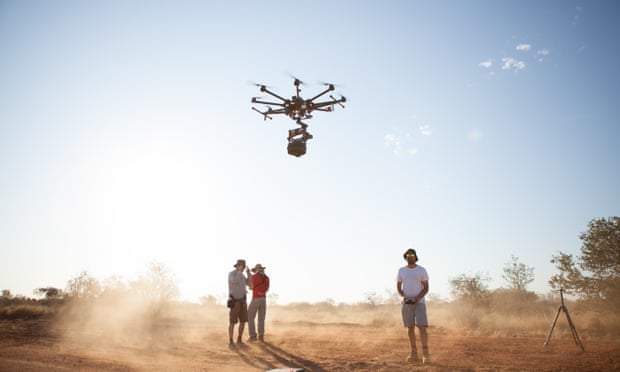
What do you think is going on in this picture?

An unnamed company secretly testing drone delivery? Engineering students working on the next generation of medical drones. Or something else entirely?

You would be surprised at the real context!

Big payoff for science students at ISEF

Not only is science fun, it could have a big payoff for students.

Big, as in $150,000!

The Intel International Science and Engineering Fair (of ISEF), the world’s largest pre-university science competition, really rewards budding scientists,engineers and inventors.. This year three students won the top $150,000 prize each. Second place winners won $75,000 each.

This year’s ISEF Fair will be held here in Phoenix from May 8 – 11th. I plan to be there. Interestingly, three Sri Lankan students will be participating in it.

Founded 75 years ago, the fair attracts some 1,700 high school students from over 75 countries, regions, and territories who showcase their research and compete for approximately $4 million in prizes.

One of the winners (left), 17-year old Paige Brown, found a way to filter pollutants in stream water, and has nano-technology in her sights to expand on the device.

This kind of scientific problem-solving is extremely relevant here in the US, where several cities are discovering high levels of lead in drinking water, after the Flint, Michigan disaster. As the New York Times states in its report, “Rules and science are outdated.”

The future generation of scientists and policy makers like Paige will be updating the science. Other students are ‘discovering’ new ways for disease management and medical breakthroughs.

All this while still in school!


If children ‘published’ books, would there be a market?

Today, ‘to publish’ means something else entirely.  It used to be tied to the notion of a ‘publication’ – which often meant material that got edited, bound and distributed by certain entities.

So should children publish books? 

I want put this question to those of you professional communicators, and also in education:

  • Should the definition of children’s books also include children-to-children books?
  • Could book stores get into the business of encouraging children to become storytellers, designers and illustrators?

Sure, there is a good self-publishing model out there at places such as Blurb, Lulu, etc. But (a) It is hardly affordable for most children (b) The POD model presupposes the content is already ready to go to press.

  • Are there places (such as ‘Maker Spaces’) for kids to polish their craft, and go all the way to putting a book on a shelf?

Many will say that the market is not significant enough to give it serious thought. But is that good enough reason to not consider it?

I pose this question because of a suggestion raised by one of my 3rd grade classes today. They wanted to know if they could publish their work in a book form. I was shocked at the question. This after all, was from 9 and 10 year olds!

I have pat answers for questions like this. Such as: “It depends what kind of readers you are thinking about” – an opening to a discussion about eBooks, online publishing, Wikis and such.

But this is a serious question that should not be confined to school-made solutions. Any suggestions?

Tech in Schools – Surprising evidence that ‘less is more’

Given the big push toward 1:1 computing, (a buzzword in education that refers to giving every student a device) there is some evidence to show that too much tech in schools could be harmful. See: Tech in Schools: Less is More.

‘Harmful’ is the operative word in the OECD (The Organization for Economic Cooperation and Development) report.

There are several layers of findings I won’t bore you with. But in general, reading, math and science among students in countries with heavy investments in computers, have shown no appreciable gains.

This chart shows how reading drops as share of computers increases.

I know for a fact what happens to reading, when passages have to be read on a screen. It appears to turn off students, some of whom otherwise may be classified as heavy readers. The OECD Report in fact says that “even specific online reading skills do not benefit from high levels of computer use at school.”

You may think this is odd for me to comment on such a study, being a computer and technology teacher. Well, I don’t drink the Kool-Aid. I try to make sure computers are part of a larger series of learning experiences, to get students think, create, and communicate. I also follow the standards outlined by ISTE, the International Society for Technology in Education, which focuses on real world issues.

But this study is sobering, even if you are not inclined to believe it. What exactly do we do when we place a device in front of our children? Are we teaching them to consume content with no fixed end goal?

Earth to Scott Kelly: Welcome home!

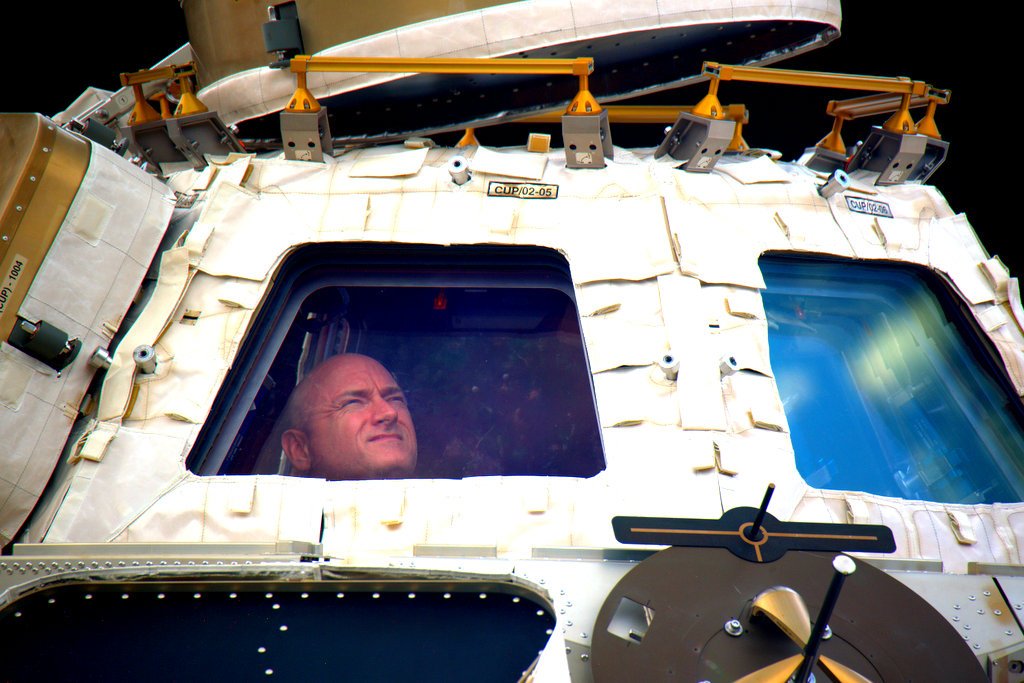
Watching Scott Kelly, and his ongoing work on the International Space Station for the past year has been like following a live-action science-and-technology class.

Many of the NASA-related activities in our school this past year (talking with an engineer at JPL, and the crew of a Mars mission simulation etc) have directly or indirectly addressed to the big question “What will it be like to live on Mars?” Astro-twins Scott and Mark Kelly, have become the human faces of astronomy, aerospace, and space exploration.

Students keep asking questions such as:

What kind of ‘work’ do engineers and astronauts do, besides floating around doing ‘space gardening’ and 3D mapping? Some amazing work is described here. We watched some incredible views taken by GoPro cameras aboard the ISS, including one involving inserting the GoPro into a water bubble.

On the fun side, I’ve even used Scott’s Time Magazine cover photo to teach a class on Photoshop (replacing Kelly with a 6th grade teacher who’s got a similar look.)

Here’s hoping we see more of Kelly brothers, and get to hear from Scott. Perhaps in a future Mars Day!

He should be back on earth tonight – NASA says touchdown is scheduled for 11:27 pm Eastern Time. As he put it in 140 characters before he left the ISS, “the journey isn’t over.”

Continuing Digital Learning Day – Don Wilde on Arduino and micro-controllers

DonWilde_tnToday Don Wilde, former Intel engineer, and FLL robotics coach/judge, was here to show our students a different side of programming – the Arduino board.


Don talked about how programming has been invading almost every part of our lives, from cars (which house dozens of computers), and houses to businesses, and libraries. (This session was fittingly held in the library – and I mentioned how students today self-check in and check out their books with a scanner and software).

He also stressed the point of how engineers are needed to design robots, and for online stores, casinos and satellites to function. “Highly-paid work today, whether it is in entertainment or communication needs engineers and programmers, and you could be one of them,” he said.

Don then demonstrated one of the devices he had put together for this, using a off-the-shelf Arduino Uno board. He connected a series of light, touch and sound sensors to show how this plug-and-play device worked.


Board_DLDay2016

By way of comparison, he talked about the Lego NXT robot, itself a micro-controller, with which many students in both 5th and 6th grades are familiar. We have had a robotics program in the school for the past 6 years. Thanks to Don, I have become interested in introducing Arduino to my class. Perhaps someday, we will have programming as a regular class, rather than an add-on to the curriculum!

Micro-controllers_DLDay2016


When is too early to start building apps?

avatar_new_resizedToday, for Digital Learning Day, I’m inviting an App developer, Chris Cardinal, of Synapse Studios, to introduce our 5th and 6th grade students to apps.This is going to be an eye-opener, since I get a lot of questions about coding and app building. None of us are programmers, but I have channeled self-paced lessons through Code.org and Khan Academy before. This time, having a live app class will make a huge difference.

Tomorrow  we will have Don Wilde to introduce students to Arduino! It appears it’s never too early for students to dip their hands into computer science, and understanding programming. Thank you Chris and Don for taking time to be here at Salt River Elementary.DLDay 2016

Wed 17 Feb, 2016   – Chris Cardinal, Synapse Studios

1:00 – 1:40 pm  – 6th grades  “Creating Apps for a Digital World”                       

1:45 – 2:25 pm  – 5th Grades  “Creating Apps for a Digital World”


Thurs 18 Feb, 2016  – Don Wilde, former Intel ProgrammerDonW

1:00 – 1:40 pm  – 6th Grades  “Programming Beyond  Lego – Arduino and Beyond ”  

1:45 – 2:25 pm  – 5th Grades  “Programming Beyond  Lego – Arduino and Beyond ”  

    
synapse_studios_logo