Visual Thinking Strategies

I didn’t realize there’s a whole territory called Visual Thinking Strategies or VTS!

Indeed, an image (often something we saw online) becomes a discussion trigger. You’ve probably indulged in VTS by asking people to comment on a photo. It’s something we use now and then in a classroom, to set up a topic, or draw students into a subject that might otherwise lack context.

I ran into VTS because of series in the New York Times called “What’s going on in this picture?” on Mondays. Readers comment and try to guess what was happening, and on Friday the paper reveals what it was about.

So here’s a bit of VTS for you:

What do you think is going on in this picture?
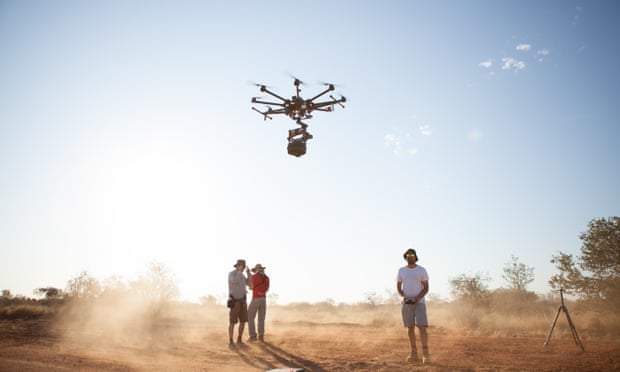
An unnamed company secretly testing drone delivery? Engineering students working on the next generation of medical drones. Or something else entirely?

You would be surprised at the real context!

If children ‘published’ books, would there be a market?

Today, ‘to publish’ means something else entirely.  It used to be tied to the notion of a ‘publication’ – which often meant material that got edited, bound and distributed by certain entities.

So should children publish books? 

I want put this question to those of you professional communicators, and also in education:

  • Should the definition of children’s books also include children-to-children books?
  • Could book stores get into the business of encouraging children to become storytellers, designers and illustrators?

Sure, there is a good self-publishing model out there at places such as Blurb, Lulu, etc. But (a) It is hardly affordable for most children (b) The POD model presupposes the content is already ready to go to press.

  • Are there places (such as ‘Maker Spaces’) for kids to polish their craft, and go all the way to putting a book on a shelf?

Many will say that the market is not significant enough to give it serious thought. But is that good enough reason to not consider it?

I pose this question because of a suggestion raised by one of my 3rd grade classes today. They wanted to know if they could publish their work in a book form. I was shocked at the question. This after all, was from 9 and 10 year olds!

I have pat answers for questions like this. Such as: “It depends what kind of readers you are thinking about” – an opening to a discussion about eBooks, online publishing, Wikis and such.

But this is a serious question that should not be confined to school-made solutions. Any suggestions?

Those social media users you hardly know

Let’s be honest. We have no clue how people (other than our closed circle of friends) use social media.

This important study is not just how social media changes people — pretty obvious in many cases. It is about how society changes social media.It was done after a 15 months study by nine anthropologists, each of whom spent that time living in communities in China, Brazil, Turkey, Chile, India, England, Italy and Trinidad.

Daniel Miller, (a prof at Univ College London) one of the researchers/authors, sums it up this way: While social media companies decide (and probably control) how users will interface with their platform, users find new ways to use the service, leaving companies to play catch-up. “They repurpose their digital worlds” transforming the social medium.

The book studied people as diverse as Kurdish users, Moslems, Chinese, Indians and more. It’s available as a book and as a free PDF. I found it interesting how Chinese users of the social platform QQ (similar to Google+) sort and evaluate friends. Or that mine workers in Chile would use WhatsApp, but are concerned that it could breed jealousy!

it is the first in a series of studies by the anthropologists. I can’t wait for the next installments.


Good Apple, bad Apple: Tough call to unlock phone

Which side are you on regarding the FBI’s request that Apple unlock the phone of a killer?

I lean on the side of the agency because I would want those who protect us to have every possible lock-picking device to thwart criminal behavior. But I can see Apple’s point of not wanting to give up liberty for security, as it could tip the balance when citizens (and businesses run by citizens, never mind if they are global corporations) hand over their freedoms to the state.

Incidentally, that Ben Franklin quote, which must be resounding in your ears about how Those who would give up Liberty for safety deserve neither, is one of the best mis-quoted statements by old Ben. He actually said that “Those who would give up essential Liberty, to purchase a little temporary Safety, deserve neither Liberty nor Safety.”  (Note the qualifiers – ‘essential’ and ‘temporary.’) 

What if Apple gives up a little temporary liberty, and stop making a huge thing of this Apparently Apple has unlocked some 70 phones before, but had done it without the media baring down on it. Given that there are dozens of websites that provide back-door services, and there being ‘ethical hackers’ who could unlock phones, I’m surprised no one has offered to do it for Apple, thereby freeing them of the PR nightmare.

Perhaps the government ought to hold a hackathon and see what surfaces. After all, DARPA holds cyber-security hackathons, don’t they?

Continuing Digital Learning Day – Don Wilde on Arduino and micro-controllers

DonWilde_tnToday Don Wilde, former Intel engineer, and FLL robotics coach/judge, was here to show our students a different side of programming – the Arduino board.


Don talked about how programming has been invading almost every part of our lives, from cars (which house dozens of computers), and houses to businesses, and libraries. (This session was fittingly held in the library – and I mentioned how students today self-check in and check out their books with a scanner and software).

He also stressed the point of how engineers are needed to design robots, and for online stores, casinos and satellites to function. “Highly-paid work today, whether it is in entertainment or communication needs engineers and programmers, and you could be one of them,” he said.

Don then demonstrated one of the devices he had put together for this, using a off-the-shelf Arduino Uno board. He connected a series of light, touch and sound sensors to show how this plug-and-play device worked.


Board_DLDay2016

By way of comparison, he talked about the Lego NXT robot, itself a micro-controller, with which many students in both 5th and 6th grades are familiar. We have had a robotics program in the school for the past 6 years. Thanks to Don, I have become interested in introducing Arduino to my class. Perhaps someday, we will have programming as a regular class, rather than an add-on to the curriculum!

Micro-controllers_DLDay2016


When is too early to start building apps?

avatar_new_resizedToday, for Digital Learning Day, I’m inviting an App developer, Chris Cardinal, of Synapse Studios, to introduce our 5th and 6th grade students to apps.This is going to be an eye-opener, since I get a lot of questions about coding and app building. None of us are programmers, but I have channeled self-paced lessons through Code.org and Khan Academy before. This time, having a live app class will make a huge difference.

Tomorrow  we will have Don Wilde to introduce students to Arduino! It appears it’s never too early for students to dip their hands into computer science, and understanding programming. Thank you Chris and Don for taking time to be here at Salt River Elementary.DLDay 2016

Wed 17 Feb, 2016   – Chris Cardinal, Synapse Studios

1:00 – 1:40 pm  – 6th grades  “Creating Apps for a Digital World”                       

1:45 – 2:25 pm  – 5th Grades  “Creating Apps for a Digital World”


Thurs 18 Feb, 2016  – Don Wilde, former Intel ProgrammerDonW

1:00 – 1:40 pm  – 6th Grades  “Programming Beyond  Lego – Arduino and Beyond ”  

1:45 – 2:25 pm  – 5th Grades  “Programming Beyond  Lego – Arduino and Beyond ”  

    
synapse_studios_logo

Star Wars, a gift when teaching image manipulation, animation

For the past few weeks I’ve been having a blast (and hopefully my students too), using Star Wars as material for classes on image manipulation, and color correction whether it is in Microsoft Word or Photoshop. The latter, for instance is a forthcoming 6th grade class that will be continued this year as well.

Chewey - DesireeStudents pick their favorite Star Wars image from Google, and the fun begins.

  • They learn to copy and paste (the keyboard shortcuts as well as the right-mouse commands).
  • The learn to layer an image, and color correct it – as in the example on the right
  • They learn to delete a background color using the much-ignored ‘Set transparency Color’ tool
  • They learn how to tweak the ‘saturation’ of the image, and what that means – and says. Or how to re-color an image for a specific effect.
  • It’s a good way to introduce ‘layers’ before we get to Photoshop.

Star Wars is also helps open the door to other topics and discussions about space.

Over the past few weeks, my 5th graders are working on The Moons of Mars – a PowerPoint, specifically aimed at understanding animation paths and orbits. I’m not a big fan of PowerPoint, but it’s a great canvas on which they could understand the purpose of animation, beyond the obvious wow factor.

I am now considering using Star Wars as a backdrop for a class on Digital Storytelling. Perhaps an animated cartoon strip with voice-overs matching the speech bubbles. I can see a lot of storm trooper effects, and tricks using the lovable BB8.

Start taking notes! (It’s good for your brain.)

I’ve always known that note-taking is good for you. There are plenty of stories about this, and it’s always refreshing to see research and evidence for this. Here’s Why Writing Things Out By Hand Makes You Smarter: By slowing down the process, you accelerate learning.

One theory is that introducing ‘desirable difficulties’ that challenge the user help retention. The person who introduced this idea is Robert Bjork, at the Learning Lab – interestingly called Bjork Learning and Forgetting Lab.


Of course the best example of note-taking can be seen from the notebooks of Leonardo da Vinci. His notes went like this:

“Put this in the Book of useful inventions and in proving them bring forward the propositions already proved…”

Or, in what looks like a ‘note to self, Leonardo jots down this:

“And this is to be a collection without order, taken from many papers which I have copied here, hoping to arrange them later each in its place, according to the subjects of which they may treat.”

A notebook, after all is a piece of ‘technology’ designed with a simple interface. Use often. Use responsibly!

Media Illiteracy prevails, and the adults aren’t off the hook

As our modes of communication grow smarter, we seem to be doing a shoddy job of using them. This is not just about the misuse of Twitter, of which dumb tweets are legion. Such as a Time correspondent firing off a tweet wishing for a drone strike on Julian Assange in 2013. This is about young people who have too powerful publishing tools at their disposal. If you like to know more, you will love this compilation!

This week, six High School students in Arizona got themselves and their school into serious trouble, using SnapChat. They got a picture of themselves taken wearing shirts that spelled out a racial slur. They learned, too late, that an app’s ability to ‘communicate’ should not define the message. (If none of them had data-enabled mobile devices would anyone have even bothered setting up the shot?).

An editorial in the Arizona Republic asked how students who have gone through a curriculum that probably included close reading and discussion of the civil war era, could have been so crass.

It’s hard to imagine these girls got this far in school without reading the ugly chapters in American history about the enslavement and oppression of Black people. Did they fail to pay attention? Did they fail to connect the dots to real people?

Let’s not get parents off the hook. How much time are we spending with young people to inform them about media use? It’s easy to be tool literate and media stupid.

Here are some thoughts for parents who may be considering giving a teenager (actually pre-teens, now) a mobile device:

  1. You pay for the phone and the data plan. You own the device; you set the rules. A phone is not like a pair of shoes, it doesn’t have to belong to the end-user.
  2. You better decide on the apps that get on the phone. Don’t complain later when a kid is spending too much time on Insta-brag or Brat-chat. I mean Instagram and Snapchat.
  3. Like your car keys, devices not owned by a child should be stored outside of bedrooms at night.
  4. It’s possible for homework assignments to be completed without digital devices. Really!
  5. Make sure your child makes every effort to not be in a video taken by a fellow insta-bragger.
  6. Finally, make sure your child’s school has a policy that has been updated to match the ubiquity and speed of shared media. It’s no longer valid to call it a ‘social media policy’. It’s a device use policy.

It’s a kite. It’s a tethered bird. Could it be a drone?

I love how this guy is disrupting the idea of what we think of a drone, to re-frame it as a kite.

A kite that takes pictures, that is.

Funny how we box ourselves in by classifying things the way they originally emerged as. Is a cell phone today really a phone? Ore more recently, with the idea of a supersized ‘commuter drone’, is a drone a light aircraft that may or may not need to be autonomous? But apart from the boxing ourselves in, the need to be creative is often stymied by those who are reluctant to make mistakes.

Sergei Lupashin, in the video below spoke at an Education technology conference last year about this. His point being we need to get young people to feel comfortable with making  a lot of mistakes! That is how we could make breakthroughs


If you haven’t seen the Chinese-made single passenger drone, here’s how they position it – learning from their mistakes. Um crashes!