Could robots cross the line?

There are four ‘Laws of robotics’ that are seldom discussed whenever the topic comes up. There were written by the late sci-fi author, Isaac Asimov. More like guide rails, these are practical laws.

With the rapid rise in automation, AI, and robotics from battlefield robots (developed by South Korea, the US, and who knows who else) and surgical bots, these issues are worth discussing. Why leave the issues of automation and robotics to academic and/or politicians?

In this month’s column in LMD, I discuss the pros and cons of robotics. You can read it here.


Prepping the launchpad – STEAM Night is today!

It’s as if the stars were lined up for this. The launchpads were being prepped in the space industry –and in education.

The race toward ‘Space Tourism’ which has been on for some time, hit a milestone, Sunday. Blue Origin, a company owned by Amazon’s Jeff Bezos, (which I’ve followed for some time now) launched a successful test flight yesterday, using dummy astronauts. Humans will soon follow.

Back here in Arizona, today is STEAM Night at Salt River Elementary School. The highlight of which will be  our ‘3-2-1 Lift-Off’ challenge

Can’t wait to see what kind of rocket entries we receive.

While some robots handle hernias, others could be invade countries. Are we crossing the line

I’m all for the use of surgical robots, or the emerging field of ‘drone journalism’ for data gathering, and even exoskeletons. But could others go too far?

Two types of robots worth considering this week:

Exhibit A: Robots in the battlefield. The Guardian reported that AI experts have called for a boycott of South Korea’s Advanced Institute of Science and Technology (KAIST). The arms race for autonomous robots as machines of war is real. The US Military with Lockheed Martin has been developing autonomous armored vehicles.

Exhibit B: Then there’s the more benign use of a robot –in a coffee shop! The Da Vinci surgical robot (which I have written about) was used in a ‘demo’ of sorts in Kullman, Alabama, to give people a chance to see its capability in a friendly setting. This robot typically handles gall bladder and hernia procedures. (No fear, it’s not an autonomous bot.) Nice touch, humanizing this strange-looking refrigerator-sized 4-arm robot.

The point being, teaching robotics ought to come with a layer of ethics. It’s not enough to be develop breakthrough robots just because we can. There is such a thing as the 4 Laws of Robotics, as written up by Science Fiction writer, Isaac Asimov. They are:

  1. A robot may not injure a human being or, through inaction, allow a human being to come to harm.
  2. A robot must obey the orders given to it by human beings, except where such orders would conflict with the First Law.
  3. A robot must protect its own existence as long as such protection does not conflict with the First or Second Law.
  4. A robot may not harm humanity, or, by inaction, allow humanity to come to harm.

The fourth law was added later by Asimov. We may have begun crossing the line, and ignoring it.

Interestingly, the UN this week has addressing the pace of robotics, through the Convention on Conventional Weapons (CCW) agreement, and the UN Institute for Disarmament Research. Lots of semantics in the debate, with regard to ‘autonomous’ and ‘automated’ and what constitutes ‘human control’ of these devices.


Future Inventors – My LMD article on Team Sri lanka

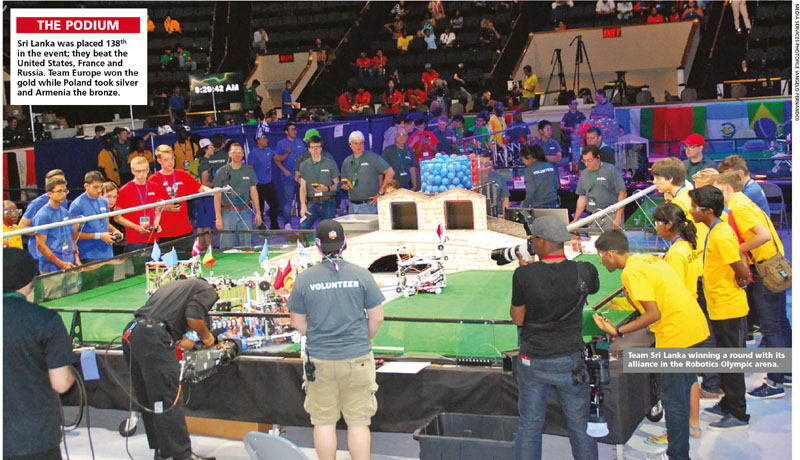
SRI LANKA AT THE ROBOTICS OLYMPICS

BY Angelo Fernando


A short walk from the White House, the steps leading up to a neoclassical building where Robin Williams once performed spill over with teenagers in bright yellow and blue T-shirts. Using screwdrivers and wire, they are feverishly fixing their robots. It’s only 15 minutes before Round 1 of the two-day competition held in July – a global event drawing 163 teams from 157 countries.

The humidity in Washington D.C. hovers around 90 percent and Team Sri Lanka’s four students are sweating bullets. Huddled in a basement, and parked between Senegal and Sudan, their 20-wheel steel robot needs some repair work.

Why? The bot they had built in a classroom (so secretive was the project, they called the room ‘Area 52’) arrived with a warped axle and damaged omni wheels. The motor failed too, which is not an uncommon problem among teams here. In a few minutes, they must have their 23-kilogramme robot working. It is the ‘Olympics,’ after all…

Link to full article here.

Published in the Sept issue of LMD Magazine.

Robotics teams immersed in complex (timely) water challenge

So as #Flooding and #StormSurge is on everyone’s mind with havoc from hurricanes Harvey and Irma, it is unhappily timely that robotics in schools and clubs across the country are wrapping their minds around an H2O challenge. Specifically, ‘Hydro Dynamics.’

It’s this year’s theme for the FIRST Lego League that will culminate in tournaments between November and December. (Interestingly, the theme of the FIRST Global ‘Olympics‘ in July was H2O Flow ) Alongside the work on building and programming a bot to run missions, students must work on a research project. How water is sourced, conserved, distributed etc. They must also come up with a solution that ‘adds value to society’.

Right now there are a myriad of issues that experts and government officials are wrestling with. Could students hypothetically solve some of these in the future? Dean Kamen’s FIRST outfit has been doing an amazing job of using robotics to build a new cadre of engineers, designers, and problem-solvers.

As I watch my school team assemble the missions in my lab, it’s evident that each mission (built of Lego pieces) is more complex this year: There’s a ‘Pump addition’ mission, a Water Treatment model involving ‘Big water’, and others involving Pipe Replacement, and Sludge Removal.

Here is what the field mat looks like.

Rockets, robots and human smarts – Why humans are (still) indispensable

We like to imagine that space travel will one day be managed and dominated by robots. Yet there is plenty of reasons why humans will not be obsolete.

I spotted some clues to this in the latest report of the SpaceX docking of the Dragon capsule with the Space Station.

The report reads:

At that point, astronauts will grapple Dragon using the station’s huge robotic arm, securing the freighter. When the hatches between the two vehicles open, ISS crewmembers will begin offloading the capsule’s cargo, which consists of more than 6,400 lbs. (2,900 kilograms) of food, supplies and scientific hardware.

Indeed, although it involves a robotic device, humans must snag (‘grapple’) the capsule in a way sounds a lot like human expertise involved in bringing a ship to harbor using rope and bollards. It is sometimes noted that self check-out lanes in stores have not made human cashiers obsolete.

The point being, careers in robotics will grow in tandem with some of these technologies. The field of robotics will need –indeed depend on — human expertise in dealing with complexity.

Robotics Olympics highlights. Team Sri Lanka returns

Washington DC’s humidity hovered around 90 percent when the competition began on 16 July. Team Sri Lanka’s four students were sweating bullets for different reasons. In a crowded basement, parked between Senegal and Sudan their 20-wheel steel robot needed some repair work.

The bot that they built in secret in a classroom in Colombo (they called it ‘Area 52’) arrived with a warped axle and damaged omni-wheels. Two hours before departure the airline forced them to repack the 23-kilo microwave-sized contraption into two boxes. The next day the motor failed –not an uncommon problem among teams here.

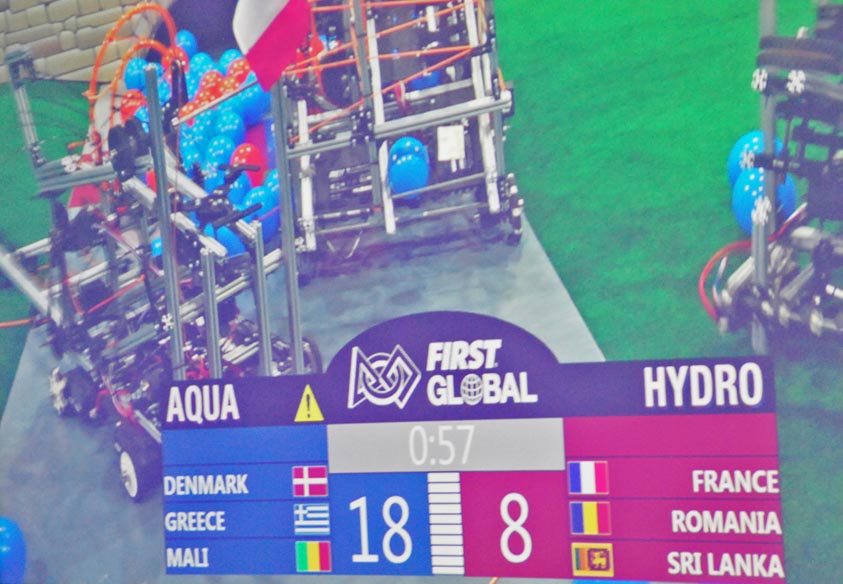
But they did take on the world! In this competition, designed by FIRST Global like the Olympics, each team worked in ‘alliances’ – groups of three country teams. It was fascinating to watch each team, battling cultural and language barriers (and jet lag and sleep) work through the constraints and perform. My family and I were so proud to be there supporting them.

They did quite well in strategy and design of the bot. In terms of rankings they were placed 138th out of 163 teams – beating the US, France, and Russia. When you consider they had just 9 weeks to prepare for this (many teams had at least 12 weeks), it was quite a feat.

Kudos to coach Dilum Rathnasinghe who took on such an unthinkable task. The team comprised: Ali Anver, Ishini Gammanpila, Vinidu Jayasekera and Akash Gnanam

Here are some images from the 163-team, 157-nation Robotics Olympics.  Read previous post here.


Two weeks to Robotics Olympics! Team Sri Lanka gears up

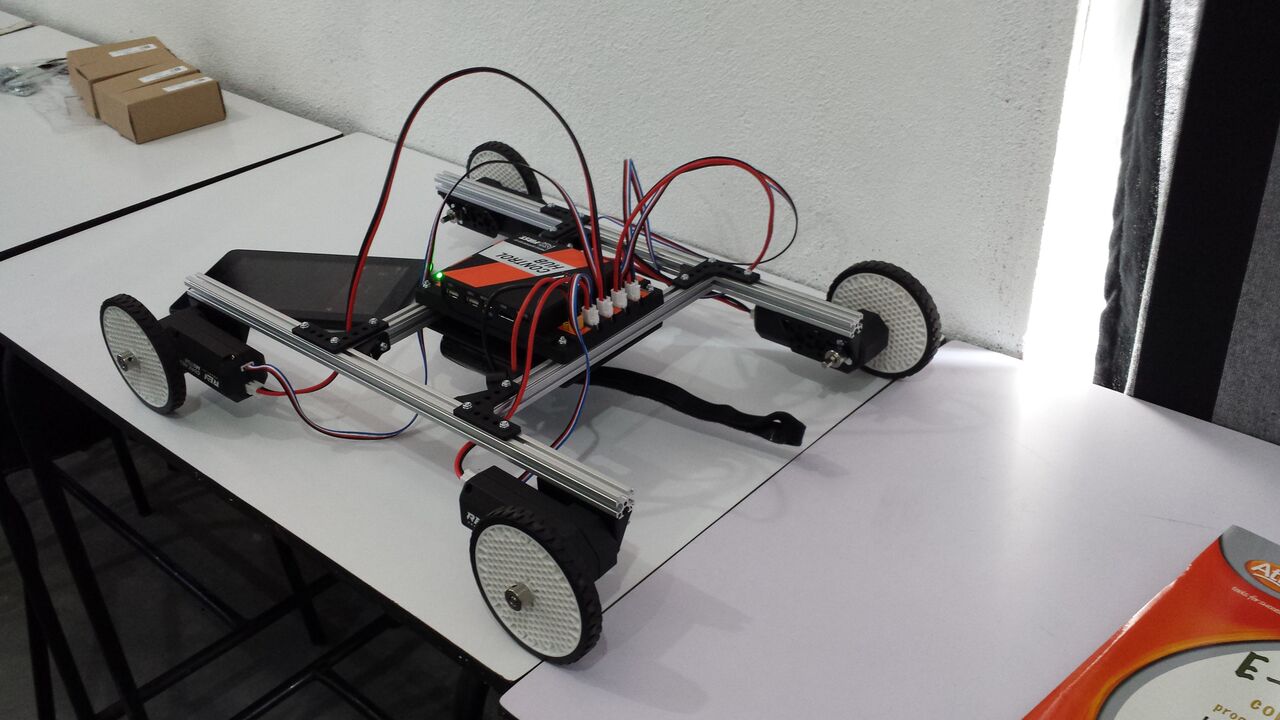
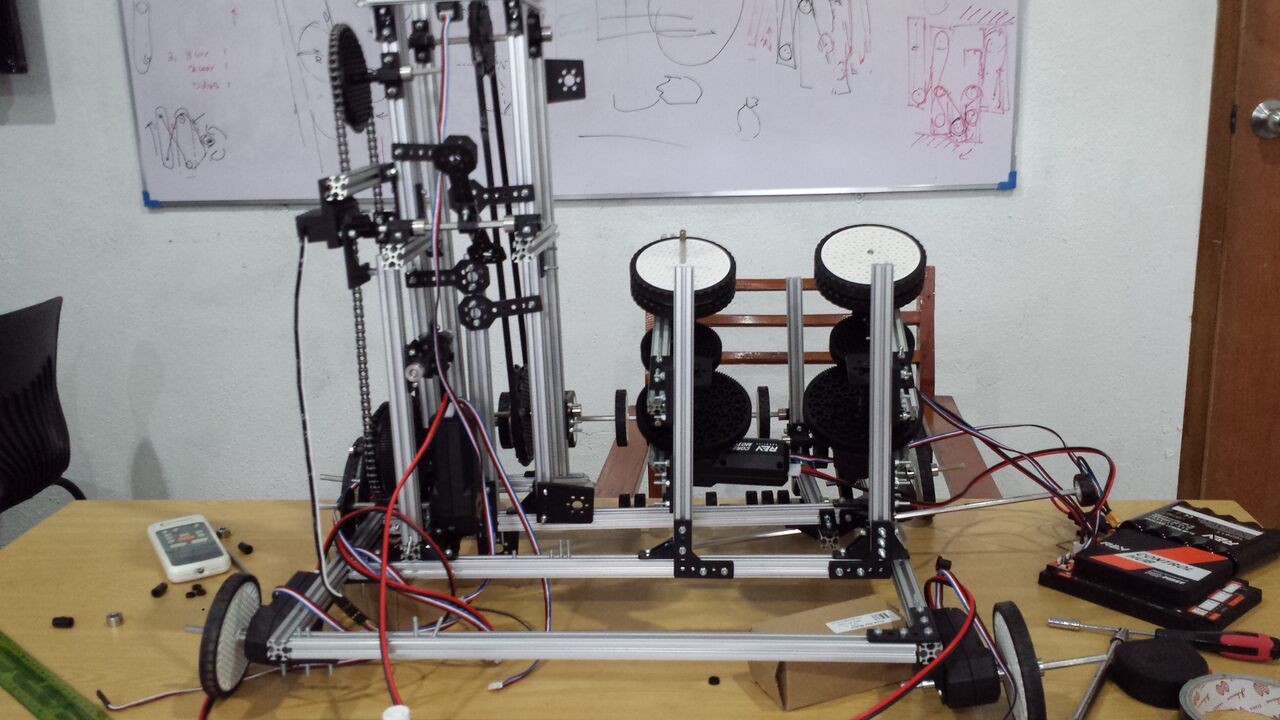
Yesterday I spoke to Sri Lanka’s four-member team making the final tweaks to their robot, with hundreds of moving parts including 8 motors, 4 sensors, 4 servos, and some pretty fancy wheels. (This was them, 2 weeks ago.)

These are A-Level students, with the grit and passion you’d expect from college kids. They’ve mastered the programming software Blockly. They tell me they redo some parts of the design, just to be sure. In two weeks, they pack it all up and head to DC.

Today I also spoke to Joe Sestak, president of FIRST Global, and he told me how impressed he was by this team which is so committed, despite getting the robot kit a few weeks later than most other country teams.

I wish them the best!


If only schools can be like this!

I just interviewed Kris Canekeratne, CEO of Virtusa, a 20,000-strong global business consulting and IT outsourcing company headquartered in Massachusetts. Among the many strands we talked about, I was fascinated by his take on learning, and how schools ought to be the ‘ignition’ for curiosity.

“Students have an innate proclivity to curiosity,” he says – no different how engineers are inherently curious, with problem-solving and design thinking as part of their skill set. If only we could design schools to be the spark plugs of knowledge! It’s time we began exposing students to Big Data, Nanotech, AI, user experience, and gamification, he says, instead of teaching them how to memorize material just to pass exams.

To this end, here’s an example of design-thinking class at a Charter School in Berkeley, California.