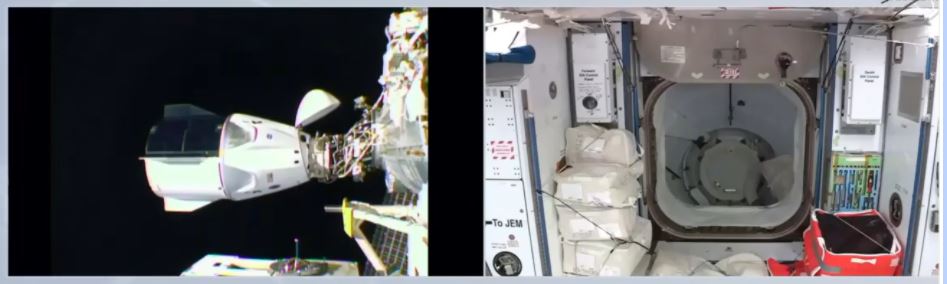
Exciting docking of crew with Space Station

Watching the live feed of NASA’s historic mission to the International Space Station gives us pause to consider what science is capable of. At 9:45 pm, this was the scene as the 4-person capsule, the ‘Crew Dragon’ parallel parked with the ISSS. They switched the cameras to an external view while the crew changed their gear into the space station uniforms.

The crew included Mike Hopkins, Victor Glover, Shannon Walker, and Soichi Noguchi. Lift-off of SpaceX Falcon 9 rocket was on Sunday night. So in all, it took about 24 hours to get there.

The spacecraft Crew Dragon is called ‘Resilience’ -a fitting name for all that must go on in the name of science, despite the existential threat we face as a planet. Or perhaps, because of it.

Twitter makes Diplomatic doublespeak so easy to spot.

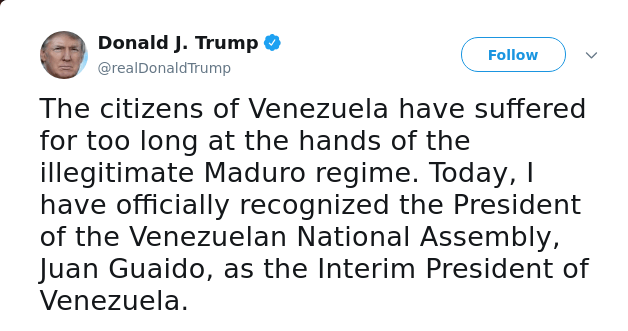
It was not too long ago (Jan 2019) that the Trump administration expressed its shock that the newly elected Juan Guaido in Venezuela was being blocked by incumbent president. In a flurry of tweets (what else?) President Trump threatened Nicolas Maduro, and telegraphed that troops, a naval blockade and embargoes were in the works. He tweeted that its citizens had suffered enough and Guaido would be recognized as the interim president of Venezuela by the US. The State Department too put out this statement. “The United States recognizes Juan Guaido as the new interim President of Venezuela, and strongly supports his courageous decision to assume that role pursuant to Article 233…”

Against such a backdrop of pro-democracy talk that the US hectors the rest the world, what Secretary of State Mike Pompeo said this today, sounds incongruent (the current term ‘janky‘ comes to mind.) Double standards.

The rest of the world recognizes such doublespeak.

Googler speaks to my students

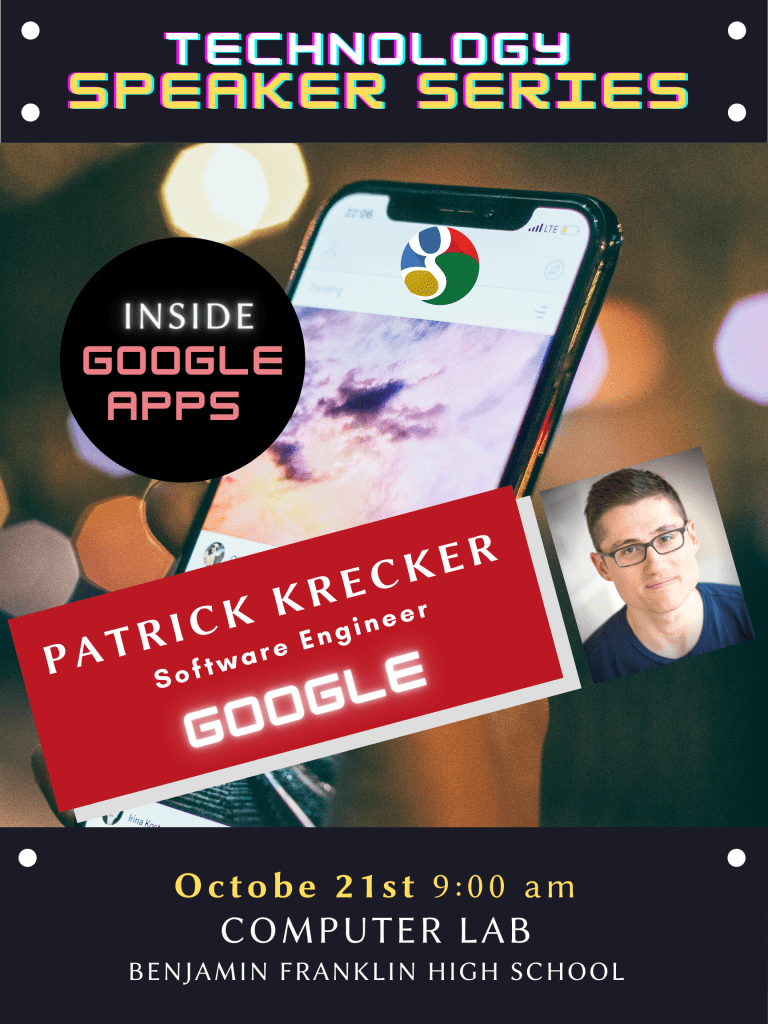
Patrick Krecker, a software engineer at Google spoke to my students last week. This was the start of a series of Technology Speakers this semester at Benjamin Franklin High School.

The goal is to give students a different way of seeing the relevance of a computer class. My hope is that speaking to someone in the real world, at a company they are acutely familiar with, could put many things in context. The previous week, we discussed search engines, and Sergey Brin and Larry Page’s early engine, curiously called Backrub! They also took a deep dive into Google’s Moonshot projects at GoogleX.

Hearing about the Google culture, its pioneering spirit, and the way a Google engineer approaches apps was really enlightening. Even for me. I used to work with Patrick at ASU. I was so impressed to see what he’s doing at one of the most powerful, omnipresent companies today.

Thanks, Patrick! I would certainly want to have to back on Google Meet (what else?) in the future!

Top 5 podcasts teachers should listen to

Why limit yourself to education podcasters? By all means start with one. We teachers can learn a lot about how to present content from journalists, poets, historians and entrepreneurs. Otherwise we risk living in the bubble!

  1. Google Teacher Podcast – Hosted by Matt Miller and Kasey Bell, this seasonal podcast is a huge asset for educators who like to stay aboard the high-speed Google express.

2. Grammar Girl – A fantastic podcast about language hosted by Mignon Fogarty, a former journalism instructor. Even if you’re not an English teacher, her take on how we communicate applies to any field. It was one of the earliest podcasts I listened to about eight years ago.

3. This American Life – One of the most listened to podcasts, hosted by Ira Glass, a radio guy. He chronicles the gritty, real life of average people who just might happen to be our students. Ira won a Pulitzer this year for his show – a first for podcasters! If there is only one podcast you should listen to its’s this one!

4. Invisibilia – A relative new podcast begun in 2015. Extremely well researched, it mines “the intangible forces that shape human behavior.” The true life stories probe the unspoken and unseen forces that shape much around us – a sort of professional Development class that you never signed up for but wish you had!

5. Revisionist History – Remember Malcolm Gladwell? Yes, that guy whose books gave us terms such as ‘Tipping Point’ and ‘Outliers.’ Gladwell’s take on events whether they are related to Hamlet or the FBI, to make your head spin!

Vocabularitis outbreak! Take cover

Twindemic? Janky? Doomsday scrolling? When did these words jump out of the dark shadows and infect us?

I am compiling a list of words that have emerged and are showing up in everyday language, as an experiment on how language changes with circumstance. Also, the hypothesis is that many of these words will become more or less extinct by this time next year. Some of them show up in school, violating the dress code. Others, stick to my rubber earbuds when listening to a podcast.

  • Coronahobby – Means exactly what it describes but, absent the hyphen
  • Doomsscrolling – Obsessive scrolling through bad news
  • Janky – When something is broken or a technology is not working to plan
  • Twindemic – A terrible coined word repeated by the media, ad nauseam
  • Covidiot – Someone who ignores COVID warnings, to his/her misfortune
  • Intubation – When you want to show you know a lot about ventilator use
  • Zoombombing – Uninvited guests during a Zoom call

Not so long ago we had to get used to these words. Remember these?:

  • Deepfake
  • Gig Economy
  • Influencers
  • OK Boomer
  • TextNeck

Voters aren’t that stupid

Dear Political campaign manager,

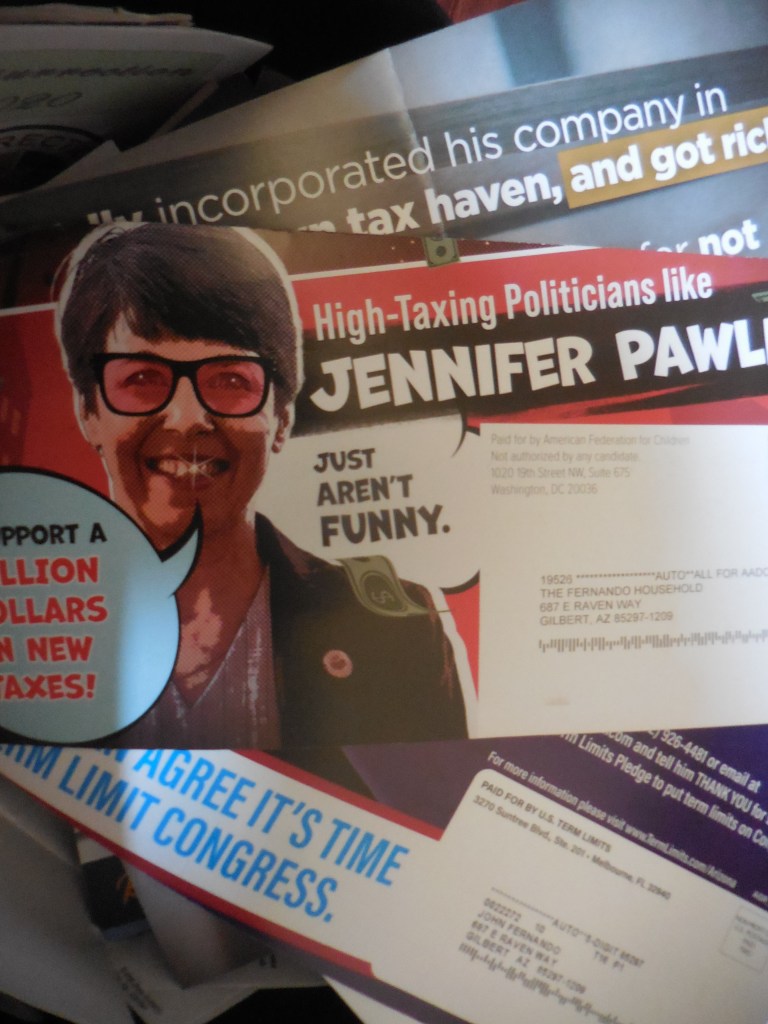
If there’s one certain way to get a voter to disbelieve your candidate, it is the inane, silly postcards like these you send out. Having dumped hundreds of these in the recycling bin without so much as glancing at them, I would like you to know that I will most certainly vote for the person you vilify because (a) Your communication skills and your morals probably line up with your candidate, and (b) If the only thing you want me to remember are the ‘dark secrets’ of others then you do not seem to have a leg to stand on.

Are you in marketing? Or did you just learn Photoshop over the weekend? You do not deserve to represent anyone but the scorpions that occasionally show up during this time of year.

That is why I wanted to shine a black light on your work so that when your candidate loses, you will at least know why.

We voters aren’t that stupid. Grow up and go back to marketing school.

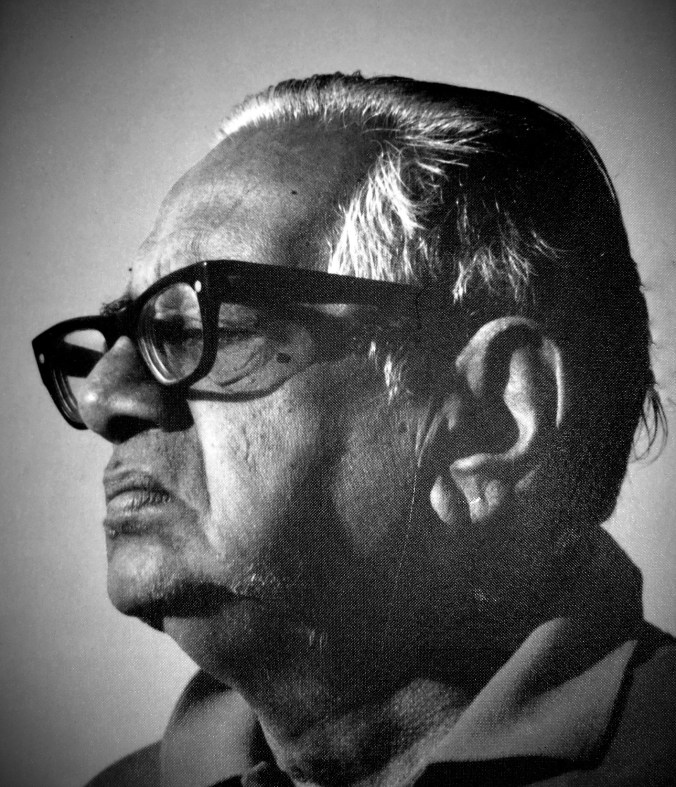
My Dad , the teacher and story-teller. 15 year anniversary.

My dad passed away 15 years ago, today, October 16th, 2005.

Joe Fernando never published a book, was never featured in the media, but he had a knack of infecting everyone around him with ideas. He was my Google, Wikipedia and Amazon; the human search engine when hunting down bits of history, with a library in our ‘office room’ that introduced me to Greek history, Elizabethan poetry, Sri Lankan archeology and more.

His encyclopedic knowledge was legendary. He could quote Thomas Merton, Aristotle, Churchill, Robert Frost, Gerard Manley Hopkins, Senarath Paranavithana, or Shakespeare –sometimes in one sitting! He once won the grand prize in the Maliban “Take it or Leave it” radio show. It is said that the show host, Tim Horshington, leapt into the air when he answered the final history question to win the grand prize, a Philips refrigerator.

In the evenings after school my dad would tutor students, often for free, fluidly switching between English, Sinhalese, and Tamil. Occasionally I would overhear him break out into Latin! He was a teacher at heart. At the height of his career, on humid Sunday afternoons, you would see him walk down Clifford Place, suitcase in hand, along the railway tracks to get to the Wellawatte railway station. Destination: Galle. His last post was vice principal, St. Aloysius College Galle, a Jesuit boy’s school.

I always wondered what kept him going. Much later, when I would talk to him about his work, I came to realize the driving force behind this dedication was his students. Including anyone who turned up at our doorstep with an exercise book and an assignment.

In a larger sense, we all sat in his class. Neighbours, nieces and nephews, my schoolmates, priests, vendors and the odd grownup that had happened to hear of the iskola-mahathaya (that’s ‘school master’ in Sinhalese) down the road. They would breeze in without any forewarning for help with essays and proficiency exams, notes for debates, and coaching for job applications and dissertations. He just loved to have them in his office room, crowded around a Formica table with ginger beer stains. It was Aladdin’s cave, as one cousin described it, stuffed with books and papers. He always knew where to dig out and dust off that biography, anthology or newspaper cutting you were looking for. If you had time for some sidebars, he would invite you to a long walk to Galle Face, and tell you an elaborate yarn or two about British soldiers who got drunk while on duty in Bandarwela during World War II. Or about the time he fell into a river when the boat capsized on his way to a funeral in Galle.

Yes, life was a collection of colourful stories to him, as those who listened to his repertoire of ghost stories, war stories, travel tales and embellished family narratives know.

A simple man, my dad, who impacted so many of us.
Planning a school podcast, 11 years later

I have been working on material for a podcast at school in the past few weeks. It’s an opportune time to do it, with so much to discuss in education, especially with millions of students rethinking ‘school’ in the middle of a pandemic.

Ever since I re-discovered my 2009 podcasts, I’ve felt pull to get out that microphone and fire up the recording app! The tools make it so much easier. Here are some ideas to start up:

Recording:

  • Audacity, open-source software is free to download. It’s also super intuitive –easy to use.
  • Hindenburg This is professional-grade software. More complex, but serious features!

Now for mics.

  • I have a trusty old mic that does look like it was from the nineties, and it is. Quality is great but not too much base.
  • I am experimenting with a lavelier (clip-on) mic we were  given for our distance learning video recordings. I found an adapter on Amazon, which plugs directly into a PC.
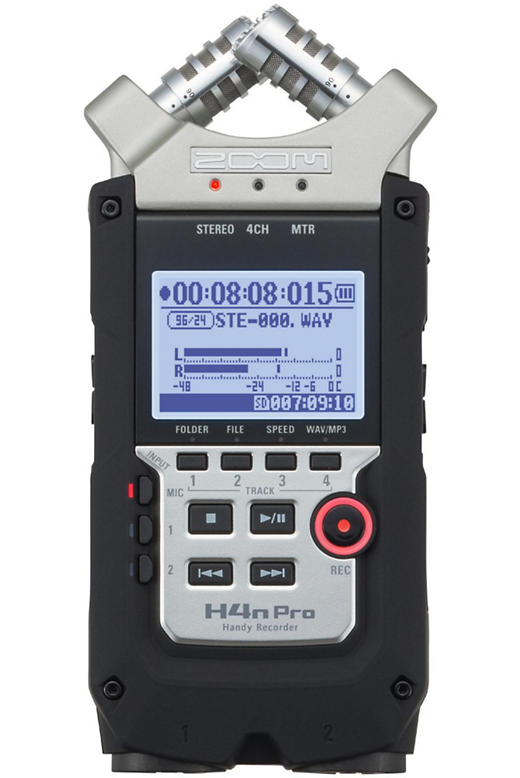
  • Zoom. I consider the ZoomH4N the best. I used to own one. It has a curious shape, but voice quality is terrific with 2 uni-directional mics

Intros/Outros

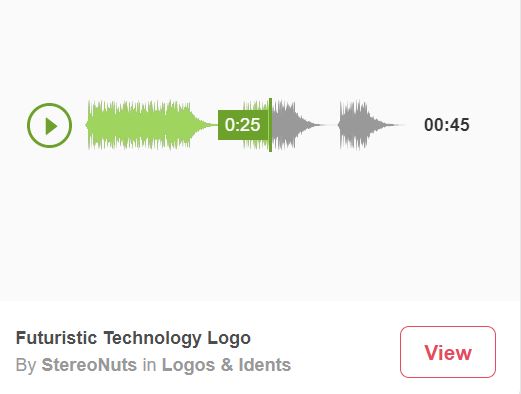
Unlike in 2009, there is plenty of podsafe –Copyright free–music available. But it is highly recommended you support the artists with a small contribution. Nothing should be free, in this economy!

In 2009 we planned for an influenza pandemic. I was in the room. I recorded it in a podcast

I have heard the ridiculous ‘plandemic‘ theory,  including one about a virus outbreak appearing in an election year. Or, that the US didn’t see this coming.


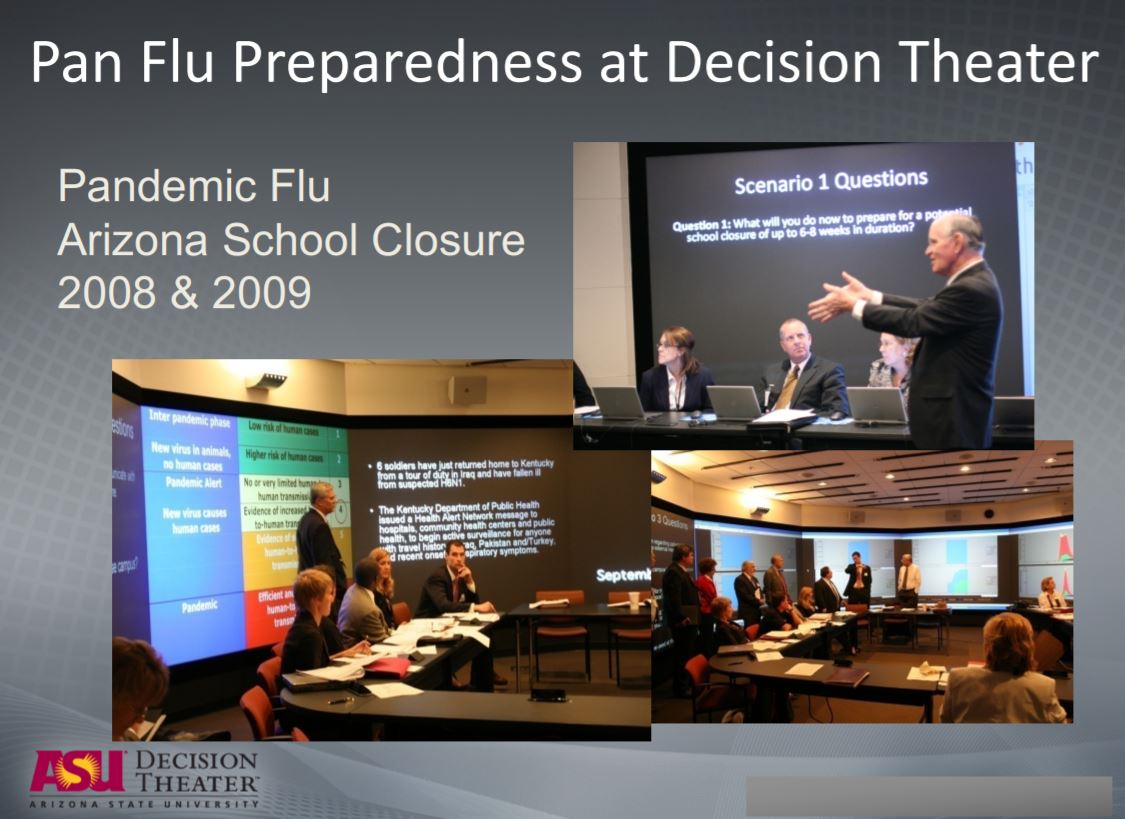
Well, in 2009, at ASU, I worked for an outfit that ran a 2-day pandemic planning exercise, with realistic scenarios. Elections were over. The participants were county health officials, school superintendents, infectious disease specialists.  People who would be called upon to make the tough calls, to safeguard populations, and schools.  Arizona State University’s WP Carey school of business was involved, as was the School of Health Policy and Management. But this was not what researchers typically call a ‘table-top exercise.’ This was a bit more realistic.

The location of this exercise was the Decision Theater – a visualization space that has a war room ambiance. (Fun fact: Decision Theater was used to movie as exactly that , where scientists wrestle with how to avert a catastrophe when an asteroid was heading to earth.)

Participants were presented with news reports, and data sets of unexpected scenarios: a virus entering the country through returning soldiers, outbreaks spreading to cities, and small towns, children infected etc. On the large screens in the Theater (also known as the ‘Drum’) our team created simulated news reports for each potential crisis point. The 2009 exercise, a follow up to the one in 2008,  was to be a test of how decisions would be made in an unfolding crisis.

Weeks before, our videographer, Dustin Hampton and I set up and recorded ‘news’ reporters, and edited story-lines that would track with the mathematical models that would be presented to the participants.  In one sense it was a fun exercise, even though the H1N1 Flu was a concern in some parts of the world.

I was in the room, and we were behind the scenes making the event look realistic. Cameras rolled, make-shift media were putting pressure on people to quarantine people, students, and shut down schools. I had not realized this but I had created two podcasts of the event, interviewing attendees.  They are a peek into the situation I describe.

This is not the only exercise of its kind that preempted the current pandemic. In May 2018 Johns Hopkins University ran a similar table-top exercise, that put people in a room to respond to realistic reports of a viral outbreak Watch the video below. It’s eerily similar. Even the date of the fictitious outbreak is so close, it shocked me when I watched it.

If you want more research into this, there’s a paper here: https://www.sciencedirect.com/science/article/abs/pii/S0167923612002680#!

Below, is another interview we did with Dr. Robert Pahle who worked on another piece of software for pandemic preparedness.

POD Throughput Model from Decision Theater Network on Vimeo.

Purifiers, fiber-optics lines and masks. Welcome back to school!

I was as excited to be back in school as students were, last week. Online, of course. There’s something about a new school year that lifts our spirits, and simultaneously releases those abdominal butterflies. As I stepped out the car in park, strapped on my mask, and grabbed my satchel, I could feel this new normal creep up on me, and broke out into a grin – which no one notices now.

Distance learning is something we must get our arms around, like it or not. I’ve conducted webinars, and workshops online, but this is a whole new animal. (I date myself – in 2010, I taught a series of online classes that included blogging. Well!)

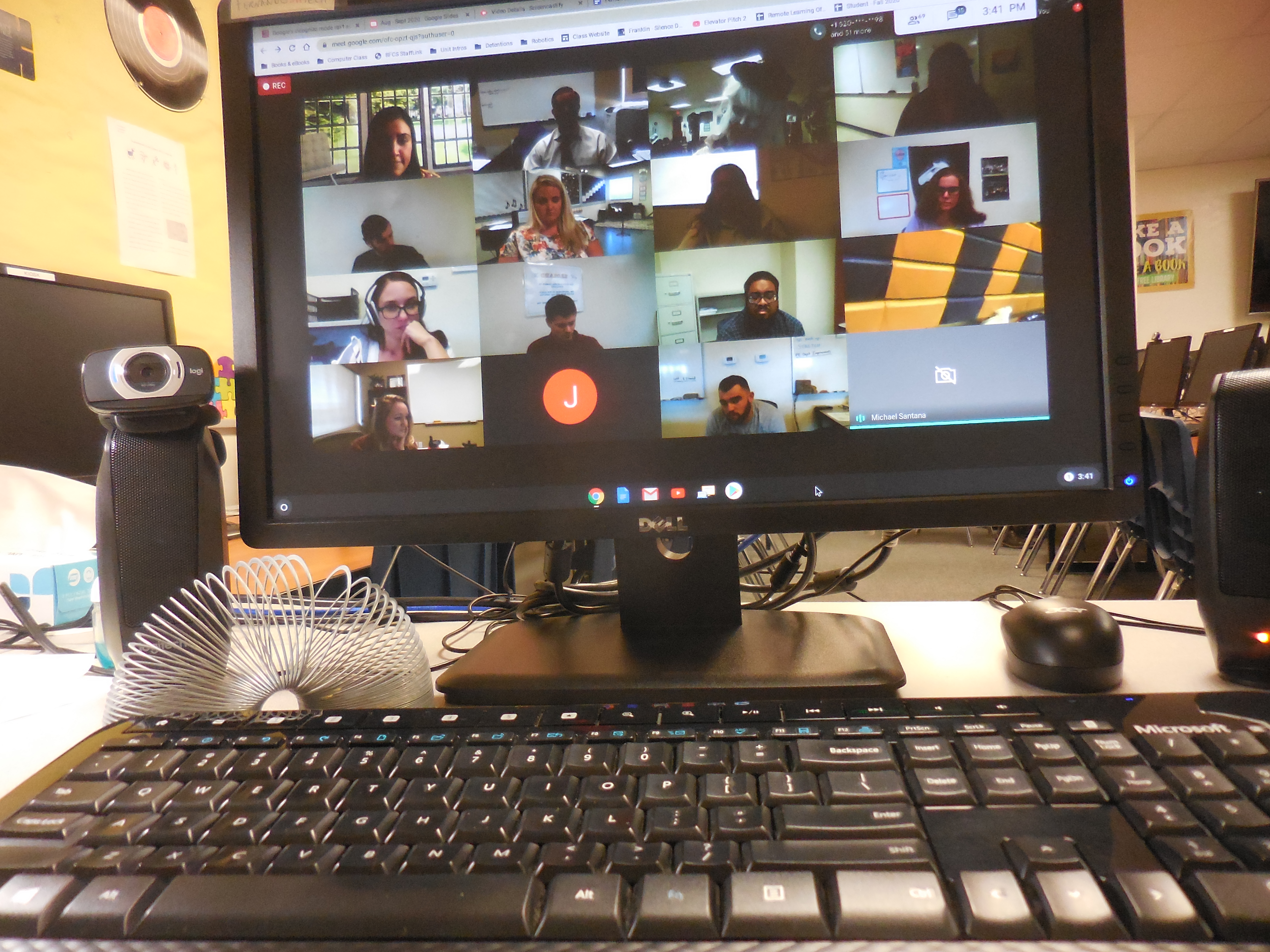
Behind checkered, floral and surgical masks, we go about our business, but it’s a business in a whole new dimension. Lesson plans need to get turned into material that delivered through a Google Classroom platform. These must be ‘chunked,’ linked and  annotated for a student doing it in small time slots, with slow WiFi, on a small screen. Video and audio recordings must be edited and uploaded –not to mention scheduling these moving parts in advance, with due dates and rubrics.

Tech questions arise and get solved on the fly by my colleagues: Could videos be cropped in Screencastify? Is there enough storage capacity on the drive? Why doesn’t PowerPoint let me use audio narration in a Microsoft 365 version? Check this neat way to turn a Google form into a quiz  (and have it grade the responses as well!) These and other issues must be figured out before dozens of Google Meets light up the building.
The week before we began, maintenance crew were crawling through the ceiling adding more lines of fiber optic lines  to support our data-hungry re-launch of distance learning.  We picked up our cameras to get up to speed with video conferencing.  With Bitmojis and bottles of sanitizer we took our positions and opened for business.

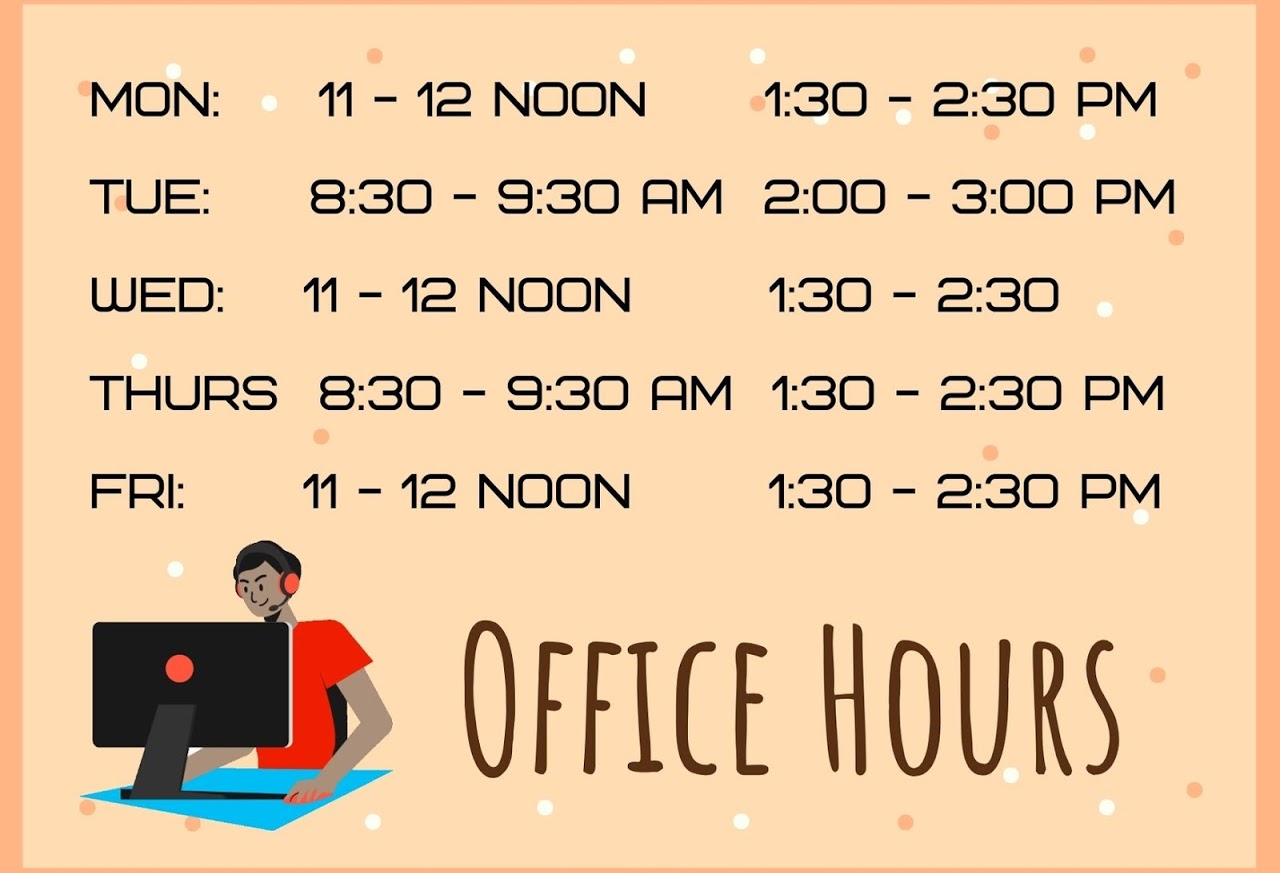
Three weeks of it, and still having many aha moments, this new normal is anything but. But as the students log into my ‘Office Hours,’ I am beginning to relax and enjoy being a teacher. I used to say that if I continue to do what I’ve always done each year, the students won’t be learning much. All of us – me and you and that dog named Boo — have collectively hit the reboot button. These lessons will last us a lifetime!