Seth Godin spreads stories, wears them.

Seth Godin plays with words. He practically owns the phrase “permission marketing” but now has a better way of describing the lack of it – “TV thinking.” He makes fun of YAA (yet another acronym), but isn’t averse to throwing in his own: BA, DA and AA. They stand for Before Advertising, During .. you get the idea.

But it’s not just his words and his books –with funky titles (Purple Cow, Meatball Sundae) — that etch their way into the marketing lexicon, but his delivery and style.

So when Seth told a packed room of communicators at the IABC conference last week to pull up their socks to face ‘the new industrial revolution,’ he got their attention. He put it bluntly that “communicators have trained people to ignore their message,” and “no one built the internet for you!” You can’t fight clutter by adding more of it. It’s more important to be storytellers, not messengers or interrupters he says.

You can’t bend the internet to suit your story, he went on. You have to play to a different set of rules –the rules set by Google, and bloggers, and ordinary people uploading videos like that of a Comcast technician who fell asleep on a customer’s couch. It means building something remarkable, and finding a way to get others to spread your stories.
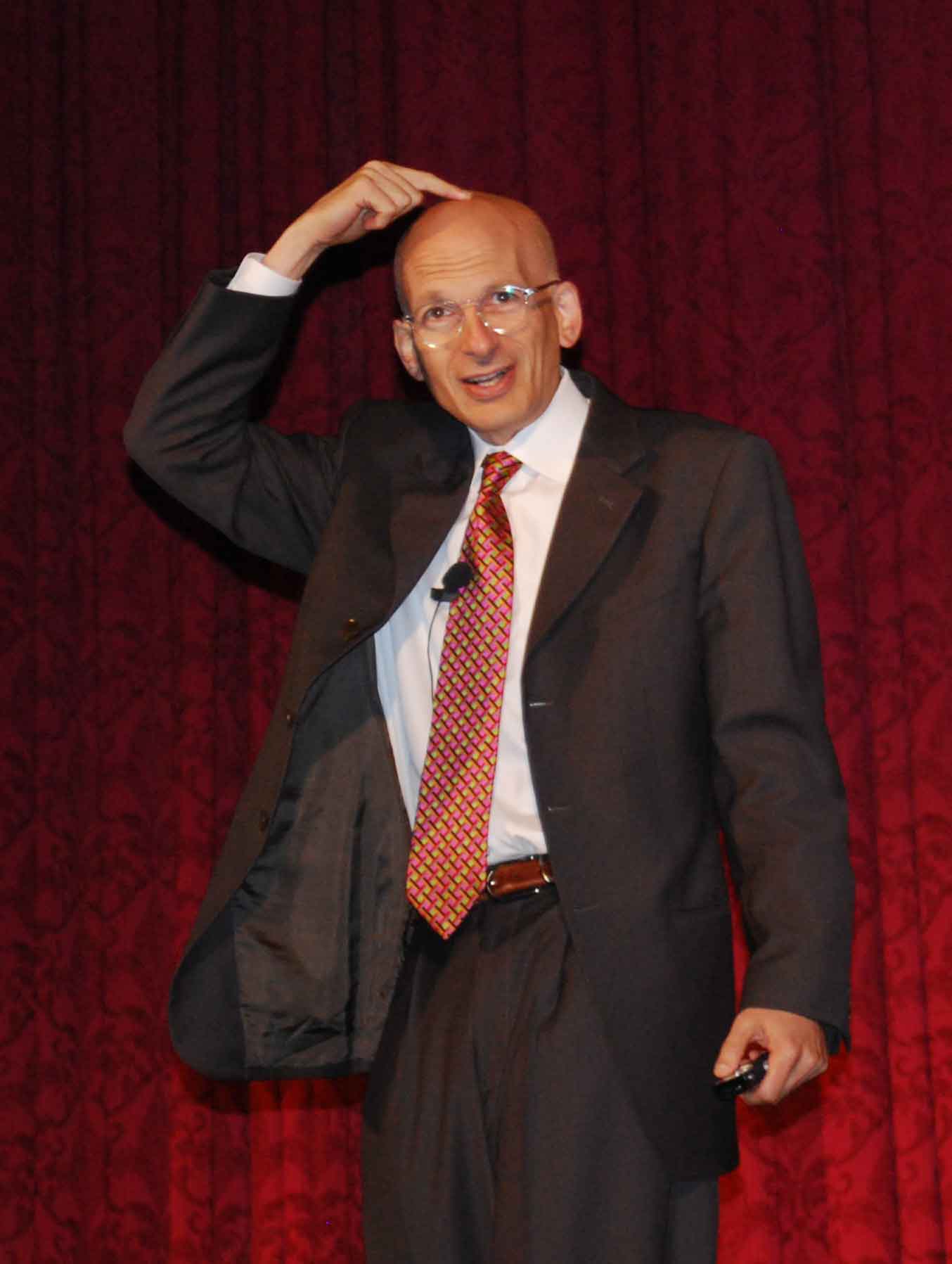
To illustrate, Seth pulled up the cuffs of his pants to reveal his brightly colored socks that happened to be mismatched. They are from a company called Little Missmatched that gives kids –and keynote speakers — permission to express themselves and thereby spread the story. We didn’t get a chance to ask any questions because he was off and running. But it’s safe to assume Seth is telling their story over and over again, on his dime, to his audience.

As a backgrounder to his presentation, you could listen to a pre-conference podcast of Seth interviewed by John C. Havens on BlogTalkRadio.

Snail mail experiment, cute with a lesson

Three snails, traveling at a blazing speed of 0.03 miles per hour, deliver 14 electronic messages.

Yes, this is snail mail in the digital age. Oh, the irony. We take for granted that we could use the web to deliver snail mail to far corners of the earth that have no internet access. But this experiment delivers web-mail on the back of snails! Meaning, you could log onto the RealSnailProject website, and type in an email to someone, and the web server delivers your email to the snail fitted with a RFID chip. The ‘mail forwarding’ then takes place as the snail moves around and comes into contact with an RFID reader, which picks up your email and send it onward.

For the rest of us who suffer near-death experiences when there’s a Blackberry blackout, there’s a sobering takeaway about this slowed down delivery. It is part of ‘slow art’.

The three snails, in keeping with a MySpace era, have ‘profiles.’ What’s next, a snailcast?

Quotes for the week ending 28 June, 2008

Seth - Meatball Sundae - Godin at the IABC conference, NY, 2008

“We are entering an era of tribes. Every tribe needs a leader.”

Seth Godin, final keynote, at the IABC Conference, New York

“Most intranets look like two tin cans and a piece of string.”

Steve Crescenzo on Corporate Blogging, at the IABC Conference, New York

“I dream of 150,000 members”

Barbara Gibson, Incoming chair of IABC, at the IABC Conference, New York

“Journalists’ sensors are tingling.”

Doug Wotherspoon, on the dangers of ‘greenwashing,’ at the IABC Conference, New York

“We want transparency in business, but wonder why students are baring their whole lives on MySpace.”

John Deveney, on Building Credibility, at the IABC Conference, New York

“You have to be careful in your belief that you can have an influence.”

Carol Sapriel, on Crisis Management, at the IABC Conference, New York

Blogging with an audio recorder

Follow up to my post about Bill Marriott’s blog, Marriott on the move, I find it interesting that he does not type his posts but dictates it to his communications manager using a digital recorder. It retains an essential conversational element that tends to get edited out when some people put pen to paper.

Many were impressed at the 75-year old CEO embracing the blogosphere, as was seen on the tweets and other conversations I had at the conference. Steve Crescenzo and others suggest that the lowly digital recorder is a great way to dive into the social media, especially for people who are bad at typing, or don’t have the time.

What’s interesting about Marriott’s blog is that his folks have not only transcribed the dictation into text, but post the audio file on the blog. It adds one more level of authenticity, because you now know that some scribe in the back room is not tweaking the sentences for the blog.

These information panels tell a story

How do you organize information? Once you do that, what kind of story does it tell your audience?

I visited The New York Times‘ building yesterday to check out what’s they call the ‘Movable Type‘ display in the lobby. Couldn’t help noticing the new building since my hotel was just a few blocks from this modern steely landmark. (The stunt a few weeks ago gave me even more reason to visit, although the panels were the real draw.) It takes the old idea of lead-based movable type and interprets it for the digital world where type is on the move, in and out of people’s lives.

The fluorescent panels at the Times building are stunning in their simplicity, considering the complex technology behind them. They are constantly being updated with bits of information coursing through the veins of the news organization -snippets of letters to the editor, comments on blogs, obituaries, headlines, search queries, sports results, politics…

For the past few weeks I have been photographing information panels -the analog, the dynamic, the sombre, and the marketing kind. Below are some of them:

Penn Station, New York

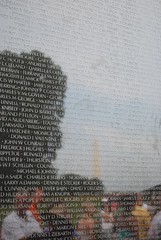
The first is at Penn Station, NY, the second is from the Apple store on 5th Avenue, and the third is a section of the panels at The New York Times. Or take this fourth panel, made of granite. It is one section of the highly charged 246-foot Vietnam Memorial in Washington, DC.

It is not just a list of fallen soldiers. The names are organized according to the day they lost their lives, with a legend next to each name so that a family member, or someone who served at that time could get a broader story.
The design of the wall itself is rich in meaning. It’s impossible to not be moved when you look at each name and read into it your own version of the story. If you look close, you’ll notice the panel reflects the Washington Memorial.

IABC Conference, the classic ‘meat space’

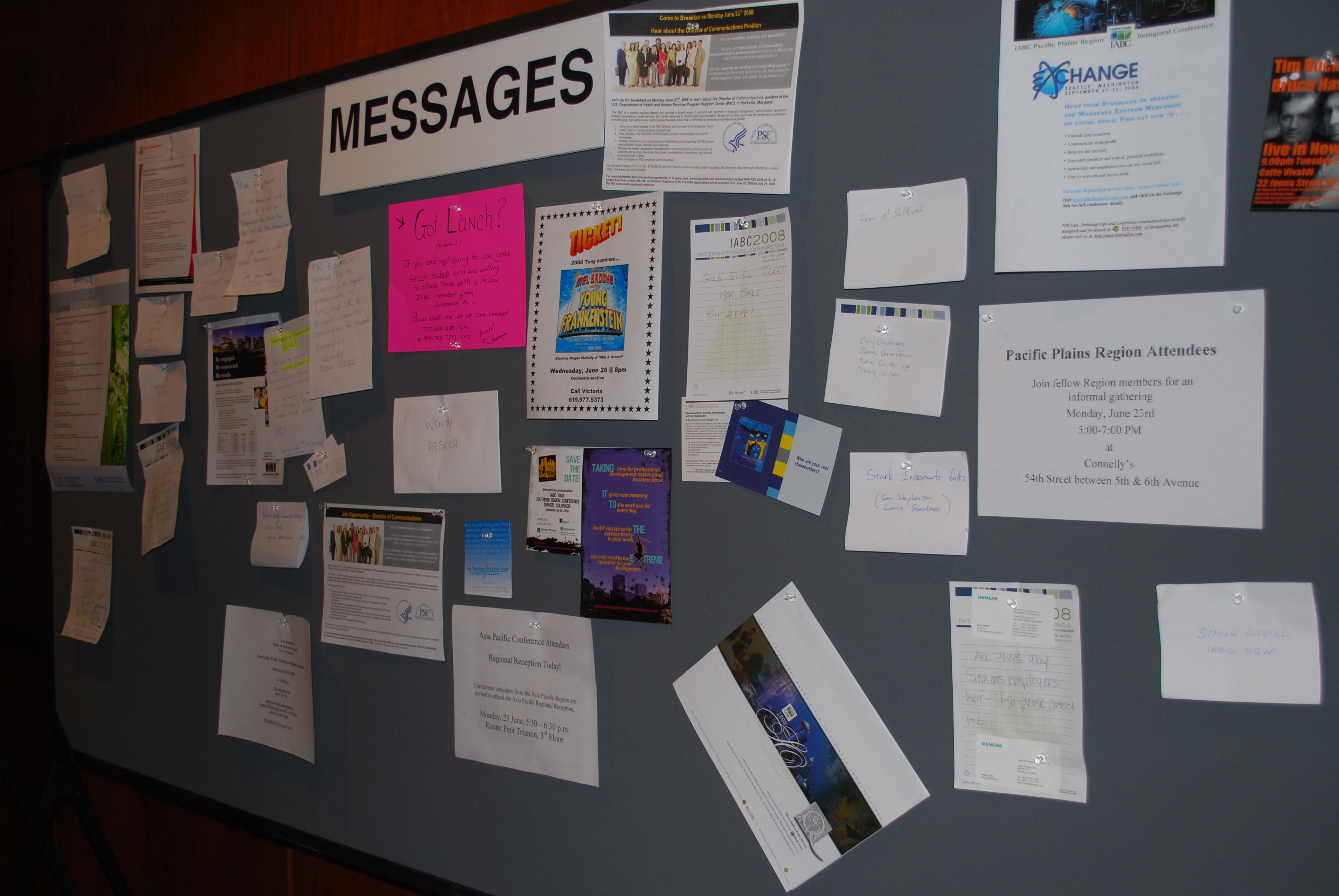
Meeting board outside the networking areaThe term ‘meat space’ may be an awful way of describing why conferences like this –where the focus is on faces, not Blackberries– matter. But it’s true. We have come here to escape the digital world and connect back in analog fashion. IABC tells me that are attendees from nearly 50 countries.

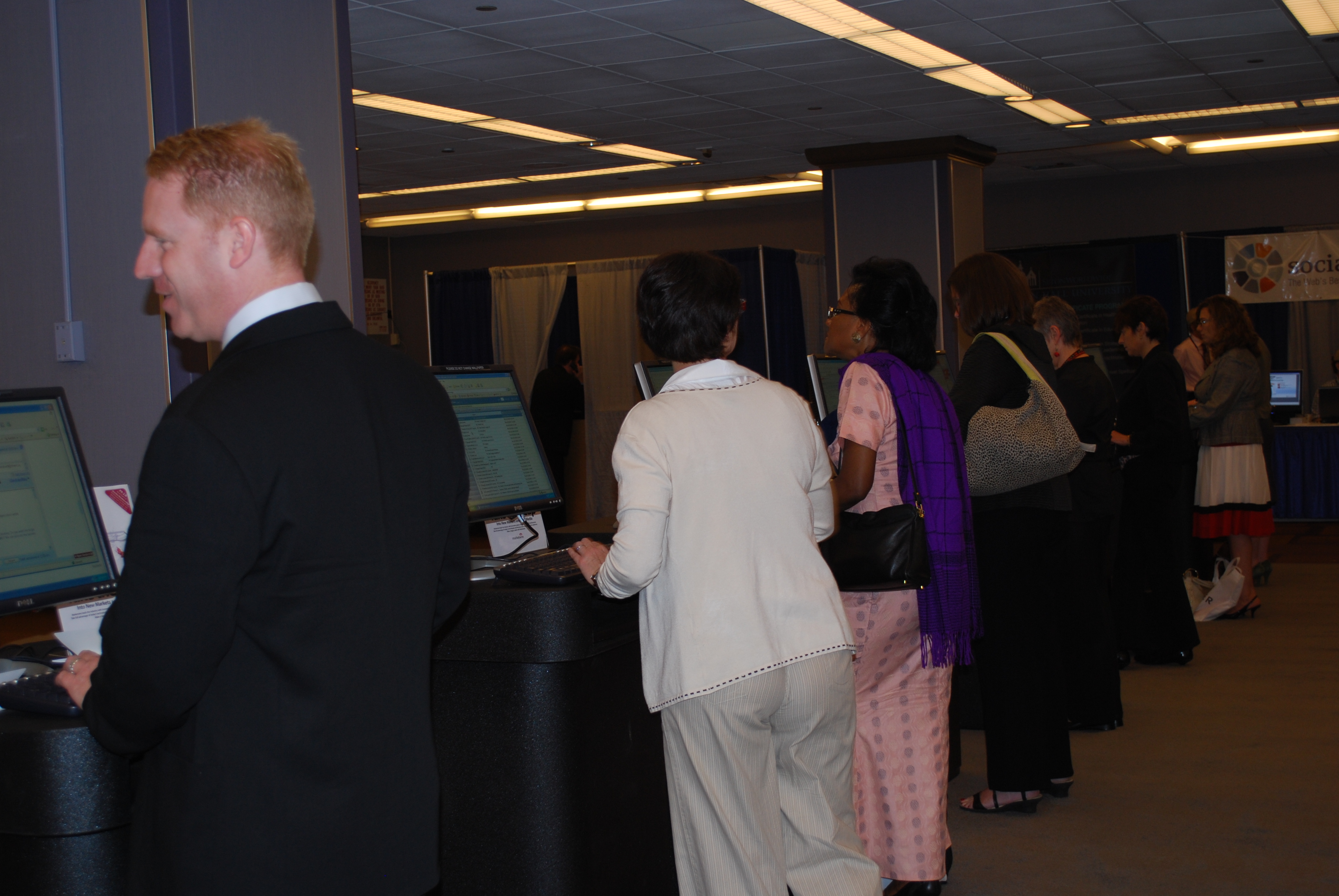
The sheer density of people, back-to-back-to-back sessions, keynotes and dinners force you to realize that sitting at a computer and sucking at an RSS feed does not compare (If you’re reading this via RSS, sorry!) Having said that, there are lines at the computer terminals. Long lines. People multi-tasking, big time. Two other prominent people are blogging the conference: Shel Holtz, and the CEO of Social Media Today, Robin Carey, whom I met for the first time. Delightful team at SMT. They aptly serve the content curation role that Steve Rubel talked about yesterday.

They did what with my story?

Role playing in \I attended an amazing session yesterday titled “A day in the life of a TV reporter” that may have seemed like it was about news, but was really about PR. Specifically about pitching your story to a TV news team,

Gerard Braud who ran the session is a been-there-done-that kind of guy. It was not the usual how to, with five golden rules, etc. It was an exercise in every sense of the word –one of the most fast paced sessions I’ve ever attended– to put us in the hot seat of the news team.

I guess you never realize the “if it bleeds it leads” imperative in a newsroom until you work in one. Attendees were divided into four news stations, KSUK, KRUD, KNTS and KRAP (no shortage of acronym fun!) given the same stories, and asked to produce three news bulletins -an A.M. newscast, an afternoon, and the big enchilada, the evening news. But it wasn’t just that. We were assigned to roles of egocentric, tired, underpaid, ambitious and reclusive individuals who put it all together. But if they were caricatures, Braud assured us he had worked with precisely these types.

That was the whole point of this. To see how stories, pitched to a news organization made up of dysfunctional (read: human) individuals dealing with the pressures of advertising, sweeps, budget constraints and deadlines ever make it.

The day’s story line-up included murder, corruption, a weather related car wreck, a local government story and a technology piece among others. As we set off to report and package the stories for the bulletin, a story of a blogger (posing as a child to lure a pedophile) was dropped by most teams, never mind the social media hook. (Please don’t tell Shel Holtz that!) The zoo story about a giraffe giving birth, survived. But you knew that, didn’t you? Even though it meant sending a cameraman in two different directions, it was in keeping with the silly convention of a cute story wrapping up a bulletin stacked with very depressing stories..

Just when we began to get the hang of things, Braud threw a curve at all four teams. I won’t spoil it for any other group who might attend this session some day, but just say this. Hard exposive stories are the sexiest -with the exception of the giraffe.

There were some great lessons. Pitching lessons, empathy lessons, and sensitivity to the news cycle. “We tend to treat them news people as special, don’t we?” remarked Braud. “We put them on a pedestal, but don’t recognize they are human, just like us.”

Steve Rubel: Micro is rising, rethink your job

Steve RubelSteve Rubel of Edelman, who inroduced himself as someone who “studies the digital landscape and makes sense of the hodge podge,”  had an interesting way to introduce Digital Trends. “Here lies mass reach. 1704 to 2004” read a gravestone in one of his slides. The point? We’re in the middle of a massive movement fom mass to micro.

As expected, Rubel’s observations and predictions of where we are headed, makes us cheer and wince at the same time. I say that in a good way as someone who believes we need to be uncomfortable with the tools we use or plan to use, rather than stick within our comfort zone of newsletters and ‘ads.’ The discomfort zone means communicators need to spend more time with data –become ‘quants’ as he puts it — try things like Google trends, and widgets etc.

Alas, we are all control and content freaks, not geeks.  We love to have meetings over fonts and color palettes, don’t we? The widgetized way to think of content and branding forces us to think of content in a micro formats.

The point I really liked was his concept of becoming ‘content curators’ –something he has written about before. Digital Curation may be a role we have to play to get our message through. Like museum curators and book editors, content curators would serve a valuable role for our micro audiences in separating the valuable from the junk. Even Brands could play a role in curation. Brand curators? Enough to make digital agencies cheer and slow-to-digital agencies wince.

Marriott CEO Blog: “A cool way to tell stories”

Marriott CEO, J.W. Marriott told a shocked audience this morning that he never knew what a blog was when he started, but now finds it a way to listen to others, and communicate better with the thousands of employees and customers around 68 countries.

Marriott spoke at the opening session of the IABC International conference in New York, where he was named the 2008 Excel Award winner. Like a few CEOs today, he stumbled onto blogging thanks to his communications director, but now finds it “a cool way to tell stories.” His advice to other CEOs:

  • Make it personal
  • Stay away from out and out advertising
  • Talk about what you are passionate about

Obviously he was mildly grilled about the value of the blog. Alluding to the ROI of the blog he said it translated ino thousands of dollars in room sales. “I would recommend it to any CEO. It’s worth it,” he said.