Cooking with sunshine in Arizona

We took out the solar oven again this week, and it was amazing what a ‘black box’ could do, unsupervised.

My wife has become quite an expert – and experimenter. This was the latest. Stuffed bell peppers, with rosemary. Previously it was roast beef. Before that egg plant, and spaghetti squash…
The oven we use the Solavore Sport. It comes with two black pots that perfectly fit in the oven space even with the lids. This week, with temps hovering in the 108 degree range, it didn’t take long to get up to 250 degrees in the oven.

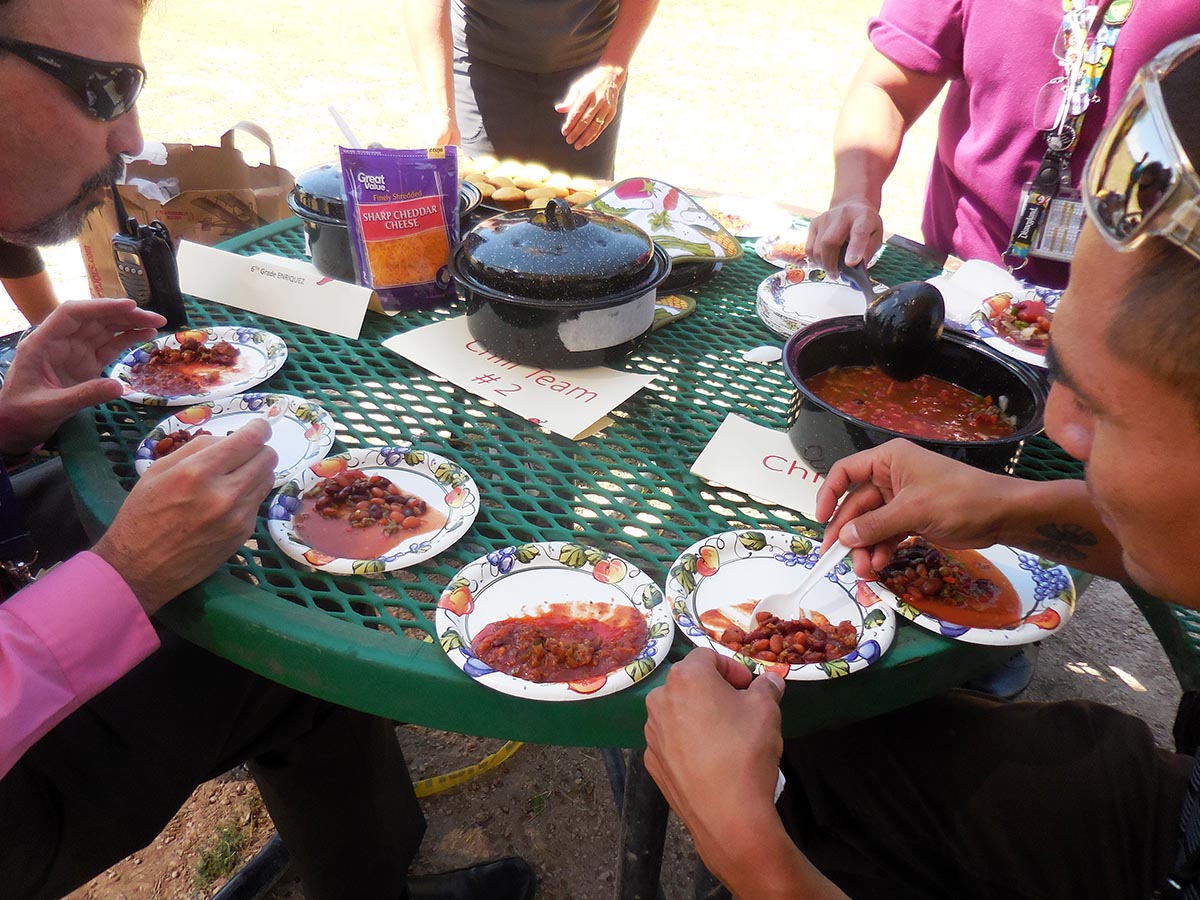
In May, I conducted a Chili Cook-Off at Salt River Elementary, as part of a year-end STEM project for 6th graders. May was a ‘cooler’ month (if you could call 98 degrees cool – a sarcastic Arizona joke of sorts). And yet we had chili cooking at 275 degrees within 20 minutes. 


Solar Chili cook-off continues today at Salt River Elementary

Thanks to Anne Patterson of Solavore, for helping me host the solar oven event in my class yesterday and today. I put together this STEM event for 5th and 6th graders as a final year STEM module.

AnneP1A great way to end the year on a high note – focusing on concepts such as insulation, radiation and the greenhouse effect, and letting students taste the end product! I liked how she compared different feeding habits of living creatures – carnivores, herbivores and ‘solavores‘ – to bring home the point about how we consume energy in one form or another. The sun, however is not a ‘consumable’Top 10 Sunnest Countries in that sense since we have an infinite supply of it.

Anne then compared the Top 10 Sunniest Countries, showing how the US has the most number of sunny days, and Arizona tops the list of States as well, with 4015 hours of sunshine a year!

Which is why, within 20 minutes of placing our ovens outside, they reached 250 degrees. One even topped 300 degrees!


Judges_1_SolarSRE

Ovens1

Thank you to my judges on both days, Annette Williams, Chris McIntire, Erik Haarstad, Joni Andreas and Wayne Sekaquaptewa who braved the chili recipes and the near double-digit heat outside. Today’s judges got to taste some of my Sri Lankan Chili as well.

Finally a big thank you to my colleagues. 6th Grade teachers: Erlinda Allen, Donna Horn, David Crebs, John Emmons. 5th Grade teachers: Maria Enriquez, Bernadette Spencer, Valencia Gorman, and Ashlee Chee for supporting this crazy idea.

Solar Oven STEM project – Chili Cook-Off!

As temps rise, I’m bringing out my solar oven for an engineering & science class. It will be a ‘maker’ type session that will culminate in a Chili Cook-Off for 5th and 6th grades. Students of each grade have been asked to come up with their own class Chili recipe and put it to the test. Outside judges will decide on the best Chili

To get started, I’m introducing them to topics such as insulation, radiation and the greenhouse effect.

  • Next a session on designing and building a Solar Oven from a Pizza Box.
  • Finally, Ann Patterson from Solavore will be here to teach a class on Solar Cookers and the engineering principles behind it.

If you’re looking for solar oven recipes, here are some. I’m a big Chili Concarne fan. Solavore has some here, too.


Chilli CookOff - CHILLI & STEAM - May 2016

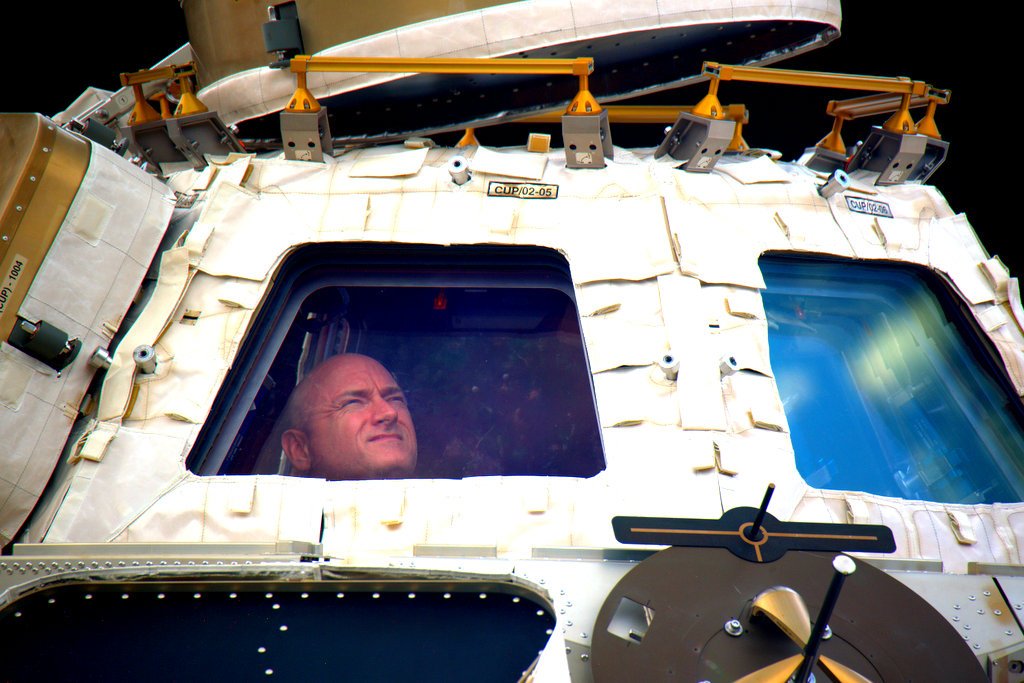
Earth to Scott Kelly: Welcome home!

Watching Scott Kelly, and his ongoing work on the International Space Station for the past year has been like following a live-action science-and-technology class.

Many of the NASA-related activities in our school this past year (talking with an engineer at JPL, and the crew of a Mars mission simulation etc) have directly or indirectly addressed to the big question “What will it be like to live on Mars?” Astro-twins Scott and Mark Kelly, have become the human faces of astronomy, aerospace, and space exploration.

Students keep asking questions such as:

What kind of ‘work’ do engineers and astronauts do, besides floating around doing ‘space gardening’ and 3D mapping? Some amazing work is described here. We watched some incredible views taken by GoPro cameras aboard the ISS, including one involving inserting the GoPro into a water bubble.

On the fun side, I’ve even used Scott’s Time Magazine cover photo to teach a class on Photoshop (replacing Kelly with a 6th grade teacher who’s got a similar look.)

Here’s hoping we see more of Kelly brothers, and get to hear from Scott. Perhaps in a future Mars Day!

He should be back on earth tonight – NASA says touchdown is scheduled for 11:27 pm Eastern Time. As he put it in 140 characters before he left the ISS, “the journey isn’t over.”

STEM Student Ambassdors to visit Sri Lanka

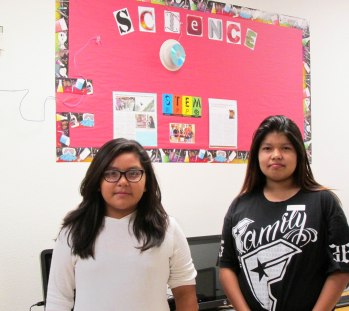
STEM Ambassadors - Salt River Elementary 2Two students from my school district have been invited to visit Sri Lanka as ‘STEAM Ambassadors‘ in December.

They will represent the Salt River Pima-Maricopa Indian Community at two workshops for teachers on Science, Technology, Engineering, Art and Math. The workshops will be held in Colombo and Kandy.

The students are:

  • Dominique Grey, a sixth-grade student at Salt River Elementary.
  • Haley Smith, a seventh-grade student at Salt River High School.
  • Maria Chavez, the school’s Parent/Community Involvement Specialist, will accompany them, as well as one parent of each of the students.

Listen to the story here, on KJZZ.

Mars Day taps NASA, StarLab and HI-SEAS Crew Member

StarLab_1It’s fun to have an event such as Mars Day at a time when there’s so much more being discovered about the Red Planet. Like the excitement about flowing water, a few weeks ago.
For this year’s Mars Day at Salt River Elementary, we feature three interesting facets of Space exploration and discovery.

StarLabThis is an inflatable planetarium that will give younger grades an interstellar experience. It comes to us through ASU’s School of Earth and Space Exploration. Just the idea of having a planetarium come to the school turns science into something more experiential. Added to that we have a great outreach team that gives students a ‘tour’ of the night sky, and a hands-on table-top experience.

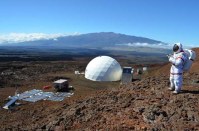
hi_seas_3Zak Wilson is one of the crew on the Mars Habitat experiment last year. He will be here to conduct concurrent sessions, and be our keynote speaker. Zak, who was part of a 6-member crew lived in a Martian habitat (seen on right) for eight months! It was situated on a volcanic terrain that resembled Mars. More about this experience here.

ASU/NASA. And last but not least, we have the team from ASU’s Mars Space Flight Facility conducting hands-on sessions with grades 3,, 4, 5, and 6. This is the fourth year of our collaboration with this group.

Mars Day 2012 - Kody EnsleyHere’s how Mars Day has evolved.

In 2012, we had our students talk to Kody Ensley, a
Native American who interned at NASA, and worked on Robonaut,

In 2013, we featured Commander John Herrington, former Space Shuttle commander,and the first Native American in Space.

In 2014, we had the Hi-SEAS Mission team, and Dr. Jack Farmer from ASU.


Derrick Mains on Augmented Reality

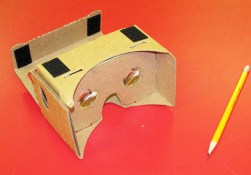
Could a pair of cardboard goggles become a critical student engagement tool?

Derrick_1I invited Derrick Mains to my computer lab yesterday to explain Augmented Reality, and what doors it might open for us educators, and of course students. I think I am sold!

Many students have heard of AR and VR, and you would be surprised how curious they are about this. Just as they are more interested in photography today because of disruptive devices such as the GoPro, they are more interested in Apps like these because of what it could do “seeing things differently.”

Cardboard_tnAs Derrick explained, this is another way to use Apps in education. Not just to stare at a screen but to ignore the screen (which disappears, the moment you put these goggles on) and engage and explore new worlds. We are not talking about fictitious virtual worlds, but uncharted territories whether it is at the bottom of the Grand Canyon, or to observe an eco-system in a rain forest.
Some of you might remember Derrick Mains from his work in social media. He was one of my co-presenters in a workshop on Digital Citizenship. The reason he’s on camera again, is because he will be in one of the several videos I am producing with my Salt River Pima-Maricopa TV team for another upcoming workshop.

Sri Lankan teaches GoPro to my class (Never mind the time the difference)

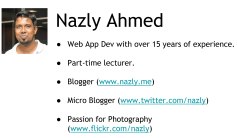
Nazly_profileThanks Nazly Ahmed, for taking the time to teach a 35 minute class to my 4th graders this morning. It was 8:45 am Arizona time, and 9:15 Pm in Colombo, Sri Lanka. But what’s a few time zones when it comes to learning from experts?
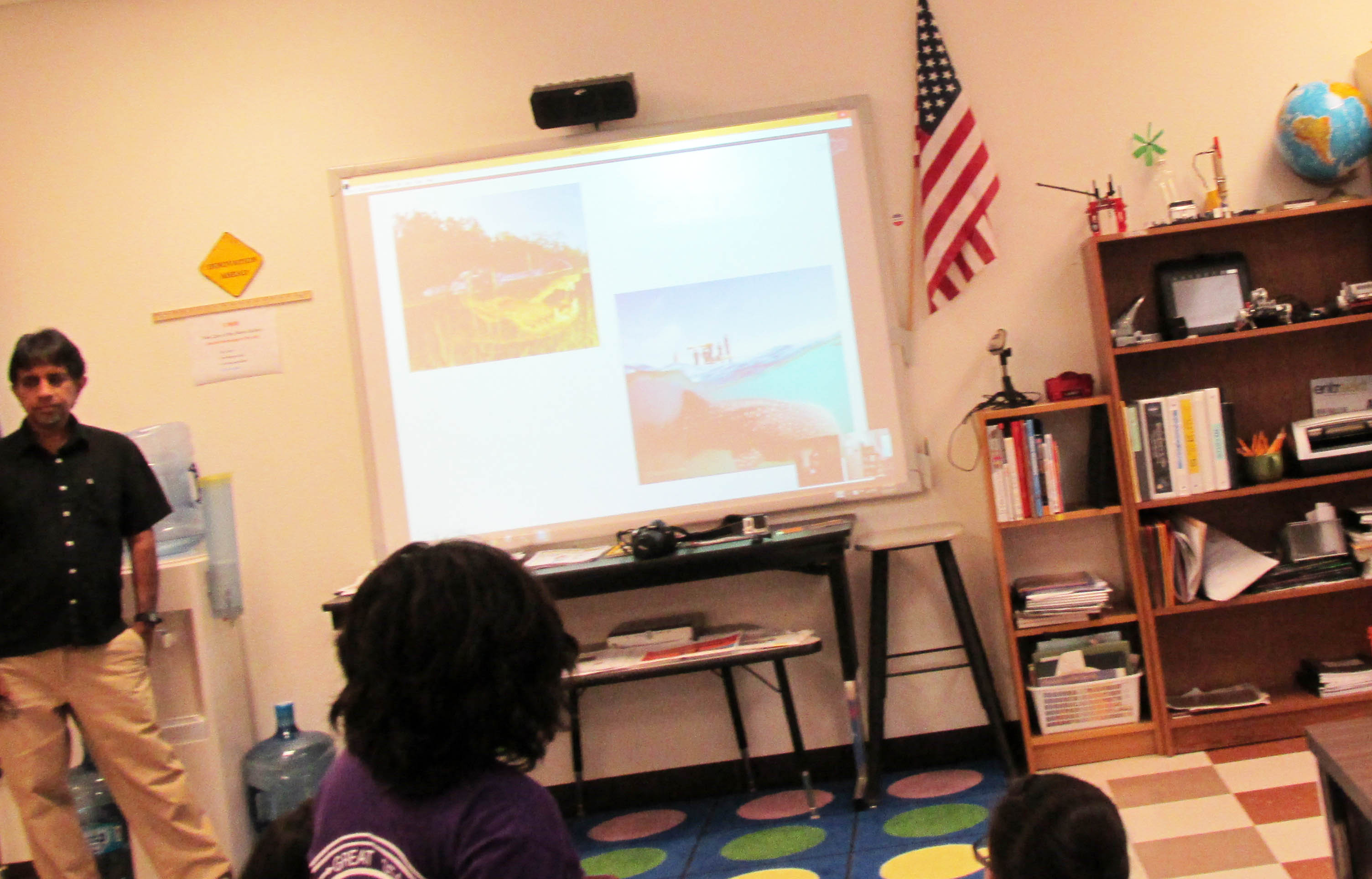
This technology class was a bit of a ‘planned surprise’ for them. Some have even seen a GoPro in action. I happen to have one in class, so before I introduce the hardware, I wanted to bring in a user to talk about it. There were three cameras in class – not counting the one on the PC for our Skype call. Nazly used screen-share from his end, to explain different camera perspectives. Forget drones with cameras. We watched the flight if an eagle mounted with a GoPro!

And students wanted to engage, so the class was (nicely) interrupted by many questions. One student volunteered to document the session on a regular camera. Everyone said they wanted to work with the GoPro, which will be in a forthcoming class.

Now if I could only find an eagle that’s willing to participate in an Ed-tech experiment 🙂 

GoPro class