Sneaking in VR to the class

This year I’m using VR both as a project, and as a motivation tool – to create a brochure. My 6th graders understand some editing and formatting skills. So to raise the bar, I got them to research and put together a brochure on Virtual Reality.

Granted it’s a lot of work. Understanding VR itself takes some time. They must create content for the 6-panel document, look up content, find pictures etc. As work progresses, there is a parallel discussion of what VR looks like, using a few cardboard headsets I acquired. One student even brought in two headsets. (One had cost him just five bucks!)
The incentive was that any student who showed me they had three panels formatted, and with required content, would get to experience a VR roller-coaster ride. Didn’t think a 40-minute class could move so fast!

Funny how sneaking in a piece of tech into a lesson can accomplish much more than a hand-out!

Thanks, Cassini for all your work. And catching our ‘wave’

Cassini, the robotic spacecraft that traveled for nineteen years (and some 948,149,234 miles), came to a sad end today, as it flew into Saturn. It’s demise was planned, however for good reasons.

It was one ambitious mission in 1997. A knowledge excursion to parts of our solar system that were previously beyond our reach. Through Cassini, we learned about and discovered more of Saturn’s moons, we got to see the make up of its spectacular rings, and learned that the gas planet does have its own hurricanes. It carried a probe, which it landed on one of Saturns’ moons using a parachute. It beamed back data through NASA’s Deep Space Network, and as you’d expect from any celebrity now, Cassini had its own Twitter handle, @CassiniSaturn.

Cassini’s full name is Cassini–Huygens, being born of a project collaboration between three space agencies from the US, Italy, and Europe.

Cassini was used for interesting aerial photo-op. It took place on July 19, 2013. The folks who programmed Cassini turned the spacecraft back toward Earth to take a picture of earthlings waving at it. The images were then beamed back and stitched together in a huge mosaic of the Saturn system, itself! More about that event, here.


Future Inventors – My LMD article on Team Sri lanka

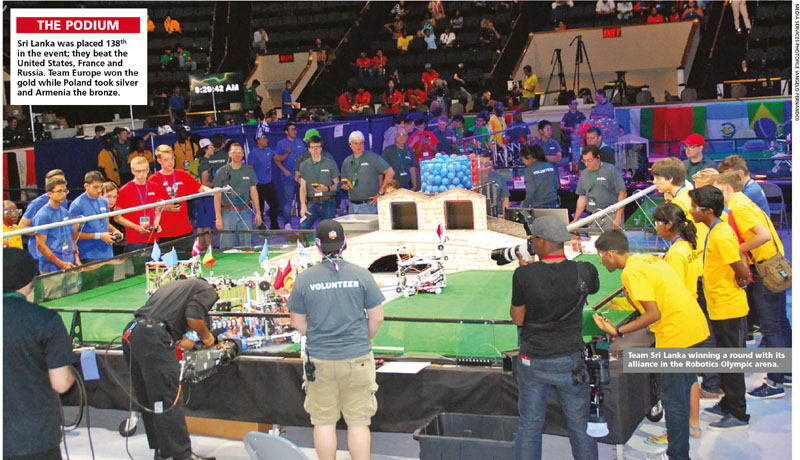
SRI LANKA AT THE ROBOTICS OLYMPICS

BY Angelo Fernando


A short walk from the White House, the steps leading up to a neoclassical building where Robin Williams once performed spill over with teenagers in bright yellow and blue T-shirts. Using screwdrivers and wire, they are feverishly fixing their robots. It’s only 15 minutes before Round 1 of the two-day competition held in July – a global event drawing 163 teams from 157 countries.

The humidity in Washington D.C. hovers around 90 percent and Team Sri Lanka’s four students are sweating bullets. Huddled in a basement, and parked between Senegal and Sudan, their 20-wheel steel robot needs some repair work.

Why? The bot they had built in a classroom (so secretive was the project, they called the room ‘Area 52’) arrived with a warped axle and damaged omni wheels. The motor failed too, which is not an uncommon problem among teams here. In a few minutes, they must have their 23-kilogramme robot working. It is the ‘Olympics,’ after all…

Link to full article here.

Published in the Sept issue of LMD Magazine.

Self-driving carts – The downside of robotics

Robots are great until they carry out tasks that take humans out of the equation. Or when they attempt to use ‘data’ as a substitute for insight.

For this reason I am not exactly excited about self-driving cars – and I pass some of these each week in the Gilbert area. (Bummer! Uber’s autonomous vehicle met with a 3-vehicle crash last week) Besides the safety aspect, there’s the real long-term effect of erosion of jobs. Those jobs that involve routine manual tasks. Think of warehouse work, or on-demand ‘runners’ and movers that make a factory work.

As fascinating as this demo below seems, it’s the dark side of what robots could do to the workplace.

If there’s any upside of this, it’s that companies that defining this future are hiring people with emerging engineering and science (STEM) backgrounds. The company who developed this cart says it is hiring a ‘Computer Vision Scientist‘ – someone with math skills, and experience in LIDAR, radar, sonar, GPS etc.

I love it! The smart cart can ‘see’ and find its way through a messy warehouse. But it needs a scientist with ‘computer vision‘ in his/her title to bring such technologies to fruition. At least it’s a raison d’être for STEM education. People who can carry out cognitive, problem-solving tasks that bots cannot. Yet.

Robotics teams immersed in complex (timely) water challenge

So as #Flooding and #StormSurge is on everyone’s mind with havoc from hurricanes Harvey and Irma, it is unhappily timely that robotics in schools and clubs across the country are wrapping their minds around an H2O challenge. Specifically, ‘Hydro Dynamics.’

It’s this year’s theme for the FIRST Lego League that will culminate in tournaments between November and December. (Interestingly, the theme of the FIRST Global ‘Olympics‘ in July was H2O Flow ) Alongside the work on building and programming a bot to run missions, students must work on a research project. How water is sourced, conserved, distributed etc. They must also come up with a solution that ‘adds value to society’.

Right now there are a myriad of issues that experts and government officials are wrestling with. Could students hypothetically solve some of these in the future? Dean Kamen’s FIRST outfit has been doing an amazing job of using robotics to build a new cadre of engineers, designers, and problem-solvers.

As I watch my school team assemble the missions in my lab, it’s evident that each mission (built of Lego pieces) is more complex this year: There’s a ‘Pump addition’ mission, a Water Treatment model involving ‘Big water’, and others involving Pipe Replacement, and Sludge Removal.

Here is what the field mat looks like.

Chamath Palihapitiya could throw a wrench into AI heavyweights

It’s always good to keep an eye on what Chamath Palihapitiya is up to. He has been building a team of ex-Googlers, and is supposed to be after the next generation of computing. A $10 million startup, to be sure!

This could signal a lot of things, depending which pair of lenses you put on. It probably has a lot to do with AI – Artificial Intelligence. For instance he hired away eight of the ten people at Goggle working on a secret project involving a chip with AI. He has poked fun at Watson, the IBM cloud-based machine learning application.

Watson, as you might be aware turned tables on Jeopardy and Go (the 2,500-year-old game), but has machine learning entrenched in many sectors from genomics to industrial safety. Google’s machine learning project, known by its bland name, Tensor Processing Unit (TPU), is underway.

Pahlihapitiya talks of ‘probabilistic‘ software that is changing how we depend on devices – a great shift from ‘deterministic’ software based on “if-the” sequences. Watch how he explains how machine learning and II is transforming, and will up-end computing. I bet Watson took in every word of this.


Could Fitbit smartwatch take over iPhone territory?

Though I will never wear an activity tracker. I’ve been very curious about the smart wristband / ‘wearables’ business. Especially the territory Fitbit has been moving into.

Sure, most people will be awed by Fitbit’s ‘SpO2’ sensor, for instance. But despite the clinical USP (to keep tabs of ones oxygenated blood), there are some features that blur the lines between an activity tracker and a smart watch; a wearable that can make contact-less payments via NFC, minus a phone.

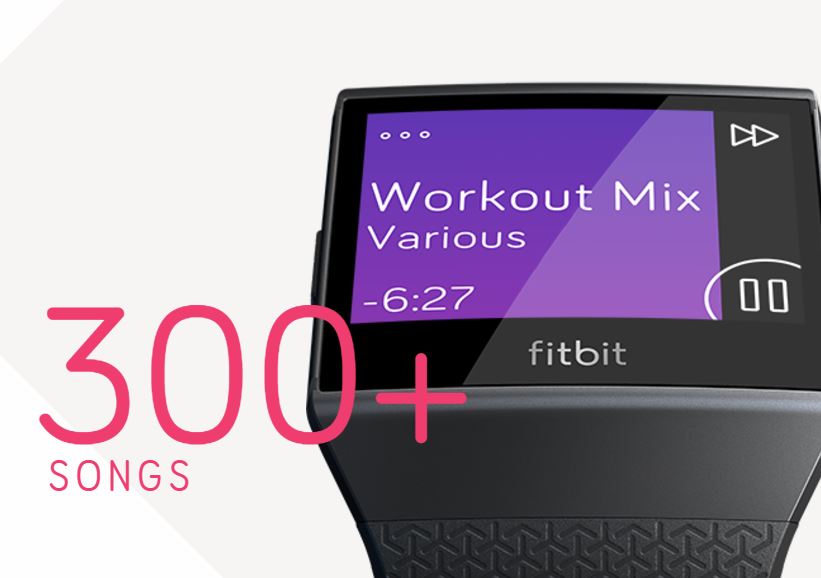
There’s also the music feature. A smart watch that could store music could be a game changer. With Bluetooth and WiFi (and GPS) who knows what territory it might lead this ‘wearable’ into? Will it motivate some to leave their phone behind? Would that mess with the iPhone eco-system?

The other reason I’m curious about this wearable is, I plan to use Fitbit as an example in an upcoming class. It’s a class about the Internet, and the connectivity it provides. And the hardware and software that run on the infrastructure students take so much for granted. Following up on last week’s look at Virtual Reality, nothing like bringing up the much-hyped Internet of Things.

Hashtag’s Birthday today – When lowly keyboard symbol became a celeb

Ten years ago, how did you refer to this # symbol? Most people I knew called it the ‘pound sign’ and we barely used it. Except for street addresses (it felt sleeker than the old-school abbreviation “No”) as in #33 Clifford Place.

Ten years ago, we had other things that grabbed our attention. FB had just bragged about 30 million users. Virginia Tech happened, the iPhone had been launched, and the global economy was teetering.

So what were you doing on Aug 23rd, 2007? Where were you working? How did you communicate? I am curious to see how my friends were doing when the hashtag emerged.

Technoference and Emojipedia – Part of our evolving vocabulary

While you were not paying attention, a new vocab has been tying up its shoes and sprinting through the techno-social-media crowd. (Sorry I just made up that super-hyphenated word.)

Emojipedia does exist. It’s a place where you could find such things as a ‘Man teacher: medium skin tone’. (Several variants, actually, as seen on Facebook, Samsung devices and Google.) If you’re looking for a person shrugging (not sure why, but…) there are 18 variants, and you’ll find some for world events and animals and such.

I could give you some even more obscure words, especially if you want to flummox someone. Try fudgel. It means one is pretending to work though basically fudging. Or ‘Grok.‘ If you haven’t run into this, I guess you don’t quite grok this post.


Rockets, robots and human smarts – Why humans are (still) indispensable

We like to imagine that space travel will one day be managed and dominated by robots. Yet there is plenty of reasons why humans will not be obsolete.

I spotted some clues to this in the latest report of the SpaceX docking of the Dragon capsule with the Space Station.

The report reads:

At that point, astronauts will grapple Dragon using the station’s huge robotic arm, securing the freighter. When the hatches between the two vehicles open, ISS crewmembers will begin offloading the capsule’s cargo, which consists of more than 6,400 lbs. (2,900 kilograms) of food, supplies and scientific hardware.

Indeed, although it involves a robotic device, humans must snag (‘grapple’) the capsule in a way sounds a lot like human expertise involved in bringing a ship to harbor using rope and bollards. It is sometimes noted that self check-out lanes in stores have not made human cashiers obsolete.

The point being, careers in robotics will grow in tandem with some of these technologies. The field of robotics will need –indeed depend on — human expertise in dealing with complexity.