Media Illiteracy prevails, and the adults aren’t off the hook

As our modes of communication grow smarter, we seem to be doing a shoddy job of using them. This is not just about the misuse of Twitter, of which dumb tweets are legion. Such as a Time correspondent firing off a tweet wishing for a drone strike on Julian Assange in 2013. This is about young people who have too powerful publishing tools at their disposal. If you like to know more, you will love this compilation!

This week, six High School students in Arizona got themselves and their school into serious trouble, using SnapChat. They got a picture of themselves taken wearing shirts that spelled out a racial slur. They learned, too late, that an app’s ability to ‘communicate’ should not define the message. (If none of them had data-enabled mobile devices would anyone have even bothered setting up the shot?).

An editorial in the Arizona Republic asked how students who have gone through a curriculum that probably included close reading and discussion of the civil war era, could have been so crass.

It’s hard to imagine these girls got this far in school without reading the ugly chapters in American history about the enslavement and oppression of Black people. Did they fail to pay attention? Did they fail to connect the dots to real people?

Let’s not get parents off the hook. How much time are we spending with young people to inform them about media use? It’s easy to be tool literate and media stupid.

Here are some thoughts for parents who may be considering giving a teenager (actually pre-teens, now) a mobile device:

  1. You pay for the phone and the data plan. You own the device; you set the rules. A phone is not like a pair of shoes, it doesn’t have to belong to the end-user.
  2. You better decide on the apps that get on the phone. Don’t complain later when a kid is spending too much time on Insta-brag or Brat-chat. I mean Instagram and Snapchat.
  3. Like your car keys, devices not owned by a child should be stored outside of bedrooms at night.
  4. It’s possible for homework assignments to be completed without digital devices. Really!
  5. Make sure your child makes every effort to not be in a video taken by a fellow insta-bragger.
  6. Finally, make sure your child’s school has a policy that has been updated to match the ubiquity and speed of shared media. It’s no longer valid to call it a ‘social media policy’. It’s a device use policy.

White House goes Cheesy, hashtags and all

It’s that time of year when communicators have too much time on their hands. Consider how: North Korea is pretending to prove it has a Hydrogen bomb (various sourcessay this was a damp squib); the sports minister of Sri Lanka is claiming he’s received ‘scandalous’ pictures of cricketers in New Zealand (hotels are denying this), and Google’s ‘self-driving’ cars are supposedly dangerous (drivers have sometimes had to stop them from crashing).

Perhaps it’s that down time after the Christmas season, when there’s a news hole that needs to be filled. With Cheese, for instance. The White House is hosting a humongous cheese party. The hashtag being #youfetabelieveit. It’s called the Big Block of Cheese Day. It’s been created after Andrew Jackson’s 1837 event, for which he trucked in a 1,400 pound block of cheese and had citizens come and mingle with the occupants. A sort of Open House event.

I don’t know how Mr. Jackson managed to handle this without a Tumbler account, but it sure goes to prove that sometimes all you need is a piece of cheese to get people to hang out with you. Unless you don’t mind keeping away the lactose intollerant.


Farewell LMD readers – I’m retiring after 20 years

Dec. 2015 was my last column in LMD Magazine. After 20 some years, I’ve decided to put down the pen and become a consumer, rather than a contributor. (And yes, it’s always been a pen!)

I began writing for the magazine back in 1994, as an ‘occasional’ contributor. By 1995, publisher Hiran Hewavisenti cajoled me to start a column after we returned to the US, and …the rest is history.
I admit, ‘retiring’ as a columnist was a tough decision, considering how much it connected me with many of you readers in Sri Lanka and elsewhere. It’s funny how ‘old tech’ print publications like this have been the precursors of our fancy schmancy social networks. It’s how I’ve met tech evangelists, entrepreneurs, and a wide range of thought leaders in emerging sectors. You’ve helped me cover topics such as US political campaigns, and advertising to diplomacy, from the tsunami to the ‘Uber economy’, from mobile learning, and cyber wars to artificial intelligence.

I like to thank the staff at LMD for their wonderful support, and my fellow columnists who sometimes became my sounding board, as they covered complimentary, emerging topics from different corners of the world. And last but not least, I have to thank my readers, many of whom write back, or send that occasional tweet.

Ring-cut or Missed Call? Lankan English at its best

I recently had a conversation with Harshana Rambukwella, a lecturer at the Open University, and our discussion drifted into an evergreen –even controversial — topic: What exactly could we consider ‘standard’ English? Harshana’s work has been about ‘narratives of nationalism’ and often speaks about identity, and nationalism in literature and language.

We got talking about the term “Ring-cut” which means calling someone’s mobile phone from your mobile, and cutting the call so that the number gets registered. Typically, a ring-cut is used because the person you ‘ring-cut’ has a free calls, and can call you back. This pithy term captures the essence of an action that has become ‘standard’ even in a conversation in Sinhalese or Tamil. Meaning, there is no need to translate it!

Interestingly, in some parts of the country, this is also called a ‘Missed call’ – a term I came across in advertising. As in: “Give us a missed call” and enter to win…” So much more interesting than saying “Call and leave your number on our answering machine to register to win.”

Here are a few more Sri Lankanisms:

  • What, for instance would you be doing, if you were caught “murdering the queen?” (Hint: It’s not a punishable act, but could be embarrassing).
  • How about being accused of doing a “Devil Dance?”
  • “Don’t tell me!”  is the equivalent if “Are you kidding me?” but conveys more shock and awe. Another version of which is “You’re telling me!” 
  • “Driving like a lunatic” (Said in exasperation, when talking about TukTuk drivers, or… a spouse)

Incidentally, you could find more of these Lankanisms in Michael Meyler’s  a dictionary of these words in Mirisgala.

And if you like to share your favorite words and phrases, please send them along.


Ranting and Whining – And you call this ‘social?

There was a time, not too long ago when social media was the place to be nice to others, and celebrate the ‘small world’ we live in.

What did we do with that?

A week seldom goes by without seeing humans whining and groaning like 14-year olds, complaining about the most mundane things, broadcasting what most people used to keep private in their petty-little spats, or rambling about the speed bumps we all face each day.

There are a 101 reasons why this is bad for us as a society – overuse of social media, that is. There’s a good summary of Why it’s bad for you here (and you probably intuitively knew most of these already.)

Just because we can screen-shot a conversation or an email, or tell our Instagram followers why someone makes us mad, doesn’t need we have to. I’ve written plenty on ‘Why Web 2.0 ought to make us more human’ but find myself having to call out those who turn this wonderful resource we call social media, into the most advanced anti-social media behavior.


Zak Wilson demos 3-D Printing to my students

IMG_3466Always wanted to introduce a class on 3-D printing in my computer and technology lab.

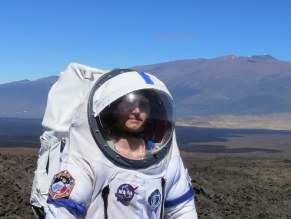
Tomorrow, our students will have just that, as Zak Wilson, a mechanical engineer who recently spent 8 months on a NASA-sponsored mission, visits Salt River Elementary. He is our keynote speaker and presenter at Mars Day.

Why is 3-D printing suddenly popping up everywhere? Depending whom you ask, you’ll find out that the ‘maker Movement’ is partly responsible. It’s driving young people to rediscover the art and science of building things from scratch. Libraries began hosting these Maker spaces, and organizations began experimenting with ‘printing’ hardware from a bicycle to an engine transmission. The latter by a mechanical engineer, for a Toyota! Not to mention the medical industry, and the space industry.

Which brings us back to NASA. There’s a 3-D printer on the International Space Station. One of the astronauts recently printed a 4 1/2 inch ratchet wrench, out of plastic. Zak, featured here, printed many small items in the Mars dome, and we will find out more about this.

More about the previous Mars Days, here if you are interested.

Playing to the cameras – Politics as usual

In the swim suit contests for our future president, the conflict of style vs substance is hard to miss.

These debates are, after all political theater, set up by TV networks. Sometimes I wonder if we have the right to even complain that it is such a frivolous affair, and we hardly come away with substance about a candidate.
So this month, in my column, I covered it from the premise that the candidate who really masters the ‘camera angle’ of this theatrical exercise, is the one who could win.

If you watched the incident in Iowa a few months back, when Donald Trump was interrupted by TV journalist Gorge Ramos, from Univision, you’ll know what I mean. The cameras rolled, and as crass and disingenuous as Trump was, he demonstrated camera mastery.

It’s no longer Public Relations 1.0. The groundswell of offline and online conversations is creating new possibilities. It’s possible now to follow real-time commentary in the Twittersphere, On Facebook, Instagram, or via ‘Vine’ while a campaign speech is being delivered. And these short burps of commentary, are fed by what comes to us via the camera soundbite.

 If you want to read more on this it is here.

Instagram ain’t for everyone, but sadly it’s a mass medium

I’ve been extremely sceptical about Instagram, and not just because of who own’s it, but because of what a pathetic wasteland it was becoming. That was more than a year ago.

This was soon after lawyers were also going after Instagrammers with intellectual property lawsuits (Janet Jackson’s legal issues, for instance). And it was about the time when a bulk of preteens and teenagers began to adopt it as their social bragging network, populated by selfies.

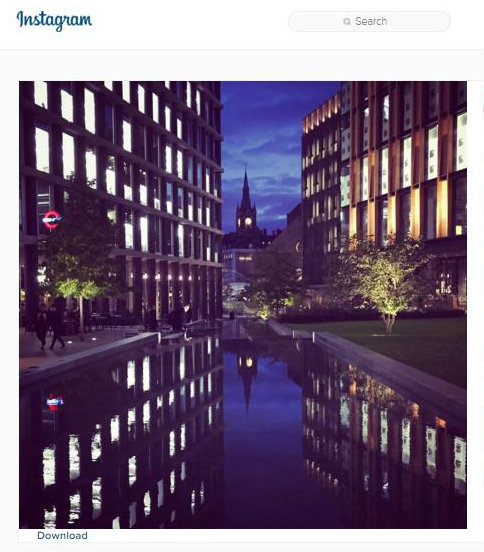
But then I discovered the real Instagammers, those passionate photographers with an eye for detail, who didn’t really need the canned filters that come with the app. People like my niece, Melissa Bocks, for instance who captures the most amazing moments in and around London. When you follow such people, you begin to feel you should not be licensed to even use your camera phone!

I believe that it’s about time Instagram separated the wheat from the chaff, before it becomes just another social network. Take a look at these pictures, and see what I mean.

MelBocks_1


London, St. Pancras Square – by Mel Bocks

NazlyAhmed_1


Sugar candy vendor, Madampitiya – by Nazly Ahmed

So many (scientific) ways to use a GoPro!

If you saw The Martian, you couldn’t miss the GoPro cameras strategically placed where Mark Watney (Matt Damon) hast to talk to other humans who were mostly absent.

It’s not exactly a webcam, but a powerful tool to ‘journal’ an activity a whether it is extreme sport, or something technical. I’ve started off using a GoPro in robotics, and it was quite revealing how the camera sees a manoeuvre.  I am now considering a class about the camera itself.

For this there will be two three cameras at work, in fact. The first, will be a webcam because of the expert I am going to bring in, via Skype. He will demo a GoPro and ‘teach’ us how to turn a GoPro into a scientific inquiry tool.WE will be using one in class as well.

The GoPro on Mars didn’t seem contrived – or a blatant product placement —  since some have actually been used in Space before. In real space, that is, and not on a movie set. And it has also gone to on some breathtaking missions — in a balloon, for instance.

Here’s one of my favorites. What a great way to demonstrate the surface tension of water, by making the camera a part of the experiment, while acting as a journaling device!


The GoPro is obviously switched on, and what’s really smart is how the editor of this video reverses the perspective. We finally see the scientists (the astronauts) through the scientific object (a submerged camera), and the water bubble acts as another distortion lens!

When Distance Learning was a mule-drawn wagon!

I have always been interested in Distance Learning, but as I like to tell young people many of our modern business and education models existed before the Internet.

For instance, about 50 years before eBooks made it possible to have the library accessible from home, we had the ‘mobile’ bicycle-drawn lending library.

But this ‘school on wheels’ known as the Jesup Wagon beats that! It was developed by George Washington Carver, a former slave.

A scientist, better known for the innovation we call ‘crop rotation’ and also peanuts, he loaded a wagon with seeds in this His ‘horse-drawn classroom’ and laboratory. His students were former slaves who had become sharecroppers.

The Movable Classroom program began in 1906. The wagon cost $674.

We could all use this to get some perspective, especially when we think we need fancy technology to connect knowledge with students.