When a speech gets waterlogged.

Pity the speechwriter on the White House payroll. I envision the person banging his or head on the keyboard, every time the boss speaks. The most recent being Trump’s description of relief efforts in Puerto Rico.

“The response and recovery effort probably has never been seen for something like this. This is an island surrounded by water. Big water. Ocean water.”

Trump’s speechwriter must be probably wondering:

  • Why state the obvious in a tragedy caused mostly by water?
  • Why heap on adjectives such as ‘big’ and ‘ocean’?

“This is an island sitting in the middle of an ocean. It’s a big ocean, it’s a very big ocean.”

Perhaps he believed that things might have been different had it taken place in a small ocean? Leaves us scratching our heads if it’s possible the real estate mogul knows of some islands surrounded by something other than water? (Blue Gatorade, perhaps?)

Whatever it is, my sympathies go out to Stephen Miller, Trump’s senior speechwriter, who’s probably right now trying to tell the boss to stick to the teleprompter. Or at least run a phrase through a cliché-extracting machine.

Algorithms do make mistakes! A teaching moment after Vegas

It’s so easy to assume that ‘algorithms‘ can do no wrong. Did you even use the fancy word prior to ‘Search Engine Optimization’ ?

So Google’s statement that, after the Las Vegas tragedy (and the inaccurate news that ensued via social media) they had to go in and over-ride the algorithm, says volumes.

“Unfortunately, early this morning we were briefly surfacing an inaccurate 4chan website in our Search results for a small number of queries. Within hours, the 4chan story was algorithmically replaced by relevant results. This should not have appeared for any queries, and we’ll continue to make algorithmic improvements to prevent this from happening in the future.”

Here’s what is worth teaching.

  • A search result that pops up may not be accurate. In fact it can be deliberately misleading. (The Tom Petty headline, being the latest in ‘inadvertent’ mistakes.)
  • Cross-reference your ‘facts’. Read the whole article before drawing a conclusion.
  • The headline in a tweet or a trending FB post is an incomplete picture. Or often carries a bias. Former Facebook ‘news curators’ have admitted they were instructed to artificially inject selected stories into the trending news module.

An algorithm is just “a process or set of rules” that are set up in advance for sifting through data, and making calculations with complex variables. Algorithms are not writ in stone. Especially when there is some Artificial Intelligence involved, they are supposed to ‘learn’ from the complexity and adjust. Sometimes they aren’t good learners, and are easily misled, or tricked.

And so are we!

News we’d love to hear

Remember that Anne Murray song with the line, “Sure could use a little good news, today“? Imagine if the headlines went like this:

“Twitter bans Donald Trump’s Twitter handle, citing cyber-bullying clause.”
“Uber discontinues plans for self-driving cars.”

“CNN to replace words like ‘optics’ and ‘weaponized’  with words in plain English.”


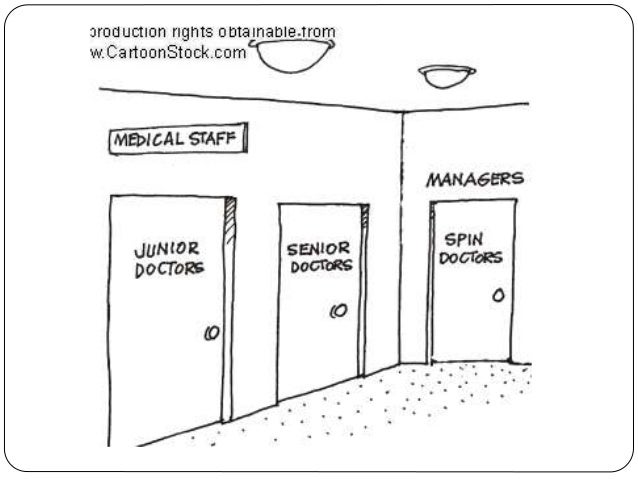
Spin doctors and the ‘Ministry of Truth’ go back a long way

There’s a new way to do spin, and it comes packaged from the Ministry of Truth. (Poor Edward Bernays. The so-called father of spin, must be doing somersaults in his grave.) Modern day spin is much more insidious that doublespeak, or ‘Newspeak.’

We the hoipolloi have a ‘scientific’ way to deal with spin. It involves making air-quotes whenever we use a word or a term generated by the Ministry.

I take on this delicious topic in my May column in LMD Magazine, titled, Alternative facts from the Ministry of Truth

Read it here.

Writers wanted. Start Here!

Is writing a dying skill? It appears to me that good writers are in short supply – analytical writers, storytellers, creative writers.

I am talking up writing and publishing in my school because I see the huge gap between what people read, and what (or how) they write. Young people read Dr. Seuss, but hardly take a stab at poetry. They may binge watch on Netflix, but never consider a screen play, or even coming up with a skit. They consume the news, but seldom look at the nuts and bolts of news writing, features, or Op-Eds.

You want to write? Here are a few places to start.

  • WriteTheWorld, an organization I have been talking to, has a very interesting Poetry and Spoken Word Competition. It’s open to students between the ages of 13 and 18. And there are prizes. $100 for the first prize! More details here.

Which is worse? Conspiracy Theories or Fake News?

It’s impossible to miss the conspiracy theories swirling around us whether it’s politics, technology or pop culture. You may have heard of Google News, delivering fake news snippets via a Google Home speaker.

Perfectly timed, because this month my LMD column you’ll find my wacky take on conspiracy theories, including the many tall tales concerning the Illuminati.

Titled:“Stop spreading fake news. Worry about Beyonce instead!”

(I discussed the topic here on this blog in January, while working on the article stating that news fakery is nothing new and dates back to the civil war.)


Digital storytelling on Digital Learning Day

Today, being Digital Learning Day, I plan to get students to rethink cameras. How could camera create digital ‘stories’?

  • How would a background give your subject context and proportion?
  • What could you filter or manipulate a picture before you take the shot?
  • How could you change the ISO settings to get a different result with the same subject?

Who knows? Some of my students may turn out to be journalists, or take to photography in some shape or form. Despite the fact that most pictures today are taken on phones, understanding lighting and perspective will always be an asset. My 5th grade class was divided into three groups. One with a Digital SLR, and two with regular digital cameras and two tripods if needed.

Here is how one group shot a Lego device. Interesting how one chose the robotics table, and another chose the Moon landing poster as a backdrop.

lego_2

lego_1


Or take how they approached this subject. Long shot with an outdoor context vs a close-up shot, adding the human element.

rose_1     rose_2


Long before fake news, we had half-truths

You’ve heard the adage, “a lie can travel halfway around the world before the truth can get its boots on.” 

In the absence of fact-checking, we cultivated scepticism. It’s easy to blame our epidemic of fake news on the Russian trolls, and geo-politics. But truth is, half-truths and conspiracy theories circulated before social media arrived on the scene. Some even embedded themselves into the pages of history. Here are two:

Have you heard the one about Black Confederates? It’s a ‘story’ of how 80,000 black soldiers supposedly fought for the Confederacy. This is, as the Civil War website calls it, shoddy facts that’s were “repeated, amplified, and twisted” to become credible to some, just because the story fit their agenda.

Or the story of American planes dropping napalm in South Vietnam? It surrounds the Pulitzer prize-winning photograph, taken by Associated Press photographer, Nick Ut on June 8, 1972. That too, we are informed by Joseph Campbell, was a myth. The photo was accurate. The story was not.

Which brings me to how do we teach fact checking to young people ?

Until a few years ago some made Wikipedia the culprit. But even before that there were stories circulated via email, that travelled through an unverified friend-of-a-friendsnetwork. They contained dubious facts no one bothered to fact check. Fast forward to now, and we like to blame the trolls.

How easy it is to blame someone else when the onus ought to be on us.

All the *fake* news that fit to share

At least ‘The Onion’ doesn’t pretend to be real news. Just well-written ‘stories’ that parody news. But it gets harder to spot the truly fake from the plausible, somewhat fake. For instance could you spot which one of these is an Onion story, and which is made up?

  • The Secretary Of Treasury Announces Plan To Remove Gross Penny From Circulation.
  • An Ipsos Public Affairs study (for Buzzfeed) showed that fake headlines fool American adults 75% of the time.
  • Pope Francis asked Catholics to not vote for Clinton.

OK, so the story about the penny was a classic Onion piece. The Ipsos Study was real. The Pew study was just made up for your entertainment, though the story about the Pope did get circulated on social media, thought it had been debunked.

If you like to test how news savvy you are (or not) take this sample of  questions, by Marketwatch. 

Is surge of Signal, triggered by paranoia or cynicism?

Chat apps with encryption sound like an idea whose time has come. Or rather, an idea whose time came, did a quiet exit, and after some tangle with Twitter, did an U-turn and returned as ‘Signal’.

signalSignal has powerful encryption, and has supposedly grown by 400 percent since the US election. Indeed, most people are passionate about keeping their communication away from prying eyes of governments. Or is this paranoia, knowing what we know about email being easily hacked or compromised? Even Signal has been subpoenaed by the govt! No coincidence that journalists now use encrypted chat apps more than ever.

Which explains why Chat apps like WhatsApp, Line, SnapChat and FB Messenger have quietly changed how we communicate. Hike, the SnapChat clone in India lets users chat in eight languages!

To be sure, as I said (in the last chapter of my book, Chat Republic) ordinary citizens, not just journalists, who become wary of the status quo, would refine these modes of chat in ways that we never imagined. That was in 2013.

And we the ____________ people (insertcynical,’ ‘paranoid,’ etc) are probably taking that path too.