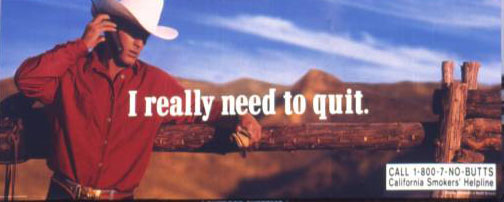
Facebook, just like nicotine, has no good patch

About eight years ago, I would begin a workshop with an opening line that went something like this: Facebook is the greatest, most irresistible social network ever designed.by the CIA. Not factual, or course, but it got attendees to ponder how surveillance had become so easy, with no need for wiretaps, or laws such as FISA or ECPA.

Well, it’s now normal for journalists to talk of Facebook as being the great harvesting ground of big data organizations that use it to surveil and/or target users. That includes our friends and family in our networks. Social media addiction feeds the algorithm. Here’s what Mashable’s Damon Beres just wrote that it’s time to protect yourself -and your friends –from Facebook:

“The photos you post are interpreted by Facebook’s programs to automatically recognize your face; the interests you communicate via text are collated and cross-examined by algorithms to serve you advertising. Our virtual social connections enrich this marketing web and make advertisers more powerful. And many of us open the app to scroll without really knowing why. Facebook literally presents us with a “feed.” We are users the way drug addicts are users, and we’re used like a focus group is used to vet shades of red in a new can of Coca-Cola.”

He uses the analogy of the Marlboro Man, and the rugged cowboy appeal that continued to lure ‘users’ into a deadly nicotine habit, despite the truth which tobacco companies hid, and were reluctantly forced to admit.

So what to do? Some of my friends have quit Facebook. I haven’t yet. But I do recommend limiting data that algorithms could vacuum up: birthdays, business information, opinions related to our social causes, political rants and things we purchase online. No public displays of affection for family birthdays, anniversaries and such. (Birthday cards and letters were invented for this; despite claims to the contrary they haven’t gone out of style.) And Selfies! –unless you don’t mind feeding facial recognition algorithms now being used in many, many locations.

Deleting some of this now is a bit too late, but like the nicotine patch, it’s better than the alternatives. Unless your family and friends don’t mind the creepy second-hand smoke…


Still publishing Newsletters? We do!

I’ve often said I still read newsletters. From the quirky Trader Joes’ black-and-white ‘Fearless Flyer,‘ to those that come in the mail, often unsolicited. A good friend, a realtor, publishes and mails us an information-filled newsletter that is a delight to read each month. And there are many more – we just don’t give them enough credit in an everything’s-on-Facebook kind of era.

What’s your favorite newsletter? Does it still get printed or has it turned digital? I’m curious.

The case for newsletters has been debated ad nauseam. Most tend to get into the print vs email debate. But I don’t think it’s an either/or. It could be both. Sure, the reading habit is on life-support in some places. But we’re not going to pull the plug.

And so in school, some of us continue this tradition as a way to communicate with parents and the community as to what goes on in our classes in Music, Art, Library and Media Center, PE, and Computers & Tech. Here’s our latest Specials Newsletter – the March 2018 issue.

Speech infected by low-hanging fruit? Run it up the flagpole!

This is something my students in Communications will find relevant.

It’s a hilarious case of what happens when you get infected by buzzwords and cliches. Gerard Braud, a well-known media trainer and business communications speaker I follow, gives us his take on how not to discombobulate your mesage when giving a speech.

(Public Service Announcement from the Center for buzzword disease control: Never use words such as ‘discombobulate!)

Social media self-immolation: Adults feed the beast

You know things aren’t going well in government when the folks who pass laws are caught doing things we want our children to stay away from.

  • A Texas congressman was the latest to prove that he cannot use a moble device responsibly. The details are too lewd to recount, or link to, here.
  • Then there was was the member of the House of Representative representing New York City, who resigned over a similar sexting incident involving photos on Twitter – in 2011. (There’s an entire Wikipedia entry on this.)

The list is unfortunately long and disgusting. When grown-ups taking to social media are so easily detached from their moorings, it’s no wonder young teenagers (and pre-teens!) misunderstand the fine line between private- and public-facing ‘media.’

Every time I hear a parent complain of a child who spends too much time on the phone, my response is, “So why do you continue to pay for the connection?” It’s easy to push the blame onto social media, when it’s the adult behavior that’s feeding the beast.

Cliches don’t work after this school shooting. Students will put spin doctors out of business!

I came across an observation made by Michael Shammas, who asked us to consider what we would say if Kim Jong-un disputed international arms control treaties by adapting the cliché, “Nukes don’t kill people; people kill people!”

We would dismiss it as deranged thinking, wouldn’t we?

The events following the massacre at Marjory Stoneman Douglas High School in Parkland, Florida have created a different kind of tipping point. One that shows students’ capacity to hold up these tired clichés and talking points for scrutiny. Such as these lines spoken by a senior at that school:

“They say a good guy with a gun stops a bad guy with a gun: We call BS!”

“They say guns are just tools like knives and are as dangerous as cars: We call BS!”

These students are thoughtful, logical, vocal –the kind of non-polarized citizens a country needs. Imagine what they could accomplish when they get to voting age!

Facebook fills George Orwell’s plot line

When you hold up terms such as ‘fake news‘ and ‘alternative facts‘ to the Orwellian mirror, things become a lot more clear.

In George Orwell’s Nineteen Eighty-four the government’s Ministry of Truth, or ‘Minitrue,’ produces distorted information through an assembly line of sorts. Importantly, though it’s managed by humans, not machines. Today we call these folks trolls, and the assembly line is the Internet.

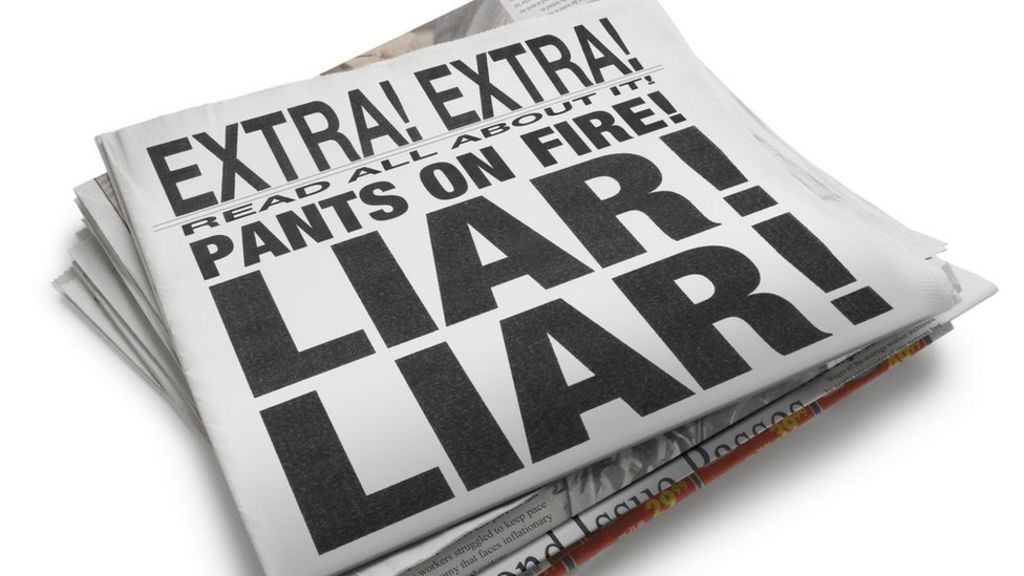
In that fictitious dystopia, truth gets thrown down a memory hole. And citizens like Winston Smith who work for Minitrue, are tasked with creating alternative versions of history for ‘tele-screens’ and other media. Sounds familiar, doesn’t it?

There’s a telling piece in Fortune  and Chicago Tribune, journalists appear to have interviewed a Russian troll. In fact he worked with other trolls in a ‘Facebook Department.’

Did the social network know about this? In 2016 Facebook was reportedly working on a global ‘counter speech’ effort. It’s a big deal to them, even in Europe. Social networks must surely be bracing themselves for the legal consequences of sleeping at the wheel, while being compromised.

Radio days! Podcasts back with a vengeance!

In case you’ve not noticed the podcast landscape had changed. I’m so glad this genre – audio story-telling –has survived in a digital age that at one time seemed to gravitate toward video, slapstick entertainment, and uninformed opinions.

These are highly-researched, well-produced shows – not just opinionated rants. 

Here are a few:

Code Switch – Fascinating takes on race and identity

Rough Translation – A great way to escape the echo-chamber!

The Hidden Brain – Shankar Vedantam’s insight into human behavior

The Tip-Off – Peeling back investigative journalism, by Maeve McClenaghan of London’s Bureau of Investigative Journalism


Some older podcasts still give the newbies a run for their money. Those such as:

  • This American Life – Ira Glass’ extremely topical take on all things social, political, personal
  • Invisiblia – Gripping tales and insights about the forces that shape us.


“Negotiating with Jell-O” and other zingers

Sometimes a zinger in a speech captures the essence of all the other verbiage put together.

Consider these:

“I get it, I get it. We’ve got to address the elephant that’s not in the room.”

(Hasan Minhaj, host of the White House Correspondent’s dinner this year.

It got better, especially with the rest of the thought aimed at president Trump who did not attend:

“The leader of our country is not here. And that’s because he lives in Moscow. It is a very long flight.  


“I served with Jack Kennedy. I knew Jack Kennedy. Jack Kennedy was a friend of mine. Senator, you’re no Jack Kennedy.”                  

                                                                                                             Lloyd Bentsen

The context was the VP debates; Dan Qayle had  likened himself to JFK and was treated to a delicious zinger by  Bensten.

Negotiating with Trump ‘like negotiating with Jell-O’

Senate Democratic Leader Charles Schumer


Fake news – Old model recycled for digital age

Before we called it Fake News, it was called propaganda. Or just plain dirt.

The New York Times has a great story on the roots of Fake News. (I’ve always disliked the term; it suggests there is such a thing as ‘authentic news.’) When information is manipulated, and planted, and spread, it is not just fake but spurious. The Rand Corporation calls this the ‘Firehose of Falsehood‘ propaganda model.

It’s features are:

  • High-volume and multichannel
  • Rapid, continuous, and repetitive
  • Lacks commitment to objective reality
  • Lacks commitment to consistency.

The firehose brings in information from so many sources that it tends to consume and compromise the bandwidth of attention we have to process the information.

But while we pay attention to malicious actors who spread falsehoods, let’s not be blinded to other ways fake news, falsehoods and propaganda spread. In a much older analysis of news and propaganda (Manufacturing of Consent, 1998) Noam Chomsky revealed how systemic propaganda is part of the business model of newsmaking. He identified ‘filters’ in the media embed propaganda and bias.

Fake news is just a new digital iteration of what we’ve had, and blissfully ignored before. Everything old is new again!


Nalaka’s take on responding to ‘fake news’

At a forum on Media and Development in Berlin yesterday, my friend Nalaka Gunewardena (who moderated a discussion) brought on a fresh perspective to the problem. It’s not about the tools per se that we could use to fight Fake News. It’s also about education, alliances and policy reform, .

We must also look for the symptoms in the loss of trust in journalism, he said. The need is to build structures that enhance and nurture quality journalism. In other words, create trustworthy messengers before trying to fix (or block) the pipes through which the messages flow. Plus the need to influence policy and literacy.

This is a lot more nuanced than just clamping down on media platforms or discrediting the sources – reactive steps.

So let’s get pro-active about a problem that didn’t arrive yesterday, and won’t go away soon.

I encourage you to read Nalaka’s post about this.