Google’s drag-and-drop ‘Scratch’ doodle

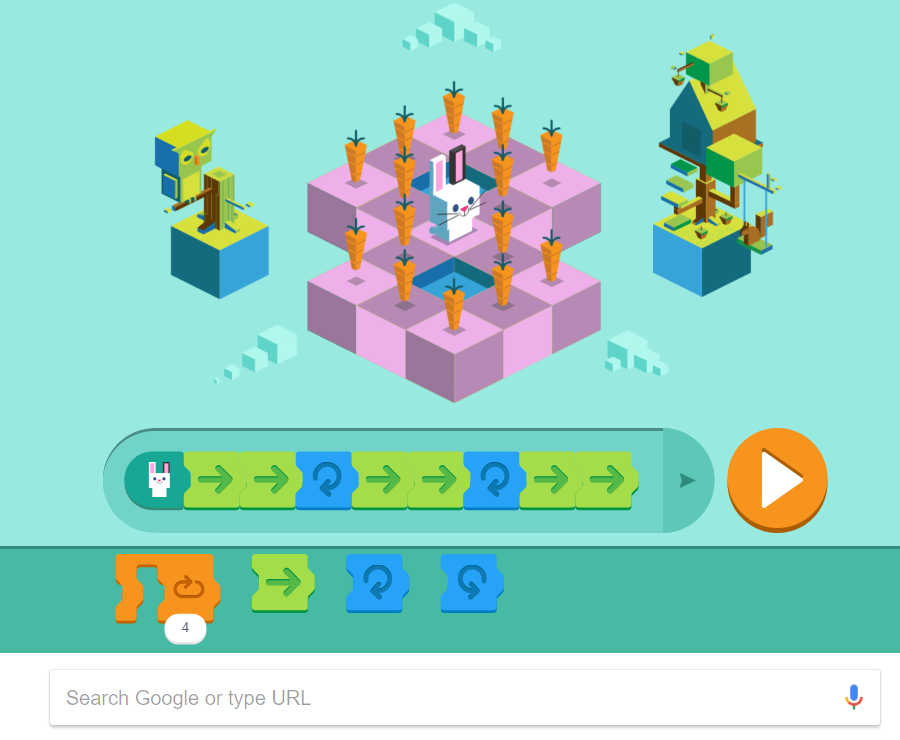
As Google doodles become more interactive it’s fitting to see it launch Hour of Code with a drag-and-drop doodle. It’s their first Coding-based doodle. Have you tried it? It’s on today’s Google landing page.

Worth reading: A description by MIT’s Champika Fernando, who was on one of the 3 teams that built this doodle.

Hour of Code runs through this week, which is also Computer Science Education week, and the anniversary of 50 years of programming languages. Scratch was developed at MIT.

Using robots to teach PowerPoint animation

Around this time of year when I introduce animation in PowerPoint, I try to find something topical to animate.

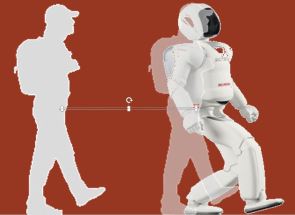
So I’ve got my 4th graders to think about ‘Man and Machine‘ -specifically how a human could evolve into a humanoid. We use the custom animation tool to draw a path to make the human glide across the screen to turn into a robot.

To preface it, I showed them a clip of Asimo, the Honda humanoid project. Asimo is the acronym for Advanced Step in Innovative Mobility. It is a 4-foot 3-inch character that can run, climb steps, and play a bit of football (soccer). Even those who aren’t into robotics get instantly engaged.

I asked the class what they thought of man and machine after watching this; some thought it was a bit weird and creepy, but pretty cool.

Once the unit is completed, I figure this will be a good way to re-introduce Coding for the Hour of Code project. How do they build a set of instructions to make an inanimate object move? Coding and animation have a lot in common!

Your input matters as robots with facial expressions and emotional intelligence emerge

What might you get if you affix an android head onto a metal and plastic life-size body? More than a bobble-head, for sure. especially if there’s a whole bunch of robotics, plus artificial intelligence under the hood.

The android known as Sophia debuted at the Future Investment Initiative, an event with speakers as varied as Richard Branson, to Nicolas Sarkozy, to Maria Bartiromo. Indeed Sophia made recent headlines because Saudi Arabia granted it ‘citizenship’ – whatever that means. Let that sink in for a moment – giving civic status to a machine.

Hansen Robotics, the workshop where Sophia was built has several models. A bald-headed Han, a 17 inch tall boy robot called Zeno, and a full-sized animatronic, Albert Einstein. These bots use facial tracking, natural language processing, and their creators plan on developing Emotional Intelligence for Einstein.

Robotics is a double-edged sword. I cover robotics, help train students, and often talk of being alert to where all this could be headed. Governments, labs, schools, policy-makers and ethicists should be joining the debate. (Recall Elon Musk and others sounded a warning that AI could threaten human civilization.) It shouldn’t be a conversation dominated by those in technology alone.

Space Day at Salt River Elementary

So today is Space Day! Our 6th year, Space Day is turning out to be quite an event!

This year we have two keynote addresses from NASA scientists:

Dr. Jim Rice,  Co-Investigator on the Mars Exploration Rover Project. His work has involved mission experience working on the Mars Odyssey Orbiter and Lunar Reconnaissance Orbiter Projects, the Mars landing site selection for every NASA Mars Mission since Mars Pathfinder in 1995. he is currently involved in manned missions back to the Moon and Mars.

Dr. Ashwin Vasavada, is the Deputy Project Scientist working on the mission of the Mars Curiosity rover. He helps lead an international team of over 400 scientists. His work has involved geologic studies of Mars with regard to surface properties, volatility, and climate history.

Other sessions will be specific to grade levels:

  • Robots in space
  • Planets & Liquid Nitrogen
  • Food in Space
  • Moon rocks
  • Rockets and launches
  • Satellites Communication in Space
  • Small-scale satellites

We could not have done this without the support of:

  • Challenger Space Center
  • NASA
  • Orbital ATK
  • ASU – School of Earth and Space exploration
  • ASU – Collective Systems Laboratory
  • SpaceTrex


An NASA observatory, a Nobel Prize, and an asteroid named after him. Quite a guy!

Looking into Google’s celebration of the birthday of astrophysicist Subrahmanyan Chandrasekhar, I was fascinated by the man’s career that spanned from home schooling in Madras, to Cambridge, to Chicago.

Carl Sagan was his student! His uncle also had won a Nobel!

Chandrasekhar’s propensity for research was unstoppable – he apparently investigated a fresh field of study each decade!  His Nobel Prize for Physics came in 1983.

As for the observatory, the Chandra X-Ray Observatory is the third of NASA’s ‘great observatories’ –after Hubble and the Compton Gamma Ray Observatory.


Plans afoot for Space Day 2017

Just announced plans for Space Day at Salt River Elementary – our 6th year!

  • This year’s focus is on the Moon, rockery and spacesuits.
  • The student competition is to design a future spacesuit 
  • Each class in every grade level will experience one facet of space science
  • When: Oct. 26th, 2017    Time: 8:30 am – 3:00 pm

As the event grows bigger each year, my thanks to those who will be supporting it:

  • Orbital ATK, Arizona
  • Jet Propulsion Lab, California
  • Autonomous Collective Systems Lab, at ASU
  • SpaceTRex, University of Arizona
  • Challenger Space Center, Arizona


Space science is a fascinating field, and gives us who focus on STEM an ability to widen the lens. Consider some of the recent developments


Thanks, Cassini for all your work. And catching our ‘wave’

Cassini, the robotic spacecraft that traveled for nineteen years (and some 948,149,234 miles), came to a sad end today, as it flew into Saturn. It’s demise was planned, however for good reasons.

It was one ambitious mission in 1997. A knowledge excursion to parts of our solar system that were previously beyond our reach. Through Cassini, we learned about and discovered more of Saturn’s moons, we got to see the make up of its spectacular rings, and learned that the gas planet does have its own hurricanes. It carried a probe, which it landed on one of Saturns’ moons using a parachute. It beamed back data through NASA’s Deep Space Network, and as you’d expect from any celebrity now, Cassini had its own Twitter handle, @CassiniSaturn.

Cassini’s full name is Cassini–Huygens, being born of a project collaboration between three space agencies from the US, Italy, and Europe.

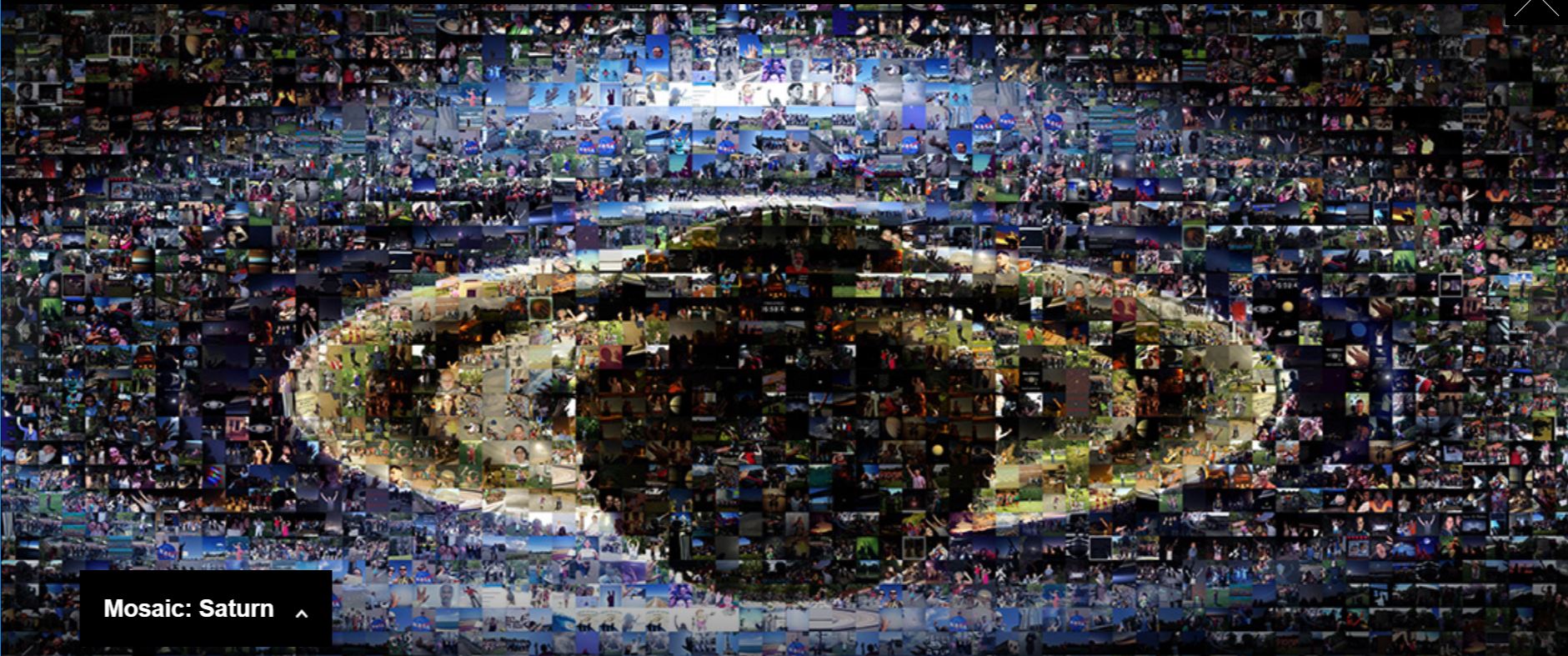
Cassini was used for interesting aerial photo-op. It took place on July 19, 2013. The folks who programmed Cassini turned the spacecraft back toward Earth to take a picture of earthlings waving at it. The images were then beamed back and stitched together in a huge mosaic of the Saturn system, itself! More about that event, here.


Future Inventors – My LMD article on Team Sri lanka

SRI LANKA AT THE ROBOTICS OLYMPICS

BY Angelo Fernando


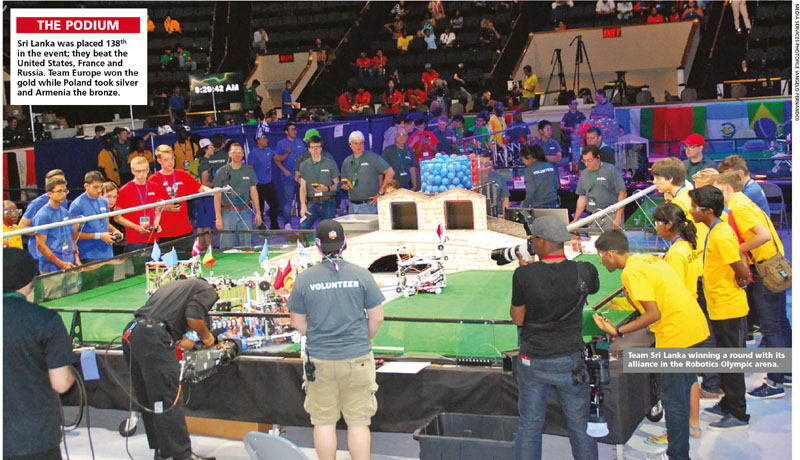
A short walk from the White House, the steps leading up to a neoclassical building where Robin Williams once performed spill over with teenagers in bright yellow and blue T-shirts. Using screwdrivers and wire, they are feverishly fixing their robots. It’s only 15 minutes before Round 1 of the two-day competition held in July – a global event drawing 163 teams from 157 countries.

The humidity in Washington D.C. hovers around 90 percent and Team Sri Lanka’s four students are sweating bullets. Huddled in a basement, and parked between Senegal and Sudan, their 20-wheel steel robot needs some repair work.

Why? The bot they had built in a classroom (so secretive was the project, they called the room ‘Area 52’) arrived with a warped axle and damaged omni wheels. The motor failed too, which is not an uncommon problem among teams here. In a few minutes, they must have their 23-kilogramme robot working. It is the ‘Olympics,’ after all…

Link to full article here.

Published in the Sept issue of LMD Magazine.