Digital Learning Gets To Schools, One Principal at a Time

I watched a recording of a Webinar by Eric Sheninger, a principal of a New Jersey school, who happens to be a big advocate of digital technologies in education. Been following his blog for about a year now.

His big point on Digital Leadership (speaking for, and to school administrators) was that schools should mirror or parallel the real world.  In other words, few are actually doing that. (A point backed by Univ. of Texas professor Steve Minz, who says there has been much ‘floundering and flailing’  after they emerge from college.)

I’m very cognizant of this kind of thinking, because we in elementary schools feed that college pipeline.  I start my year by informing  my students that the ‘computers’ they will use in less than a decade, won’t even look like the ugly black boxes they see in my computer and tech lab. (Not to mention the posibility that they would not simply shrink, but become invisible, yet ubiquitous.)

Sheninger has a list of seven pillars in this new model of digital leadership he offers:

1. Communications
2. Public Relations
3. Branding
4. Professional Growth
5. Student Engagement and Learning
6. Learning Environments and Spaces
7. Opportunity

Imgine that: principals and administrators having to deal with branding, in addition to student engagement. He makes some fascinating observations about our fear of technology. Interestingly, although he is a prolific blogger, he was at one time skeptical about social media!

My kinda guy!

Drone, Baby Drone and other Creative Apps at ISTE 2014

“Creative teachers,” said one presenter –whose name I couldn’t jot down because I didn’t have the appropriate app ready to scan his QR code at a 30-foot distance–“know how to sneak the really good stuff into their classroom.”

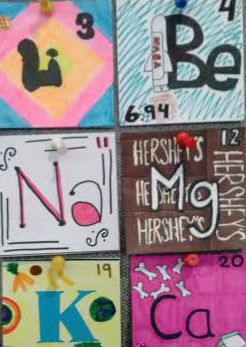
elementsAs this marathon ISTE conference draws to a close, there were so many sidebars, and concurrent darn-I gotta-skip events, it’s hard to pin-point one big thing. I ran into more creatives (the tablet-wielding types) per square foot than at any event I’ve attended. Students, too. More about that in a moment. And I don’t mean creative types in terms of the iPad-toting app-happy folk. There are teachers who have spent insane number of hours disrupting their lesson plans with science-ish, media-ish, technology-ish, math-ish hands-on work that you’d think they were running non-profit enterprises. (sidenote: I just recalled the afore-mentioned speaker – author of the children’s book, “ish” – Peter Reynolds.) Getting students to produce hand-drawn periodic tables because they work better with Augmented Reality. You get the idea.

This enormous body of work ought to be documented (Ok, Evernoted, Dropboxed, Google docked or Wikiid) for the 18,000 weary souls who will drag themselves to the train station and airport today. So that when we return to our students in August, we could pull up some of these big ideas to implement.

Consider some of the discussions and hands-on sessions. Most people outside of education (that’s where I came from) only hear of Arduino, Aurasma, SkitchReflector, and Qrafter at social media shin digs. Drone Baby droneThe rush (crush) to scan QR codes was so great at one point this morning there were lines of people –smart-phones poised– that rivaled Starbucks. I must’ve been the only tech blogger with an analog device –my notebook.

Most people think Maker Spaces are where wanna-be engineers mess around. One teacher at a small booth tucked away in a corner had practically designed a pinball machine kit for students to experiment with simple machines. No fancy app here, but ‘moving parts’ foraged from Home Depot and her garage: door knobs, furniture screws, bolts, rubber bands and ‘springs’ from spines of spiral-bound notebooks. Creative teachers really know how to sneak in the good stuff, on a budget.

In case you read my post yesterday, yes, this kind of creative pedagogical streak is very different from the cameras, cloud-based tools and Google-glas-ish shiny objects I ran into before.

THEN THERE WERE STUDENTS teaching the grown-ups. Lots of them. One group from Mexico brought a mine-rescue bot controlled by Bluetooth, a piezo-electric floor, a cardboard-model levitation train, and a swimming robot embedded in a large plastic bottle that can take water-samples of a polluted lake. Students! Others were showing off how to turn 2D images into 3D movies –ideal for digital time capsules. That palm-sized quadro-copter (above) is not however a student project, but a company who has STEM-ready drones that I just might use, soon.

One more day to go. I plan to skip the last keynote and go talk to more smart people…

And apps to download before I sleep. And apps to download before I sleep.

An “Eat More Kale” problem all over again!

Corporate entities trying to silence the voice of their users is a story you’ve heard again and again.

I featured the “Eat More Kale” story, the story about Bo Mueller-Moore in Chat Republic. So this story of two students being told by their college, Yale, that they had no right to come up with a better website for their school, rang a bell. Mueller-Moore was considered a trespasser; a pest. Harry Yu and Peter Xu (who designed what amounts to a replacement of Yale’s course selection website) were just end-users.

These are the kinds of people who end up receiving “cease-and-desist” letters. Just Google the phrase and you’ll see.

It took an online following and petitions to get the college dean to respond to the incident. But if you read her explanation, it is hardly apologetic. This triggered an online petition, which called it a “non-apology.” It explained:

We must let the Yale administration know that these tactics are not okay. The university has broken students’ trust by acting in a hostile way towards students who were providing a beneficial service to fellow students free of charge.

Three days later, Mary Miller, the dean, responded once more. This time with a bit more humanity. She (somewhat grudgingly) granted that “In the end, students can and will decide for themselves how much effort to invest in selecting their courses.”

An interesting modern fable that keeps being updated all the time.

If only the Yale folk had read up the Eat More Kale story!

Chat Apps could ignite true engagement

We know that Chat Apps are driving a lot of mobile service providers to rethink their once-lucrative profit center. But these apps are also disrupting traditional social networks, because providers know how important it is to keep the user engaged within the channel.

Consider our fragmented mobile experience. We toggle between Email, Facebook, Twitter (or Hootsuite), and SMS. They each have their distinctive experience. Status updates and informative mails are not the same thing; content sharing on a social network, with the ability to garner a small ‘mob’ around a cause or a pet peeve is not the same as firing off a text message to 20 people. International texts are expensive so we may tweet a message instead…

I’ve been intrigued by these so-called ‘conversations’ online, especially since many of them are not always in real-time. They are really partial dialogues, with one word (or one button) responses that are a proxy for people joining in.

That why we need to keep an eye on where Chat Apps are headed. They are simple –as in distraction free– formats that could garner true engagement.

At a recent event, I was asked where I though our social media lifestyles would be headed. My pat answer was that we might see a lot of social media fatigue. The media overload we are all facing might mean vast numbers of us will be quitting those social media channels that just don’t fit our personality. But that’s not to say that we will retreat to our caves, and get back to notebooks and pencils, or phone calls. We will seek out those experiences that help us stay connected. And that’s where I see Chat Apps gaining ground.

THE NEXT WhatsApp or Viber (the free phone app combines the chat feature– free even with people in other countries) could threaten Facebook and Twitter. It could combine elements of email and micro-blogging, so that we may never need to go to the other platforms to see what our friends are saying, and to chime in.

Multiple language chats. I fielded this question to a panel of international students at Scottsdale Community College last week:

  • How many of them spoke more than one language. All hands were up
  • How many spoke three languages. Eighty percent of the hands remained up
  • More than three? About fifty percent

What would happen if we could chat with people in different countries, in different languages, using the same app? Already WeChat, which is apparently a lot like Line, an app not known to many in the West, lets one do this.

Maybe ChatApps are where we may find the genie of true engagement. I admit I may be somewhat biased, because of the title of my recent book.

What do you think? Does social media fatigue drive you to give up on certain channels?

Media Literacy, Sorely Needed (Don’t blame the Digital Natives!)

Is Tool Literacy overshadowing the need for Media literacy?

I’ve registered for one of those so-called MOOCs, and the topic of Media Literacy* is the subtext of a lot that is being discussed when it comes to technology in education.

In one of the forums, the question on ‘digital natives’ (a.k.a. students) comes up, and many educators are wondering how to best engage these tool-literate natives.

Because I teach a computer and technology class I see a large cross-section of tool literacy alongside media illiteracy. This is in no way meant to blame the digital natives as much as put the ball back into the court of educators. There are no Media classes in a typical elementary school because we always thought that Media was something people opted in to learn later.

Today the very concept of what Media constitutes has been muddied. We create lower-case ‘media’ (content) that happens to hitch a ride on upper-case Media (channels), but this gets complicated when we begin to also own some of these media channels.

No wonder the kids are confused.

Educators, too. When did someone update teachers with the new ‘rules’ of creation, curation, fair use etc? This cannot be done in a one-off professional Development seminar, but has to be something done on an ongoing basis.

If our students have mixed (or rigid, or even outdated) ideas of what they could do online, if our students think that all the information in an article on The Economist could be gleaned by a 140-character summary…we have ourselves to blame.

Before we address technology in Education, we need to take a deep breath, back up, and address media literacy. (Like we have time for all this – considering our super-busy lives that involve non-stop status updates.)

* The ‘Massive Open Online Course’ for Educators is held by the Friday Institute for Educational Innovation at NC State University’s College of Education in collaboration with Project 24 –the Alliance for Excellent Education.

“Malala Day” by UN ups the ante for education access

Today has been declared “Malala Day” as the UNICEF celebrates the birthday of the 16-year old who took a bullet for education.

The message: “Every child needs to know more than to read, write and count, but to learn to be a global citizen.”

Note how she stresses that she is not against anyone, but that she is for something.

Powerful event video here:

http://webtv.un.org

“Sending a message,” in a post-Bansky era

In my book, Chat Republic,  I feature a few examples of how ‘street talk’ has been effective, even sans the Internet.

“Banksymus Maximus”

This old, classic tactic from guerilla artist Bansky could take us into a whole new discussion of how to create buzz, often without words.

Here’s the set-up: In 2005, Bansky managed to place a fake “rock painting” in the British Museum. As you could see, it shows a caveman as a different kind of hunter and gatherer. The rock was stuck onto a wall in a ‘Roman Britain’ section.

Just plain ‘art-jacking’ or is Bansky an ingenious, much-ignored communicator? In a world empowering us to ‘speak out of turn’ do tactics like this feel relevant? Or are they too edgy for you?

Before you come to a conclusion, take a look at the modern version of this phenomenon, known as Culture Jacking.

I would love to hear your comments.

Citizens’ voices matter

A few years ago I conducted a series of webinar-style workshops for the U.S. State Department, for content creators, educators, marketers and those in traditional and new media. The workshops were called  “Passport to Digital Citizenship.”

I was convinced that citizen’s voices would be valuable, and –despite technological barriers and people who would try to keep them quiet– they could be heard.

So today, as my book is about to launch, I am thrilled to see this report by CNN on the importance of citizen-driven media.

Journalism has been forever changed — I’d argue for the better — thanks to the fact that people can interact with media organizations and share their opinions, personal stories, and photos and videos of news as it happens. This year’s nominated iReports are prime examples of how participatory storytelling can positively affect the way we cover and understand the news. 

(“36 stories that prove citizen journalism matters.” By Katie Hawkins-Gaar, CNN | Wed April 3, 2013 )

When we talk of  ‘participatory journalism’ we mean that ‘CitJos’ work alongside traditional media. They are not here as a replacement model, but to complement the changing media industry. Of the 100,000 citizen stories submitted to CNNiReport.com in 2012, they used 10,789 –having vetted them first.

I just interviewed the creator of a leading citizen journalist outfit in South Asia, and he stressed the importance of community guidelines, and careful design.

Citizen journalism, and the power of citizen voices is a big section in my book, Chat Republic.

Social Media and innovation surge in Sri Lanka

(This post is being updated)

Today in Colombo the tech and business community attended Social Media Day, a Mashable-coordinated event, worldwide in which 511 cities participated

Two days ago, they held another parallel event known as Refresh Colombo.

One of the organizers noted that the hash-tag #SMDayCMB, which had begun trending regionally (as a ‘tailored trend’) validated the fact that there was a highly engaged community now. Speaking of the community, it’s got the right volatile mix for innovation. One newspaper reported, it was a confluence of “hackers, bloggers, coders, geeks and geek lovers, journalists, techies, entrepreneurs and venture capitalists.” Note: the absence of one group here – politicians. In post-war Sri Lanka, steering clear of politics appears to be a well-honed skill.

One of the highlights was a video-link up with Jehan Ratnatunga in California. Jehan is the person behind the comic YouTube skits. Fittingly (for this social media savvy audience) he explained how he landed a job with YouTube because of his hobby.

Watch this presentation by two of the smartest young entrepreneurs who understand not just technology, but how grass-root change and politics works at a fundamental level.

Watch the whole thing (it’s 25 minutes) because the best discussion is toward the end.

More coverage of event

Wikis to books worth experimenting

I often make the point that we spend too much time clicking on links, rather than spending time on the meaning of what we read.

So I thought of experimenting with PediaPress, a service that lets you convert Wikipedia pages into a book.

The book? On Clark University – for my son’s graduation today.

Knowing fully well that information on the university will change, did not bother me. In fact, that’s precisely why I wanted to do it. After all, Wikipedia content is not exactly writ in stone, could be considered as relevant for a moment in time.

(If you’ve been watching how pages get edited, and the edit wars that ensue over single words or phrases, you’ll know that this ‘moment’ sometimes changes several times an hour as a result of furious edit wars!) I want the book to be a sort of  time capsule that he could one day look back on.

PediaPress is basically offering a print on demand (POD) service, but the beauty of this is how simple they have made the steps. There’s very limited customization (the cover and title, plus a preface), but the layout of pages and sections are very clean.

I would have liked a bit more customization, such as:

  • The ability to move photographs and charts into separate pages
  • Uploading my own photograph for the cover, and a few others for other pages
  • An acknowledgment or title page
  • Adding text to back cover

But as this was an experiment, I was willing to take the risk.

Other risks. For a different project, say trying to compile a short compendium of knowledge on a breaking news event, or a current topic, using Wikipedia as the source of content is more risky. While the Creative Commons license gives anyone permission to use and re-purpose content, one has to me meticulous about accuracy.

I began to wonder of there are other similar services that let you blend knowledge from multiple sources, and let you add chapters to the book. I’ve looked at Blurb, which offers a Blog-to-Book option. Lulu also has a great service. a cookbook/ A book of poetry/ Wikipedia has a rich selection.

Give it a try!