Typos aside, should they ignore his tweets?

Have you wondered if the media is unable or unwilling to ignore Donald Trump’s puerile tweets?

I’m willing to bet that if the major news organizations had stopped covering the ridiculous things he unloads in a Twitter storm, he wouldn’t have got to this point. Of course he’s gaming the system, knowing they are gleefully waiting each morning for a ‘story’ or controversy.

His latest blunder, addressing the wrong Twitter handle of Theresa May is just another one that will be drowned by others in a few weeks.

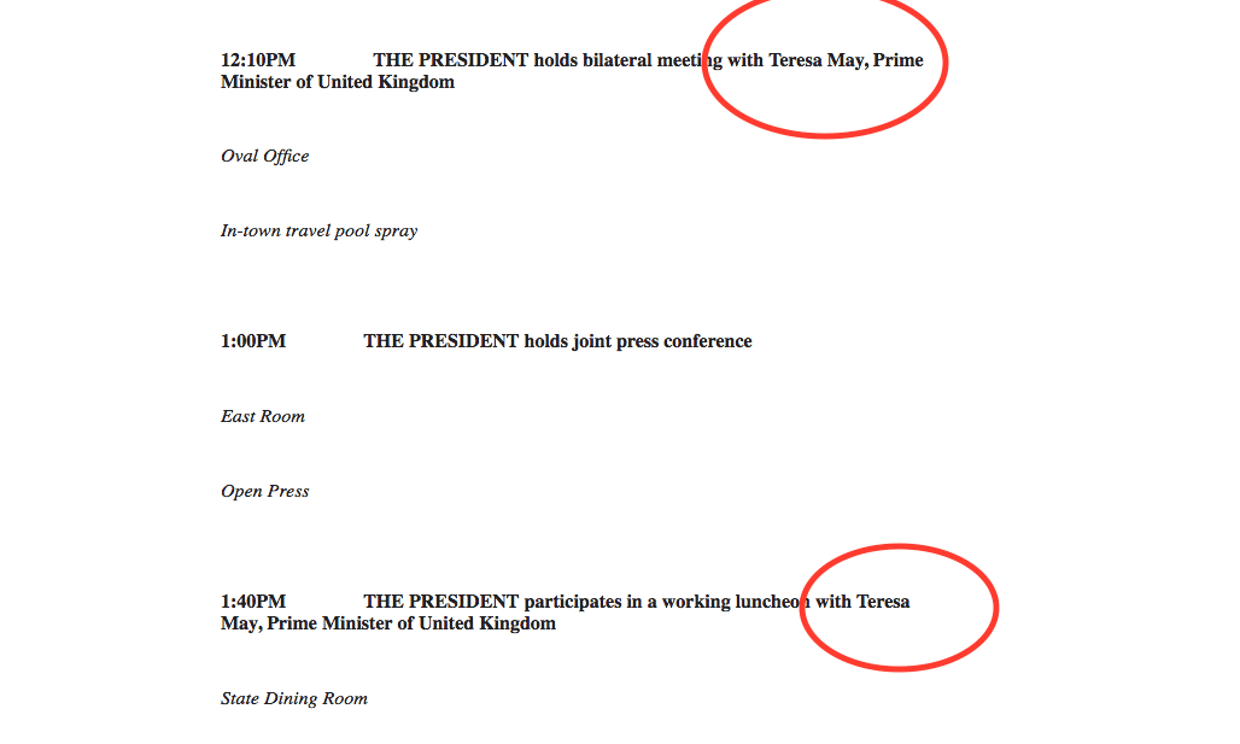
Remember the last time they messed up the British PM’s name? Thought so! In January when she visited the US, the White House misspelled her name as ‘Teresa’ several times – it was spelled without the ‘h’ in the introduction to the daily guidance.
I suppose it’s impossible to not find a story in his tweets, when it causes a diplomatic flare-up. In response to his broadside against her, the right Theresa was blunt in her rebuke. (Jeremy Corbyn, Britain’s Labour leader put it best, when he advised Trump to “hold yourself back” and “restrict yourself to two or three tweets a day”.)

Many years ago, probably before the president stumbled upon micro-blogging, people actually conducted training programs for those in governance and management. It’s too late to send someone back to social media 101 classes. Itchy fingers will continue to produce clumsy tweets  as I have said before.

But perhaps a temporary blackout might help the poor chap. And our republic.

Cut through the spin on Net Neutrality

I don’t blame you if the term ‘Net neutrality‘ make your eyes glaze. However as a battle royale is being waged these weeks, it’s good for us to all get to know the definition of Net neutrality, and what’s at stake.

Before bureaucrats put their spin on it.

Definition – by the ACLU.

Network neutrality means applying well-established “common carrier” rules to the internet in order to preserve its freedom and openness. In other words, the network should discriminating against information by halting, slowing, or otherwise tampering with the transfer of any data

(Older) Definitionby WIRED

Today, privileged companies—including Google, Facebook, and Netflix—already benefit from what are essentially internet fast lanes, and this has been the case for years. Such web giants—and others—now have direct connections to big ISPs like Comcast and Verizon, and they run dedicated computer servers deep inside these ISPs.

FCC Chairman Ajit Pai’s Statement

He proposes a return to a Telco as a Title I information service. One with “light-touch regulation”  The wording of the rest of the document looks specious, since it supports the rolling back of regulation with the talk of jobs, competition and privacy.

Firefox (Mozilla) cuts through the legaleseWorth a Read

Under Pai’s proposal, ISPs would be allowed to block, throttle and prioritize (or deprioritize) internet access for Americans. Companies like Comcast and AT&T could selectively slow down or speed up access to online journalism, blogs, films, apps, and other services. This would undo 2015’s hard-won net neutrality protections that took years of hard work.

Nalaka’s take on responding to ‘fake news’

At a forum on Media and Development in Berlin yesterday, my friend Nalaka Gunewardena (who moderated a discussion) brought on a fresh perspective to the problem. It’s not about the tools per se that we could use to fight Fake News. It’s also about education, alliances and policy reform, .

We must also look for the symptoms in the loss of trust in journalism, he said. The need is to build structures that enhance and nurture quality journalism. In other words, create trustworthy messengers before trying to fix (or block) the pipes through which the messages flow. Plus the need to influence policy and literacy.

This is a lot more nuanced than just clamping down on media platforms or discrediting the sources – reactive steps.

So let’s get pro-active about a problem that didn’t arrive yesterday, and won’t go away soon.

I encourage you to read Nalaka’s post about this.


Airbags on lamp posts – Signs of the times

This sounds so funny I thought it was a parody. But on checking, it appears that authorities in Salzburg, Austria have installed airbags on lamp posts. To prevent people (tourists) from hurting themselves as they walk around staring at their phones.

If ever there was a head-thumping situation to counter head injuries. Worth a read just to come to terms how far phone usage has come.


As trust far as trust in media goes, funny how radio beats the Internet

Interesting how the one place we associate with up-to-the-minute information is the least trusted. While what some would call ‘old school’ media –Radio! –consistently earns people’s trust.

Among several studies looking at media trustworthiness I was fascinated by this European study. (Trust in Media, 2017 by EBU)/ Some highlights:

  • 64% of countries surveyed find radio the most trusted
  • 59% of citizens in the EU trust radio
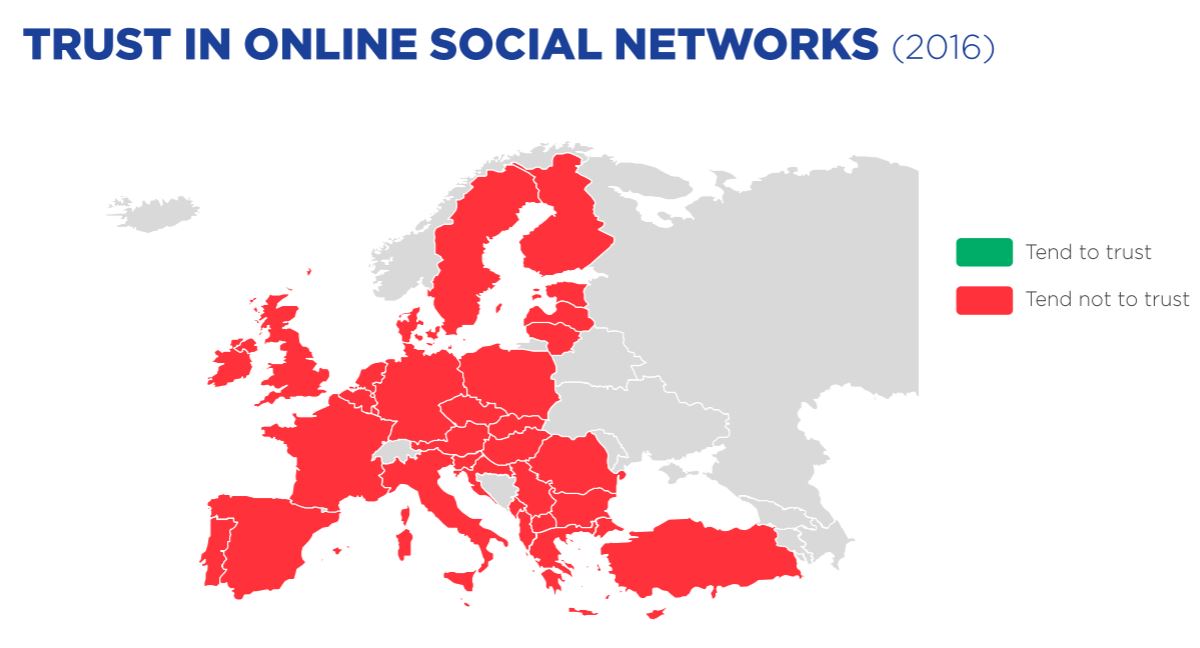
  • Social networks are the least trusted (except in eastern Europe)
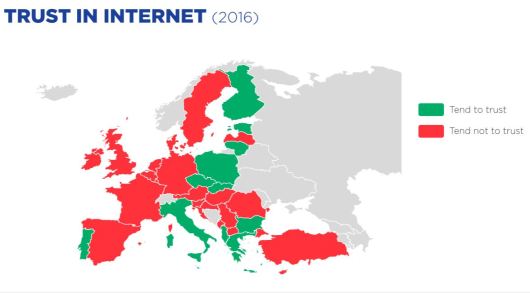
  • In 12 out of 33 countries 64% of citizens mistrust the Internet

Check these snapshots. The Internet is seeing red!


It gets worse on networks we sign up to –if only to connect with those whom we assume are trustworthy.


Which begs the questions.

  • How did we get here?
  • Or better still, why have we – who often comprise the ‘sources’ of news on social networks –misused the resource?

Technoference and Emojipedia – Part of our evolving vocabulary

While you were not paying attention, a new vocab has been tying up its shoes and sprinting through the techno-social-media crowd. (Sorry I just made up that super-hyphenated word.)

Emojipedia does exist. It’s a place where you could find such things as a ‘Man teacher: medium skin tone’. (Several variants, actually, as seen on Facebook, Samsung devices and Google.) If you’re looking for a person shrugging (not sure why, but…) there are 18 variants, and you’ll find some for world events and animals and such.

I could give you some even more obscure words, especially if you want to flummox someone. Try fudgel. It means one is pretending to work though basically fudging. Or ‘Grok.‘ If you haven’t run into this, I guess you don’t quite grok this post.


Itchy fingers, clumsy tweets

Donald Trump’s (ab)use of his Twitter account will one day be looked at by historians in about the same way archeologists scrutinize cave paintings.

Back in April, when I was working on my June column for LMD, I had this sense that Trump’s clumsy (but some would say strategic) tweets would be worth focusing on.  Besides the political and international furor swiring about them, there are lessons in them tweets for anyone using social media.

And that was even before he bestowed upon us covfefe.


Could they be social minus the media? Dire mental health finding

If you have teenagers, you know the dilemma. How do we get them to make connections without a device?

A subset of this includes:

  • How do we keep the phone away from the dinner table?
  • At what time should all devices be off in the home?
  • Is there a good reason to allow my daughter to use Snapchat? Or Instagram?*

As someone who once conducted workshops on how to adopt social media, I feel it is my responsibility to now warn young people about the unintended consequences of trying to be ‘social’ via a screen. We don’t need research to tell us that a generation could be experiencing serious issues very soon if we thrust smart phones into their hands, and hope for the best.

This research just in: Mental health and Instagram. 

Conducted by the Royal Society for Public Health in the UK, it has young people using words like ‘fake,’ ‘intimidating,’ and ‘superficial’ to describe platforms such as Instagram and Snapchat. The report explains how:

  • Young people say that 4 of the 5 social media channels make their feelings of anxiety worse!
  • A phenomenon called ‘Facebook Depression‘ which involves being ‘constantly contactable’ and having unrealistic expectations of reality. I had never heard of such a phenomenon, though suspected this existed.
  • FoMo (Fear of missing out) is also a thing, and is another cause of distress, something adults are just getting to know about.
  • There are indeed opportunities, despite the dire warning this report sends out.

Not many young people realize that Facebook owns Instagram and WhatsApp. 

Why good writing matters. Even in the PowerPoint obsessed business world

The reason we teach writing is to get students to illuminate their ideas. The craft of writing is indeed on the decline, a topic I have dealt with in many posts before.

So I was heartened when I came across how Jeff Bezos, CEO of Amazon insists that his staff write memos with a ‘narrative structure.’ (See Fortune magazine article on this.) The reason? He requires someone to communicate clear thinking. Unfortunately, we let bullet points take the place of rationales, criticism, and memos. Or even advertisements.

I see an ad for a charter school that’s the biggest mish-mash of bullet points and headlines I’ve ever seen. It comes up as a slide in a cinema I visit. Every ‘important’ point has been thrown in for the audience to consume in about 4 seconds.

I do hope they teach writing, though. The Elements of (Jeff Bezos) style, at least.