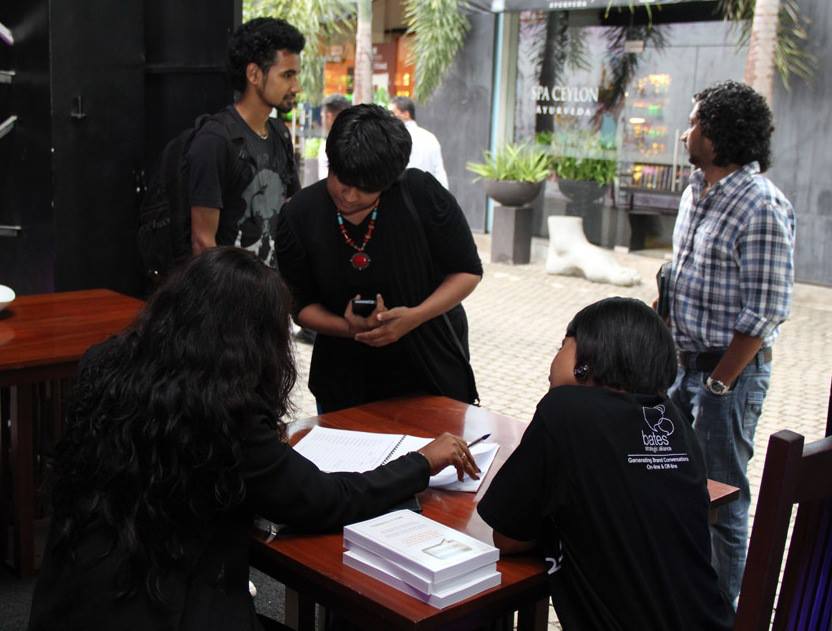
“Chat Republic” launches at Gangplank

It has been a few months since I launched Chat Republic in Asia. It’s now time to roll it out, State-side.

So on November 7, Chat Republic will be launched at Gangplank.

Never been there? Gangplank has the fitting ambiance  –a cross between a very spacious coffee shop and a technology incubator. I have previously written about it, conducted a live radio show from there.

If you like to attend this launch event, leave me a note here, or use this link to RSVP.

Address: Gangplank, Chandler
260 South Arizona Avenue, Chandler, AZ 85225

Time: 6.00 pm

Review: “Chat Republic: A welcome change from the American-centric view of social media”

Review by Linda VandeVrede

Now that Twitter and Facebook have been around for several years, the ability to communicate with strangers and mobilize crowds seems an accepted form of crowd communication. Younger generations who are extremely good at texting have emerged as so-called “thumb tribes.” Yet as these voices continue to emerge, some corporations are still fearful of these public conversations and their implications.
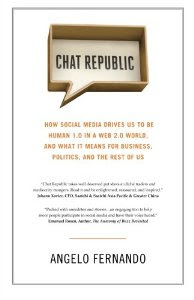
Angelo Fernando’s new book, “Chat Republic,” provides an overview of social media, including how it has evolved and continues to be a work in progress. It acknowledges that social media poses a threat to those who once controlled the conversations that took place within and without an organization. It acknowledges that social media has challenged traditional ingrained ideas about marketing and management, with some taking to it with abandon, some approaching it with a measurement of decorum, and some sniping from the sidelines without partaking. Angelo reminds us to consider communities in terms of what gets shared, not how. He points out that conversations between humans are inherent in our society; even FDR had “fireside chats” that made listeners feel as if they were participating, even through a one-way radio medium.

This citizen journalism scenario is messy but informed. This is not a bad payoff, Angelo observes. The hoi polloi, rather than a filter, decides on which media they will believe. Citizen journalism isn’t merely reactive now. It is becoming more proactive, where people proactively seek stories that interest them and share them with others.

Chat Republic is full of examples of times through world history when people have networked around monolithic authorities in small clusters, from homeless groups decades ago to the Middle East most recently. Still, there is a discrepancy in how people view social media. “There are those who see social media…as a transparency filter to let the sunlight in. There are also those who decry it as a lever that unlocks the floodgates to an unwanted stream of information and/or trouble.” The positives are that it improves trust and reputation. This is the new face of PR, crisis management and advocacy.

One of Angelo’s interviewees observes that people’s habit for deep reading has eroded: “Once I was a scuba diver in the sea of words. Now I zip along the surface like a guy on a jet ski.”

If you ever wanted a view of how social media has changed us for good, this is the book. Best of all, the data presented is multi-cultural, a welcome change from the American-centric view of social media that dominates most books. Angelo’s book is full of tips and case studies about how these concepts have been implemented effectively. I’ve always been impressed with his ability to pull in examples from all walks of life, and analyze the hoi polloi response to social media.

(Disclosure – Angelo was part of the group blog Valley PR Blog, with whom I blogged from 2007-2010, and I am one of the many people interviewed for and quoted in the book).

Picture Copyright: Adam Nollmeyer

SMS as a crowd-sourcing channel for… farmers

Remember when Short Codes were all the rage? That was a few decades (in Internet years, that is) before QR codes walked into the bar and stole the limelight.

I’m still a big fan of SMS, even though I use QR Codes for all manner of things. More on this later.)

We in the West are all enamored when we hear how a majority of the world is now mobile. 91 Percent of Americans own mobile phones, according to a Pew report in May.

When I was visiting Sri Lanka I ran into some interesting uses of Information-Communication Tech, I touched on ICT in a passing way in Chat Republic, only because I was making the case that social media users need to understand that the new, new thing they stumble upon is based on some very old concepts –crowd-sourcing being one of these.

I met the folks at Sri Lanka’s Information Communication Technology Agency, and they talked about a lesser-known project that enabled rural villages to use of ‘short codes’ via mobile phones to provide what amounted to SMS-enabled commodity trading.

Yes you read that right: Commodity trading for farmers for farmers!

It worked like this: A farmer sends an SMS to a knowledge hub using a particular short code, providing details of what he has to sell. Buyers or whole-sellers also subscribe to the service, and the portal matches the buyer and seller. The mobile device is just the tool that enables that digital hand-shake between these two groups of people.

They may never meet, but have learned to trust each other because of a secure network, and their comfort level with short codes.

Trust is a rare commodity in the social media space we inhabit. There are workshops and books on building trust, and I’ve read a few. But in practice, the ease of use, and the ability to fake it on social media is causing a backlash. We have become more skeptical of those who push links at us. Our digital handshakes, though instantaneous, and seamless are fraught with problems.

We may be all Web 2.0 but we tend to forget the basic tenets of being Human 1.0. Just ask those farmers who are using basically 1.0 tools.

Note: The image, above, is from a similar project in Bangladesh.

Chat Apps don’t just destabilize business models, they ruffle governments

All this chatting is taking us somewhere, right?

Ever since I stumbled on Chat Apps, and discussed it toward the end of my book, I knew that this thing curiously called Over The Top applications (or OTT), could tempt some to see us, chattering masses, as instruments of mass disruption.

I was bemused to hear that the Vietnam government is trying to reign in the OTT business.  Wassup Mr. Nguyen Tan Dung? Worried about the revenue loss of telecoms or worried that the hoi polloi will be talking on their own terms.

Governments famously refuse to engage citizens, while pretending to call their system a participatory democracy. Some have suggested that the Internet disconnects as much as it engages people from public life. I was reminded of my conversation in April with Indi Samarajiva (on ‘Machine Readable Democracy’) when I saw this discussion.

It’s a tantalizing question. Could a participatory democracy be nurtured? Or should it be left to evolve organically?  Or as Jos Zepps puts it, could we build a digitized, engaged democracy from scratch?

Back To Work and… Chat Republic

It’s been quite summer. Just returned from a one-week break, headlong into school.

While this blog’s been quiet, so much has transpired – controversies, new questions arising about what happens when citizens ‘speak out’ or question governments, and the (expected) paranoia about Chat Apps.

Just came across this post by Groundviews, about my book. It serves as a good backgrounder to some of the topics discussed in Chat Republic.

For those of you who have sent me Q&As about the book, my sincere apologies. Meanwhile there’s a lot happening in eduction that’s equally fascinating, as my school, and my class, specifically gets into a S-T-E-M eduation program this year. You can find out more about my work in this realm at Voices-On.com

Chat Republic Book Review – Newsroom Ink

Here’s a review by someone from a company I interviewed, in the chapter about Socializing the Press Release, to make it more authentic.

New tools such as the social media release and the online newsrooms are rapidly gaining acceptance by companies and traditional media. Storytelling, as done through brand journalism, is replacing the press or news release.

Read more here at Newsroom Ink

What’s your take about something called ‘brand journalism’ and storytelling?

Thanks for supporting the ‘Book Launch’ in Colombo

Just got back, after what seems like a whirlwind book launch.

ParkStreetMews_5I’ve had to use the quote marks around ‘book launch’ because it was not originally planned that way. A series of events, coordinated by some of my friends at the last moment was beyond my expectations.

Those who made this happen included:

ParkStreetMews_3

While I got to talk of some of the most timely topics covered in the book — Transparency, for instance– I got to meet some very smart people changing the game of marketing, media and communications.

Social Media, which has been on the back burner for many in Sri Lanka (some say it still is, but that’s a debatable point) is being embedded in so many places it was hard to keep up. More on this in a post, later.

If you are interested, check for video clips at ChatRepublic.net, and #ChatRepublic hashtag on Twitter.

Microphones or Hash Tags?

Last evening, at the Sri Lanka Institute of Marketing event for Chat Republic, we tried to get the audience to chime in.

Some of the areas covered by the panel, which included representatives from a Leading Ad Agency, a Telco, a Research company, a Digital Media company and a Multi-Media publisher were topics that were outside the comfort zone of marketers. We did have some good questions, especially from someone who represented a startup digital shop, and those that came via Twitter.

But it makes me wonder about what compels someone in the audience to not pick up a microphone and ask a question, but instead do it in 140 characters. There is no right answer. It could be that for Gen Y, a hash tag is a more ‘authentic’ way to ask a question, since it is also in a public space. (We requested the use of the hash tag #ChatRepublic). Or are mics, sort of passe? Too much a left over from old media?

I tried to make my keynote less of a lecture and more as a conversation. In fact, on impulse –believe me, it wasn’t planned — I decided to step down from the stage as I tried to make the point of how social media, just like in education today, is all about getting off our soap boxes: Getting the sage off the stage.

In the end, I would have liked more tough questions. I am sure the panel would have liked to hear contrarian view points. The most contrarian one actually came from the least expected source – the moderator, Nimal Gunewardena.

Unrehearsed Conversations, often most poignant

I just got off a Google Hangout with a group of dynamic new media folk, who interviewed me about Chat Republic.

It’s odd, and so appropriate to have these well moderated chats about a book that makes a big case for  inviting the unscripted, un-fettered conversations.  We had to pause  whenever we ran into a glitch – technical issue, human error etc — but as the moderator, Adnan, told me at the end, he leaves the glitches and silly mistakes.

I try to respond to the famous questions about ‘over use’ or ‘dangers’ of new media by saying that this thing called social media is not one thing, with a handbook. To expect it to have a set of rules is like expecting there to be a set of rules for how to use the telephone or how to speak to your neighbor.

There’s a good column in the New York Times today on the downside of email, and how in interrupting us all day, it interferes with thinking time. It ends with a line that echoes something I touched on a few days ago, when speaking of Content Curation and TMI.

“And let’s never forget the value of face-to-face, or voice-to-voice, communication. An actual un-rehearsed conversation — requiring sustained attention and spontaneous reactions — may be old-fashioned, but it just might turn up something new.”

Indeed!

In a time when we could bypass human interaction with a messaging device, an app, or a process, let’s not forget that it’s the spontaneity of being ‘social’ that makes it such good ‘media.’