Back To Work and… Chat Republic

It’s been quite summer. Just returned from a one-week break, headlong into school.

While this blog’s been quiet, so much has transpired – controversies, new questions arising about what happens when citizens ‘speak out’ or question governments, and the (expected) paranoia about Chat Apps.

Just came across this post by Groundviews, about my book. It serves as a good backgrounder to some of the topics discussed in Chat Republic.

For those of you who have sent me Q&As about the book, my sincere apologies. Meanwhile there’s a lot happening in eduction that’s equally fascinating, as my school, and my class, specifically gets into a S-T-E-M eduation program this year. You can find out more about my work in this realm at Voices-On.com

How do you prevent employees from reading a story? Use some nice gobbledygook

You can’t make up stories like this.

The Department of Homeland Security has sent a memo to employees that they may be violating their non-disclosure agreement if they click on a link to a Washington Post article.

It’s obviously a tricky legal thing. Employees are being asked not to use their work computers (referred to as “unclassified government workstations”) since doing so will “raise the level of your unclassified workstation to the classification of the slide…” Doing so, they warn, will cause “data spillage.” It’s also sensitive, being connected to the Edward Snowden affair.

That classified slide, featured in the Post, is about the program known as PRISM, that secretly collected downstream data about people from companies such as  Facebook, Skype, Google, Apple, Microsoft etc.

But the question remains: If DHS really fears such “spillage” why did it not block access to the site from work computers, rather than send out that lame memo? It’s as useful as telling 12-year old students “do not turn to page 296 of your reader; by doing so you will be in violation of the school’s policy.”

I find this very topical for another reason. I just interviewed a company called Safetica, about a product it  markets as ‘productivity’ solution – to monitor employees’ online behavior. It will not snoop into people’s content, it says, but collect data about the paces people visit and how much time they spend there. It gets more interesting: this data, can be viewed by both supervisors and employees!

Maybe Safetica ought to send DHS one month free trail of its data leak prevention software!

“Malala Day” by UN ups the ante for education access

Today has been declared “Malala Day” as the UNICEF celebrates the birthday of the 16-year old who took a bullet for education.

The message: “Every child needs to know more than to read, write and count, but to learn to be a global citizen.”

Note how she stresses that she is not against anyone, but that she is for something.

Powerful event video here:

http://webtv.un.org

Google Street View in Sri Lanka, timely -as the ‘walls’ come down

I just wrote a bit of a cynical piece about Google Glass, but, as you may know, there is no shortage of parodies about this new, much-talked about product that will help people ‘augment’ the real world.

But my beef is not with Google, per se. It’s those whom I like to call ‘Shiny New OBject Syndrome’ types. You know, S-N-O-B-S 🙂

The point being, I question if we really need everything reduced to data, or meta data –basically data about data. Do we need an appendage that turns our analog lives that are inherently data-rich in human connections, just to bathe in digital?

In one of my presentations (when asked about Big Data in a Web 2.0 era) I referred to a person who told me how he was befriended on LinkedIn by an old school buddy. Great, he thought, and clicked the button! Then he bumped into the chap a day later, and the ‘friend’ ignored him. In other words, flesh-and-blood alums are so boring, huh? The data-based connection was what the person was after.

Oddly enough, I am planning an upcoming trip, and enjoying the data Google delivers – via Street View. It’s truly amazing how one company can basically index the world as we pass through it. One country at a time. So far Google, which began capturing Street Views in 2007, has 50 countries and counting. Included are Hong Kong, Thailand, Romania, Poland…

Sri Lanka will be soon in this group – reliable sources tell me. I could see why the tourism and leisure industry would want this. For businesses too. Imagine being able to drive through a bridge, walk up the steps of a temple, check out the neighborhood in an area you plan to set up a company etc..

Inviting this kind of visibility, also trains citizens to expect greater transparency in surrounding areas. The new data we will have access to would (and should) inform a nation’s business leaders and public officials to plan for providing data beyond the ‘Street’ level.  We should be able to drive by, virtually, and pick up data, and meta-data: forms, policy papers, constitutional amendments, meeting notes, speeches, parliament bills and voting patterns etc. Will these come? Well, look at it this way. In Colombo, the government has been strident in tearing down the physical walls around public places. Cynics see this is as part of the post-war beautification strategy. But even as we will be able to peer into the windows of an un-walled town hall or government institution, (while Google,simultaneously, begins to provide virtual views) the expectation will be for greater access.

It’s an experiment that many will be watching. (No expensive Glasses required)

Chat Republic Book Review – Newsroom Ink

Here’s a review by someone from a company I interviewed, in the chapter about Socializing the Press Release, to make it more authentic.

New tools such as the social media release and the online newsrooms are rapidly gaining acceptance by companies and traditional media. Storytelling, as done through brand journalism, is replacing the press or news release.

Read more here at Newsroom Ink

What’s your take about something called ‘brand journalism’ and storytelling?

Thanks for supporting the ‘Book Launch’ in Colombo

Just got back, after what seems like a whirlwind book launch.

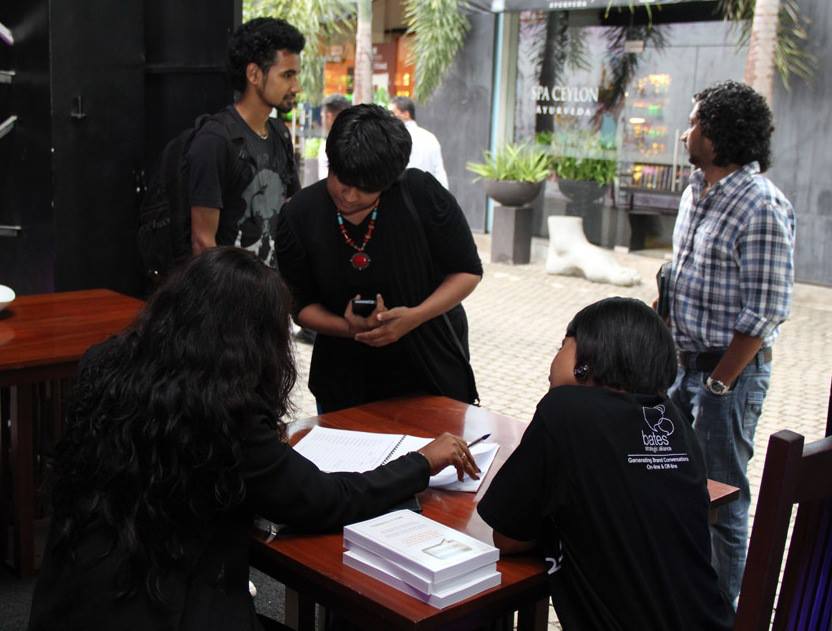
ParkStreetMews_5I’ve had to use the quote marks around ‘book launch’ because it was not originally planned that way. A series of events, coordinated by some of my friends at the last moment was beyond my expectations.

Those who made this happen included:

ParkStreetMews_3

While I got to talk of some of the most timely topics covered in the book — Transparency, for instance– I got to meet some very smart people changing the game of marketing, media and communications.

Social Media, which has been on the back burner for many in Sri Lanka (some say it still is, but that’s a debatable point) is being embedded in so many places it was hard to keep up. More on this in a post, later.

If you are interested, check for video clips at ChatRepublic.net, and #ChatRepublic hashtag on Twitter.

Microphones or Hash Tags?

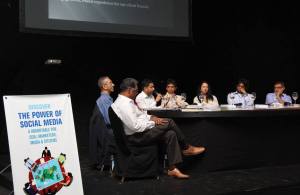
Last evening, at the Sri Lanka Institute of Marketing event for Chat Republic, we tried to get the audience to chime in.

Some of the areas covered by the panel, which included representatives from a Leading Ad Agency, a Telco, a Research company, a Digital Media company and a Multi-Media publisher were topics that were outside the comfort zone of marketers. We did have some good questions, especially from someone who represented a startup digital shop, and those that came via Twitter.

But it makes me wonder about what compels someone in the audience to not pick up a microphone and ask a question, but instead do it in 140 characters. There is no right answer. It could be that for Gen Y, a hash tag is a more ‘authentic’ way to ask a question, since it is also in a public space. (We requested the use of the hash tag #ChatRepublic). Or are mics, sort of passe? Too much a left over from old media?

I tried to make my keynote less of a lecture and more as a conversation. In fact, on impulse –believe me, it wasn’t planned — I decided to step down from the stage as I tried to make the point of how social media, just like in education today, is all about getting off our soap boxes: Getting the sage off the stage.

In the end, I would have liked more tough questions. I am sure the panel would have liked to hear contrarian view points. The most contrarian one actually came from the least expected source – the moderator, Nimal Gunewardena.

Unrehearsed Conversations, often most poignant

I just got off a Google Hangout with a group of dynamic new media folk, who interviewed me about Chat Republic.

It’s odd, and so appropriate to have these well moderated chats about a book that makes a big case for  inviting the unscripted, un-fettered conversations.  We had to pause  whenever we ran into a glitch – technical issue, human error etc — but as the moderator, Adnan, told me at the end, he leaves the glitches and silly mistakes.

I try to respond to the famous questions about ‘over use’ or ‘dangers’ of new media by saying that this thing called social media is not one thing, with a handbook. To expect it to have a set of rules is like expecting there to be a set of rules for how to use the telephone or how to speak to your neighbor.

There’s a good column in the New York Times today on the downside of email, and how in interrupting us all day, it interferes with thinking time. It ends with a line that echoes something I touched on a few days ago, when speaking of Content Curation and TMI.

“And let’s never forget the value of face-to-face, or voice-to-voice, communication. An actual un-rehearsed conversation — requiring sustained attention and spontaneous reactions — may be old-fashioned, but it just might turn up something new.”

Indeed!

In a time when we could bypass human interaction with a messaging device, an app, or a process, let’s not forget that it’s the spontaneity of being ‘social’ that makes it such good ‘media.’

Speaking Out Of Turn – from Citizen Journalists to Whistleblowers

Some notes and pictures from the Chat Republic event at the American Center, on 13 June.

Organizations are going beyond the ‘blabbing’ phase of using social media, to craft more thoughtful, business-focused strategies for customer / audience engagement.

Dipnote – the State Department – and Dell are good examples of using ‘media’ to different ends. In the book, I feature Dipnote, as one of the pioneering government blogs that dared to use a format and a platform that was not exactly popular in tight-lipped institutions.

Dell, uses a Social Media Listening Command Post to be closer to its customers. It runs a virtual war room, with full-time employees who listen to the chatter.

Many people question social media as if it is some sort of object that comes in a box –and ought to also include a set of instructions. If you like to give it a tangible quality, think of it not as an amplifier, but an antenna. en, Even then, no box will contain it.

I then opened up the topic of podcasting, and how it was different from its old media cousin, broadcasting.

As this was a seminar-style discussion, there were good examples of how print media is using print and digital to create ‘breadcrumbs’ back to the readers. Also in the audience was a member from a grassroots organization I had featured in the book (in one of the Bonus Chapters at the end of the book, and he updated us on the programs involving teaching English and blogging.

And finally, we addressed Citizen Journalism. From Abraham Zapruder, one of the most remember ‘accidental’ or citizen journalists – he caught on tape the Kennedy Assassination. To the brave amateurs who risk their lives to tell a story no one else is privy to.

Oddly enough, even as we were speaking, a larger story was unfolding of someone who has dared speak out of  turn – the Edward Snowden affair. I can see this topic come up in the next two weeks, even though phone tapping is not a social media problem per se. It is, after all, related to the ancillary, hairy issues social media skeptics bring up: too much transparency, and how vulnerable it might make any institution. But that’s not what my book is about. But, hey, I’d be happy to discuss in another forum.