Baxter, Sawyer, Tina, SIRI. Is this our future?

Baxter and Sawyer are brothers in arms, so to speak. They are collaborative, follow instructions, and adaptable to their surroundings.

They also happen to be robots. I find it interesting that they have human names, although they are industrial bots. No mistake they are meant for the factory floor, and not cute or friendly robots that are also coming of age elsewhere. Rethink Robotics, which manufactured them says they are “trained not programmed.” It quotes a professor who says his “long range aim is to try to achieve human level artificial intelligence. So the Baxter would be like a person, maybe not a full-fledged adult.”

  • Baxter is a 2-armed bot, and is described as “the safe, flexible, affordable alternative to outsourced labor and fixed automation.”  It weighs 165 pounds.
  • Sawyer is a one-armed fellow, and is called a “collaborative robot designed to execute machine tending, circuit board testing and other precise tasks.” It weighs just 42 pounds

Why I find this interesting is that we have begun to look at robots in humanistic terms, and this paves the way for them to be ‘invited’ into our homes some day soon. If you don’t believe me ask those who love their Roomba, the robotic vacuum cleaner.

How long will it be before we have a Homework robot, and an automated, (two-armed, hopefully) Personal Assistant? Low maintenance, too –no need for company benefits. Some people who use SIRI may say they already have one of those! Chat bots are also in the news now – like the Iranian bot, endearingly known as Tina.

Humanoid devices are also the stuff I have begun writing about elsewhere.

Technology lessons – No books required!

Sometimes you don’t need text books to learn a skill.I don’t usually advise young people to skip university, but I know of many folks who have learned incredible skills, never having stepped into a classroom for the past 20 years. One friend fixes BMWs as a hobby (sometimes has about 10 in his driveway). Another runs a mid-sized marketing communications agency, but has built and operates an eco-resort. The former never went to engineering school. The latter never took a class in architectural design or management.

And my point is, we often hone our skills in our garages, and our basements.These are our ‘labs.’ No one gives us a certificate for these long hours of professional development.

Here’s a related example: Children learning about science and tech on a farm. Think of it as a STEM lab in Nebraska.

Cows. BMWs. Conservation. Plenty of knowledge out there, not found in books and lectures.

Virtual Reality meets Happy Meals meets Education

Is Virtual Reality going to become the next toy? It was going to happen, when marketers rediscover the immersive experience that they never got to realize when the wonders of Second Life never materialized.

Now that McDonald’s has got into the game, letting children re-fold the Happy Meal box into a VR headset (just like the Google cardboard model, but a different template), you could expect many to follow. WIRED reports that these ‘Happy Goggles’ (ugh! I just don’t dig this name), will be available at 14 McDonald’s restaurants across northern Sweden.

Coke has also experimented with similar headsets.

Now, to be sure the Golden Arches says they want to be in the education space. How that will go is left to be seen. Edutainment might be more appropriate.

Nevertheless, VR is well suited for educational experiences like we have never known. Unlike a computer screen, the wearable experience could be used differently. We don’t need ‘toys’ in class, though. Just tools.

Drones meet Parachutes in Google’s new ‘Delivery’

Amazon must have quaked at this news today. Google, the folks who have given us Project Loon which will seen create a local Wi-Fi service in countries such as Sri Lanka, is now launching Parachute.

And yes the parachute can deliver anything to you.

Yes, it’s April 1st, folks.

There’s a line in the video that goes “Parachutes are like minds. They work best if they’re open.” Hey, minds are like parachutes – they easily catch a passing drift…!

While you’re enjoying it, check out the Google self-driving…. bicycle. (25 years ago a self-driving car would have seemed like an April Fool’s joke.)

Little known fact: Shel Silverstein penned Dr. Hook’s “Sylvia’s Mother”

I know of many parents who have a copy of Shel Silverstein stashed away somewhere. He was a prolific writer of books such as The Giving Tree, and tomes of books of wacky, insightful poetry such as “Where the sidewalk ends.”

I was looking up the man, and discovered that one of the anthems of the early seventies, “Sylvia’s Mother” was actually a vignette from his life. he knew the original Sylvia, and if you the words of the song resonate in your brain, you’ll know he was trying to get the ‘operator’ reminding him it would cost him “40 cents more” to stay on the line.

When was the last time you had an “operator” intervene between you and the person you were calling?

Footnote: The Giving Tree has been ranked one of the top 100 books for children, beating several by Dr, Seuss, and even Lois Lowr (The Giver) and Roald Dahl’s books.

Was Apple v Justice iPhone battle feigned?

So, did Tim Cook win? Or did law enforcement fight a fake battle over a back-door to an iPhone? A few weeks ago I wondered why they even bothered asking Apple.
Given that there are dozens of websites that provide back-door services, and there being ‘ethical hackers’ who could unlock phones, I’m surprised no one has offered to do it for Apple, thereby freeing them of the PR nightmare.

A lawyer for the ACLU seems to think the battle is far from over. As a friend mentioned in response to this post, this legal tussle could have been a set-up, just to cover the fact that the surveillance program can snoop into phones – locked or otherwise.

But no worries, 60 governments already do it, as reported in Wired magazine two years ago.

Visual Thinking Strategies

I didn’t realize there’s a whole territory called Visual Thinking Strategies or VTS!

Indeed, an image (often something we saw online) becomes a discussion trigger. You’ve probably indulged in VTS by asking people to comment on a photo. It’s something we use now and then in a classroom, to set up a topic, or draw students into a subject that might otherwise lack context.

I ran into VTS because of series in the New York Times called “What’s going on in this picture?” on Mondays. Readers comment and try to guess what was happening, and on Friday the paper reveals what it was about.

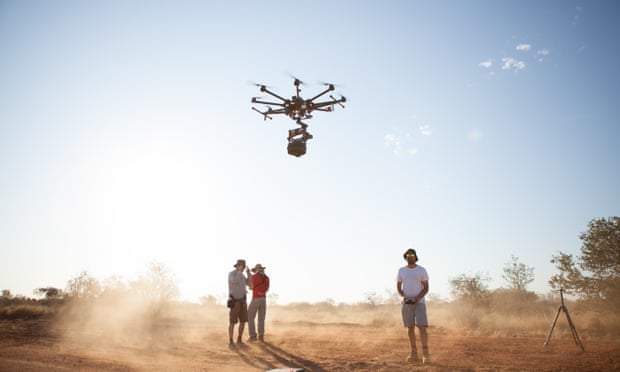
So here’s a bit of VTS for you:

What do you think is going on in this picture?

An unnamed company secretly testing drone delivery? Engineering students working on the next generation of medical drones. Or something else entirely?

You would be surprised at the real context!

Big payoff for science students at ISEF

Not only is science fun, it could have a big payoff for students.

Big, as in $150,000!

The Intel International Science and Engineering Fair (of ISEF), the world’s largest pre-university science competition, really rewards budding scientists,engineers and inventors.. This year three students won the top $150,000 prize each. Second place winners won $75,000 each.

This year’s ISEF Fair will be held here in Phoenix from May 8 – 11th. I plan to be there. Interestingly, three Sri Lankan students will be participating in it.

Founded 75 years ago, the fair attracts some 1,700 high school students from over 75 countries, regions, and territories who showcase their research and compete for approximately $4 million in prizes.

One of the winners (left), 17-year old Paige Brown, found a way to filter pollutants in stream water, and has nano-technology in her sights to expand on the device.

This kind of scientific problem-solving is extremely relevant here in the US, where several cities are discovering high levels of lead in drinking water, after the Flint, Michigan disaster. As the New York Times states in its report, “Rules and science are outdated.”

The future generation of scientists and policy makers like Paige will be updating the science. Other students are ‘discovering’ new ways for disease management and medical breakthroughs.

All this while still in school!


If children ‘published’ books, would there be a market?

Today, ‘to publish’ means something else entirely.  It used to be tied to the notion of a ‘publication’ – which often meant material that got edited, bound and distributed by certain entities.

So should children publish books? 

I want put this question to those of you professional communicators, and also in education:

  • Should the definition of children’s books also include children-to-children books?
  • Could book stores get into the business of encouraging children to become storytellers, designers and illustrators?

Sure, there is a good self-publishing model out there at places such as Blurb, Lulu, etc. But (a) It is hardly affordable for most children (b) The POD model presupposes the content is already ready to go to press.

  • Are there places (such as ‘Maker Spaces’) for kids to polish their craft, and go all the way to putting a book on a shelf?

Many will say that the market is not significant enough to give it serious thought. But is that good enough reason to not consider it?

I pose this question because of a suggestion raised by one of my 3rd grade classes today. They wanted to know if they could publish their work in a book form. I was shocked at the question. This after all, was from 9 and 10 year olds!

I have pat answers for questions like this. Such as: “It depends what kind of readers you are thinking about” – an opening to a discussion about eBooks, online publishing, Wikis and such.

But this is a serious question that should not be confined to school-made solutions. Any suggestions?