10 STEM Vacation Ideas

It may be time to box up the microphone and the rocket, the robots and the VR headsets. But truth is, we could do a lot of interesting things related to science and technology during the long summer break.

So here’s what I am asking my students to do in July and August.

  1.  Become a ‘Maker’ – Build something. A tree house? Make a parachute out of a plastic bag, or a scarf, and a large eraser. Drop it from a balcony (or that tree house!) and change the way it lands.
  2. Create a Rube Goldberg device. Use scrap material, some dominoes, a tennis ball, a discarded cardboard tube, and a flower-pot… Watch this amazing example for inspiration
  3. Practice Coding. Work on a project at Code.org, or Scratch.Mit.edu
  4. Create a paper airplane or rocket contest. As we learned at the recent STEAM Night, some of the rockets that flew the furthest cost nothing, and were made of paper!
  5. Conduct a potato battery experiment! Two potatoes, a few nails, copper wire, and a light bulb from a flashlight. Ask an adult to download the steps here.
  6. Build a robot. Wrap a shoe box in tin foil. Add wheels and axles using bottle caps and skewers. For accessories like an antenna, and a probe, cut a coat hanger, and bend it into shape.
  7. Take up photography! Last year I taught a class using point-and-shoot cameras, and (the horror) phones! Figure out how depth-of-field, and back-lighting could enhance your pictures. No (Instagram) filters required.
  8. Write a short story! Try your hand at science fiction. Write your friends into the plot, and see where the story takes you! Check out these YA sci-fi authors
  9. Produce a skit. Before there was this thing called the Internet, we kids down the street created our own ‘drama.’ Find a friend who could help you co-write a short play about pollution, or landing on Mars.
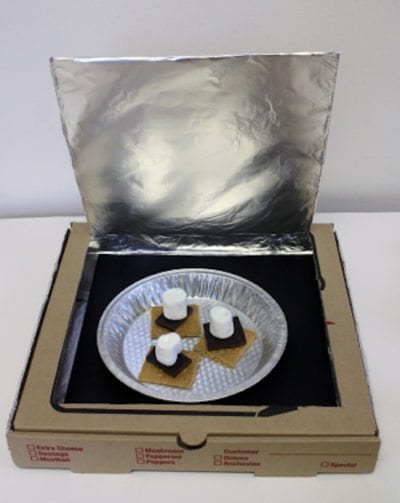
  10. Build a solar oven. Start with a pizza box. Watch this video for inspiration! 

Reading, stagnant. But book fairs are on the rise!

Reading among students in the US has been stagnant for the past 20 years – according to a recent NAEP study. An expert quoted in the article (how reading is good for the brain) says schools are too focused on reading for comprehension, while not focusing enough on vocabulary and background knowledge about what’s being read. See my related post on adult reading that also seems to be in steep decline. Pew Research tracks reading trends. A recent survey of 2,002 adults, ages 18 and older, showed this.

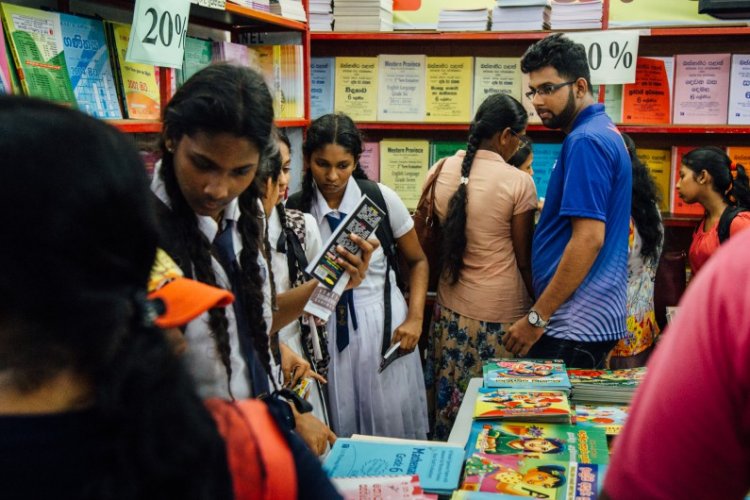
Oddly enough, book sales are doing somewhat better now in the US (according to Publisher’s Weekly). Meanwhile, 12 time zones away in Sri Lanka, huge, week-long Book Fairs like this, and this are on the rise.

A report by Roar Media: https://roar.media/english/

A report by Roar Media: https://roar.media/english/


Evidence that student writing (about chapatis and chickens) isn’t going obsolete

One of my passions is to help students become better writers. Many teachers will tell you that students are not writing enough. Anecdotally we know that information consumption (coupled with information overload) compounds the problem. Research supports this. Forty percent of college students who took the ACT writing test, lacked college ready skills.
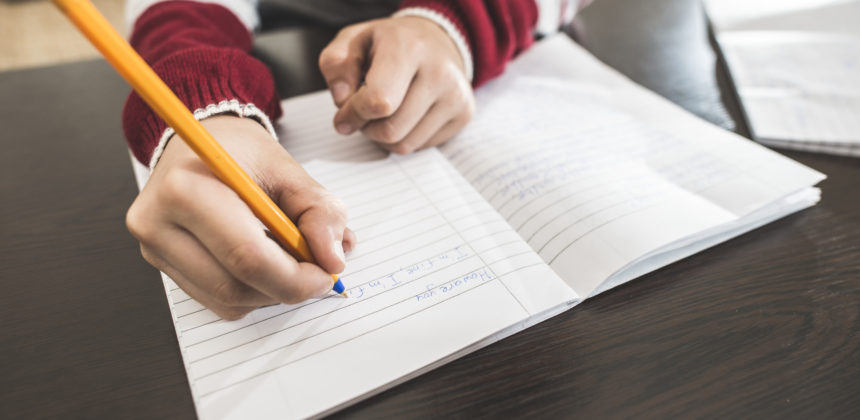
As a computer and tech teacher, I am pleasantly surprised when students ask for scratch paper before they login. It’s not ‘old school’ to jot down ideas; to organize information before it gets into a brochure or PowerPoint. One of my lessons for 5th grade at the end of the school year involves teaching them how to write a radio script, and record it! A script, of course, isn’t like an essay. It gives a student an opportunity to adopt tone of voice that comes naturally. To speak from the heart. To talk about odd, personal, funny things that connect with the listener. Like a letter, I suppose. “Who writes those?” You ask! You’d be surprised how many Thank You letters are queued up to print next week. That’s my evidence, and I’m sticking to it! 

On that note, here’s some inspiring  student writing. One of the college application essays featured in the New York Times last week. Eric Muthondu, who’s entering Harvard, talks about his Kenyan grandmother.

“When I return, the chapatis are neatly stacked on one another, golden-brown disks of sweet bread that are the completion of every Kenyan meal.”

Or this piece of writing by Jeffrey C. Yu, a second generation Chinese American.

“Not all sons of doctors raise baby ducks and chickens in their kitchen. But I do. My dad taught me.”

These essays are worth a read, if only to recognize that good student writing exists –in certain places one has to dig to find. Here’s another place: Write The World. A global community for student writers I have been in touch with, and have covered in a previous post. By some coincidence, this month, Write The World has a Food Writing contest for students. First prize for a 6,000-10,000-word essay is $100.

More chapatis and chicken, please!
 

One teacher’s bonus: Watching students grow

As any teacher will tell you, the big ‘bonus’ we get at the end of the school year doesn’t involve zeros after a decimal point. Instead it is seeing the outcome of the work put in – watching students move up.

This was evident last evening, as I wrapped up the communication class, COM 225, which I taught at Chandler-Gilbert Community College. It was their final exam, one part of which was a prepared speech. Watching them put into practice material they learned over five months was the exclamation point at the end of a long chapter. The kicker, if you will. Their speeches were top-notch. Their confidence -and use of techniques learned –on full display.

Before they left, I recommended they sometime watch Randy Pausch’s ‘Last Lecture.’ Why? Because it is both an artifact or Public Speaking that embodies everything found in the text books, plus one of the most motivational messages students could take away on their journey.

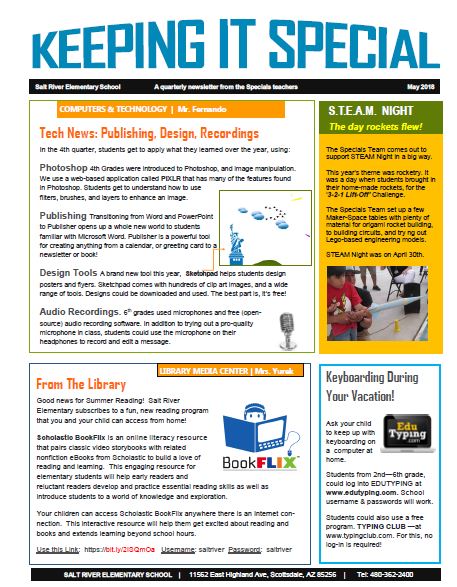
The day rockets flew!

Rockets soared at our school, on April 30th –the same day news broke of China’s plans to test a reusable launch vehicle, the ‘Long March 8.’ STEAM night was quite an experience, six years since we began on this journey.

Ours too were reusable, but they were built by students from Kindergarten upwards. Made of paper, drinking straws, Popsicle sticks, and rubber bands they traveled where no rocket had gone before on the basketball court. (One flew way out of our test range, covering 70 feet!) Most were powered by rubber bands. Some preferred to use wind power – blowing them out of the launch tube! The judges were quite impressed. Said Orbital ATK engineer, Monique Dalton of one model:

While most rockets flew pretty flat and straight, this one showed a curve visible to the naked eye of the sort of trajectory rockets take in space. It was as if this rocket really was on a mission delivering a payload.

This student’s rocket traveled 58 feet, 7 inches.

Meanwhile, SpaceX, is looking for ways to go beyond ‘reusable’ into mass production of rockets, just like GM does cars. Some day one of these kids will be in Mission Control –and I’m going to watch it from my rocking chair!


Note: Check out


Prepping the launchpad – STEAM Night is today!

It’s as if the stars were lined up for this. The launchpads were being prepped in the space industry –and in education.

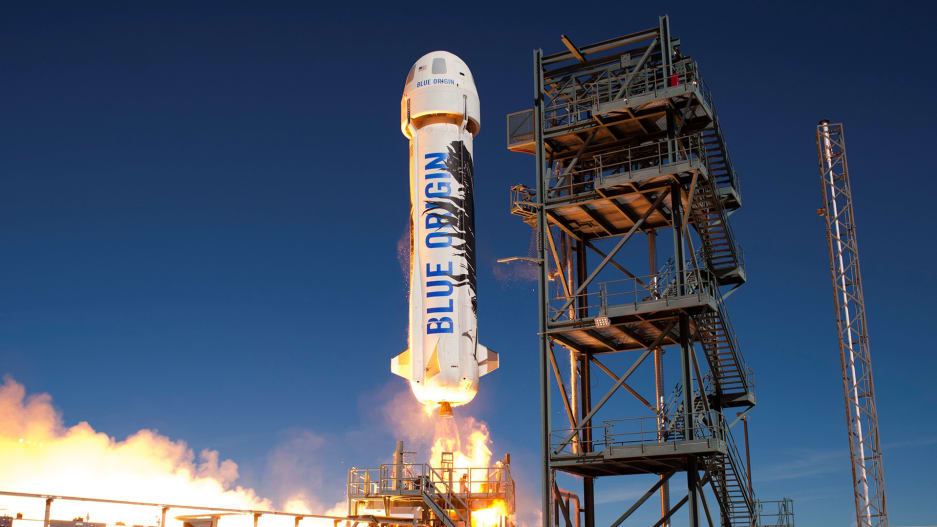
The race toward ‘Space Tourism’ which has been on for some time, hit a milestone, Sunday. Blue Origin, a company owned by Amazon’s Jeff Bezos, (which I’ve followed for some time now) launched a successful test flight yesterday, using dummy astronauts. Humans will soon follow.

Back here in Arizona, today is STEAM Night at Salt River Elementary School. The highlight of which will be  our ‘3-2-1 Lift-Off’ challenge

Can’t wait to see what kind of rocket entries we receive.

Trying out Sketchpad. Great way to teach layout

I’ve been experimenting with a simple, but powerful design and layout tool called Sketchpad.

It’s like Adobe Spark but with interesting brushes and pens, 800 plus fonts. I like the how easy it is to import images from your computer into the layout. There’s plenty of clip art too. It’s web-based but the offline version is at an unbelievable price of $4.95! For schools, this is a great asset, especially since it integrates with Google Classroom.

Here’s what the working area looks like, as I asked students to create cubes. They were using a connector tools for this, but there are more options. Check it out!


‘Red for Ed’ in perspective

If you have any doubts about teacher pay, read the New York Times article on what some teachers make.

Michelle Gibbar, a teacher at a High School south of Tucson makes $43,000, despite having 20 years of experience. Another Arizona teacher, Jose Coca, at Kyrene Middle School, gets $46,000 with 12 years of experience.
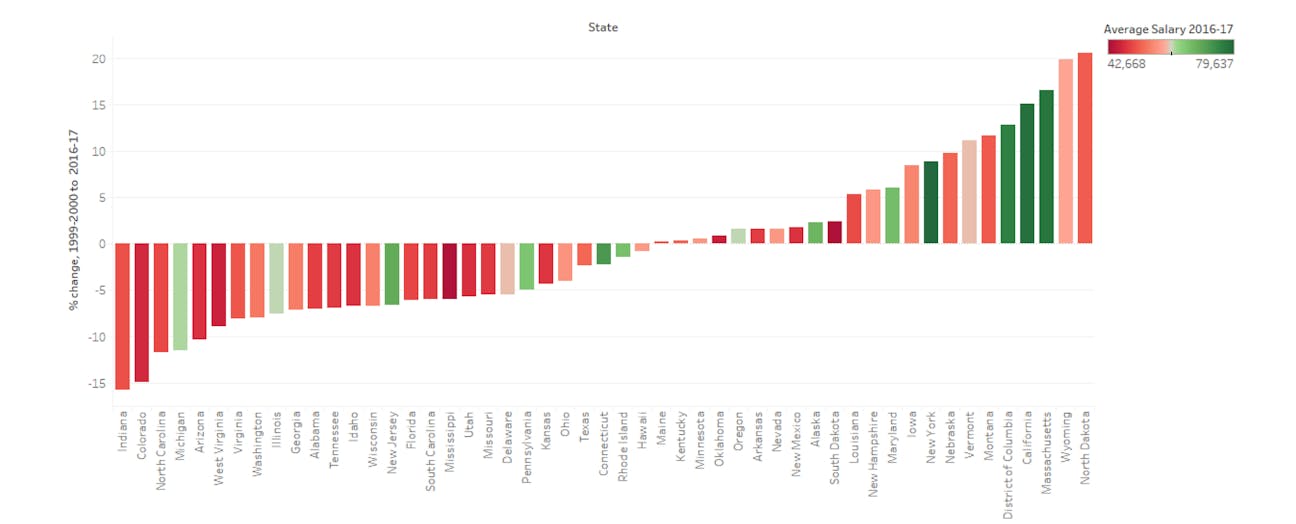
Then there’s the data. Washington Post in 2016 cited a study of teacher pay by  Economic Policy Institute, with this finding.

Average weekly wages (inflation adjusted) of public-sector teachers decreased $30 per week from 1996 to 2015, from $1,122 to $1,092 (in 2015 dollars). In contrast, weekly wages of all college graduates rose from $1,292 to $1,416 over this period.

And here’s this visual if you don’t want to read the reports: It’s the Percent Change in Constant Teacher Salary from 2000 to 2017. (Courtesy public.tableau.com).Click to see interactive chart.


Could a Bot write a poem? Take the challenge – it’s National Poetry Month

As weird as it seems, there’s is such a thing as Bot Journalism. Reportedly, a bot broke a story of an earthquake in California in 2014. But poetry written by bots? I took the challenge at ‘Bot Or Not’, a site that asks you to guess if a poem could have been written by a real person or a software bot. Have to say I failed!

Consider this – could these lines have been put together by a bot? Or a human?

Mortal my mate, bearing my rock-a-heart
Warm beat with cold beat company, shall I
Earlier or you fail at our force, and lie
The ruins of, rifled, once a world of art?
The telling time our task is; time’s some part,
Not all, but we were framed to fail and die—
One spell and well that one. There, ah thereby
Is comfort’s carol of all or woe’s worst smart.
Field-flown, the departed day no morning brings
Saying ‘This was yours’ with her, but new one, worse,
And then that last and shortest…

To find out, go to Bot Or Not.

As for the lines above: It’s by one of my favorite poets – Gerard Manley Hopkins. I should have known better.