Hi-tech Augmented Reality goes low-tech with ‘Cardboard’

In May this year I previewed Augmented Reality glasses – the Google ‘Cardboard’ variety. So it was a pleasant surprise to see that Palmer Luckey, who came up with the clunky but amazing viewfinder called Oculus, is featured on the cover of the upcoming issue of TIME.

The plan this year is to feature Google Cardboard in a ‘STEM Talk’ in my class. As the TIME feature puts it content will be coming up soon that will enable us to learn in immersive environments. Using special or tricked out cameras that could record in panoramic view, students may soon be able to experience life on the Space Station, or that of otherwise inaccessible nomadic tribes.

Partnerships and competitors will soon bring this AR world into the mainstream. As would some GoPro hacks. I’m betting on Google cardboard, though it’s not as good as Oculus, (I could see schools more amenable to partnering with the Google folk, rather than Facebook, which now owns Oculus Rift).

It goes from this

to this


And it’s coming your way! Perhaps soon in my class!

Balloons could add new flavors to the ‘Cloud’ and Digital Democracy

Most of you know how I dislike the word ‘cloud’ as a catchall for anything accessed online. So how about getting used to balloons? As in Google’sProject Loon that has been in the works for some two years, and now is supposed to be set to launch in Sri Lanka.

It’s a crazy, heady idea. Sri Lanka will be the first country to get ‘universal Internet access’ as TechCrunch put it.

I just got back from Sri Lanka, and did an extensive train and road trip with the family. I experienced first hand what connectivity is –and is not. The new, fast highways are obviously connecting more people to more opportunities. The Telcos are providing easy-to-get (via a scratch card) low-cost bandwidth for smart devices. There is growing free Wi-Fi presence in towns as diverse as Galle, Anuradhapura, Kandy and some places in Jaffna; even on a train we took to the hill country! Access does get spotty and sluggish at times, but the appetite for connectivity is growing in leaps and bounds.

And now balloons!

Here’s why I welcome this. Not for the obvious reasons, such as giving everyone including tuk-tuk drivers or election monitors the ability to tweet or upload pictures – which could be useful in and of itself.

Education: First sorely needed bandwidth to homes, schools and offices will change the game. I was at one outstation school, and the science teachers had to use a dongle to get online. ‘Universal access’ for schools would change the dimension of how learning takes place beyond the Google search. Young people could be empowered to create content and not just consume it. It’s about time schools got a better deal when it comes to connectivity. Why haven’t the telcos given schools a better deal? What will they do now?

Political participation. Sri Lanka has demonstrated that despite the dismal examples of governance, that democracy and citizen participation works. ICTA reported recently that “Sri Lanka has shot up to 74th position in the United Nations E-Government Survey of 2014, after climbing 41 places since 2012.” Nalaka Gunewardene goes into rich detail about how Digital Democracy is at work. Beyond elections, this will affect transparency and accountability, when everyone has an uplink, a camera and a voice.

There are obviously several more examples, which some of you might like to add. Please do!

Searching for context, more than keyword dumpster diving

It’s frustrating to hear people say “I researched that” when they simply mean “I looked it up on Google.”

I believe we have diluted the word ‘research’ by equating it to a one-click action. I’m not trying to say that every topic under the sun needs a deep dive. I’m not suggesting that we turn fact-finding into some geeky task. I’m suggesting that we ought to train our brains to think that knowing something is contextual. There is no pat answer.

Google must know this. It stepped up to the late with the release of what it calls the ‘knowledge graph.’ (I am not a big fan of the term. It has a hint of Zuckerberg;s ‘social graph,’ doesn’t it?) Nevertheless, if you haven’t noticed the contextual info showing up on Google, take a look.

If you’re into the deep dive thing, Google does have a few tricks it tends to hide from the general public.  But there are more. Try these:

Google Scholar – http://scholar.google.com
It provides pages from books, PDFs, scholarly literature, peer-reviewed journals, material found via Google books, and even court opinions. Duke University encourages students to use it!

Patent Search – http://www.google.com/patents?hl=en

Lexis Nexis – http://www.lexisnexis.com
This is not a free service, but it combines information from legal, academic, and corporate knowledge databases.

Our Web. Our Conversation. Our House Rules

The 'shape' of our Internet

It’s not everyday you get an email from Vnt Cerf, a.k.a. the father of the Internet.

His email yesterday read: “You spoke out and showed that, when we stand together, we can prevent bad policies from hurting the Internet. You proved we can stop something, but now it’s time for us to start something.”

He was probably referring to my joining in on the online petition in January, in support of massive, worldwide protests against SOPA and PIPA. Some 7 million people signed that petition. Apparently such widespread laws could ‘break’ the Internet.

Now, since there is talk of a renewed attempt to get those laws passed (read the recently published White House Intellectual Property Report) Vint is calling for you and me and your next-door who walks around with her face buried in her tablet, to do something about it.

The newly worded act talks, among other things (such as fear of China) that “U S innovation and creativity (needs to be) protected around the world and allow Americans to do what they do best—out-innovate, out-compete, and continue to lead in the global marketplace in this decade..” yada, yada, yada.

We’ve heard this blathering before. Funny how other nations are out-innovating, out-competing, and out-thinking us –sans such laws.

Vint makes a good point. It’s not enough for us to be always reacting  to legislation. We ought to be demonstrating to the people pushing for these laws that the value of openness outweighs  the value of putting handcuffs on every node of the Net.

The call to action is a tad too simple, if you ask me. It is a web site called Start Something. Basically you are asked to complete the sentence “The Internet is the power to…” You could have your say on Twitter, Google or Facebook.

I am not convinced that adding to the noise as to what the Internet is, will make the lawmakers do a double take. The content creators of this world, the thought-leaders, and social media evangelists ought to come up with a deeper, richer conversation.

What would you do? 

Online Privacy for the rest of us

If you didn’t see the blackout yesterday in protest of the Online Privacy Acts going through the House of Representatives and Senate (known by their acronyms SOPA and PIPA) it’s time to pay attention.

It won’t be trampling on the Wikipedias and the Facebooks of this world alone. Google, Reddit, and Craigslist, WordPress, Mozilla, and O’Reilly also protested the acts.

As Shel Holtz rightly noted in a great insightful piece, SOPA threatens much of the content residing on websites of organizations “as long as it resides on a .com, .org or .net domain. All it takes is for a user to upload a video, a photo or a presentation that violates someone’s copyright—even if it’s someone singing a cover of a song at a party—and under SOPA, Internet service providers could be ordered to block the domain name.”

Even those involved in advertising and SEO work.  Even Higher education! Syracuse University’s School of Information Studies, according the ReadWrite Web.

I just submitted an article for publication on infographics, so this one caught my eye. It summarizes the issue well. But…. does that mean this blog too could come under scrutiny by the SOPA police?

If you care about having your voice heard, you can sign the petition here.

Updated: The House of Representatives statement on the blackout, says that this was a Wikipedia ‘publicity stunt.’ In a press release (responding to the claim that some organizations had dropped their support of SOPA) it stated that ““Contrary to critics’ claims, SOPA does not censor the Internet.”

Quotes for the week ending 17 April, 2010

“I write essentially 7,000 words every week for the blog and for the paper and all that stuff.”

AdAge on the New York Times Reporter, writing fro DealBook, who resigned for ‘accidental plagiarism’

“If you get the chance, grab a video camera (or a smartphone) and head to your nearest Tea Party. Who knows, your footage could dispel some false accusations; citizen-journalists are turning in the most reliable kinds.”

Lachlan Markay,  of Dialog New Media, on the Tea Party infiltrators.

“To all the Twitter lovers out there: this is NOT the first sign of the apocalypse….People will not desert Twitter for this. It’s inevitable — technology services need revenue.”

Josh Bernoff, on Twitter’s business model that might involve advertising

“Her brand is Teflon, ubiquitous and so strong that a book like this is not even going to dent it….The media is not going to give this story a second life.”

Michael Kelley, in Advertising Age, on Kitty Kelly’s latest unauthorized biography on Oprah

“Wait, Who Says My Tweets Belong to Google or the Library of Congress?”

Slate’s Heidi Moore, on the news that Twitter content from as far back as 2006 is being archived in the Library of Congress

“Weave in your personality. Sure it’s business, but you don’t want to be a social media sleeping pill. Avoid dry and boring messages, posts and links.”

Susan Young, at Ragan.com on the ‘Seven Habits of Highly Successful Social Media Communicators’

Quotes for the week ending 20 Feb, 2010

“This award celebrates the fact that, in today’s world, a brave bystander with a cellphone camera can use video-sharing and social networking sites to deliver news.”
Judges for the George Polk Awards in journalism who honored a work produced anonymously, in a new category (videography) the video, of Neda Agha-Soltan, the young woman who was shot during antigovernment protests in Iran. This was the first time in the 61-year history of the awards that an anonymous person was recognized.

“You won’t be set up to follow anyone until you have reviewed the suggestions and clicked..”

Google. in a blog post on the buzz about Buzz. It said the company had heard the feedback –outcry, really– loud and clear about what Gmail users thought of the new social media feature. Google immediately changed the ‘auto-follow’ model to ‘auto-suggest’ and apologized.

“misleading, confusing and disingenuous,”

Plaintiff’s claim against Facebook’s new privacy settings –in a lawsuit filed in US District Court for the Northern District of California in San Francisco

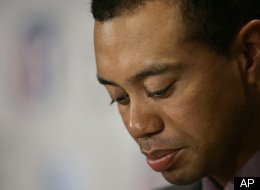
“My real apology to her will not come in the form of words; it will come from my behavior over time.”

Tiger Woods in his ‘press conference’

Ask etymologists who work for any common language dictionary … and they will tell you that all dictionaries cannot Prescribe means, but instead only Describe meanings that are already being ascribed through common usage.”

“For those who don’t find that good enough or revealing enough at this point, well,  maybe they have their own issues.”

Michael Wilbon, sports reporter for the Washington Post about, commenting on Tiger’s apology, calling it ‘pretty powerful stuff.’

Russell-Oliver Brooklands, responding to a discussion in Melcrum’s Communicators’ Network (via LinkedIn) about the use of the word “fulsome”

Quotes for the week ending 16 Jan, 2010

“This isn’t actually an article form a newspaper. It is part of the ad…”

Copy from a fake piece of editorial that’s part of a creative ad buy for Aflac in The Wall Street Journal, linking to the microsite, getquack.com

“They just had a name that was hard for Chinese to pronounce and harder to spell.”

Kaiser Kuo, a Beijing-based consultant and former head of digital strategy at Ogilvy & Mather in China, on Google’s decision to pull out of the country.

“I don’t think it’s wrong to take chances …Sometimes they work.”

Jeff Gaspin, of NBC, on the network’s decision to move Jay Leno back to his original slot –11.35 pm

a “pact with the devil”

The reason, according to televangelist Pat Robertson, why he thinks Haiti is cursed.

“Our alleged “pact with the devil” helped your country a lot.”

Haitian ambassador’s response, to Robertson

“This is citizen journalism at its best, bringing the news of nature’s worst to a global audience.”

John Savageau, on CNNs use of citizen journalism in Haiti

Quotes for the week ending 9 Jan, 2010

“…we’re not saying you’re evil, Google–you just sometimes make us want to wear a tin hat.”

Kit Eaton at Fast Company, on Google’s Near Me Now app on its Android phones and the iPhone that he says  will make “a lot of location-based App Makers” furious.

“Yes, I’m serious…there are plenty of companies that still insist on running every single tweet through multiple PR teams to make sure the messaging is spot on.”

Matt Singley, on the 6 things you need to know about social media.

“your diaphragm changes — your voice comes across very differently.”

Nancy Duarte, CEO of Duarte Design and author of slide:ology, on presenting to remote audiences.

“Jay Leno is one of the most compelling entertainers in the world today … It has, however, presented some issues for our affiliates.”

NBC statement on its decision to move the time slot of Leno’s show.

“Seamless connectivity and rich social experience offered by web 2.0 companies are the very antithesis of human freedom.”

Web 2.0 Suicide Machine, a web site that claims it can erase a person’s presence from Facebook, Twitter, LinkedIn and MySpace.

Quotes for the week ending 12 Dec, 09

“However Mr. Jobs, now that you got into this mess …You are the only person who can get our APPS ‘everywhere.’ despite the fact that their MAPS have blanketed the country.

Commenter named Gary of Chicago, on the Advertising Age story on how Verizon Wireless created buzz for the Droid phone –a distinct shift in the way a carrier is advancing the popularity of a handset.

“And, the warning? Don’t read too many blog posts like this.”

43 Folders, on NaNoWriMo

“Living Stories,”

Google’s experimental project to save newspapers, featuring content from New York Times and the Washington Post

“Our role is actually stronger than ever, because we are more than  just a magazine … to promote travel around the state.”

Robert Stieve, editor of Arizona Highways magazine

“When you’re using search engines, you’ve got to be diligent. You can’t trust that just because it’s Number 2 or Number 1, it really is…”

Jim Stickey, on how fake web sites trick search engines which become ‘unwitting accomplices’ of Google, Yahoo and Microsoft.

“Industry Listening Program”

One of the four recommendations by Rohit Bhargava, who advises companies on easing into listening via social media by keeping an eye on keywords rather than brand mentions