Purifiers, fiber-optics lines and masks. Welcome back to school!

I was as excited to be back in school as students were, last week. Online, of course. There’s something about a new school year that lifts our spirits, and simultaneously releases those abdominal butterflies. As I stepped out the car in park, strapped on my mask, and grabbed my satchel, I could feel this new normal creep up on me, and broke out into a grin – which no one notices now.

Distance learning is something we must get our arms around, like it or not. I’ve conducted webinars, and workshops online, but this is a whole new animal. (I date myself – in 2010, I taught a series of online classes that included blogging. Well!)

Behind checkered, floral and surgical masks, we go about our business, but it’s a business in a whole new dimension. Lesson plans need to get turned into material that delivered through a Google Classroom platform. These must be ‘chunked,’ linked and  annotated for a student doing it in small time slots, with slow WiFi, on a small screen. Video and audio recordings must be edited and uploaded –not to mention scheduling these moving parts in advance, with due dates and rubrics.

Tech questions arise and get solved on the fly by my colleagues: Could videos be cropped in Screencastify? Is there enough storage capacity on the drive? Why doesn’t PowerPoint let me use audio narration in a Microsoft 365 version? Check this neat way to turn a Google form into a quiz  (and have it grade the responses as well!) These and other issues must be figured out before dozens of Google Meets light up the building.

The week before we began, maintenance crew were crawling through the ceiling adding more lines of fiber optic lines  to support our data-hungry re-launch of distance learning.  We picked up our cameras to get up to speed with video conferencing.  With Bitmojis and bottles of sanitizer we took our positions and opened for business.
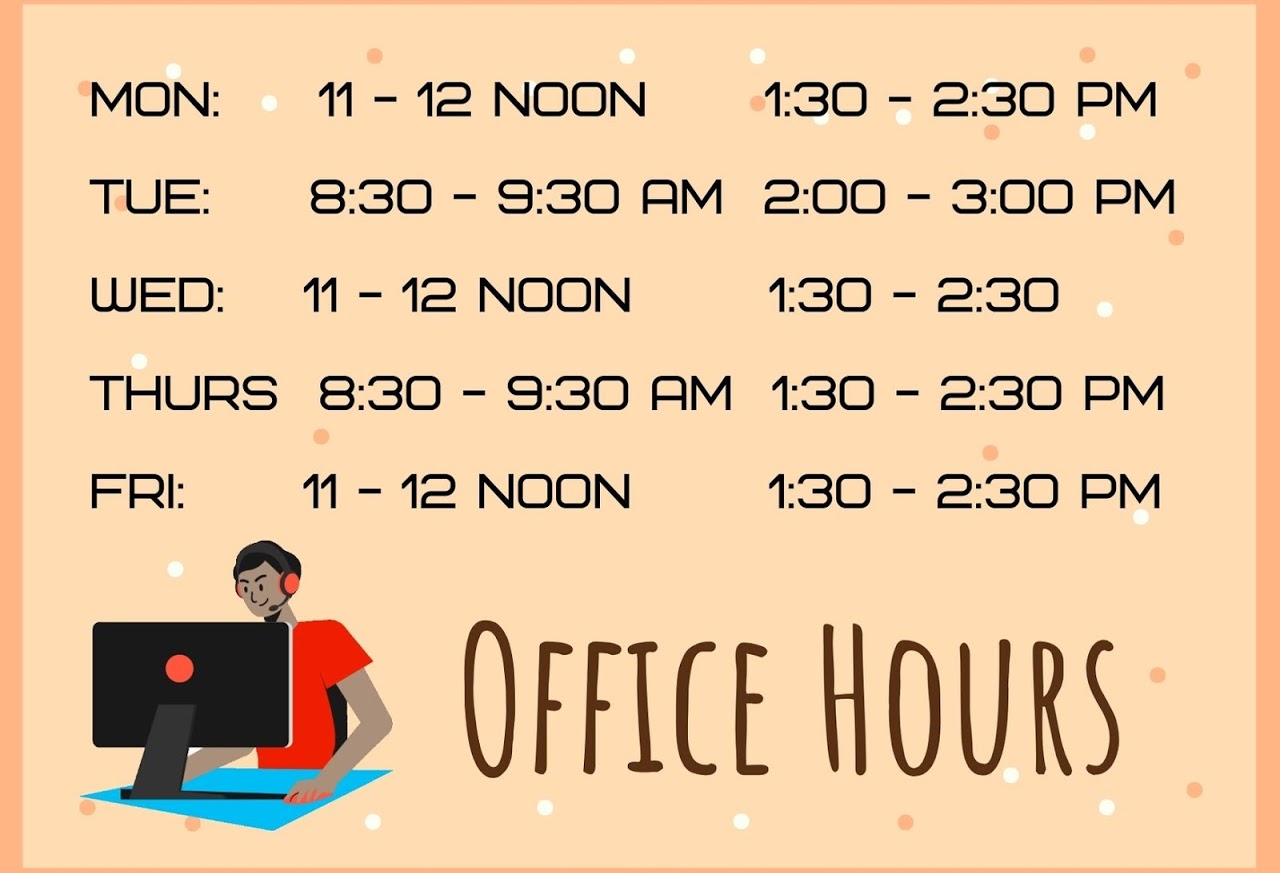
Three weeks of it, and still having many aha moments, this new normal is anything but. But as the students log into my ‘Office Hours,’ I am beginning to relax and enjoy being a teacher. I used to say that if I continue to do what I’ve always done each year, the students won’t be learning much. All of us – me and you and that dog named Boo — have collectively hit the reboot button. These lessons will last us a lifetime!

Thoughts on wrestling with ‘hybrid’ learning models as schools reopen

Photograph, courtesy Annie Spratt, Unsplash.com

The question on everyone’s mind is not, “When will school reopen,” but how.  It’s been on our minds, nagging us like crazy no sooner we closed for summer this May.  My wife and I being teachers, have different models and school environments. Hers is a Montessori – Li’l Sprouts. Mine is a classical academy, Benjamin Franklin High School.

Should her students wear masks? And social distancing two-and three-year olds? Hmmm. She has decided to wear a face shield when not donning a mask. My students will have to learn new ways to conduct themselves, from the simple things like sharing pencils and keyboards, to what to do or not during recess.

The hybrid model is something we have experimented with from March through May with mixed results. Students love computers, but aren’t exactly thrilled about being ‘instructed’ through them.  (She conducts Zoom sessions, I’ve been using Google Meet.) But having said that, we educators have to adapt to the times and be part of the learning. I love the challenge, however. I’ve been spending much of these quarantined months experimenting with platforms and lessons, while not hanging out at a coffee shop with a mask. Toggling  between face-to-face and online technologies: Screen-Castomatic, Explain Everything;  Jamboard, and Google Classroom.

Remember that ‘PLC’ buzz acronym (for ‘professional learning communities’) that got thrown around a lot five years ago? Now’s the time for us to show that we can be a true learning community. Not just with our peers, but with our students. A community of learners.  As the Coronavirus mutates, we must hybridize.  Would that make us ‘PHCs‘? Professional Hybrid Communities? Here are my random thoughts on how schools will be for the near future, at least in the US.

  1. Teachers will find ways to better connect with and understand students they don’t see face-to-face or have just a smattering of time with, should they show up in class or on camera.
  2. Parents will form strong partnerships with teachers in that there will be much more back-and-forth, rather than leaving it to annual parent-teacher conferences. We need their unstinting support as much as they need ours.
  3. We will all admit that technology is messy. It’s sometimes broken, and cannot be the magic bullet. Meaning, we will stop complaining about poor WiFi, or the audio not working.
  4. We will not forget the larger lessons we are called to teach. Yes we want to help students dot the i’s and cross their ts, but we want them to have grand takeaways that make them better people, not just high GPA achievers.
  5. The clock-watchers will disappear. It won’t matter if we run  ten minutes over to explain the difference between a web browser and a search engine for the eleventh time. The ‘lab work’ won’t end when the Bunsen burner is turned off.

Let’s not allow a virus to kill our enthusiasm. Let’s be safe. But let’s go!

Chat Republic revisited

Angelo Fernando - Chat RepublicI came across post of interview I gave back in February 2014. It was interesting to recall how I was really anxious about the downward spiral of social media, then.
Read the full interview here.

Two of those questions were:

PB: How did you come up with the title for your book?
AF: I was always amused hearing people repeating the phrase “If Facebook was a country” as if it was a thing to revel in. I have also been fascinated by the power of conversations and the spoken voice that, minus cameras and other distractions, conveys much, much more.

PB: What is the main message you want your readers to understand?
AF: My overarching message is that we risk losing what makes us human by being so distracted that we prefer to scan headlines in 140 characters, rather than dig deep into the issues. We risk losing the art of listening because we are busy thinking how we may craft the next ‘tweet burp.’ After reading my book, I hope my readers reconsider what goes on in the name of marketing communication, PR and corporate communication.

The digital media conundrum

As I prepare a syllabus for a new class on media, I am fascinated by the ambivalence of so many who have moved transitioned from the analog to the digital age.

“On the one hand,” says MIT’s Sasha Costanza-Chock, an associate professor of civic media, “digital technology has been used by progressive social movements” to mobilize citizens to action. But on the other,   we have entered the era of digital media being used for surveillance, “well-funded disinformation campaigns” and extremists.

Newspapers and media organizations also wrestle with this conundrum, as this cartoon aptly captures.

From Editor & Publisher. editorandpublisher.com/cartoons

Facebook employee resignation reveals dark practices

Take a look at this disturbing resignation letter from employee, Timothy Aveni.

He says that “Mark always told us that he would draw the line at speech that calls for violence. He showed us on Friday that this was a lie” and that he finds “Facebook complicit in the propagation of weaponized hatred, is on the wrong side of history.”

He says he’s scared for the US because, “social media-fueled division that has gotten people killed in the Philippines, Myanmar, and Sri Lanka.” 

A few days back I asked my friends (and posted here) if they could justify using this corrupt social network. But don’t take my word – pay attention to this FB employee!

And you’re still using Facebook?

This country is in flames while Facebook continues to play the game of ‘free speech’ –basically making space for hate speech. In Sri Lanka, Indonesia and Cambodia Facebook was called out for this last year – and apologized.

Zuck’s apologies mean nothing!

Today, Facebook’s own employees have called out its morally bankrupt leader on his decision to not take down the innuendo-rich Trump tweet on the “looting…shooting”  in relation to the George Floyd protests.

There’s no point hand-wringing, and criticizing, if you’re still using Facebook. It’s time to quit! The time was two years ago, actually.

Breaking news is broken. The replacement parts are not available.

Ok, I am being facetious here in my post headline. But what annoys me is how news organizations continue to parrot the ‘Breaking news…..” model, trying to get our attention, when the news is not actually breaking. It’s often late to the party, and the story is fractured.

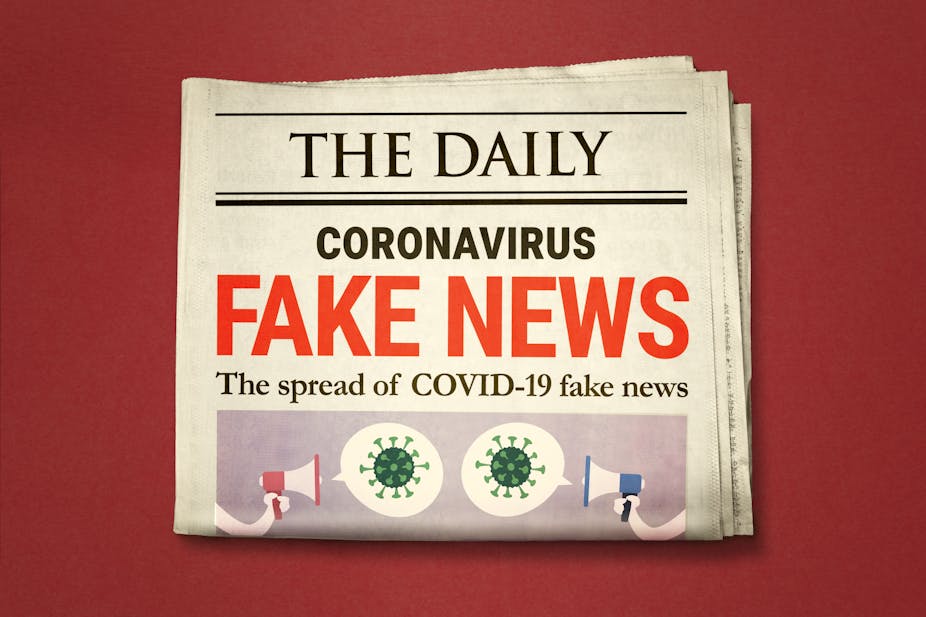
Did you hear the one about the Nobel prize winner from Japan who claimed he had reason to believe Coronavirus was designed in a lab in Wuhan?  If you did,  I hope you did not share this story on WhatsApp because the story was a fake. Plausible? Yes.  But it was completely manufactured. 

Many acts of disinformation are manufactured on a grain of truth, but upon that grain are placed smooth pebbles of faulty data, and these support larger rocks, perilously balanced to form what looks like some pleasing artifact.

The person in that twisted story was Tasuku Honjo, a professor at Kyoto University who won the 2018 Nobel Prize for Physiology or Medicine. He and an American researcher had found a way to manipulate the body’s immune system to combat cancer. He had never worked in a lab in Wuhan China, and never said that “the Coronavirus is not natural. It did not come from bats. China manufactured it.”  (See professor Honjo’s statement here) And yet, it spread like wild fire. Or rather, like a virus. Jumping from human to human because we just don’t understand how to ‘social’ distance ourselves from social media and misinformation. 

Before today’s keyboard warriors were even born, countries including the US employed such tactics. In 1693 England a printer, William Anderton, was executed for publishing stories against the monarchy. In the US around 1898 another William, published fake stories about Spain triggering the Spanish-American war.  That was newspaper magnate William Randolph Hearst !

Today’s breaking news model, practiced by not just the large TV networks but by lazy cut-and-paste ‘reporters’ (repeaters, really!) simply recycles this model. And unfortunately it works. Even the president is doing it. 


My typewriter, a Corona

My typewriter shuttles between home and my computer lab. So when I brought it back from school last week I was surprised to see it was a Corona.

The company that made these marvelous machines was actually Smith Corona. This model goes back to 1935!  I love the sound of the keys as I type. Interestingly I use it in demos when introducing keyboarding in class each semester. You should see the rush of students waiting to use the clickety-clack machine –in a class filled with 34 computers!

On an interesting side note, you should watch this TED talk that I had referenced some time back. It’s how a technology innovator names Aparna Rao, hacked a typewriter to enable it to send email! Why? Because it helped her uncle feel he was typing a letter, and still give him the ability to email. Fast forward to 1 min, 14 secs for this segment.

Covid, the back yard, and a camera – Serendipitous moments

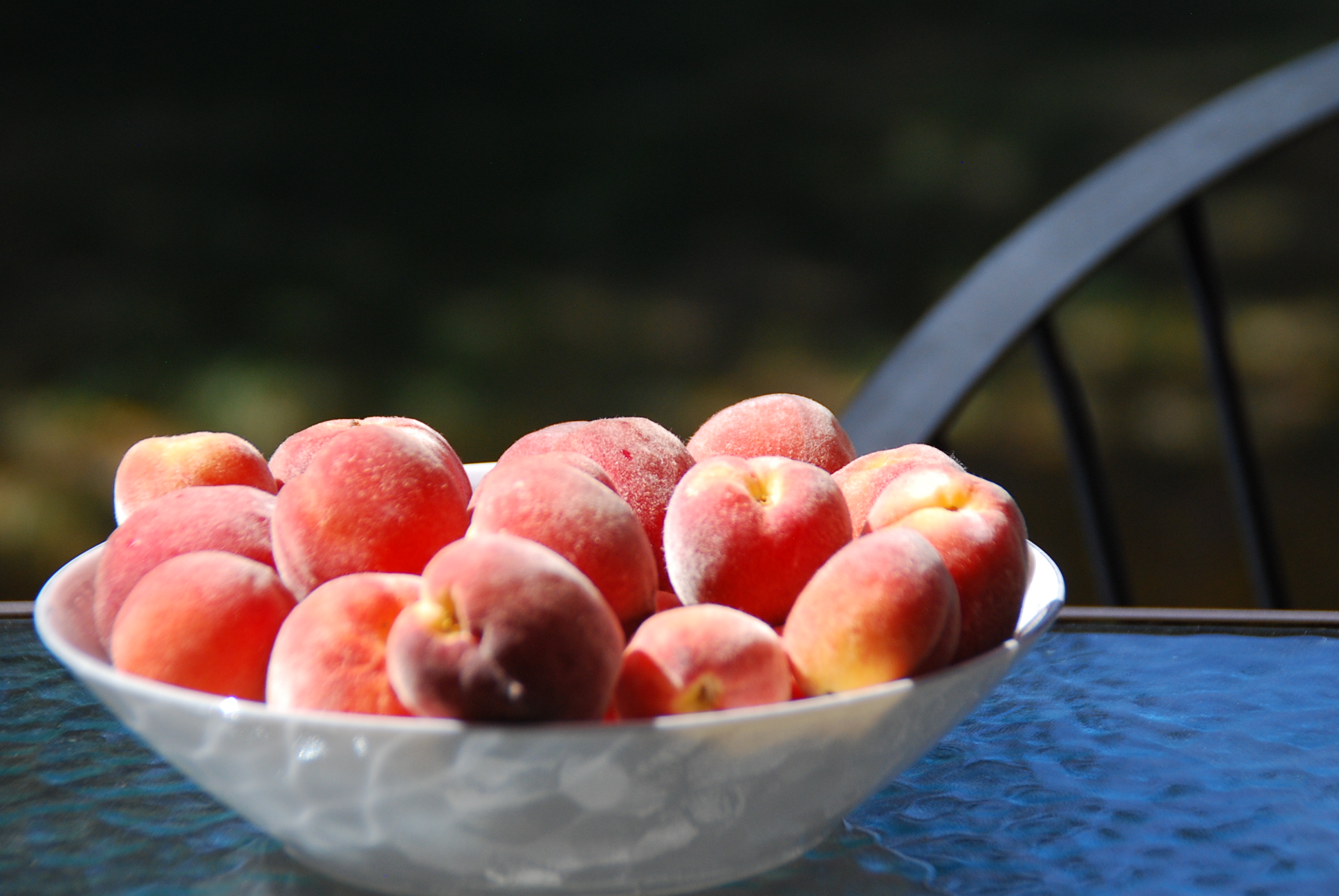
Sometimes photographs just present themselves! On Monday we got our first batch of peaches from a yard we seem to be spending more time in now, courtesy Covid-19.

Having just co-taught a photography class, I am revisiting how depth of field, and ISO settings on my trusty (old) Nikon might make a still image more interesting.

There’s also the serendipitous moment when the morning sun filters through the trees on to a beaten up old log that the Montessori kids use for woodwork.

And yes, the peaches, about the size of large strawberries, are really, really sweet.

Photoshop, Photography and Web Design in final week of school

This was indeed a weird semester! So to end it on a high note, I taught classes on image manipulation, digital photography, and Web design on three consecutive days. Using Google meet, of course.

Photoshop was something all my students had asked for. It’s an opportunity to also connect it to real-world issues such as doctored images in news –a blood relative of ‘fake news’ — digitally altering historical figures –Churchill without a cigar, MLK at a cleaned out podium on the Mall — and simply knowing how to be aware of what could be Photoshopped.

Photography may not seem related to a computer class, but we all know that taking pictures, editing, and sharing is now a given in a young person’s life. Any device is now a ‘camera.’  To make it more interesting, I invited a photographer from Sri Lanka to co-teach the class. (This is distance learning after all, so what’s another 10,000 miles?) Nazly Ahmed, a photo-journalist uses various cameras, spoke of lighting and composition, depth of field, framing, why aperture settings and ISO are important.

As for web design, the goal for the class was to give students an opportunity to design a site that could be home to their digital portfolio, or even a rudimentary business.

I also added a photography contest, so that students could go and use the techniques they learned. The winners are announced on my class website, here.