Last week I was contacted by ‘FIRST Global‘, an organization launching an Olympic-styled robotics event in Washington, DC, in July 2017. They were keen to see students from Sri Lanka represent their country.
I have been talking to organizations in Sri Lanka about this, and wanted to summarize details of the endeavor.
FIRST Global is the brainchild of serial entrepreneur, Dean Kamen, whose organization holds several robotics competitions for schools across the country. My school participates in it, and I have been the robotics coach since 2012. But this event is different, and stretches its global footprint to reach out to every country on earth, and empower students in engineering and science.
The Goal: To ignite a passion for Science, Technology, Engineering, and Mathematics (STEM) among the more than two billion youths across the world.
Dates: 14 – 18 July, 2017
The Requirement: High-school students (ages 15 – 18) who would build and program a robot from a provided kit (hardware and software)
Team: Could comprise 3 students, plus a coach
What I like most about this event is that it fosters a new international movement among future STEM leaders who will use the ‘competition’ as a springboard for global collaboration not just in robotics but in the emerging fields within science and technology.
The Robot Challenge: The focus this year is on Water. More specifically access to clean water.
For this, the robot table at the competition will be set up with challenges solving the global water crisis.
This could be similar to how the ‘missions’ are set up on the board for the other FLL competitions (2016 wasAnimal Allies, in 2015 it was Trash Trek etc) in which the robot to accomplish as many missions as possible within two and a half minutes.
For students who might want to contact me, here is one of the videos that explain the hardware that will be available to design their own bot. If you need more information, please contact me at publicradius at gmail.
Professor Ashley Halpe, who passed away on 14th May 2016 was more than a teacher to me. He was a role model, a constant inspiration, a consummate artist, and a friend.
His inspiration was contagious – it made no difference whether it was in the hallways of the arts faculty in Peradeniya, or the living room of his home. His humor was a constant, as was his ability to remain unruffled by the latest flavor-of-the-month student strike or political upheaval. As for the latter, Ashley Halpe lived through many, from the insurgency of 1971, to the ethnic unrest on the campus pre-July ’83. It might be fitting to say that he looked at these events with a poet’s eye, not as a keen observer, seeing himself as part of the solution.
As Professor Walter Perera, commented, “No other lecturer in our time was able to bring poetry and drama alive as he did. But his strengths were not limited to the classroom.”
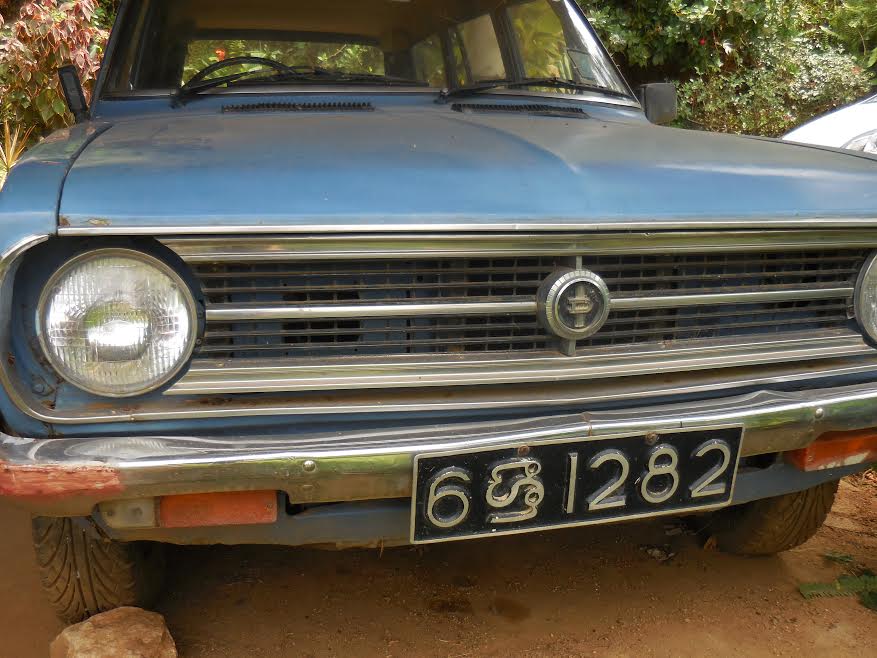
If I may expand on that, I would say his influence was not limited to books on his shelf or his classroom. True story. One day a few of us who showed up for class were asked to leave our books behind in class and get into his blue station-wagon, which he drove to Peradeniya Gardens. This was not a field trip, but a ‘seminar’ under the sprawling Banyan trees in the 147-acre botanical gardens. To Professor Halpe, the classroom could be anywhere! “All the world’s a stage; And all the men and women merely players.”
I was fortunate to visit prof. Halpe in Kandy in July last year. We talked of many things –about writing, and teaching, poetry and publishing. But I am not sure if I thanked him enough for his sphere of influence that reached out and touched us, no matter how far we have moved.
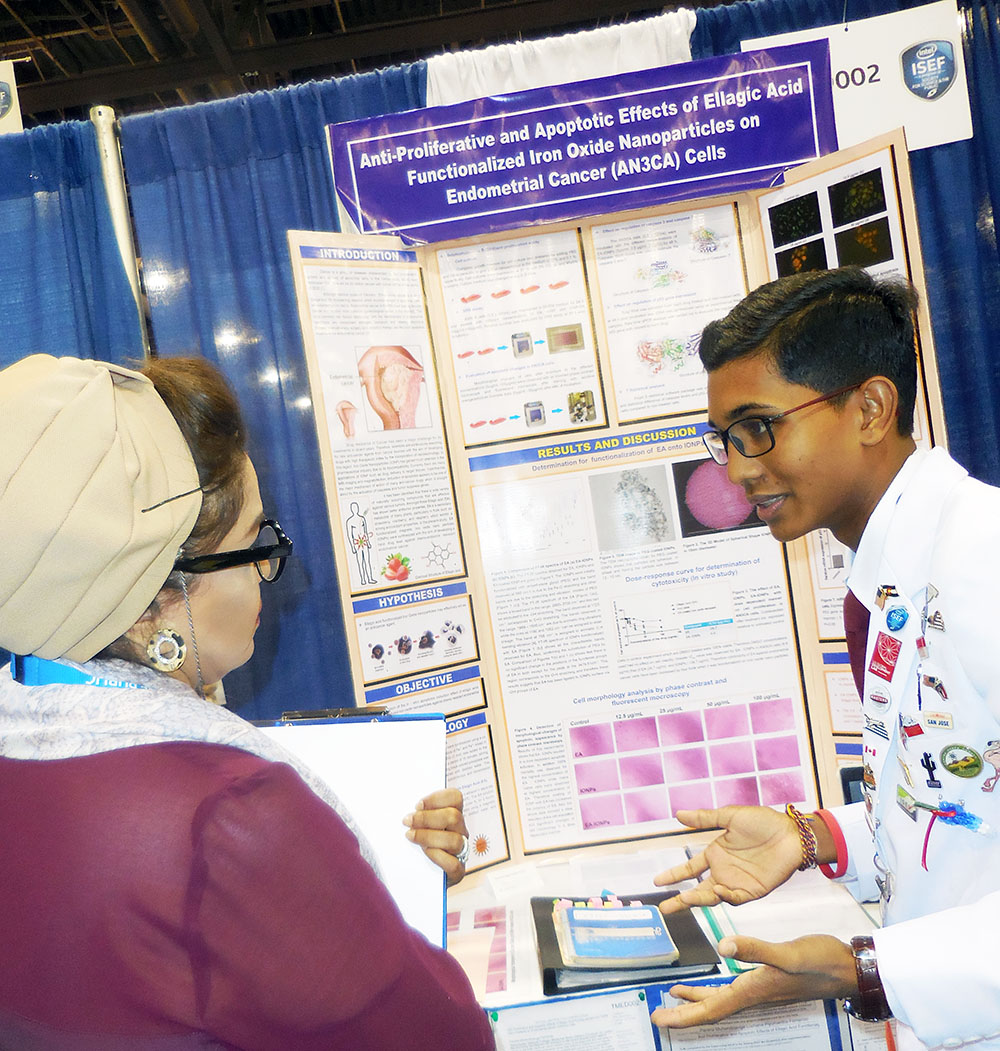
I volunteered at the Intel Science and Engineering Fair in Phoenix yesterday as a translator for Sri Lanka competing at the international event.There were thousands of students from Azerbaijan to the Ukraine –and 24 from Arizona. There were outstanding inventions and research across the board. These three students’ work were very impressive!
17-year-old Lochana Fernando had breakthrough research on cancer. His board was titled “Anti-proliferative and Apoptotic Effects of Ellagic Acid Functionalized iron Oxide Nanoparticles on Endometrial Cancer Cells.” In plan English it was looking at a way to use nano-technology to fight uterine cancer.
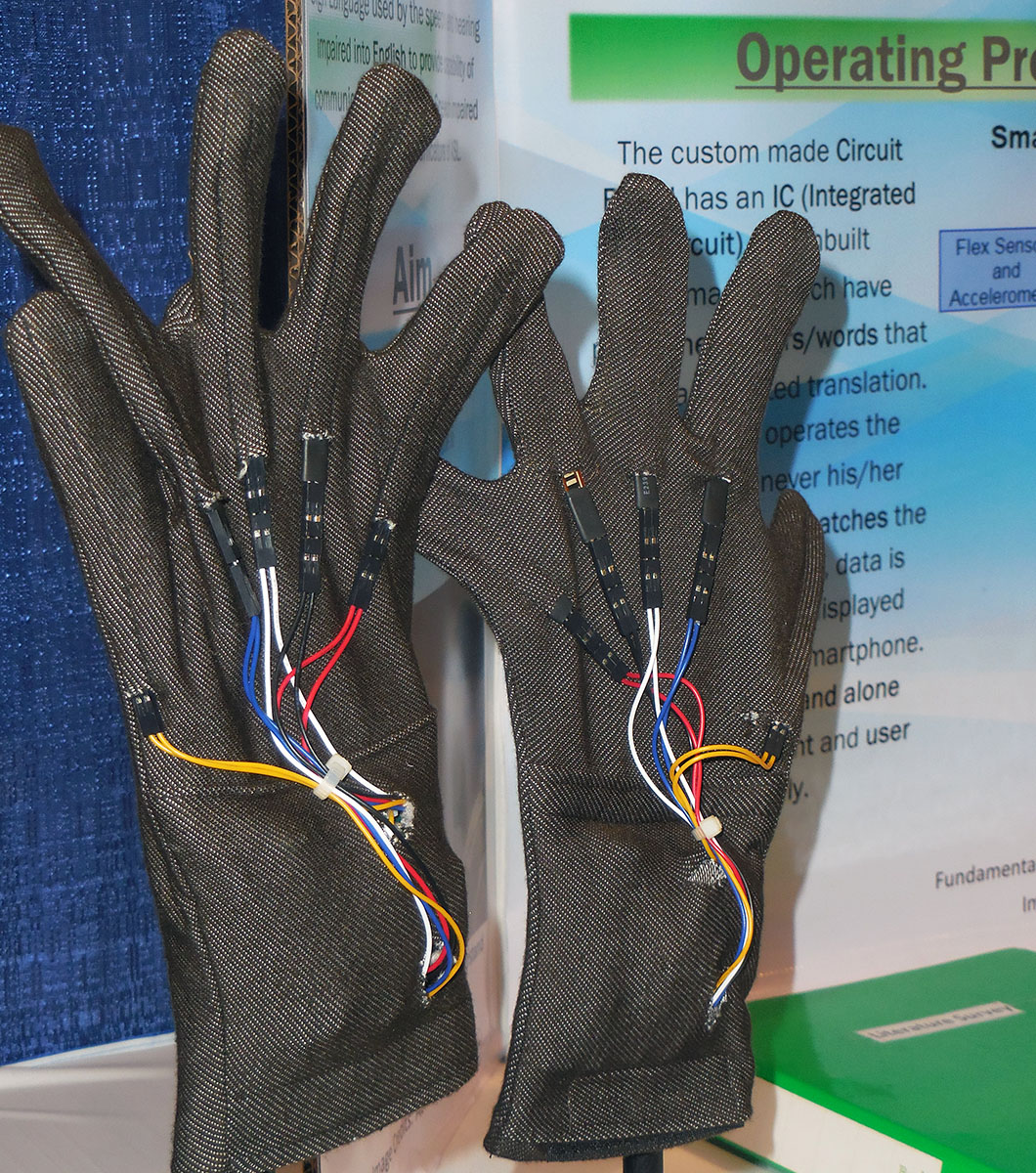
16-year-old Abishek Gomes had a product, a smart glove, that would convert sign language to English. His board was titled “Wearable Device to Translate American Sign Language (ASL) into English.”
14-year-old Chamindu Jayasanka displayed a pair of “Modified Adjustable Crutches” he had invented to help amputees in particular. It is easily adjusted, but the neat part is that it also serves as a foldable seat!
Abishek Gomes
Chamindu Jayasanka
Lochana is from Senanayake National College, Madampe. Abishek is from Belvoir International School, Colombo. Chamindu is from Rajasinhe Central College, Hanwella.
To make the pair of smart gloves, Abishek explained how he had to teach himself programming, and learn how to modify a 3-D printer (among other things) in order to give precision to the flexible connectors inside the gloves. This was crucial to precisely convert finger movements to the alphabet in real-time.
The stakes are high. Three first place winners are awarded $150,000 each!
I am testing a book creation tool called YouBlisher. The goal is to learn how it works so I could teach my students next year how to ‘publish’ in more ways than one! Test it out and let me know what you think.
Click on the icon to view a digital book that lets you flip pages. Then read below the pros and cons:
What’s good about Youblisher:
It’s free, so I don’t have to download any software.
The content has to be created on a local computer, and not on the provider’s website.
You need to convert your document into a PDF to upload it. Which means you create your book as a Microsoft Word doc, or Publisher. Alternatively, you could create a photo book using Photoshop or Powerpoint. As long as you save it as a PDF.
The pages flip like a professional ebook.
YouBlisher gives you a link to embed (which is not what I did here – I just linked an image of the cover, back to the site.) They also give you a Facebook embed code.
What I wish was possible:
A way to download the entire ebook, and save it on any device
Not only is science fun, it could have a big payoff for students.
Big, as in $150,000!
The Intel International Science and Engineering Fair (of ISEF), the world’s largest pre-university science competition, really rewards budding scientists,engineers and inventors.. This year three students won the top $150,000 prize each. Second place winners won $75,000 each.
Founded 75 years ago, the fair attracts some 1,700 high school students from over 75 countries, regions, and territories who showcase their research and compete for approximately $4 million in prizes.
One of the winners (left), 17-year old Paige Brown, found a way to filter pollutants in stream water, and has nano-technology in her sights to expand on the device.
This kind of scientific problem-solving is extremely relevant here in the US, where several cities are discovering high levels of lead in drinking water, after the Flint, Michigan disaster. As the New York Times states in its report, “Rules and science are outdated.”
The future generation of scientists and policy makers like Paige will be updating the science. Other students are ‘discovering’ new ways for disease management and medical breakthroughs.
Here’s a video I did with Ruben Gameros, a grad student at State University. It’s about what it takes to start a Robotics program.
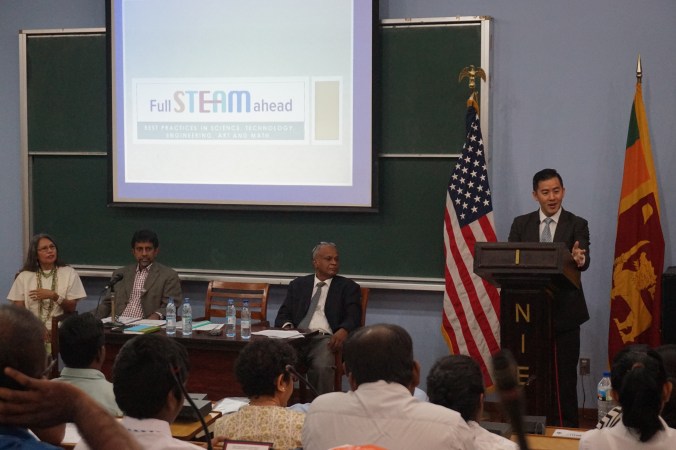
This was a hot topic in the STEAM Workshop last December in Colombo and Kandy, Sri Lanka. We know drones are changing the game in many areas. How about ‘Swarm’ robotics? Watch Ruben explain!
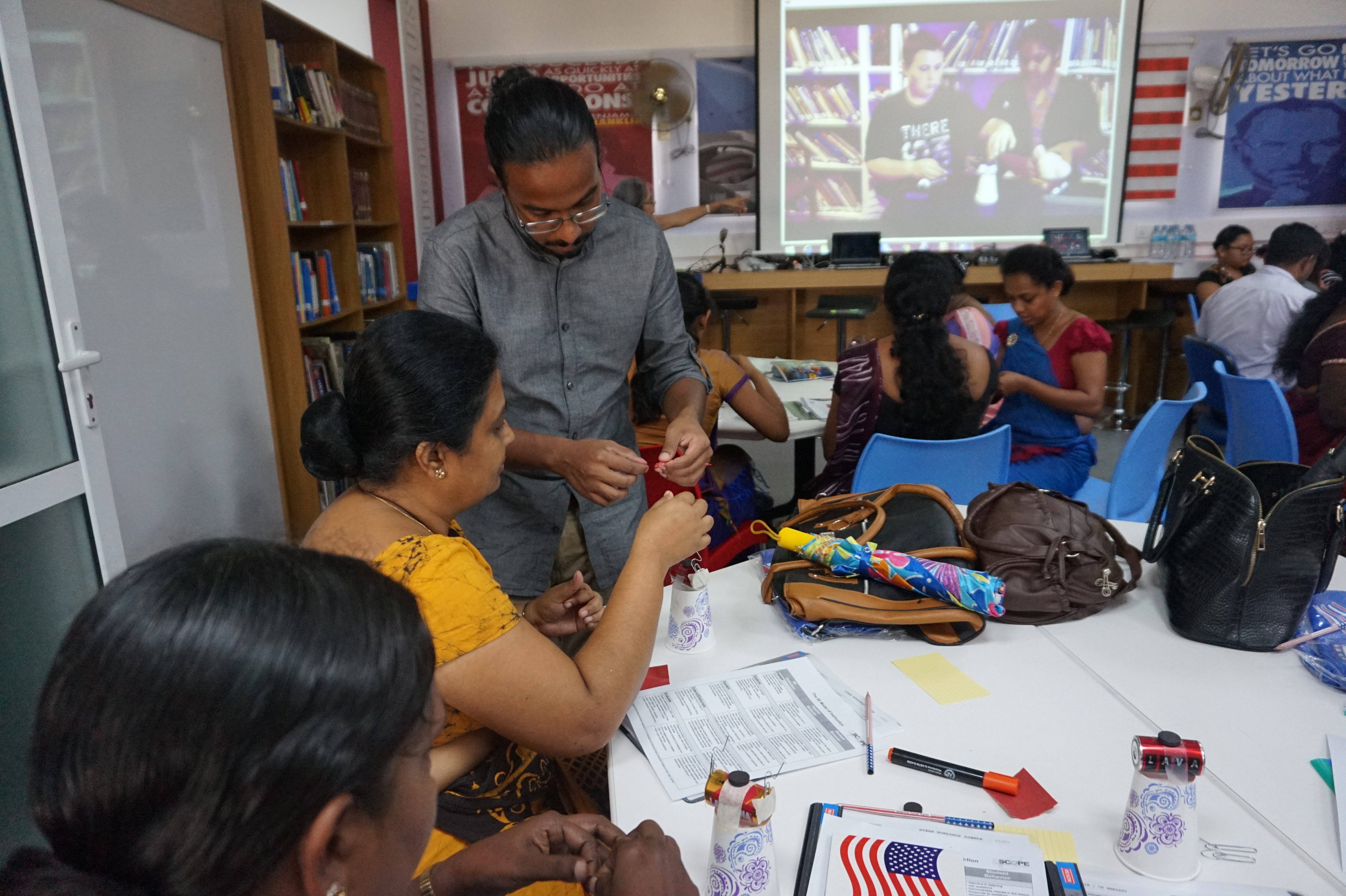
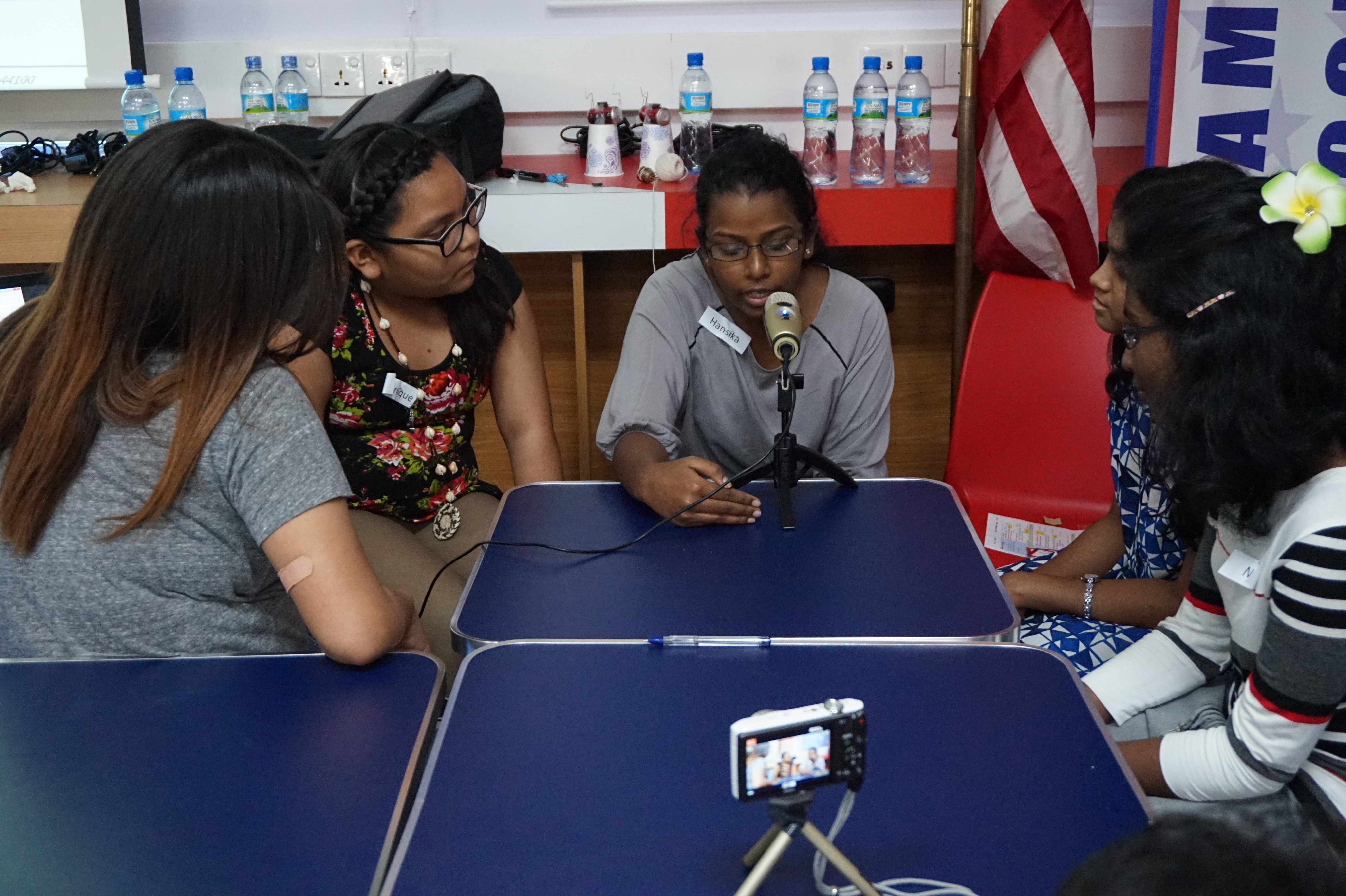
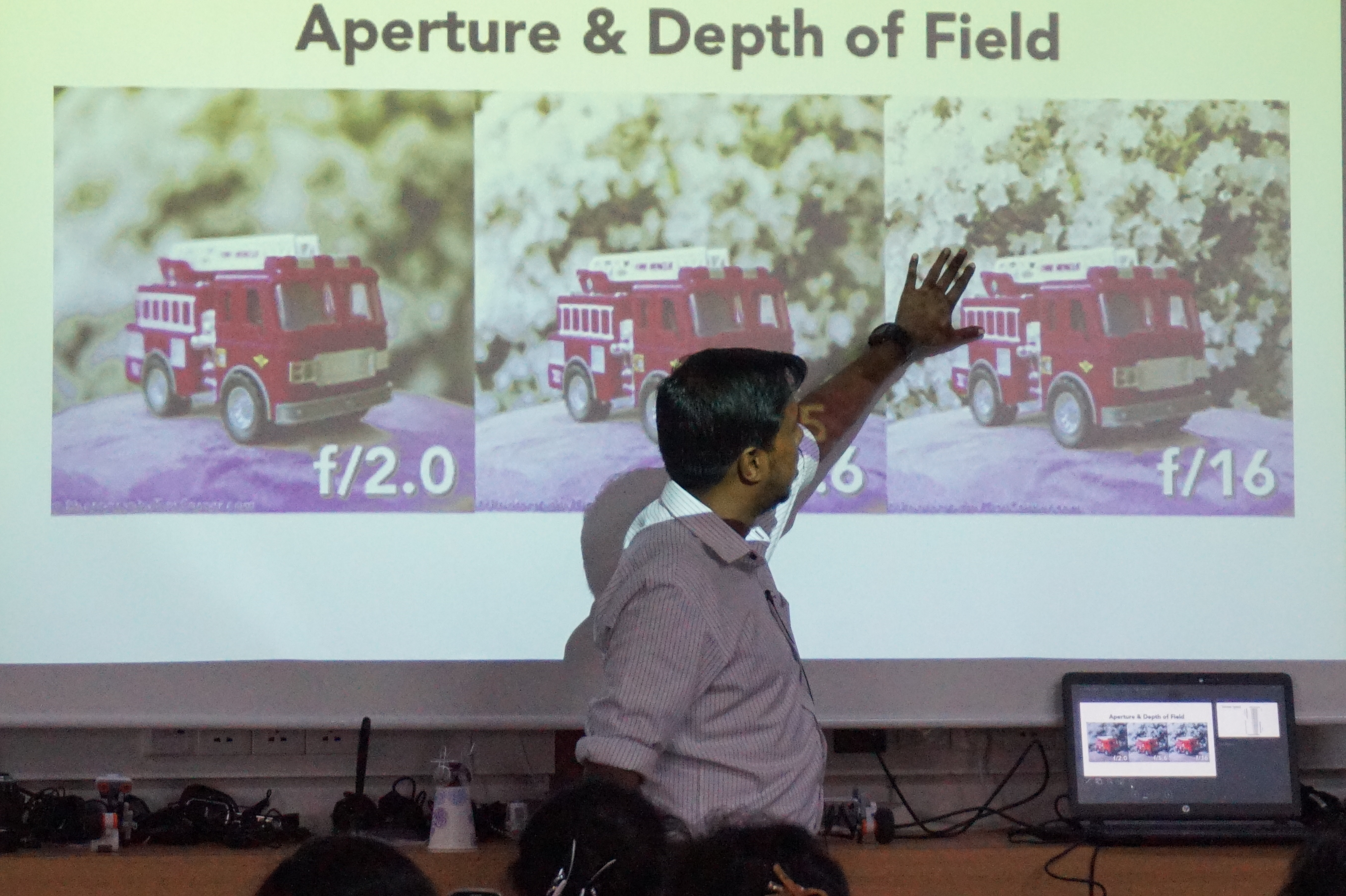
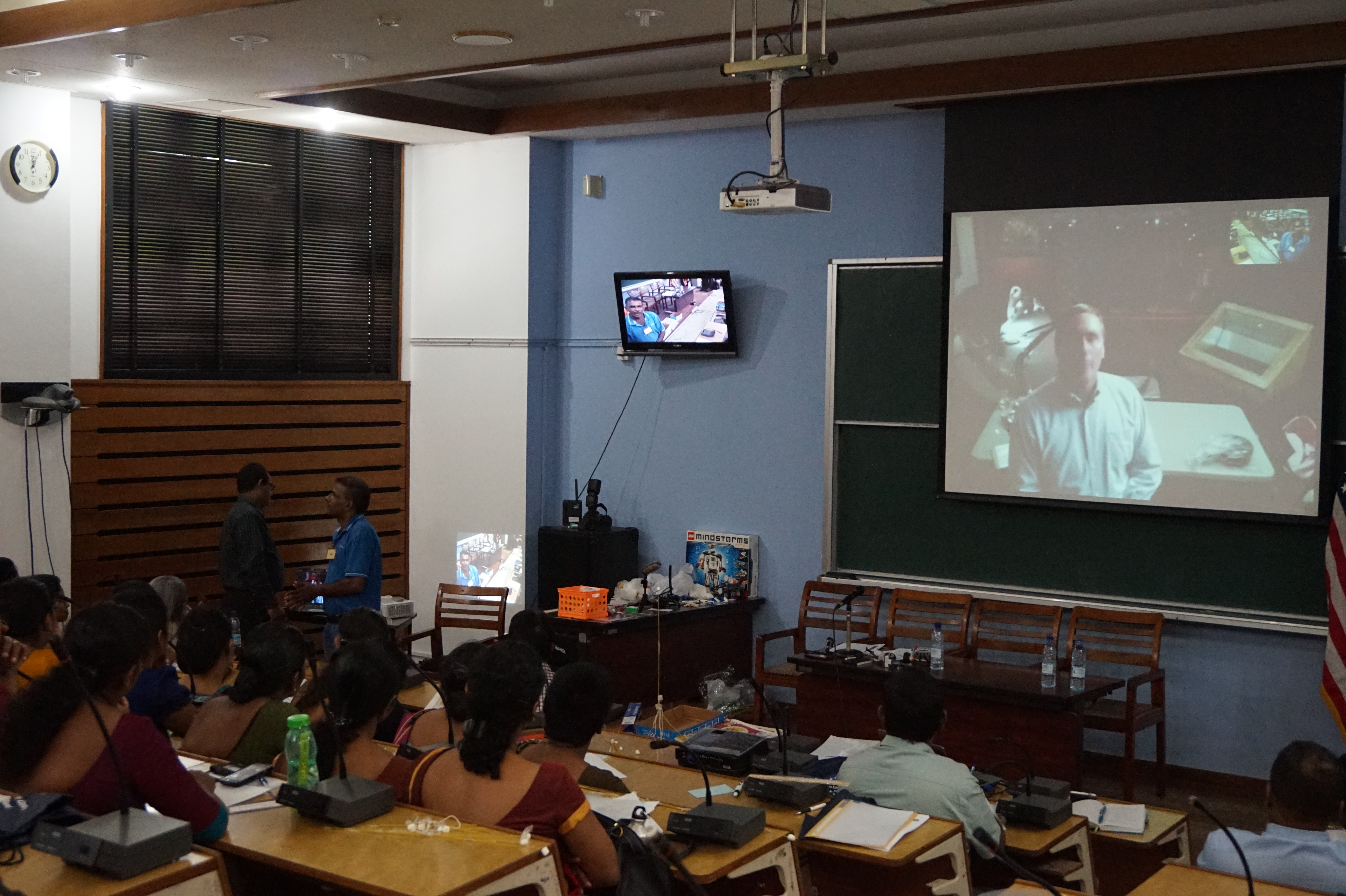
Just got back from a short trip to Sri Lanka, where I conducted two workshops for teachers.The first was in Maharagama on Dec 15th & 16th. The second workshop was in Kandy on Dec 18th.
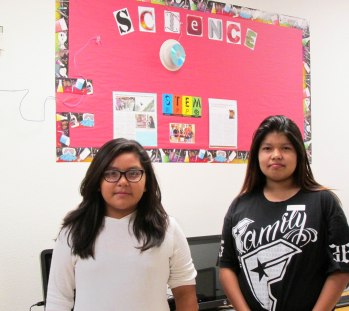
Two students from my school district have been invited to visit Sri Lanka as ‘STEAMAmbassadors‘ in December.
They will represent the Salt River Pima-Maricopa Indian Community at two workshops for teachers on Science, Technology, Engineering, Art and Math. The workshops will be held in Colombo and Kandy.
The students are:
Dominique Grey, a sixth-grade student at Salt River Elementary.
Haley Smith, a seventh-grade student at Salt River High School.
Maria Chavez, the school’s Parent/Community Involvement Specialist, will accompany them, as well as one parent of each of the students.
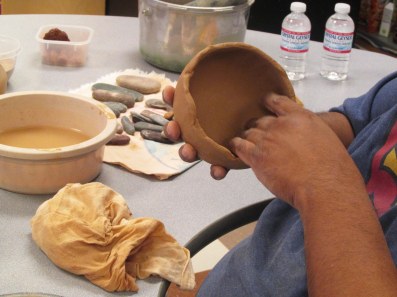
I was listening to a teacher, Ron Carlos, demonstrating pottery a few weeks back, and he was telling students on how important it is for them to stay ‘in touch with the earth’ around them. This included being aware of the natural resources they have been blessed with. Creativity, he said, takes patience, and spending time ‘tuning in’ to the material. Sometimes, he said, it’s as if the clay in his hands decides what shape it wants to be.
It reminded me of the craft of writing. Many authors describe how the character they give birth to, often decides where to go and what path to take. Just like wad of clay, I suppose!
How does this apply to many of us? Many of us sleep with a cellphone by our bedside, and a wi-fi-connection within a few feet no matter where we wander. No wonder it is such a challenge to find ‘think time’ and creative time. We are victims of TMI –which is an old acronym for ‘Too Much Information’, but also an acronym for ‘Too Many Inputs.’ And we can’t honestly blame anyone for it.
In a forthcoming workshop, I am planning on bringing up this topic of how important it is to be connected, but also to often (very often) be off the grid, so to speak.