 As we get to know different parts of the puzzle about the Boston Marathon bombers, one thing has become clear. The biggest leads came from cameras that were in the hands of private citizens.
To this end, read this by someone who predicted citizens’ potential:
If the day comes when millions of people go about their lives while wearing sensor-equipped wearable computers, the population could become a collective surveillant: Big everybody.
That was Howard Rheingold, in Smart Mobs: The Next Social Revolution.
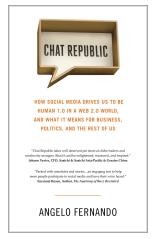
How will citizen participation take shape when everyone is a reporter, a photo-journalist? It’s easy to be cynical, but I have talked to many people about this, in my book, Chat Republic, and have to admit that you win some, you lose some: freedom / security.
Crowd-sourcing, whether it is investigating health issues or knowledge is always a good thing.

 Shakespeare piles on metaphors of books, records, copying etc, to take the audience –an outbound link– to a place that provides some background to Hamlet’s state of confused state of mind, his ‘distracted globe.’

 I also noted recently my disappointment at one aspect of the ‘death of print’ – the news that Britannica is ceasing to go into print. Some of my friends thought it was a good thing. One said it was cumbersome to have to dig into journals for knowledge he needed fast. I was interested not in what it meant for us in the now, as to what it meant for present younger (and future) generations, who automatically think that search engines index and reveal everything there is to know on a particular subject.
 Hoipolloireport