Purifiers, fiber-optics lines and masks. Welcome back to school!

I was as excited to be back in school as students were, last week. Online, of course. There’s something about a new school year that lifts our spirits, and simultaneously releases those abdominal butterflies. As I stepped out the car in park, strapped on my mask, and grabbed my satchel, I could feel this new normal creep up on me, and broke out into a grin – which no one notices now.

Distance learning is something we must get our arms around, like it or not. I’ve conducted webinars, and workshops online, but this is a whole new animal. (I date myself – in 2010, I taught a series of online classes that included blogging. Well!)

Behind checkered, floral and surgical masks, we go about our business, but it’s a business in a whole new dimension. Lesson plans need to get turned into material that delivered through a Google Classroom platform. These must be ‘chunked,’ linked and  annotated for a student doing it in small time slots, with slow WiFi, on a small screen. Video and audio recordings must be edited and uploaded –not to mention scheduling these moving parts in advance, with due dates and rubrics.

Tech questions arise and get solved on the fly by my colleagues: Could videos be cropped in Screencastify? Is there enough storage capacity on the drive? Why doesn’t PowerPoint let me use audio narration in a Microsoft 365 version? Check this neat way to turn a Google form into a quiz  (and have it grade the responses as well!) These and other issues must be figured out before dozens of Google Meets light up the building.

The week before we began, maintenance crew were crawling through the ceiling adding more lines of fiber optic lines  to support our data-hungry re-launch of distance learning.  We picked up our cameras to get up to speed with video conferencing.  With Bitmojis and bottles of sanitizer we took our positions and opened for business.
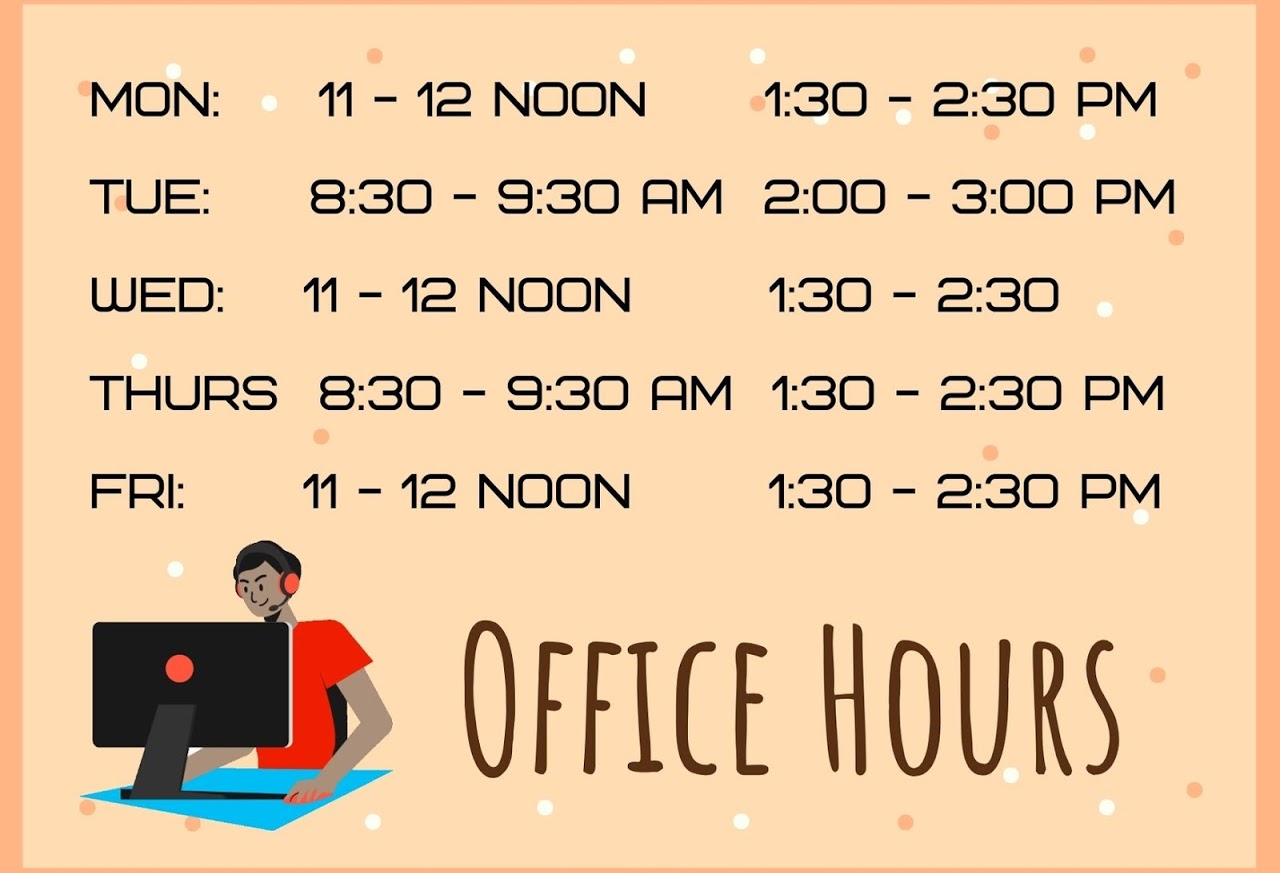
Three weeks of it, and still having many aha moments, this new normal is anything but. But as the students log into my ‘Office Hours,’ I am beginning to relax and enjoy being a teacher. I used to say that if I continue to do what I’ve always done each year, the students won’t be learning much. All of us – me and you and that dog named Boo — have collectively hit the reboot button. These lessons will last us a lifetime!

Tired of Zoom? Small schools suddenly seem attractive

So what’s the Facebook-fueled fad about ‘pandemic pods‘ all about? As with many fads, it’s something that’s been around for more than a century. Since 1906, to be exact.

And the model? A small house –a casa. Basically a ‘house of children’ or ‘Casa dei Bambini.’ That was, of course, the first successful hands-on school begun by Maria Montessori. If Facebook had been around, someone would have called these nano-schools, or a ‘practical life pods.’ Maria Montessori didn’t need likes. If she had followers, they included poor  and working-class parents with challenged kids. Oh, and there were folks like Alexander Graham Bell, an early promoter of her method when it came the America.

This prolonged pandemic, and the need to isolate ourselves has thrown a large curve ball at us parents, business owners and most importantly, children. Suddenly the large ‘campuses’ with sometimes 3000 students are frightening. The home-school model or the Montessori ‘house’ clearly addresses many of the concerns parents have. Not the masks or no-masks, or 6-foot-rule question. But questions and concerns such as:

  • What’s the alternative to sticking my child in front of an iPad?
  • My child needs to be outdoors as much as academics. More trees than apps!
  • Social media is killing socialization. I need a school that is ‘offline’ for eight hours of the day.

As schools get ready to make the large-school experience more engaging, and personal, more of these models will crop up. Maria Montessori would be pleased. Children need a safe place to learn, exchange ideas and socialize not something akin to an office space, where everyone’s glued to a screen.

Thoughts on wrestling with ‘hybrid’ learning models as schools reopen

Photograph, courtesy Annie Spratt, Unsplash.com

The question on everyone’s mind is not, “When will school reopen,” but how.  It’s been on our minds, nagging us like crazy no sooner we closed for summer this May.  My wife and I being teachers, have different models and school environments. Hers is a Montessori – Li’l Sprouts. Mine is a classical academy, Benjamin Franklin High School.

Should her students wear masks? And social distancing two-and three-year olds? Hmmm. She has decided to wear a face shield when not donning a mask. My students will have to learn new ways to conduct themselves, from the simple things like sharing pencils and keyboards, to what to do or not during recess.

The hybrid model is something we have experimented with from March through May with mixed results. Students love computers, but aren’t exactly thrilled about being ‘instructed’ through them.  (She conducts Zoom sessions, I’ve been using Google Meet.) But having said that, we educators have to adapt to the times and be part of the learning. I love the challenge, however. I’ve been spending much of these quarantined months experimenting with platforms and lessons, while not hanging out at a coffee shop with a mask. Toggling  between face-to-face and online technologies: Screen-Castomatic, Explain Everything;  Jamboard, and Google Classroom.

Remember that ‘PLC’ buzz acronym (for ‘professional learning communities’) that got thrown around a lot five years ago? Now’s the time for us to show that we can be a true learning community. Not just with our peers, but with our students. A community of learners.  As the Coronavirus mutates, we must hybridize.  Would that make us ‘PHCs‘? Professional Hybrid Communities? Here are my random thoughts on how schools will be for the near future, at least in the US.

  1. Teachers will find ways to better connect with and understand students they don’t see face-to-face or have just a smattering of time with, should they show up in class or on camera.
  2. Parents will form strong partnerships with teachers in that there will be much more back-and-forth, rather than leaving it to annual parent-teacher conferences. We need their unstinting support as much as they need ours.
  3. We will all admit that technology is messy. It’s sometimes broken, and cannot be the magic bullet. Meaning, we will stop complaining about poor WiFi, or the audio not working.
  4. We will not forget the larger lessons we are called to teach. Yes we want to help students dot the i’s and cross their ts, but we want them to have grand takeaways that make them better people, not just high GPA achievers.
  5. The clock-watchers will disappear. It won’t matter if we run  ten minutes over to explain the difference between a web browser and a search engine for the eleventh time. The ‘lab work’ won’t end when the Bunsen burner is turned off.

Let’s not allow a virus to kill our enthusiasm. Let’s be safe. But let’s go!

A newspaper for our times by Kids. “Six Feet of Separation”

Could children ‘report’ on how Coronavirus is ravaging their world? I came across a newspaper that does just that!

It was a project begun  by a father of two children in San Francisco, to engage the children of a small neighborhood called Bernal Heights who were bored, suddenly separated from their friends, and unable to process the changes taking place in our world. “What concerned me were the 7,000 other things going on inside our children, the complex internal rearrangements we wouldn’t begin to comprehend, let alone address, for years. Hell, we have no idea what’s happening in ourselves these days.”
Chris Colin emailed friends and neighbors to see if their children would like to send in stories, poems, drawings etc for a newspaper.  A flood of submissions ensued, and over the weeks he was receiving contributions from  other parts of the country and the world. The name of the newspaper was selected by children, and is fittingly called Six Feet of Separation.

One of the contributors in this recent issue writes a poem about (actually to) Coronavirus.

“I miss all my friends,
I miss all my family,
So now go on and reunite, with MERS and SARS,
And don’t you bring them back,
We will all be happy.”

The newspaper is published on an eBook platform, Flipsnack, which I use in school for a student project. It’s not fancy, but it works! There’s lots of art, a ‘Data’ division, and even an Editorial Page. A hand-made crossword, criticism, fan fiction and more.  This June 13th edition has 24 pages!

A project like this is significant for many reasons. First, it comes at a time when hometown newspapers are being shuttered.  Then there’s the problem of news being hijacked by the adult-made, and politically-crafted news cycle that focuses on aspects of life that are alien and irrelevant to our younger generation. A generation whom Chris Colin rightly observes would in a short time take over the reins from our tired hands. News about angry press conferences, and tax returns make it seem as if nothing else is happening in the world. Six Feet of Separation fills that gap, and addresses those things that children care/worry about.  Let’s give them a platform. And please give them your attention.

Meaning, read this kids-made newspaper!

My typewriter, a Corona

My typewriter shuttles between home and my computer lab. So when I brought it back from school last week I was surprised to see it was a Corona.

The company that made these marvelous machines was actually Smith Corona. This model goes back to 1935!  I love the sound of the keys as I type. Interestingly I use it in demos when introducing keyboarding in class each semester. You should see the rush of students waiting to use the clickety-clack machine –in a class filled with 34 computers!

On an interesting side note, you should watch this TED talk that I had referenced some time back. It’s how a technology innovator names Aparna Rao, hacked a typewriter to enable it to send email! Why? Because it helped her uncle feel he was typing a letter, and still give him the ability to email. Fast forward to 1 min, 14 secs for this segment.

Covid, the back yard, and a camera – Serendipitous moments

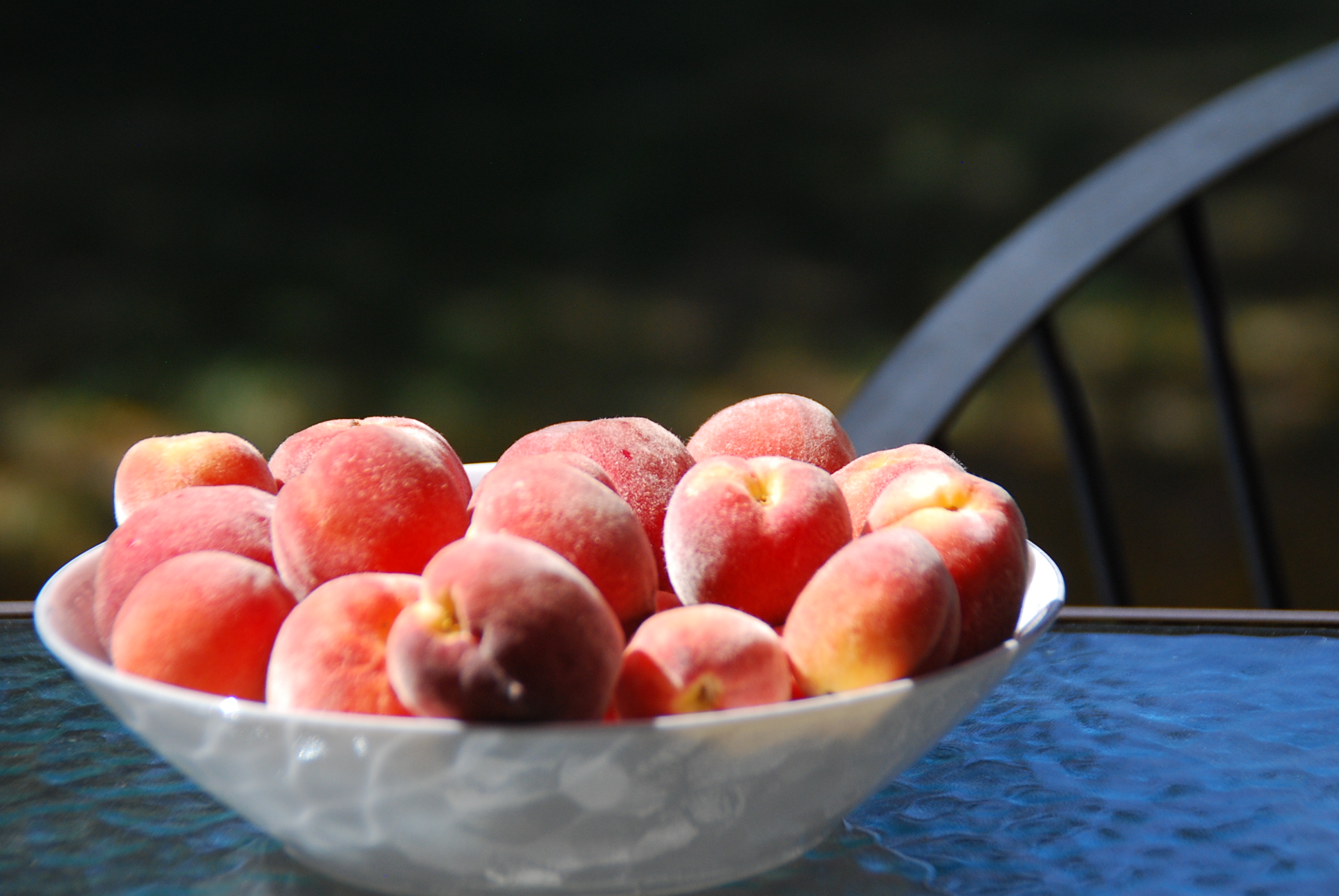
Sometimes photographs just present themselves! On Monday we got our first batch of peaches from a yard we seem to be spending more time in now, courtesy Covid-19.

Having just co-taught a photography class, I am revisiting how depth of field, and ISO settings on my trusty (old) Nikon might make a still image more interesting.

There’s also the serendipitous moment when the morning sun filters through the trees on to a beaten up old log that the Montessori kids use for woodwork.

And yes, the peaches, about the size of large strawberries, are really, really sweet.

Photoshop, Photography and Web Design in final week of school

This was indeed a weird semester! So to end it on a high note, I taught classes on image manipulation, digital photography, and Web design on three consecutive days. Using Google meet, of course.

Photoshop was something all my students had asked for. It’s an opportunity to also connect it to real-world issues such as doctored images in news –a blood relative of ‘fake news’ — digitally altering historical figures –Churchill without a cigar, MLK at a cleaned out podium on the Mall — and simply knowing how to be aware of what could be Photoshopped.

Photography may not seem related to a computer class, but we all know that taking pictures, editing, and sharing is now a given in a young person’s life. Any device is now a ‘camera.’  To make it more interesting, I invited a photographer from Sri Lanka to co-teach the class. (This is distance learning after all, so what’s another 10,000 miles?) Nazly Ahmed, a photo-journalist uses various cameras, spoke of lighting and composition, depth of field, framing, why aperture settings and ISO are important.

As for web design, the goal for the class was to give students an opportunity to design a site that could be home to their digital portfolio, or even a rudimentary business.

I also added a photography contest, so that students could go and use the techniques they learned. The winners are announced on my class website, here.

Alone Together – How teachers deal with virtual school

During these days of isolating and distancing ourselves from our colleagues and friends, I have reminded of the title of one of my favorite books, by MIT professor Sherry Turkle. Alone Together.

Granted the book was about technology and robotics, but also on the ‘illusion of intimacy’ as technology was slowly polarizing us. It was a contentious topic whenever I brought it up, having  having once been a cheerleader of social media as encapsulated in my 2013 book, Chat Republic.

Photo by Chris Montgomery, Unsplash.com

But today, we all turn to the very technologies that glue us to screens, to reconnect in very unusual ways. My wife, for one (who usually advocates no screen time or very limited screen time for her young preschool students) took to Zoom. To get a 3 year-old to be in on a ‘conference call’ is a challenge for any teacher, and at odds with Montessori education.  This Monday her learning packets (left outside on Mondays for parents to pick up) included seeds, a bio-degradable pot and and dirt, with instructions they will use in the Zoom class. Montessori involves a lot of sensorial learning and ‘practical life‘ – it was Earth Day yesterday, after all. Yes, we are all learning on the job!

As for me, I have had to come up with creative ways to engage my students – weekly, daily, hourly – to keep them  on track with ongoing projects. We are ‘together’ but by appointment only whether it was via Google Meet, Zoom, Microsoft Teams, or Webex. I’ve been using Google Forms embedded into a Google spreadsheet. (The first was about how two of Google’s ‘moonshot’ programs are being revamped as tools to assist during the pandemic.). My students are working on a COVID-19 Report, analyzing data (and thereby understanding spreadsheets) formatting the document in real-time with me during our Wednesday Google Meet calls. This requires me to have to generate PDFs and data sets on the fly, when my online explanations fall flat. Just because we all have mics and cameras don’t solve the problem of not being face-to-face.

Online education is a lonely endeavor. You get to sense it after a few weeks of not hearing voices down the hallway, not being in an unplanned meet-up over a paper-jam in the teacher’s lounge, not being asked to fix a colleagues overhead projector, and thereby seeing something on his wall that gives you an idea for next week’s lesson plan, not being at the daily school assembly and hearing something about the volleyball team that makes your heart soar.  Facebook and Instagram (in my book, Fakebook and Instabrag) can only give you so much.

My school is trying to fill the gaps. We still continue with our Benjamin Franklin Semper Sursum awards. Our weekly conference calls are lively and inspiring. I still visit the school parking lot now and then to meet a colleague and purchase free-range eggs from her farm. My wife and I one day took a long walk and made an unannounced home visit to one of her students, at whose home we dropped off some curry leaves. We both call our students’ parents, and keep fine-tuning our teaching methods to suit the moment.

On a separate note, I am also following an online class at the University of Phoenix. Being a student and a teacher at different times of the day is odd. But everything’s out of whack, and this is, to use a tired phrase, our new normal. We will survive!

Could Maker Spaces help with urgent hospital equipment?

When Maker Spaces became popular, the idea was to help average people improvise technology with simple material. Where are the Maker Spaces now?

The good news, is they have taken the challenge, as you can see here.  From face shields to cloth masks, and even automated ventilators. These specs are for a face shield using a 3D printed visor. (From Columbia University librarians.) But I would imagine that off-the-shelf plexi-glass would do. The University of Arizona  Dept of Health Science has a similar project.

Could you help? Why not start with making cloth face masks for the family, and neighbors? The patterns are here as PDF downloads. The Center for Disease Control also has a step-by-step tutorial.

Looking ahead, I hope one of the lessons from Covid-19 and the new normal would include the ability to rapidly mobilize citizens to come to the aid of over stressed hospital systems. While we are all isolating, at least we could keep our hands busy.

Meanwhile, mask brokers and fraudulent middlemen have been trying to capitalize on the lack of preparedness.