Technology in schools. Love it or hate it?

IMG_0302

Touch screens and Robotics. My classroom this yea

In my upcoming July technology column I analyze the pros and the cons of Technology in Education. A few in my network have asked me about my thoughts on this ever-changing topic. (In Oct 2014 I did cover it – “Disrupting Education)

Here’s a summary of what’s to come. As you and I witness the discomforting transition from text books to tablets, from hand-outs to videos-as-homework, from sequential ‘lectures’ to disruptive (noisy) small group activity, it’s easy to fold our hands across our chests and fight it. But there are some compelling arguments on both sides. The Wall Street Journal, and the International Association of Technology in Education almost in the same week ran Pro and Con arguments about Ed-Tech. I get both sides! In my classes I argue against the inane use of social media for the sake of ‘publicity’, but I encourage thought use of digital media with real, and real-time audience participation.

‘Hall and Stevens’ Vs Khan Academy. In my younger days, I had to thumb through Hall and Stevens, the geometry ‘bible.’ Today’s kids are learning geometry from a guy called Salman Khan, founder the free online learning portal for mathematics and science. (Fun sidebar: ‘Hall and Stevens’ is available as an eBook; flip the pages as if it was a real book, here: https://archive.org/details/schoolgeometry00hall

Screen Time vs Think Time. I am a big proponent of virtual and augmented reality, especially if it could bring in ‘distant’ experiences (Civil War, 3D models of engineering, space science etc), but I also aggressively advocate limited screen time. Odd isn’t it? That’s the dilemma we educators and parents face. Augmented Reality
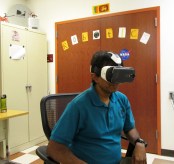
Your son or daughter probably goes to school with a device in her backpack with more processing power than the rocket that took men to the moon, and this child wants to be… an astronaut? You’ve forgotten how to log into your son’s school website to download his missed homework, but… he’s found a way to ‘jailbreak’ your cell phone? There are ‘teaching moments’ in all of these.

Sal Khan speaks of the “fundamentally dehumanizing experience” in education. And he was not talking about teenagers and even pre-teens staring at their phones and not talking to one another. A real, ‘digital citizenship’ crisis, right now! He was referring to children packed in a classroom! Hmm!

Love it or hate it, technology is gate crashing our class rooms, just like ball-point pens or calculators once did. Are you ready for it?

When science works, machines break, and coffee cups burn

In teaching technology we like to say that it’s OK mess up the first time. This is counter to how we like things to run smoothly – neat transitions, good closures etc. A formula, in other words. Even when doing a demo, you probably want your audience to see the end result.

earthquake-simulatorBut I’ve realized that in many lessons – life lessons, not class lessons– the worst thing you could do is to have something perform flawlessly.

Take this ‘Earthquake ‘simulator’ we built here. The plan was to simulate tectonic plate movement that brings down buildings. This was for our STEM Night, which happened on 21st April. A rickety contraption that would shake-rattle-and-roll using a power drill. We quickly ran into a few issues. The wheel you see here was cracking.With two hours to go to the ‘earthquake challenge’ we implemented Plan D – Duct tape. Which looked messy, but it worked. In a sense, I loved that uncertainty; an opportunity to tell students that this ‘problem-solving’ stuff we go on about, is real, even for us.

The next day, FOX 10 News showed up. More issues, with the weather guy and a camera pointing at our ‘machine’.

  • Problem #1: The drill that drove the wheel, had been taken home!
  • Problem #2: Reporter Cory McClousky wanted to repeat the ‘quake’ and of course, it failed. On camera. Nice!
  • Unrelated issue. Behind the earthquake simulator was the solar oven we used the previous day. I had left my coffee cup inside while we were waiting. A solar oven, in case you haven’t heard can reach up to 250 degrees in 30 minutes. So does the plastic cap, as you can see here, which warped out of shape.

You cannot plan these things. What looks bad, actually informs the story. McClusky’s parting line about the solar oven was: “We’re burning coffee cups in here…” Indeed. You can’t touch this.
STEM Night 2nd Red Camera (12) Solar baking After

FOX 10 News | fox10phoenix.com

 Cory Goes Back to School

Messy Learning Labs. Just what our screen-obsessed kids need

If you’ve ever complained about classrooms being stuck in the industrial age, here’s a glimpse of a different kind of class. It’s Hi-Tech space with a factory-floor setting. Perfect for digital natives, huh?

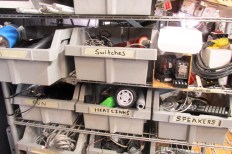
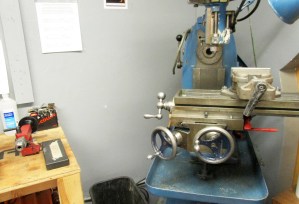
heatsynclabs_tnI took my robotics students here last Tuesday, to a place called HeatSync Labs in Mesa, Arizona. Not the kind of ‘lab’ they had in mind – but in a shocking way! It is what’s known as aMaker Space’ where kids come to ‘learn by doing’. They didn’t want to leave!

You see, a Maker Space like this is more like a mad scientist’s garage, than a classroom, with a variety of machines, tools and material just begging to be used. If you recall how HP began in a humble garage, you’ll see why a tinkerer’s tool-shed like this is what classrooms ought to be like if we are to motivate the next generation of inventors, astronomers and mad scientists like Bill Hewlett, Dave Packard. Or the next Thomas Edison (who barely went to school, please note).

Having worked with 6-12 year olds for four years now, I know how hungry they are for science. Especially science that comes to them in unexpected packages. OK, so in one corner of the lab there was a 3-D printer, an artifact from our all-too-digital present. But someone had used it to produce intriguing pieces such as this plastic cube (right), with gears!

In 75 minutes my students probably got more about science that any slick PowerPoint presentation. This was about experimenting, making mistakes, and asking ‘what-if’ questions. This was about rummaging through bins, and peering through scopes, working with laser-cut stamps they mounted on blocks of wood. And not a tablet in site!

Shelves

Machine


At one point, Eric Ose who works there took me aside and told me, awkwardly, “I am not used to young people here asking permission to do things.” Meaning, this was a space that people came and just tried things out, used material lying around, and worked on their own pace. Of course there are guidelines – especially safety guidelines, as when watching laser cutting, or operating the 3-D printer.

But the real house rules are this: Try something out. Make things. Break things. Revise. Start from scratch. Discover. Build something impossible!

Note: If your students have never been to one I urge you to make it your next field trip. Many cities have these community run spaces. (Map)

HeatSync

Water on Mars, Coffee in Space. I’m fine with both

Last week, my students chatted with Dr. Ashwin Vasavada from NASA’s Jet propulsion Lab about how the Curiosity rover is drilling into and analyzing rock samples, documenting all kinds of terrain-specific information. This was part of a series of STEM Talks each month in my lab.

Curiosity has been sending back what amounts to evidence of a clay-like river bed on Mars, as you see here.

And then I happened to hear this story on radio about sending sending a coffee machine up to the International Space Station.

The machine (called the ISSPRESSO machine), might not be a bad idea.I can’t imagine spending months in a very cramped space without the occasional coffee chat with your buddies.

‘BYOD’ in schools, free ‘Candy Crush’ tablets for MPs – Maybe it’s a good thing

The BYOD – or ‘Bring Your Own Device’ – movement has been gathering steam in schools. If you want to know my position on this, I put it this way: It could quickly turn into Bring Your Own Distraction’ unless we make sure young students understand what screens are good for, and what they are lousy at. Unless we teach young people how to engage with others, and the value of being able to dive deep into issues beyond simple search and scan, we will end up with a distracted workforce, and distracted leaders.

Speaking of whom, consider this: 650 British MPs will be issued iPads after the British elections in May. But apparently the Brits are concerned about distraction. (Just read the headline of this Forbes article, and you’ll know what I mean.) But skepticism aside, it’s about time elected officials are provided with technology that denies them the excuse for not staying in touch with the rest of us.

In my book, Chat Republic, I featured a prescient idea by a Sri Lankan journalist who said that we ought to make democracy more digital. In a nutshell, what Indi Samarajiva said was that the average citizen has a right to know how an elected acts on our behalf, in real-time! Here is Indi expounding on part of that idea.

Last December (21014) Accenture published a paper on ‘Government as a Digital Disruptor. It spoke of the need for an eco-system for open, collaborative, creative engagement. Read the paper here.

Skype with a rocket scientist – Today’s STEM Talk at Salt River Elementary

It’s funny how an ‘old’ technology comes to the rescue, even in education that’s all about Ed-Tech.

I’ve used Ustream, am experimenting with Stre.am, one of the newest shiny objects for collaboration and live-streaming. WebEx is not feasible for legal reasons, which is why Skype has come to the rescue. Skype – that grandaddy of web conferencing tools– is old in Internet years! Released in 2003, it came in a different era from our one-click chat apps that are morphing into lean, mobile must-haves. It’s still a trusty, if not crusty application.

Anyway, for this ongoing series of STEM Talks, I am pleased to be able to connect my school with an eminent NASA scientist, Dr. Ashwin Vasavada. He is the lead scientist on NASA’s Curiosity Rover mission, and comes to us via the Jet Propulsion Lab in Pasadena, California. For those of us with one-planet experience, know this: Ashwin participated in Galileo mission to Jupiter, and Cassini mission to Saturn.

My students have some background to Curiosity, because of robotics, and some have seen the full-scale model of this Humvee-sized robot at ASU. I’ll be curious (I know, bad pun!) to see how they engage with him.

Place: Computer & Technology Lab

Time
: 4:00 pm

Light refreshments will be served.

Check out previous STEM Talks here, and here.

Is It True? Or Is It Photoshop? Students Tweak TIME Cover

For my Photoshop class last week I tried to bring home to my 6th graders the importance of scrutinizing the media they consume – whether it is a billboard, a news photo in a newspaper, an album cover, celebrity photos, a food label etc.

Time-Magazine-Scott-Kelly-CoverThis is the exercise: Could you put a teacher’s face on the cover of TIME? This recent cover is of one of the twin astronauts, Scott Kelly, (whose brother, Mark is married to former Arizona congresswoman, Gabby Giffords) will be part of a one-year NASA study which I am following.
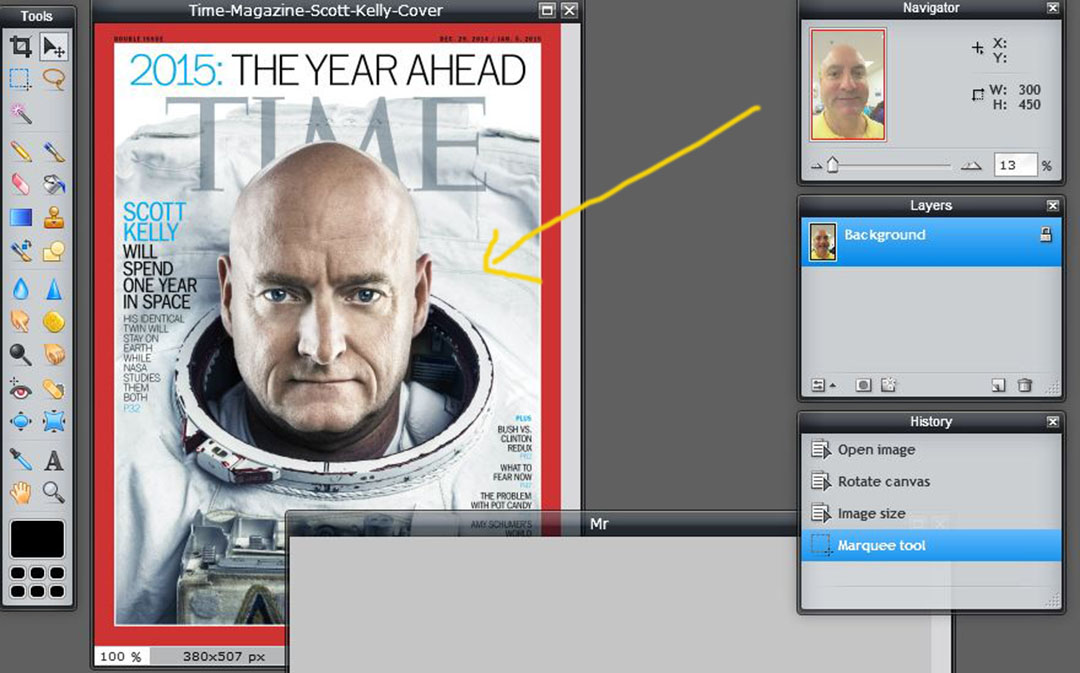
The local connection and space angle  makes it a fascinating topic that will stay relevant until this time next year. The teacher in question is very supportive of this.


This week too, the 6th graders continue to work on their covers. For more details, and to track their progress, check in here…

TruthorPhotoshop

What social media was like five years ago

I came across these pictures taken during a series of webinars on social media I conducted in late 2010, and it made me realize how far we have come. Or what we have left behind.

The series was called Passport to Digital Citizenship.

I have met some of these ‘students’ who have subsequently gone on to do amazing work in the digital space in Sri Lanka.

But now that I teach a different age and demographic of students, it is interesting to see how some major concerns of digital citizenship, have been over-ridden by new ones. Then there was no WhatsApp, and Instagram or Snapchat to think about. At that time, it was almost inconceivable that these new digital channels would practically revise the political spectrum in Sri Lanka – as Nalaka Gunewardene has well documented.

Webinar students - Passport to Digital Citizenship 2010


Thank you for the experience all of you who attended.

What are the most important tools you use in your work today? More importantly what are your biggest challenges?  Privacy? Information overload? Earning trust? PR?

Steve Jobs Vs Maria Montessori – Who Won?

I envision a debate between the late founders of two institutions that have impacted hundreds of thousands of children.

Steve Jobs is at his podium with a sleek tablet (downloading material from the Cloud, so to speak).

Maria Montessori is holding up a handful of sand-paper letters.

The debate begins, and Dr. Montessori, who doesn’t care to introduce herself, begins handing out rectangles of sand-paper, and pink blocks to anyone who cares to listen. Jobs is tap-tapping away on an iPad with retina display and fingerprint recognition.

But seriously, I have been fascinated to see how often modern educators, and people from all areas of student involvement invoke Maria Montessori today. I just came across an article by Dale Dougherty, the founder of MAKE magazine and creator of Maker Faire, among other things. He goes on to talk of her “education of the senses”

Montessori describes other exercises that encourage children to explore the sense of touch: setting out metal containers of water heated at six degree intervals; tablets made of three different woods that differ in weight by six grams; other tablets that have alternating strips of smooth paper and sandpaper.

Now you know why I was temped to compare the world’s best-known tablet promoter, and user of old-fashioned tablets!


Are hand-helds making kids dumber?

Besides being a technology writer, I am also the husband of a Montessori teacher, and we are truly concerned about the effect of tablets and smart phones.

My wife has taught very young children for about 27 years, and we have begun to observe disturbing real-time effects in kids for whom hand-delds have become proxy toys and baby-sitters. These screens are being outsourced by parents to take on the other aspects of parenting – stimulating thought-processes, imagination, language development etc.

Perhaps she will not say it in so many words, so as co-director of her Montessori school, I think it is time I did.

You may hate what I have to say, but for all of you young parents who start your day by giving your kid a screen at breakfast “just to keep her quiet,” or let a child ‘play’ with a smart phone on the way to school, you are damaging or impairing his/her development. This is not just our opinion. This is based on ongoing observations, and there is plenty of new research on the subject.

Pediatricians and brain researchers have been telling us for years that real life not its digital approximation is essential to neuron development. Issues such as attention, cognitive delays, and “decreased ability to self-regulation” aka tantrums, are common problems parents seem to face. Research is pointing to these being related to over-stimulation by technology. Many call for urgent ‘media diets’ with kids.

Check with your pediatrician, or do some research. Don’t just Google “toddlers and smart screens” but observe a child’s social behaviors when there are no screens, vs soon after a child has spent an hour on one.

Below is a quick summary of some of the arguments.