Google’s Eclipse megamovie worth watching

For those of us who cannot watch the eclipse today in North America, there’s a fascinating project that would document it. Google has worked with UC Berkeley (Eclipse Megamovie) and  has recruited 1,000 volunteer photographers and amateur astronomers for the event. Volunteers must download the Berkeley-created app for this.

The eclipse will last from 9.05 am Pacific, to 4.09 pm Eastern.

So for instance, in Scottsdale, Arizona (as is evident, we are outside the ‘path of totality’) the moon’s shadow will cover just 63.3% of the sun. It all begins at 9:14 am and will continue for 2 hours 46 minutes. Peak time of the eclipse will be 10:34 am.

I found it interesting to read that damage to the retina would only occur is someone looks directly at the sun before or after totality without the protective glasses. Thankfully, those who cannot watch the event live have the citizen-sourced megamovie.

Rockets, robots and human smarts – Why humans are (still) indispensable

We like to imagine that space travel will one day be managed and dominated by robots. Yet there is plenty of reasons why humans will not be obsolete.

I spotted some clues to this in the latest report of the SpaceX docking of the Dragon capsule with the Space Station.

The report reads:

At that point, astronauts will grapple Dragon using the station’s huge robotic arm, securing the freighter. When the hatches between the two vehicles open, ISS crewmembers will begin offloading the capsule’s cargo, which consists of more than 6,400 lbs. (2,900 kilograms) of food, supplies and scientific hardware.

Indeed, although it involves a robotic device, humans must snag (‘grapple’) the capsule in a way sounds a lot like human expertise involved in bringing a ship to harbor using rope and bollards. It is sometimes noted that self check-out lanes in stores have not made human cashiers obsolete.

The point being, careers in robotics will grow in tandem with some of these technologies. The field of robotics will need –indeed depend on — human expertise in dealing with complexity.

Classroom sans borders, now that Google Classroom is for everyone

I liked the original Google Classroom, for how it simplified how a learners could belong to a ‘class’ even though they may not be in the same building. Or country.

But the latest improvements to Classroom take it further, letting anyone who plans to teach create a lesson and connect with students. I just created a class as an experimentt. It’s a class on Writing and Publishing — the basis for a project this summer.
Lots of potential in how they hand over the tools to engage students, and receive feedback.It’s evident Google is staking its claim on a sector ready for disruption. Especially since Khan Academy has prepared the ground for it.

As the New York Times put it, Google has practically out-maneuvered Apple in the education market. More than half the nation’s primary- and secondary-school students now use Google education apps, it says.

Yes, you’re being tracked! Unless you change your phone’s default settings

Have you ever left a restaurant and received a message on your phone asking you to review the service? It’s very creepy. But it’s also what agree to when we use certain phone features or an app. (Sure, the app is ‘free’ but we pay for it by allowing some organization to grab our data, and /or track us.)

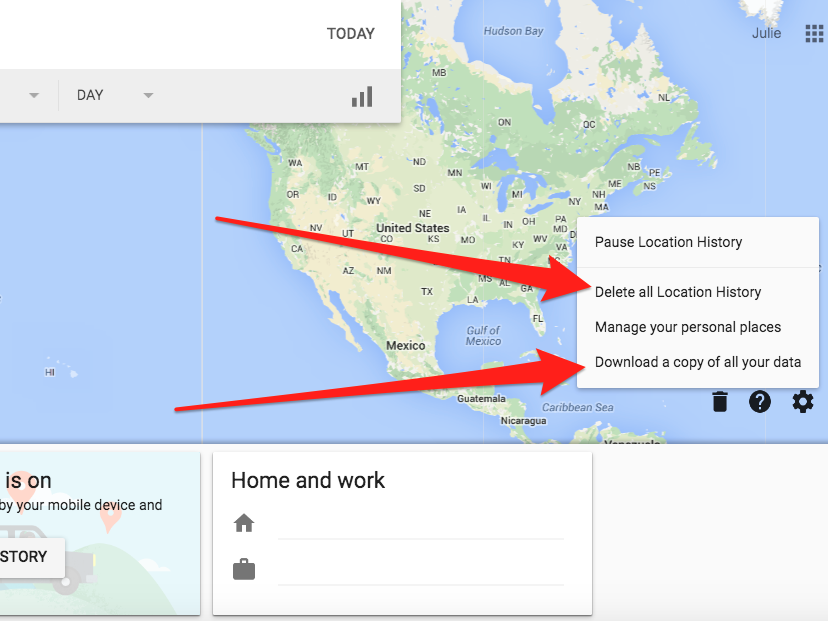
If you haven’t already done this, try Google Maps Timeline once you are logged in to Google. It pulls up a map of where you’ve been. It lets you click on each date in the past few weeks, and (if your location setting was on) you’ll see how Google has recorded exactly what time you stopped at any address, and left. So if you crossed a border, it will give you precise times when you passed through the border.

Of course this information is supposedly private. Or at least the Personal Identifiable Information (or PII) is. Of course you could –or rather should do these things:

  • Change your default settings on your phone.
  • Go into Google’s settings and delete your location history.
  • Avoid using clicking on the location icon if you could help it.

But we often forget. Or worse, think this information is harmless.

This is the kind of information that students ought to know. Not just to become paranoid about Google, but to become more aware of our data. Especially when it seems like logging into Instagram and Snapchat is a pre-teen default setting in itself.


The Real Moonshot – getting back to the Moon, soon!

While we have been obsessed with Mars, a big project has been underway to revisit the Moon. This little guy below, a Rover being tested by TeamIndus (India), is small compared to some of the Mars Rovers. It weighs just sixteen and a half pounds.

Google created an XPrize challenge, known as Lunar XPRIZE, with a $20 million prize for the team that could do three things:

  • Successfully land on the Moon,
  • Travel 500 meter
  • Transmit images back to Earth.

Five teams are in the running: Israel, US, Japan, India and International team.

Google is known for it’s ‘Moonshots’ –from balloons that could beam down the Internet to remote parts of the world, to autonomous cars, to cancer research. And of course robots.

And it’s being sponsored if you will, by Google.

Robotics Olympics highlights. Team Sri Lanka returns

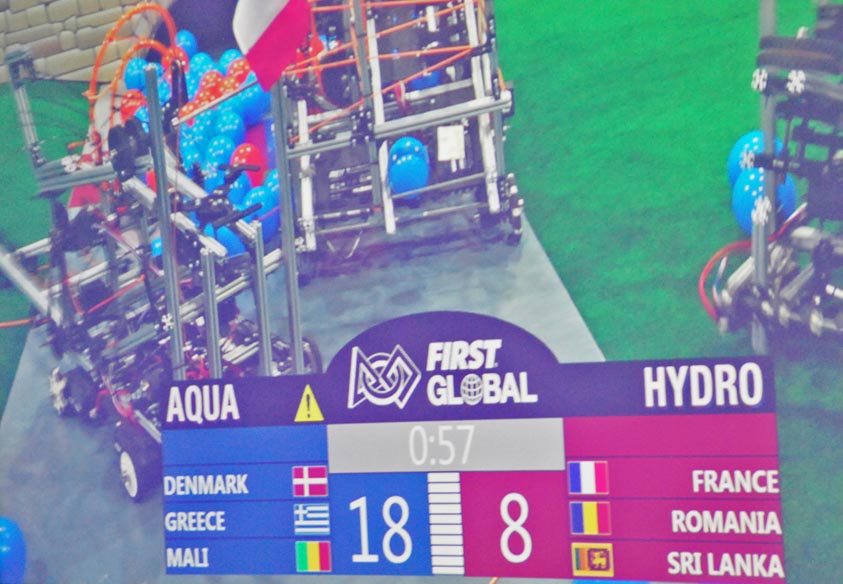
Washington DC’s humidity hovered around 90 percent when the competition began on 16 July. Team Sri Lanka’s four students were sweating bullets for different reasons. In a crowded basement, parked between Senegal and Sudan their 20-wheel steel robot needed some repair work.

The bot that they built in secret in a classroom in Colombo (they called it ‘Area 52’) arrived with a warped axle and damaged omni-wheels. Two hours before departure the airline forced them to repack the 23-kilo microwave-sized contraption into two boxes. The next day the motor failed –not an uncommon problem among teams here.

But they did take on the world! In this competition, designed by FIRST Global like the Olympics, each team worked in ‘alliances’ – groups of three country teams. It was fascinating to watch each team, battling cultural and language barriers (and jet lag and sleep) work through the constraints and perform. My family and I were so proud to be there supporting them.

They did quite well in strategy and design of the bot. In terms of rankings they were placed 138th out of 163 teams – beating the US, France, and Russia. When you consider they had just 9 weeks to prepare for this (many teams had at least 12 weeks), it was quite a feat.

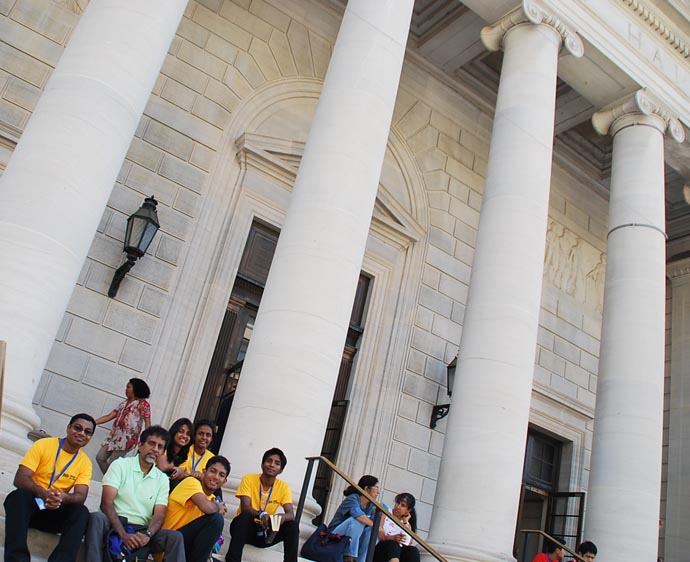
Kudos to coach Dilum Rathnasinghe who took on such an unthinkable task. The team comprised: Ali Anver, Ishini Gammanpila, Vinidu Jayasekera and Akash Gnanam

Here are some images from the 163-team, 157-nation Robotics Olympics.  Read previous post here.


Two weeks to Robotics Olympics! Team Sri Lanka gears up

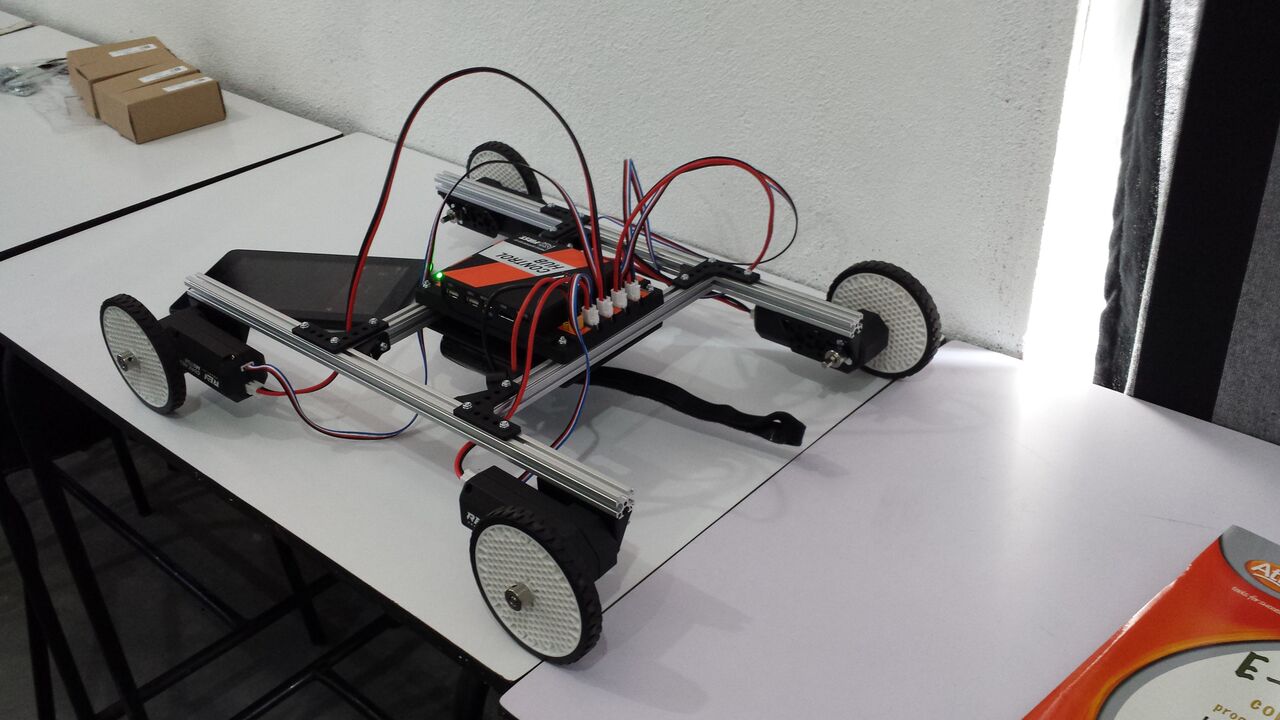
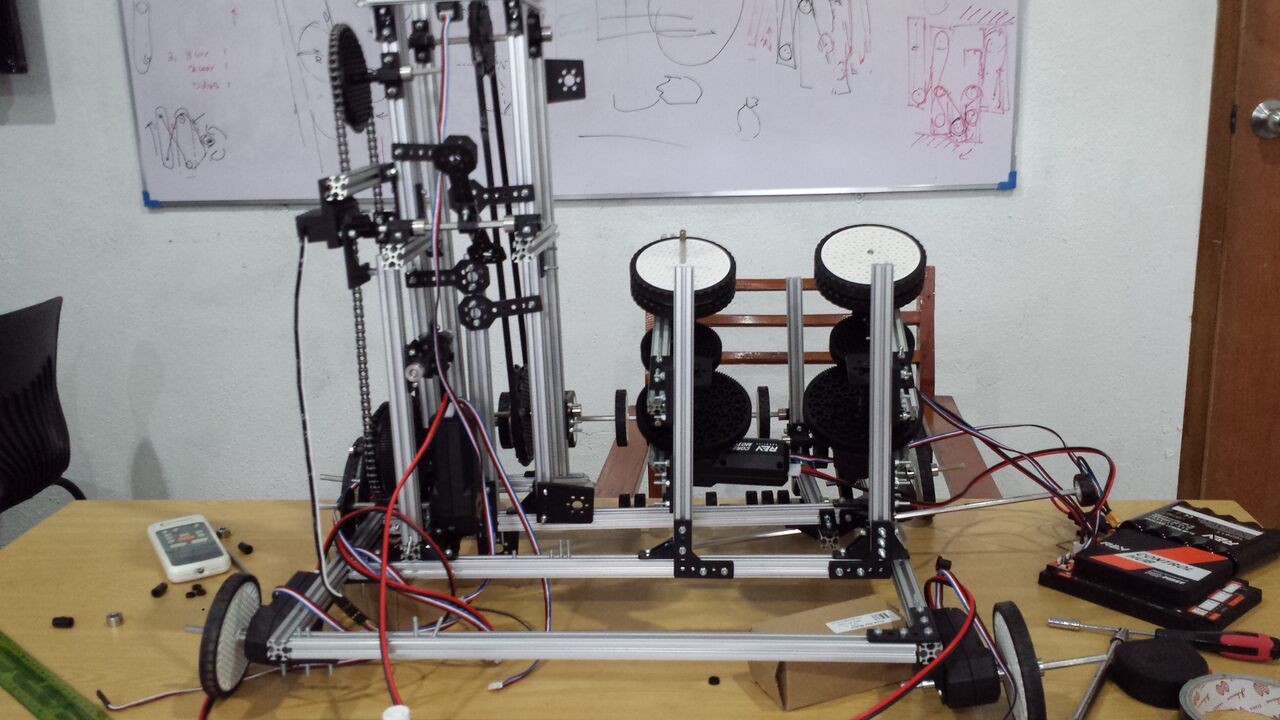
Yesterday I spoke to Sri Lanka’s four-member team making the final tweaks to their robot, with hundreds of moving parts including 8 motors, 4 sensors, 4 servos, and some pretty fancy wheels. (This was them, 2 weeks ago.)

These are A-Level students, with the grit and passion you’d expect from college kids. They’ve mastered the programming software Blockly. They tell me they redo some parts of the design, just to be sure. In two weeks, they pack it all up and head to DC.

Today I also spoke to Joe Sestak, president of FIRST Global, and he told me how impressed he was by this team which is so committed, despite getting the robot kit a few weeks later than most other country teams.

I wish them the best!


If only schools can be like this!

I just interviewed Kris Canekeratne, CEO of Virtusa, a 20,000-strong global business consulting and IT outsourcing company headquartered in Massachusetts. Among the many strands we talked about, I was fascinated by his take on learning, and how schools ought to be the ‘ignition’ for curiosity.

“Students have an innate proclivity to curiosity,” he says – no different how engineers are inherently curious, with problem-solving and design thinking as part of their skill set. If only we could design schools to be the spark plugs of knowledge! It’s time we began exposing students to Big Data, Nanotech, AI, user experience, and gamification, he says, instead of teaching them how to memorize material just to pass exams.

To this end, here’s an example of design-thinking class at a Charter School in Berkeley, California.