Planning for Star Wars class for ‘Hour of Code’ next week

I wish I had had the opportunity to learn JavaScript. But it’s never too late, since I can learn it while teaching some programming next week. You know, ‘He who teaches, learns twice‘ and all that!
hour-of-code-star-wars

I’m doing this because it is Computer Science Education Week from Dec 5 – 11 with a focus on the ‘Hour of Code‘. (It is also the week when I have to take my ‘Lab’ to the classrooms, while the computer lab is being used for NWEA evaluations.)

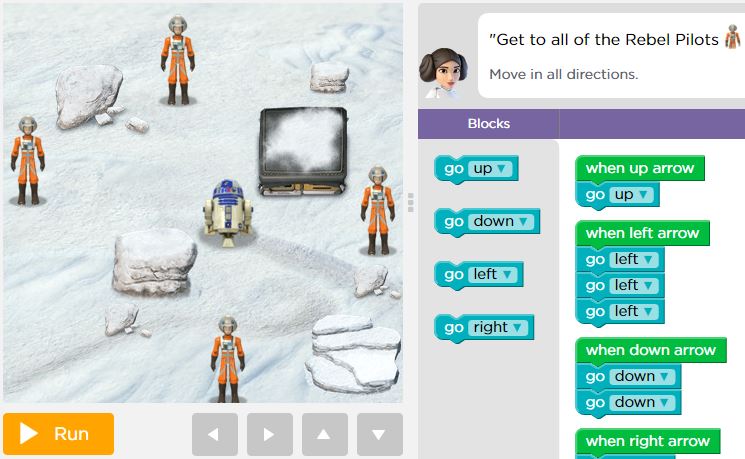
The ‘Hour of Code’ folk have added new tutorials featuring, Star Wars. Something my students are focusing on for an Image Manipulation class this week. It helps to have Kathleen Kennedy (seen in the video below), producer of The Force Awakens explain how programming is very much a part of movie production today.

Students will specifically learn to program a game in which BB8 must be sent on missions to recover objects and deliver messages.

In case you are interested, Hour of Code has several social media outlets, including

Twitter https://twitter.com/codeorg
Facebook https://www.facebook.com/Code.org
Instagram https://instagram.com/codeorg
Tumblr https://blog.code.org

Photoshopping the White House

No, this is not another fake news alert. It’s a teaching moment, however.

The subject matter is appropriate. While teaching Photoshop and image manipulation, it’s a perfect time to be teaching students how to become critical consumers of information often seen through imagery. And spot when someone has been tinkering with the truth.

student-4

The class begins with the ‘conspiracy’ around the 2003 Space Shuttle explosion, by looking closely at the Photoshopped images. We also look at doctored images of public figures.

When they get to the computers, their challenge is to add to, or ‘enhance’ fountains on the White House lawn.

Here’s are a couple of examples. student-3

Take a guess. How many fountains are really there on the North lawn?

Please don’t ‘Like’ this post – read it

Look, you are free to not read this. I’m mainly concerned about people clicking on links or forwarding them, while not reading beyond the first two sentences.

If you got this far, Thanks!

I run into issues of young people not ‘seeing’ information in front of them, because their brains have become trained bypass information on a screen and look for images and videos. They are good ‘readers’ as the data shows. They borrow a lot of books, for sure. However they seem inattentive to information, even on beautifully laid out web pages.

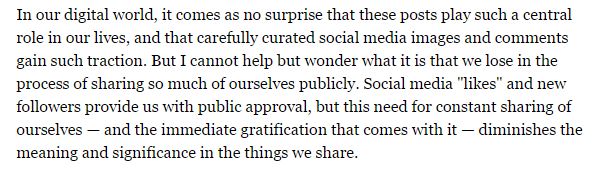
Does it have something to do with our newfound desire to share, reducing our appetite to absorb, and for conversations, as Emerson Csorba says. [“Online sharing and selfies erode the value of our private lives“]

nyt-quote_1


The article for the above quote is here at the New York Times article on Digital Connectedness. Worth a read.

If you got this far, I’m flattered. Thanks!

So how do students read in the digital era? Or rather, how is reading taught today to digital natives? Sadly, in many places, no differently from the pre-digital era. I read a long (warning: long!) article in Education Week, where reporter  says that “practitioners have few guidelines, and many are simply adapting their lessons as they see fit.” Those in literacy studies recommend that we adopt a simultaneous approach, teaching traditional and digital reading skills.

My gut feeling is we assume too much that seeing young people click on topics and pages. It makes us believe that they click, therefore the must be reading. The linear experience is being remodeled by a hyperlinked, non-linear experience even while we watch. Given the powerful desire to share instead of absorb, the non-linear experience may be not as great as advertised.

If you got THIS far, I would like to talk to you! 

(There is, intentionally, no picture in this post. What made you read on?)

Filtering the news for our kids

It gushes out of multiple channels, often without any context.

For young people, especially those under 10 years, what passes for news is almost toxic. Our challenge is to find ways to keep them ‘well informed’ and yet not overwhelmed.

And of course, there’s no wonder app for that. Even the ones that promise to filter the crud (so-called ‘news aggregators‘ like FlowReader, Flipboard etc) are often accomplices when it comes to ‘TMI,’ or To Much Information.

But wait, there was once an filter for this which we have put to pasture. We called it ‘conversations.’ The human 1.0 app that helped us sift through day-to-day details, layering over the minutia with ‘big picture’ ideas, and cross-referencing them with stories.

We re-framed topics too ugly to ponder and yet too important to ignore. Children posed questions, and found answers to them at the dinner table. We didn’t need to fact-check everything on the spot because…. yes, you guessed it: Our conversations were not hijacked by a smart device sitting next to the casserole dish.

So I like to pose the question to you readers: ‘How do you filter the news for your kids? Common Sense Media has a useful guide for different age groups of children.
Whether you’re a teacher of a parent, I like to know. How do you filter the fire hose?


Young web ‘designers’ in 5th and 6th Grade


website2
It’s exciting to be able to teach kids what it means to ‘design’ a web site, and see what they come up with.

I’m not talking about the coding part of the site, but the navigation, layout and content. So much has changed since I worked  on web sites and web content ten years ago. Especially with site builders at Wix and Weebly, or even GoDaddy.

So before website3I introduce students to online site builders, I let them play with design components, using PowerPoint. Yes, PowerPoint!

It’s a quick way to build navigation tabs, work on color and fonts, and eventually embed hyperlinks and video.

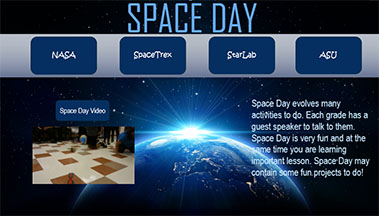
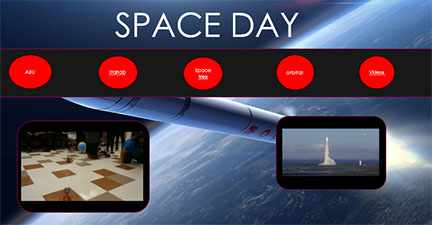
Here is some of the work of 6th grade, building a site for Space Day, the school event we just concluded.

Likewise the 5th grade is working on a website for Freedom Tower, a project they began in September. website4

Later they would be using Photoshop for image manipulation, and create and edit shapes and buttons etc. Much later, when we move into audio recordings, and podcasts, I may have them return to their web sites and add voice files using Audacity.

But for now they experiment with bevels, shadows, and other effects that enable navigation.

UPDATED:

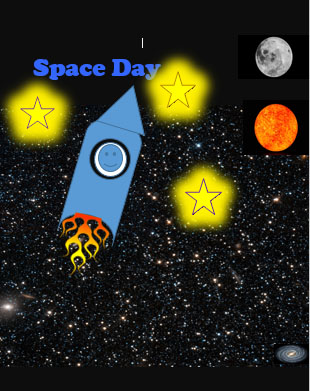
spaceday2Design is not just for 5th and 6th Grade. To address the Arizona CCRS Standard, S1.C4.PO 1: “Use digital creativity tools to create original works” I let 2nd grade students work with shapes, colors and also contrast and perspective.

Here is one student’s poster for the same event, using Microsoft Word.


Is there a ‘Maker’ in you?

Given how we’re being swamped by all things digital, don’t you long for a life with more hands-on experiences? I’ve written about (and visited) ‘Maker Spaces‘ that have been popping up in cities.

If you need inspiration, check out Intel’s ‘America’s Greatest Maker’ series. It will blow your mind to see a movement picking up steam that had young people becoming inventors and ‘makers.’ It is a TV show (similar to ‘The Voice,’ or ‘America’s Got Talent’), and a resource for learning the basics with plenty of how-to videos.  Watch someone who did just that.

“Inventing is really cool, because you don’t need a factory, you don’t have to be a certain age… as long as you have the right tools, and the right people to seek out.”  Shubham Banerjee, Maker

Also worth looking at is a fellow named Paulo De Souza who came up with the idea of equipping ”bees with backpacks” – um, tiny sensors. He has been addressing one of the world’s biggest problems, a diminishing bee population –or ‘colony collapse‘ as scientists call it.

Another great space for the movement is Maker Faire at Makerfaire.com

maker-faireFrom Art, and Arduino, to Fashion and Robotics and everything in-between, this annual festival has been instrumental in getting people to go out into their garages and tool sheds and discover their creativity. Like our ‘STEAM’ activities, but even beyond it, this it’s a fascinating trend!

There was a time when we did repair our own shoes (which lasted almost a decade), and build our own tree-houses (instead of ordering one from Walmart). There is a maker in each one of us, paralyzed by our fixation on apps and shiny new objects.

Invent, create and have fun with BirdBrain robotics

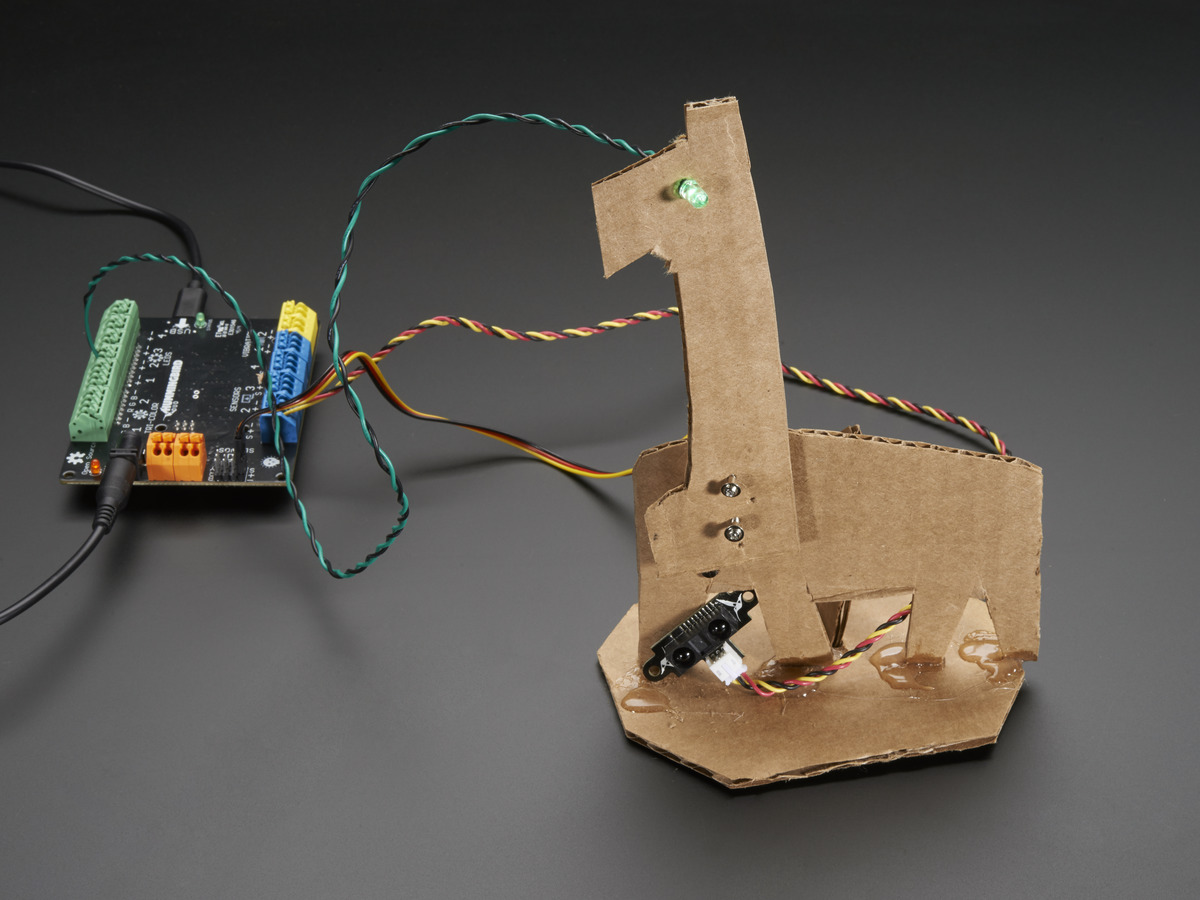
Micro-controllers are at the heart of many of today’s robotics kits.

This one, called the Hummingbird (with a pedigree derived from Carnegie Mellon labs), is designed for engineering and robotics activities for students from ages 13 and up.

I wish I could afford one of these for my computer lab, since it is an on-ramp to teaching students programming languages such as Python and Java. Or as CMU describes it, the micro-controller turns ‘crafts’ into bots.

And what’s a micro-controller for the uninitiated?

It is the decision-making part of a device, and could control sound, light, movement, and work with Bluetooth and WiFi. Our microwaves and phones have micro-controllers. We had a session on micro-controllers earlier this year.
Teaching young people to understand and tweak these devices could lead them toward higher problem-solving disciplines.

SPACE DAY – Our 5th year of ‘slipping the surly bonds of earth’

In 2012, when I put together Mars Day at our school, I could tell there was a huge appetite for all things space-related. After all, the Mars rover ‘Curiosity’ had landed on the red planet a few months before.

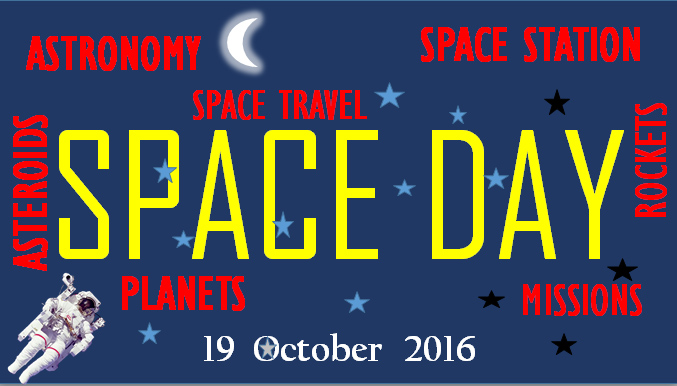
space-dayThis year, our 5th year, we are broadening our lens, so to speak. We are calling it SPACE DAY. It is on Oct. 19th at Salt River Elementary.

I am so fortunate to have so many groups supporting me. From a NASA scientist, to Orbital ATK (formerly Orbital Science), and several groups from the School of Earth and Space at Arizona State University. Also a team who keeps bringing back StarLab, the inflatable planetarium. But wait, there’s more – a surprise guest from the Jet Propulsion Lab (JPL), the NASA group prepping for Mars.

There are several break-out sessions, some that will happen concurrently. We may even have a few real rocket launches outside! This year two of my colleagues will  conduct hands-on sessions that add art and design to the mix. My goal has always been to add more of the ‘A’ to the S.T.E.A.M programs.

Almost every week it’s hard to escape news of audacious new programs pertaining to vehicular designs, space colonies, cosmonauts, or discoveries about comets, asteroids, and planets –the ones we know, and those that are still to be named.

One day of the year just scratches the surface, don’t you think?

From ‘cardboard’ to fabric, wearable VR gets more affordable

Ever since those ‘cardboard’ VR headsets came out, I’ve been waiting to see how augmented and virtual reality would be adopted. One big drawback was the cost of the competitive headsets, and of course the phone.

Now it looks like Google has fired back with Daydream, a low-cost ‘fabric’ headset that could put the technology within reach of the rest of us.

Conveniently, the Daydream headset (which works with the Google phone, ‘Pixel’) was designed to be ‘dumb’ – as in minus the electronics. The phone does the hard work, not the headset. I wonder what could follow cardboard and fabric?


Going bats! How robotics makes science exciting

When I am asked what we do in robotics, I tend to answer it with something about ‘making science relevant and exciting.’ Not the about how it is fun to build, or why programming is a 21st century skill etc. which is also accurate.

ruben-gameros-visit-4

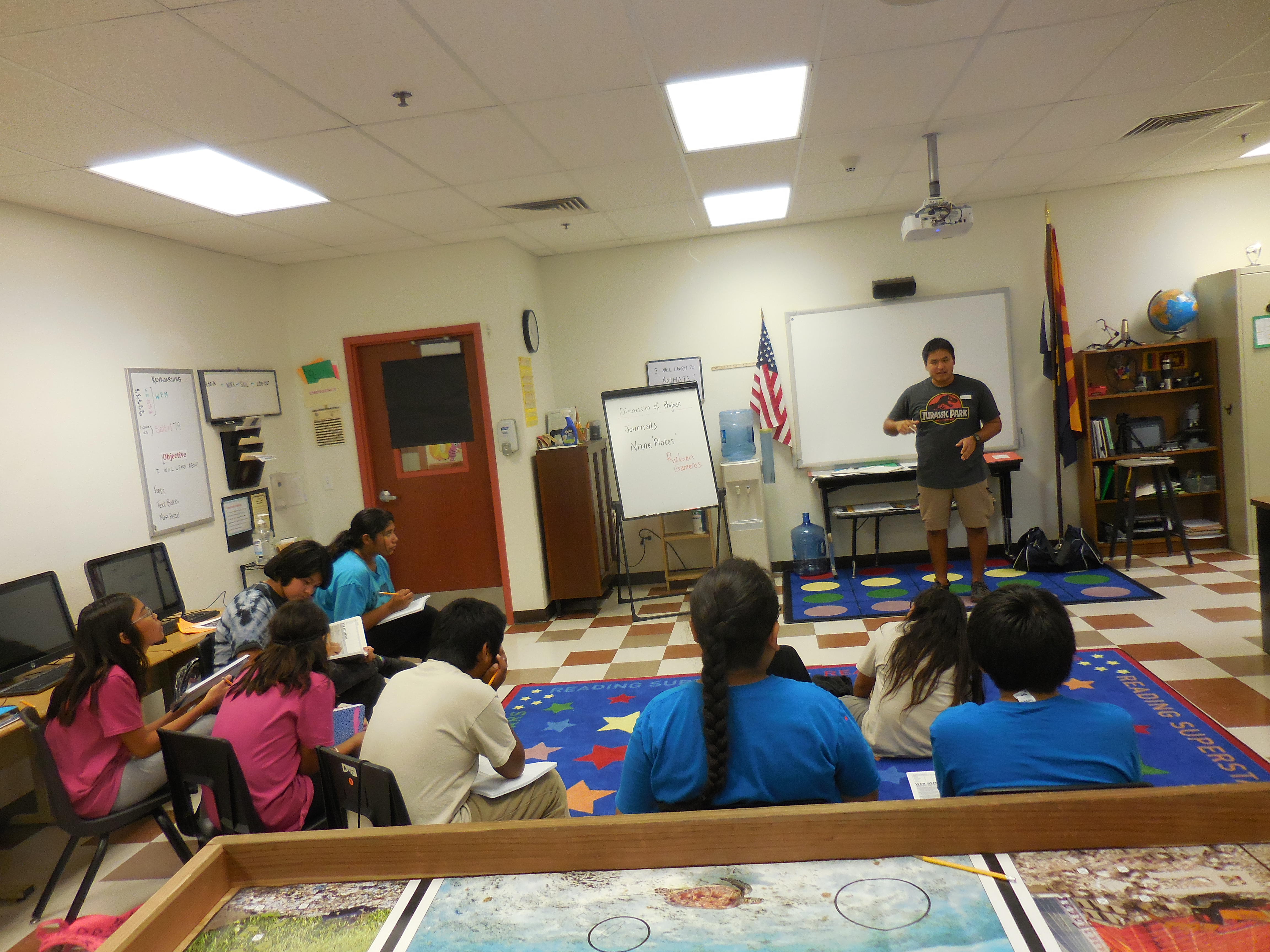
This Tuesday, I had ASU researcher and robotics mentor Ruben Gameros kick off a brainstorming session with my robotics team. The topic was ‘animal-human interaction.’ I loved how Ruben got the students thinking of ‘animal’s that are often not on their radar: bats, bees and insects.

Bat’s after all are mammals, with amazing navigation skills. They also help our survival in ways that often go unnoticed. Ruben is familiar with ‘critters’ for another reason. He works in a field of bio-mimicry, and swarm robotics!