Quotes for the week ending 9 Jan, 2010

“…we’re not saying you’re evil, Google–you just sometimes make us want to wear a tin hat.”

Kit Eaton at Fast Company, on Google’s Near Me Now app on its Android phones and the iPhone that he says  will make “a lot of location-based App Makers” furious.

“Yes, I’m serious…there are plenty of companies that still insist on running every single tweet through multiple PR teams to make sure the messaging is spot on.”

Matt Singley, on the 6 things you need to know about social media.

“your diaphragm changes — your voice comes across very differently.”

Nancy Duarte, CEO of Duarte Design and author of slide:ology, on presenting to remote audiences.

“Jay Leno is one of the most compelling entertainers in the world today … It has, however, presented some issues for our affiliates.”

NBC statement on its decision to move the time slot of Leno’s show.

“Seamless connectivity and rich social experience offered by web 2.0 companies are the very antithesis of human freedom.”

Web 2.0 Suicide Machine, a web site that claims it can erase a person’s presence from Facebook, Twitter, LinkedIn and MySpace.

Video can be great. Cameras can be dangerous…

When I talk to people about why video can be a powerful tool, it’s easy to oversimplify and talk about producing in-house vlogs. But if you look at the variations, you’ll see they could range from citizen journalism submissions, to ‘anonymous’ viral stories, to damaging claims, to pranks. Hers are three uses of video that can make or break a brand’s reputation.

These two will go down in the books as the best and worst of how video mined social media in 2009.

Samsung created this contrived piece for Smart Led technology:

Hewlett Packard, on the other hand is at the receiving end, responding to this direct, damaging claim about its facial tracking technology in its web cams

And speaking of being at the receiving end, here’s how another brand faced the music, so to speak. My all time favorite this year.

What are your most memorable videos for 2009? Share a link with my readers, and us why video matters.

Quotes for the week ending 18 Dec, 2009

“engagement zombies.”

William Paarlberg on creating a strategy for understanding lurkers in social media.

“I uploaded (Panic Attack!) on a Thursday and on Monday my inbox was totally full of e-mails from Hollywood studios”

Fede Alvarez who uploaded his short film”Ataque de Panico!” (Panic Attack!) featuring giant robots invading and destroying Montevideo. He was offered a $30 million contract to make a film.

“It’s not inconceivable that some creative hacker could use Twitter to get into a key business application at some juncture …The more Twitter focuses on the business market, the more it will have to focus on security.”

Larry Dignan is Editor in Chief of ZDNet

“Fencing the internet is not going to help anybody”

Andrea Servida, deputy head of unit at the EUs Information Society and Media Directorate General, on the Chinese proposal to meter international web traffic.

Quotes for the week ending 12 Dec, 09

“However Mr. Jobs, now that you got into this mess …You are the only person who can get our APPS ‘everywhere.’ despite the fact that their MAPS have blanketed the country.

Commenter named Gary of Chicago, on the Advertising Age story on how Verizon Wireless created buzz for the Droid phone –a distinct shift in the way a carrier is advancing the popularity of a handset.

“And, the warning? Don’t read too many blog posts like this.”

43 Folders, on NaNoWriMo

“Living Stories,”

Google’s experimental project to save newspapers, featuring content from New York Times and the Washington Post

“Our role is actually stronger than ever, because we are more than  just a magazine … to promote travel around the state.”

Robert Stieve, editor of Arizona Highways magazine

“When you’re using search engines, you’ve got to be diligent. You can’t trust that just because it’s Number 2 or Number 1, it really is…”

Jim Stickey, on how fake web sites trick search engines which become ‘unwitting accomplices’ of Google, Yahoo and Microsoft.

“Industry Listening Program”

One of the four recommendations by Rohit Bhargava, who advises companies on easing into listening via social media by keeping an eye on keywords rather than brand mentions

Quotes for the week ending 5 Dec, 2009

“The general consensus about my hair, among our team and the client, was that it was distinctive and instantly recognizable — a characteristic we ad people long for in our campaigns, but it sounds funny when we’re talking about my hair.”

Andy Azula, the guy in the U.P.S. whiteboard commercials, in a Q & A with Stuart Elliot. He has a Wikipedia entry!

“Once you start restricting access on the websites, if you have content that can broadly be found somewhere else, then you really restrict the number of people coming to websites.”

Emily Bell, Guardian’s director of digital content, on a regional British newspaper publisher charging for online news content.

“She’s more caustic than a manure lagoon.”

Paul Shapiro, senior director of the US Humane Society Factory Farming Project, on Kerry Trueman, a contestant for the Huffington Post contest for citizen journalists. One person will be chosen to report from the Copenhagen climate change summit next week.

“Most painful for us is not the minaret ban, but the symbol sent by this vote.”

Farhad Afshar, of the Coordination of Islamic Organizations in Switzerland, com

And speaking of symbols…

“It’s that image that has been shattered, sort of like the back window of his SUV, but maybe I’m pushing another metaphor too hard.”

Bill Saporito, on Tiger Woods’ apology

“I realize there are some who don’t share my view on that. But for me, the virtue of privacy is one that must be protected in matters that are intimate and within one’s own family. Personal sins should not require press releases and problems within a family shouldn’t have to mean public confessions.”

Tiger, having dealt with his ‘transgressions’ in a 6-paragraph apology, on his web site.

Microsites tilted toward sustainability get clever

When talking about social media to a group, I often step back to get them to pay attention to how to design for interactivity. After all, social media is all about interactions, right?

I like to note how wicked a wiki could be (though no one ever talks of wikis anymore, with all the tools around Facebook and Twitter). I mention how Microsites can do a lot of things their POW –that’s Plain Old Web sites, in my book) can never do. All this thanks to social media elements that are almost invisible.

So I want to comment on two microsites that came on my radar this week. Toyota and Timberland.

The Toyota site works like a cross-section between an ad and a social network. Timberland is more complex. I’ll take that first here:

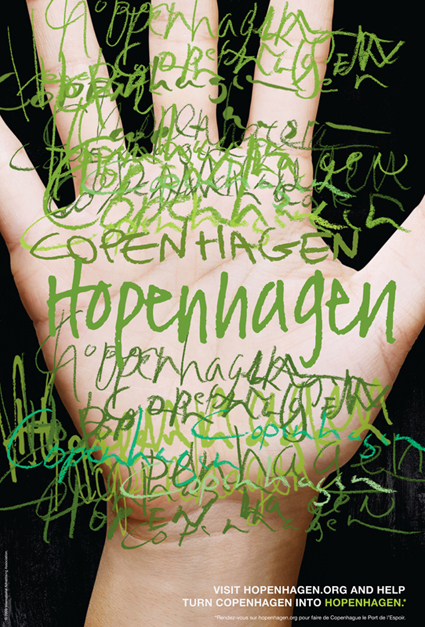
Timberland’s Earthkeepers is so complex it could easily be a mistaken for a grass roots movement, or a cause-marketing campaign such as Hopenhagen. Indeed, it has a cause-driven section called ‘Don’t Tell Us It Can Be Done’ (launched this week), aligned with the Copenhagen summit. As the press release states, it is “a movement that encourages citizens of the world to challenge government leaders attending the United Nation’s Conference…”

It has definitive calls to action – Take Steps, Make Pledges, Shop Responsibly etc.  The Twitter site is actually set up to track 12 students on a bus tour supporting the cause, rather than the typical corporate tweets. Their ‘Heroes’ are doing more than sporting Timberland attire. They are doing things like this.

There is a lot more, and it points to how web sites are getting built up so much around engagement, that very soon these microsites will be the template for the macro-sites. You know: the  standard corporate sites with dated, static information.

Toyota’s Beyond Cars, is a different animal: Dynamic content on steroids. Almost too much information. It’s an ever-changing grid of visitor-generated content (a term I like to use because it is more appropriate in this case than User-Generated). You could sort through four categories of content – innovation, environment, community, economy, with a floating navigation bar. It asks for story submissions using text, video or photos. Not sure if these go through content moderation, but it has a real-time feeling about it.

Unlike Timberland Beyond Cars is not connected to a specific cause other than to make a positive impact on the economy and environment –which is somewhat of a cliche if it ends there. But the very intent, to tap into ideas from the crowd, is bold and inspiring –yes, and visually very appealing. I wish they had thought it through into not just Twitter and Facebook, but beyond cars, literally –into activities not involving wheels. As someone who has two Toyotas in the garage, I have vested interest in this brand, obviously. I could think of a dozen, inexpensive things they could do.

What do you think?

  1. If you have some ideas, jot them down here as a comment. I will add to it next week.
  2. Which microsite do you prefer, and why?
  3. What do you think of a site like Timberland’s that stays behind the scene, as opposed to Toyota’s which is very much a branding exercise, with a cause tacked on?

Hopenhagen: inspiring creative, but no offline visibility?

I’ve seen a lot cause marketing campaigns, so perhaps my expectations are high for this one, particularly.

The presentation by Ogilvy Earth (yes they did set up a group with this name for sustainability-related clients) is eye opening,.

It hinges on the word ‘Hopenhagen‘ which initially struck me as yet another clever pun. But it’s been well thought out, to focus on this city less as a destination for activists and tree huggers, and more as a symbol, a buzz word, a starting point for conversations, individual and collective actions…

Two things going for it:

  • An impressive media-backing. Speaking of media, those donating TV, print, radio, online and ‘out-of-home’ media include The Economist, EuroNews, The Financial Times, GOOD Magazine, Google, Harvard Business Review, International Herald Tribune, Reader’s Digest, National Geographic, Newsweek, Scientific American, Business India, Time Warner Cable, and a host of others. JFK and Los Angeles International airports, the Thomson Reuters building in Times Square, and even The Wall Street Journal, typically not supportive of such global warming attention, is also in this group.
  • The campaign is bristling with social media elements –with the usual suspects – Twitter, Facebook, a YouTube channel. There’s an interesting ‘passport’ to be obtained. I like how someone has setup a simple way to use the campaign as a Twitter background, at Twibbon.com.  The flash mob, that was also part of the campaign, and turned intio a video,  ‘sunbathing’ is very funny, though it’s not gone quite viral. Watch this:

But while all this is impressive and works well in the digital world, I was hoping to see more real world events, local visibility, community calls to action. Passports and online petitions can go so far.

The city of Copenhagen itself has adopted the campaign. Why stop with that?

  • Why shouldn’t citizens of other cities adopt the idea as well? Or claim ‘sister city’ status with Hopenhagen?
  • Where are the meet ups, the walks, the school programs, the spontaneous –copycat flash-mobs events, even– the engagement of utility companies, art venues, universities, churches and temples etc?

We get so focused on digital media, with its global reach, we often forget to communicate, through local channels, and our human networks. If people can change their Twitter background, they will be ready to change some aspects of their analog life as well, if only for a few weeks.

It’s not too late. If only Ogilvy Earth could get slightly more down to earth …

Quotes for the week ending 14 Nov, 2009

“Yes, it’s important to change the light bulbs and windows, but it’s even more important to change the laws and the policies,”

Al Gore, in Phoenix, keynoting the GreenBuild conference

“When put together, we have the tools and technologies to solve three or four climate crises … But the missing element is political will.”

Al Gore in Cambridge Mass, at a book signing of Our Choice.

“Who wouldn’t buy a pair of socks for the Mount Olympus of commercial exposure?

Mitch Albom, on American Eagle’s promotion that lets a customer enjoy the his or her 15 seconds of fame on a billboard in Times Square, — the ‘famous airspace that once featured a giant winking penguin…’

“And the fun won’t end Nov. 27 …”

Story in the Associated Press about how shoppers would  the  checking social media sites for Black Friday specials

“Facebook is for brands – the careful ones”

Headline of a great post by Neville Hobson, commenting on research about using Facebook, about the need to not act like marketers!

“It’s a hole in your heart, just like 9/11.”

Spc. Chris Monge, on the tribute to 13 soldiers killed at Fort Hood, Texas

Thinking digital in unusual spaces

This video by Microsoft has not been watched a lot, but it sure demonstrates what kind of digital world we might be getting close to. The neat part is, it’s not just all digital, but a transition from analog experiences to interactive ones.

Watch the part around 4.09 minutes, when the man opens up the newspaper. How different is it from your experience today?

Not that you can scroll through a column, or click on a news item in the newsprint. But think about it: ten years ago, we never thought we would be able to read a newspaper on a phone, did we?

Or use a ‘tablet’  styled laptop in this way. Or take a picture of  an icon or bar code and have it link us to content. Which is what Quick Response Codes allow. (See my twinterview on this for more details.)

The critics of this tend to question how useful a hand-held device will be, when ubiquitous computing will make common objects interactive. “Why would the whole world revolve around a single technology (touch screens)?” asks one person commenting on the Microsoft video. Google probably has answered that, now, with its Android. Watch how its navigation application works.

Quotes for the week ending 31 Oct, 2009

“The thrill of naked guys in public aside, this marketing scheme did involve a bit of trickery.”

Advertising Age, revealing the story behind the ‘worlds’ fastest nudist’ in New York this week, who turns out to be a guy doing a stunt for Zappos, via an ad agency, Agent 16.

“Look, people the message is this: Do not tell me you cannot do this.”

Josh Bernoff, on how the Groundswell Awards, and how excellence in social media can come from anyone, anywhere.

“If there’s metadata in there, that’s public record.”

Dan Barr, attorney for the Society of Professional Journalists, on the Arizona Supreme Court decision that now requires public entities to disclose Meta Data, the ‘hidden data’ embedded in electronic records.

“A Friday afternoon news dump…”

Huffington Post on the list of visitors to the White House, released on Friday. The list includes lobbyists and prominent people

“It comes down to data and money.”

Story in Fast Company, that ‘Facebook plans to Geo-tag your life’  by linking geo-location information to users actions on the site.