Lilamani Dias-Benson – A legacy of creative ‘infection’

On 11th July, we lost one of Sri Lanka’s premier creative spirits, my former boss and old friend Lilamani Dias-Benson.

There are so many facets of Lilamani, it would take a book to document her work and legacy.  But as many people remember her she infused indefatigable creative energy into advertising from the moment she stepped onto the scene. You could say she metaphorically dominated the room she entered, whether it was an uncomfortable client meeting, a photo-shoot, or a ‘plans-board meeting’ as we called it at JWT.  She would not initially say much but with a few words made everyone reconsider what was at stake. With a  few flourishes of a pencil she would coax you out of your comfort zone and revise the pathetic radio script you brought in on deadline.

I grew up as a cub copywriter at JWT when she took over the reigns in 1986, I believe. For whatever reason my art director friend Rhizvie Saldin and I came under her wing, attending high-powered client briefings, and strategic planning sessions that were above our heads at that time. I was just out of college, and had to bone up on ‘T-Plans’ (the Thompson planning document), and layout theory she made us imbibe late into the evenings. She would cite poetry,  refer to advertising legends such as George Lois, and challenge us to “come to the edge”.

That was a favorite poem of hers that she would quote, ad nauseam. It went:

“Come to the edge.
We might fall.
Come to the edge.
It’s too high!
COME TO THE EDGE!
And they came
And he pushed
And they flew.”

(I am sure many of you in advertising who passed through her doors have heard her on this.)

I remember Lilamani recite this poem at a JWT creative workshop somewhere in Bentota, and then at a client meeting at John Keells.  She pushed, cajoled, inspired, and delighted everyone around her to recognize creativity, whether they approved of the idea or not.  Unilever meetings were bristly, but we came away with brand managers signing of on creative concepts they rejected a few minutes before! As a boss, she defended our work with a passion. (A perfectionist, if she spotted a tiny spelling error or a layout glitch, we would hear it on our way back to the office!) When I left JWT for studies in England, Lilamani invited me to an Unilever meeting in London, making sure the corporates met someone who worked on their brand. I couldn’t figure out why that was necessary, but in hindsight it was her way of giving me wings.

Lilamani was someone who spoke of something that is oddly relevant for our times – the idea of being ‘infectious‘ long before the tired phrase ‘going viral‘ came into vogue. You can hear her expound on it in that hilarious sitcom episode with Nimmi Harasgama (Aunty Netta)

“Infectious is different to infection,” she explains, because “what I do you catch,” especially something nice. And if I am to paraphrase what she was getting at, she was expounding on how creative ideas circulate, inspire, and return in ways you can never control. This is probably what many of her students experienced, and now continue to spread the Lilamani Dias-Benson brand of creativity whatever they touch.

How could we not. We came. She pushed. We flew.

A newspaper for our times by Kids. “Six Feet of Separation”

Could children ‘report’ on how Coronavirus is ravaging their world? I came across a newspaper that does just that!

It was a project begun  by a father of two children in San Francisco, to engage the children of a small neighborhood called Bernal Heights who were bored, suddenly separated from their friends, and unable to process the changes taking place in our world. “What concerned me were the 7,000 other things going on inside our children, the complex internal rearrangements we wouldn’t begin to comprehend, let alone address, for years. Hell, we have no idea what’s happening in ourselves these days.”
Chris Colin emailed friends and neighbors to see if their children would like to send in stories, poems, drawings etc for a newspaper.  A flood of submissions ensued, and over the weeks he was receiving contributions from  other parts of the country and the world. The name of the newspaper was selected by children, and is fittingly called Six Feet of Separation.

One of the contributors in this recent issue writes a poem about (actually to) Coronavirus.

“I miss all my friends,
I miss all my family,
So now go on and reunite, with MERS and SARS,
And don’t you bring them back,
We will all be happy.”

The newspaper is published on an eBook platform, Flipsnack, which I use in school for a student project. It’s not fancy, but it works! There’s lots of art, a ‘Data’ division, and even an Editorial Page. A hand-made crossword, criticism, fan fiction and more.  This June 13th edition has 24 pages!

A project like this is significant for many reasons. First, it comes at a time when hometown newspapers are being shuttered.  Then there’s the problem of news being hijacked by the adult-made, and politically-crafted news cycle that focuses on aspects of life that are alien and irrelevant to our younger generation. A generation whom Chris Colin rightly observes would in a short time take over the reins from our tired hands. News about angry press conferences, and tax returns make it seem as if nothing else is happening in the world. Six Feet of Separation fills that gap, and addresses those things that children care/worry about.  Let’s give them a platform. And please give them your attention.

Meaning, read this kids-made newspaper!

Unexpected side effects on powerful brands

No one would have predicted these events after a police officer held down his knee for nearly nine minutes on a man’s neck.

  • Johnson and Johnson announced the company will stop producing skin-lightening products sold overseas. The products promise fairer, beautiful skin.
  • The Quaker Oats company said it would rename its Aunt Jemima line of syrups and pancake mixes given the name’s association with racial stereotypes. The name originated in 1889. Quaker is a subsidiary of PepsiCo.
  • Statues of Fr. Junipero Serra a Catholic missionary, Francis Scott Key who wrote the lyrics of the Star Spangled Banner would be toppled in San Francisco by protesters.
  • Spotify earned the wrath of listeners when it inserted an “eight-minute and 46-second track of silence” across selected playlists and podcasts to show empathy with the length of George Floyd.
  • Teens on TikTok organized to make sure President Trump’s campaign rally in Tulsa, Oklahoma was poorly attended.

What’s on these cassette tapes? A past life, a bygone era

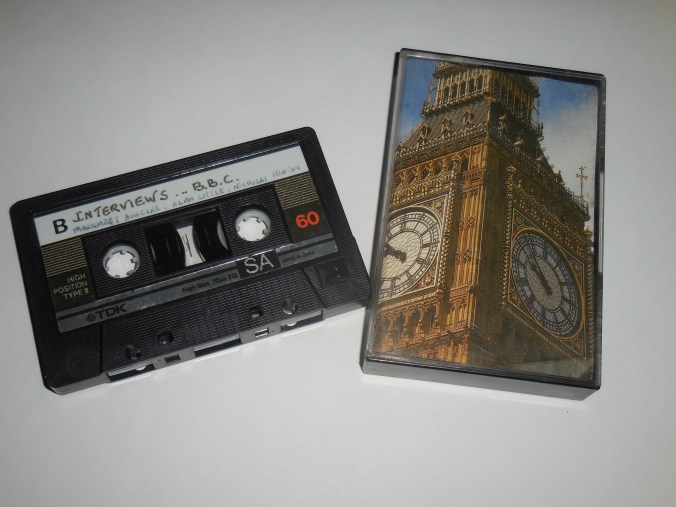
More interesting than the  fact that I still have a collection of cassette tapes is what they contain. I managed to play one of them on a not-so-ancient player, and realized it has the edited and raw recording of a program I produced at Broadcasting House at the BBC in London in 1988.

On it are unedited interviews with Margaret Douglas, a TV producer, director and feisty executive during the Thatcher years, who ended up being director general of the BBC. She passed away in 2008. Also there’s one with Allan Little, a well known foreign correspondent at that time, and Nicholas Hinton from Save the Children’s Fund.

But as they say, wait, there’s more! This tape, below archives some work done some years before when I was in advertising, at Phoenix O&M. Our clients’ names are on the tape label. A courier company, a milk-powder and the sugary syrup kept us creatives busy into the night. Driven, of course by persistent account managers who hovered around our desks with 8-page briefs, screaming about a three o’clock deadline.

Between Barnes Place, Colombo and Langham Place,  London the voices and sounds on these tapes are like a time capsule. This week I plan to digitize some of the material to share with my friends. If you’re reading this and are one of those who worked on my team  at the Beeb or at O&M let me know.

Facebook employee resignation reveals dark practices

Take a look at this disturbing resignation letter from employee, Timothy Aveni.

He says that “Mark always told us that he would draw the line at speech that calls for violence. He showed us on Friday that this was a lie” and that he finds “Facebook complicit in the propagation of weaponized hatred, is on the wrong side of history.”

He says he’s scared for the US because, “social media-fueled division that has gotten people killed in the Philippines, Myanmar, and Sri Lanka.” 

A few days back I asked my friends (and posted here) if they could justify using this corrupt social network. But don’t take my word – pay attention to this FB employee!

Breaking news is broken. The replacement parts are not available.

Ok, I am being facetious here in my post headline. But what annoys me is how news organizations continue to parrot the ‘Breaking news…..” model, trying to get our attention, when the news is not actually breaking. It’s often late to the party, and the story is fractured.

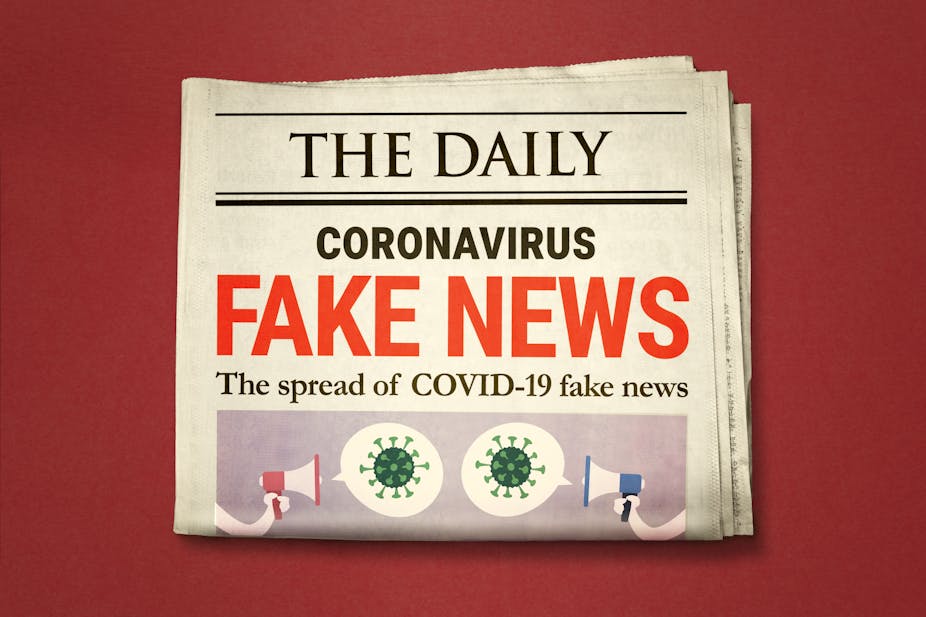
Did you hear the one about the Nobel prize winner from Japan who claimed he had reason to believe Coronavirus was designed in a lab in Wuhan?  If you did,  I hope you did not share this story on WhatsApp because the story was a fake. Plausible? Yes.  But it was completely manufactured. 

Many acts of disinformation are manufactured on a grain of truth, but upon that grain are placed smooth pebbles of faulty data, and these support larger rocks, perilously balanced to form what looks like some pleasing artifact.

The person in that twisted story was Tasuku Honjo, a professor at Kyoto University who won the 2018 Nobel Prize for Physiology or Medicine. He and an American researcher had found a way to manipulate the body’s immune system to combat cancer. He had never worked in a lab in Wuhan China, and never said that “the Coronavirus is not natural. It did not come from bats. China manufactured it.”  (See professor Honjo’s statement here) And yet, it spread like wild fire. Or rather, like a virus. Jumping from human to human because we just don’t understand how to ‘social’ distance ourselves from social media and misinformation. 

Before today’s keyboard warriors were even born, countries including the US employed such tactics. In 1693 England a printer, William Anderton, was executed for publishing stories against the monarchy. In the US around 1898 another William, published fake stories about Spain triggering the Spanish-American war.  That was newspaper magnate William Randolph Hearst !

Today’s breaking news model, practiced by not just the large TV networks but by lazy cut-and-paste ‘reporters’ (repeaters, really!) simply recycles this model. And unfortunately it works. Even the president is doing it. 


My typewriter, a Corona

My typewriter shuttles between home and my computer lab. So when I brought it back from school last week I was surprised to see it was a Corona.

The company that made these marvelous machines was actually Smith Corona. This model goes back to 1935!  I love the sound of the keys as I type. Interestingly I use it in demos when introducing keyboarding in class each semester. You should see the rush of students waiting to use the clickety-clack machine –in a class filled with 34 computers!

On an interesting side note, you should watch this TED talk that I had referenced some time back. It’s how a technology innovator names Aparna Rao, hacked a typewriter to enable it to send email! Why? Because it helped her uncle feel he was typing a letter, and still give him the ability to email. Fast forward to 1 min, 14 secs for this segment.

Covid, the back yard, and a camera – Serendipitous moments

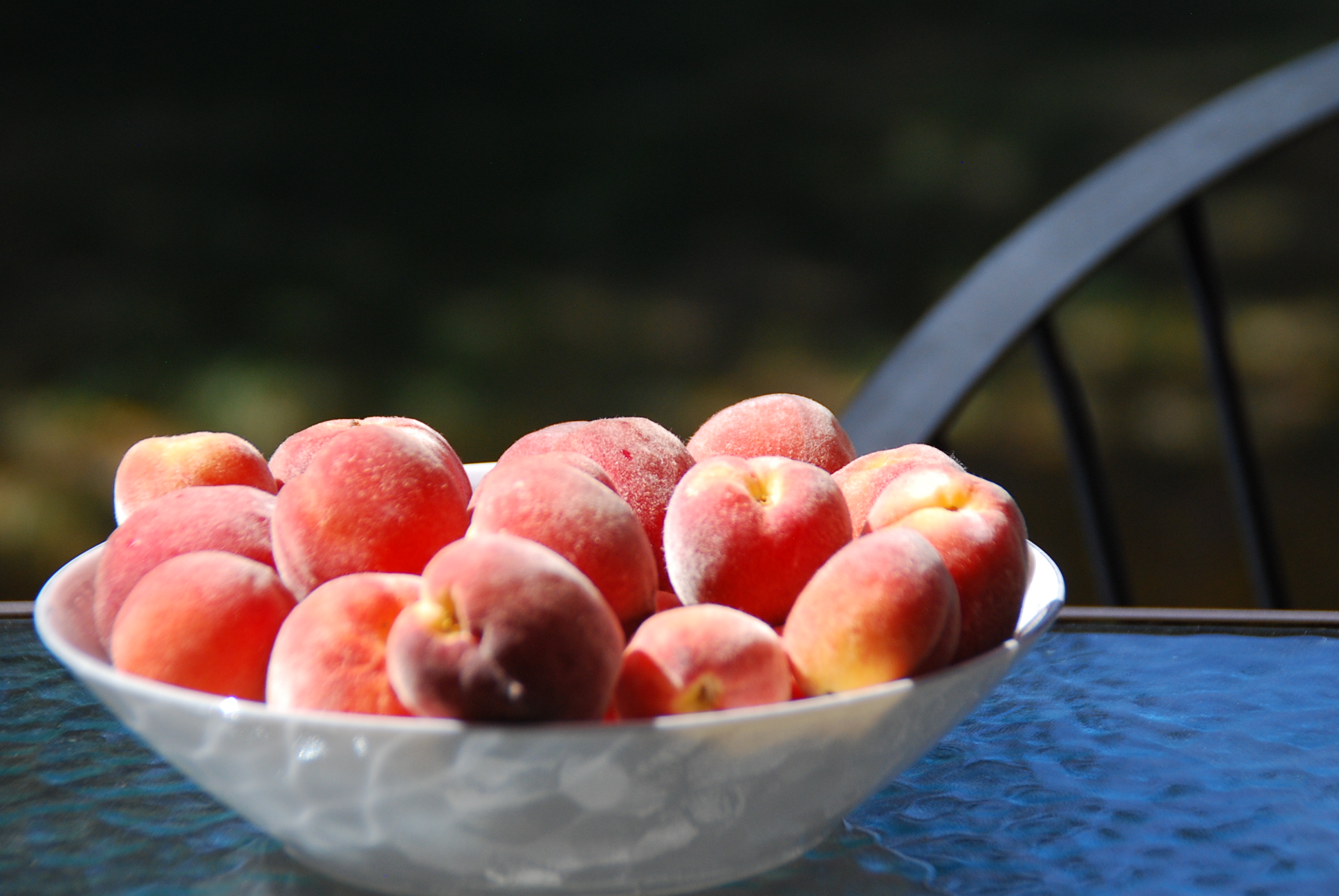
Sometimes photographs just present themselves! On Monday we got our first batch of peaches from a yard we seem to be spending more time in now, courtesy Covid-19.

Having just co-taught a photography class, I am revisiting how depth of field, and ISO settings on my trusty (old) Nikon might make a still image more interesting.

There’s also the serendipitous moment when the morning sun filters through the trees on to a beaten up old log that the Montessori kids use for woodwork.

And yes, the peaches, about the size of large strawberries, are really, really sweet.

Photoshop, Photography and Web Design in final week of school

This was indeed a weird semester! So to end it on a high note, I taught classes on image manipulation, digital photography, and Web design on three consecutive days. Using Google meet, of course.

Photoshop was something all my students had asked for. It’s an opportunity to also connect it to real-world issues such as doctored images in news –a blood relative of ‘fake news’ — digitally altering historical figures –Churchill without a cigar, MLK at a cleaned out podium on the Mall — and simply knowing how to be aware of what could be Photoshopped.

Photography may not seem related to a computer class, but we all know that taking pictures, editing, and sharing is now a given in a young person’s life. Any device is now a ‘camera.’  To make it more interesting, I invited a photographer from Sri Lanka to co-teach the class. (This is distance learning after all, so what’s another 10,000 miles?) Nazly Ahmed, a photo-journalist uses various cameras, spoke of lighting and composition, depth of field, framing, why aperture settings and ISO are important.

As for web design, the goal for the class was to give students an opportunity to design a site that could be home to their digital portfolio, or even a rudimentary business.

I also added a photography contest, so that students could go and use the techniques they learned. The winners are announced on my class website, here.

George Bush vs Donald Trump on pandemics

Suddenly, we wish we had this republican president who does not doubt science. George Bush.  Turns out Bush read the book, The Great Influenza by John M. Barry.

George Bush in 2005 warned that  “If a pandemic strikes, our country must have a surge capacity in place that will allow us to bring a new vaccine on line quickly and manufacture enough to immunize every American against the pandemic strain,”

Donald Trump  in 2020 on the other hand thought deeply about the subject, and declared coronavirus a “new hoax”.

You can tell what he watches. This classic mashup reveals the group that downplayed this as hyperbole. That’s what you get when no-scientists attempt to weigh in on a topic that’s beyond their intellectual capacity. Or don’t read.