Industrial design could send a message

How could a building or  structural feature send a stronger message about what you stand for than other design elements –web site, brochures, annual reports– you put out on a regular basis?

Not everyone could build a spectacular ‘shrine’ like Apple has, in Manhattan.

At ASU, the Global Institute of Sustainability takes a more pragmatic approach, with wind turbines on the roof generating power, even while solar panels are being installed in other parts of the campuses so as to take care of 20 percent of the total energy.

And speaking of wind power, this story out of London, of designers creating a column of light using wind power is more than a fancy energy project. It demos the capacity of creativity that could be unleashed within the urban planing when you let energy send a message.

jason-brugesIn this ‘tower of power’ as it is being called, there are 120 LED’s being powered by a “gentle” wind. Nothing fancy in the set up. A laptop is the only piece of technology behind it, apart from these 1,200 tiny fans. The designer, Jason Bruges Studio, calls it a wind-light.

Maybe someday outdoor signs will be lit this way.

So that, beyond growing lettuce (watch this video!) on the vertical face of a billboard, as McDonald’s did in this very daring/cool design, existing structures could send a passive message, with some “gentle” asistance from the sun, water and wind.

Stunning visualization of red and blue states

A colleague sent me this link from an NPR Science Friday story. It’s a story based on the voting pattern as seen through cartograms -maps that have been ‘density equalized’ by Michael Gastner and Mark Newman at the University of Michigan.

Being in the business of scientific visualization at the Decision Theater it’s fascinating to see science take a crack at politics, and why the red-state, blue-state concept trivializes the voting pattern.

The TV news networks, of course love the red-blue metaphor. We saw CNN‘s use of the ‘magic wall’ which was a recent creation by a company called Perceptive Pixel (it  sold similar walls to ABC and Fox).  MSNBC set up a 3D studio for some similar visual treats. CNN even played with teleporting, having the anchor interview a hologram, pushing visualization up several notches.

But NPR’s story is a great way to do a visual post-mortem of how the country voted. While holograms are just eye-candy, cartograms give a better picture of what happened. Gastner, by the way, lets you use his cartogram code, here, where there are more maps of the voting pattern. Talk about seeing things diffferently!

Telling a story, by removing its subject

The world’s biggest photography competition on sustainability, by Swiss bank Pictet et Cie, awarded the first prize to a photographer from Canada, Benoit Aquin. The winning entry had no “water” in it.

Take a look at the other entries, too.

As a photographer, I am always intrigued in how we could tell a story, by reducing the “subject” to a form of minimalism. It’s too easy to describe your trip to Rome with pictures of the Colosseum, or a birthday party with the kid-blowing-candles shot.

What could we learn from Obama -the brand?

John McCain was the original, durable brand as far as the media was concerned. What was on the wrapper was nothing compared to what was inside.

If we deconstruct his campaign we would see how, as I had mentioned even before the results, his team badly managed the brand, the positioning, the distribution, the user experience.

But Brand Obama is something else entirely. It was all about connections. Well managed, for sure. Strategic as good as it gets. Someone commenting on the Fast Company cover story in March this year saidthe Obama brand is a short lived one, I would not want to put on any product I was marketing”.

Another response from one Tim Leberecht was very telling:

“The Obama brand is all software and only a little hardware, and it comes with an open SDK (software developer kit) — a dynamic, modular platform that both individual campaigners and institutional networks can plug into.”

A brand that individual networks can plug into. Now that’s what all brands must aspire to be.

It’s almost like describing the iPhone. Not just for being a shiny object but for being something people could connect to, customize, create their own apps (T-shirts, signs, even graffiti!).

Compare the image on the left to this response from a French Minister, Rama Yade:

“This is the fall of the Berlin Wall times ten … On this morning, we all want to be American, so we can take a bite of this dream unfolding before our eyes.”

The brand undoubtably infected them.
Quotes for the week ending 8 November, 2008

“Thank you for painting your barns, canvassing by horseback, and volunteering alongside your Llama for Obama.”

Message of thanks on the BarackObama.com blog

“We should be careful of these zero-sum games where the new media drives out the old.”

Andrew Hayward, former president of CBS News, in The New York Times, commenting on political campaigns in the web 2.0 world.

“If I actually had a set of tear ducts, I’d probably cry.”

Angela Navtividad, at AdRants.com, reporting on the jubilation among Manhattanites on Barack Obama’s victory on Tuesday.

“The long nightmare is OVER!”

Comments by an avatar (!) going by the name Jordanna Beaumont, in Obama’s unofficial Second Life Headquarters.

“It’s marketing, not news … a bad idea executed with pompous pancake-faced flourishes and meaningless ta-da’s.”

Jim Veihdeffer, commenting at ValleyPRBlog on a post about the way a local TV news station did a story on LinkedIn.

“The public relations practitioner in me has to wonder why clients – even celebs – smugly throw their communications team under the bus when they aren’t happy with a decision made by management?”

Blog post at Phoenix PR agency, HMAPR, on ABC firing Brooke Smith in Grey’s Anatomy, and co-star Patrick Dempsey’s comments about the decision.

“He deserved better from his supporters. I was embarrassed when I heard the booing.”

Dan Wool, co-blogger at ValleyPRBlog, commenting on the response John McCain got during his concession speech, from an invitation-only audience of his “base” in Phoenix.

“I’m really glad it’s over.”

Raja Petra, a 58-year old blogger and editor of a site in Malaysia who was released after two months.

“insisting on a 20th century world behind the walls of the State Department while the watching a 21st century world develop outside the walls is not a sustainable posture…”

Sean McCormack, Assistant Secretary of State, on launching Briefing 2.0 on YouTube.

When an employee blogs…

My article on Groundswell is now out in Communication World, the IABC magazine. It’s based on an interview I did with Josh Bernoff, the co-author of Groundswell. For my friends and readers who are not IABC members, here’s a downloadable PDF.

It deals with what to do to engage, not punish, the bottom-up movement. How to tap into the energy of employees and customers. Many people are still figuring out this stuff. What do I know? I am still learning on the job, but there’s no shortage of learning moments.

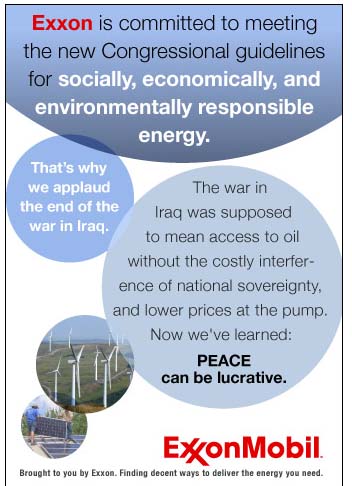
Some months back, we had the “Janet” incident with Exxon-Mobil. Last week there was the Virgin Atlantic Facebook incident. If you’re interested, there’s some excellent commentary about this in For Immediate Release, (show # 394)  the podcast by Shel Holtz and Neville Hobson.

Being an e-Community Organizer pays off

Lots of Groundswell talk surfacing again, especially since the community/grass roots/Net Roots strategy of the Obama campaign has shown to have paid off handsomely.

As Jeremiah Owyang shows us, the social networking prowess of the Obama campaign dwarfs anything done by the McCain group. Just the MySpace and FaceBook (im)balance is stunning 4:1!

Ignore the groundswell at your own peril, I guess.

The moral of the story: Never make fun of a community organizer.

YouTube as your briefing room – State Department shows how

Hey, whoever said the government was slow to adopt and risk averse? Take a look at what the State Department is doing, as an extension of what has been going on at DipNote for the past year.

They asked people for video questions and responded to it via video, in a briefing room at YouTube.

Sean McCormack takes your questions!

McCormack makes some excellent points in his post last Friday, saying this Briefing 2.0 strategy was not done for the expected reasons –to bypass the mainstream media:

“insisting on a 20th century world behind the walls of the State Department while the watching a 21st century world develop outside the walls is not a sustainable posture…”

I’ve never, in all my years of travel, considered connecting with diplomats and state department officials except from the other side of a piece of glass two inches thick. Who knows, it might be possible to ‘friend’ them one of these days on a social network.

In many of our organizations, we may think ourselves more user friendly and accessible than a government office, but we have our two-inch thick firewalls. It’s called standard business practice. The officers on the frontlines of our online press rooms do not take questions. They are there to tell us things, not respond.  When they put things down in print, to give us a bit of insight, it comes in the form of a boilerplate, at the bottom of a press release. Certainly not a blog post. Dipnote shames the business world into becoming more accessible.

Public Relations not a game

This is a follow up to my post last week (“do we trust journalists?”) and how important it is to understand what they want.

I frequently come across the argument that while PR people like to be proactive about pitching stories, they don’t do a good job of targeting, and even responding. It’s often a cat-and-mouse game.

Alec Klein, professor of journalism at the Medill School of Journalism at Northwestern wrote a thought-provoking piece this week on the PR game, and his experience as a journalist when trying to get the gatekeepers to be forthright. He talks of how, “when PR people essentially stonewall a reporter, all they are doing is forcing the reporter to find other ways to learn what is going on.”

Last Friday, after the Media Relations training session, I asked one of the attendees her reactions, one big take away was that reporters are not the enemy:  “We have to understand that they are just doing their job, and we could always find ways to help them improve their story,” she said. As long as you you how to talk to the media, you can turn what seems like an inquisition, into a dialogue. Bottom line: It’s not a game. Even if it seems like one, both sides need to win.

Sidebar: Speaking of which, this may be slightly academic, but in case you are interested, the Institute for Public Relations has a very good exploration on Ethics and Public Relations. It delves back into Plato’s Dialogues, truth and advocacy in the modern age.

(A shorter version of this appears in ValleyPRBlog)