As Rosetta mission ends, Osiris Rex soars

As an asteroid and comet watcher, the Rosetta mission designed to swing around and land on a comet ’67P’ fascinated me. I also used in for a class on animation last year, so that 6th graders could learn about the mission while learning to animate the path of Rosetta. The European space agency lost contact with Rosetta at 11:19 a.m. GMT today when the craft’s probe ‘impacted’ the comet, having reached it two years ago, on August 2014.

67p-last-images

This year, my students focused on Osiris Rex, the NASA mission to study the asteroid Bennu. marsed_sept2016By some coincidence, this was one of the big themes of the Mars Education conference I attended at ASU last Saturday.)

Students have looked up facts about the mission and next week will begin animating the path of Osiris Rex.

Osiris Rex will reach Bennu sometime in 2018, and its probe will do something more daring, – use a probe to scoop up a bit of the asteroid’s material, while it is still moving! Fascinating to think of the planning and steps this involves.
Going bats! How robotics makes science exciting

When I am asked what we do in robotics, I tend to answer it with something about ‘making science relevant and exciting.’ Not the about how it is fun to build, or why programming is a 21st century skill etc. which is also accurate.

ruben-gameros-visit-4

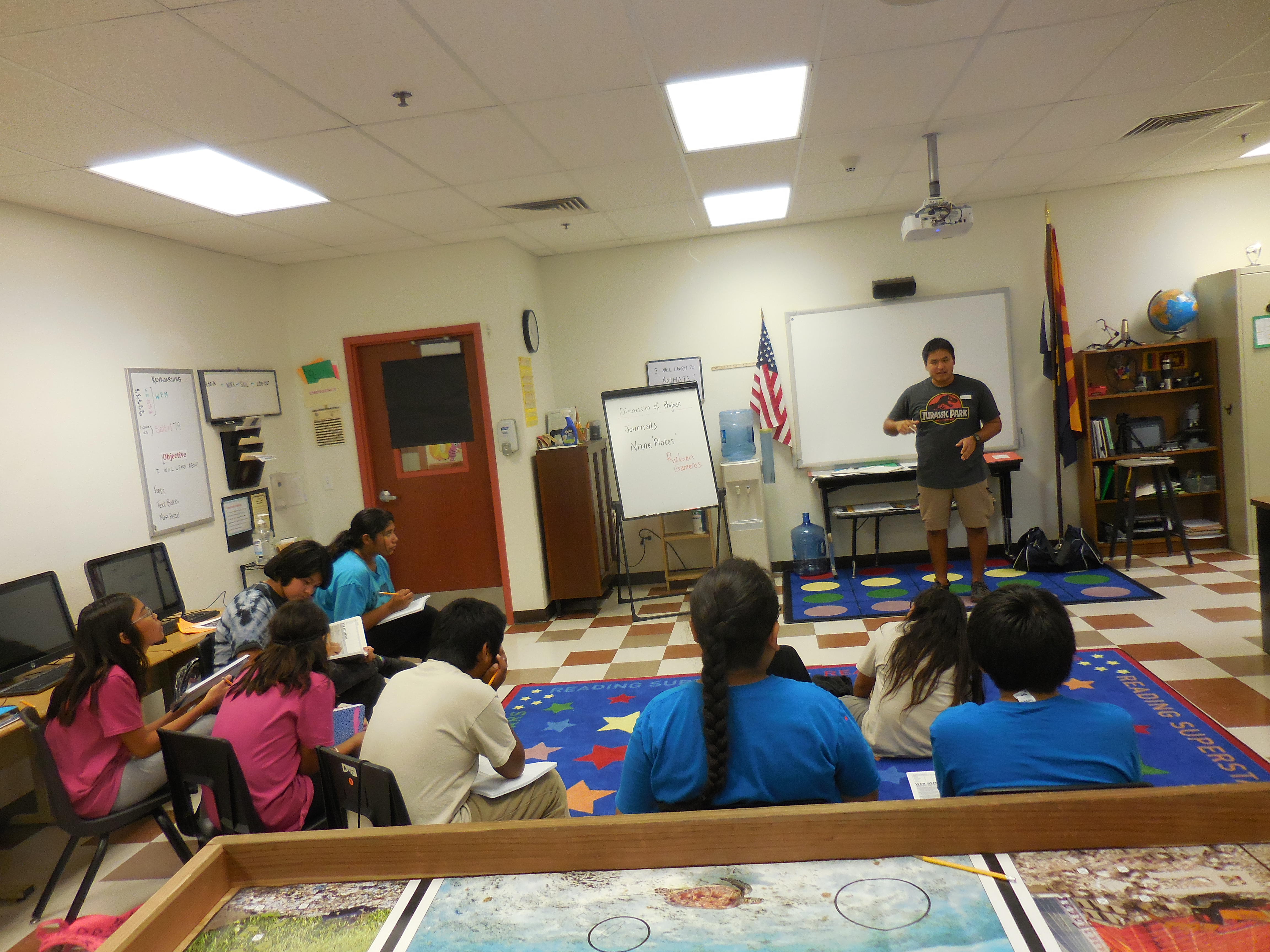
This Tuesday, I had ASU researcher and robotics mentor Ruben Gameros kick off a brainstorming session with my robotics team. The topic was ‘animal-human interaction.’ I loved how Ruben got the students thinking of ‘animal’s that are often not on their radar: bats, bees and insects.

Bat’s after all are mammals, with amazing navigation skills. They also help our survival in ways that often go unnoticed. Ruben is familiar with ‘critters’ for another reason. He works in a field of bio-mimicry, and swarm robotics!

In Robotics, investigating, journaling, and ‘core values’ matter

This week, we selected members who applied to our Robotics club. That’s right, we have an application process which involves a short test, an interview and a contract (the code of conduct) they sign and agree to practice.

Why such a process? Robotics is an after-school club at my school but I wanted members to realize what they were getting into. It’s not just building and playing with Legos. I have done this for 5 years now, and found out that the real value for students is when they get their hands around the broader scope of robotics. They learn to be researchers, problem-solvers, journal-keepers, programmers, and ‘mission specialists.’ They must also become good presenters of their work.

This year, the focus (‘Animal Allies‘) is on Animal-Human interaction. What happens when animals and people interact? Are there problems they could identify, and solve? As FLL recommends, could the solution be beneficial to animals and humans?

If you’re starting out with a team it’s important to know that many of the previous themes have nudged students towards a ‘win-win’ solution.

At the tournaments, teams will be judged on three areas

  • Core Values
  • Project
  • Robot Design

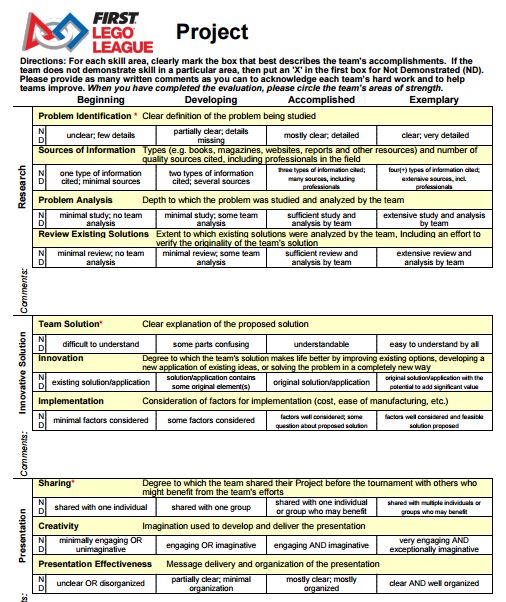
rubric-project

A little neglected fact is that winning the Robot game will not earn the most points. But as we coaches all realize, the robot game is what eats up most of the meeting time. It’s also worth looking at the rubrics for each of these three categories:

Just the Rubric for the Project (right) involves:

  • Problem Identification, Sources of information, Problem Analysis, Review of Existing Solutions.
  • Team Solution, Innovation, Implementation.
  • Sharing, Creativity, Presentation Effectiveness.

In other words, getting into robotics means learning to become an investigator, a problem-solver, learn to be an effective communicator of the science you worked on. It’s exciting to see 5th and 6th graders step out of their comfort zones to do this!

Thank you to all the IT folk who make our lives simpler

Tuesday was National IT Professionals Day. Yes, there is such as thing! A day set apart (the third Tuesday in Sept) for us to stop clicking and swiping, for a moment, and consider what makes some of these technologies work most of the time.

So thank you for all the IT teams who keeps our engines humming.

Behind the scenes of our busy workplaces are system administrators, database folk, IT security teams, those who pre-empt and fix outages in the network, web developers,and tech-support people we tend to vent about, as if they owned and designed the technologies we use. I’ve done my share of venting, and I realize that you folk, who are the first responders to my overblown crisis, have other fires to put out, too.

So on this day I like to thank all those un-named people who come to my rescue. Happy IT Pros Day!

Smarter than Google? The hunt for a ‘research’ engine

In my attempt to differentiate between Search and Research (a topic that I return to around this time in the semester) I found a current event with a point of focus: ‘Chasing an asteroid!’

As luck would have it, NASA just launched a mission, Osiris Rex, that is basically a space explorer that will be chasing an asteroid for two years, before it grabs a piece of it and hustles back to earth. Students love events like this, and quickly dig deep into finding information around it.

omnityAnd as luck would also have it, there’s a new Search engine called Omnity that promises to do better, providing ‘constellations of meaning.’ Smarter than Google, even! I wish it was true, and plan to find out shortly.

Sometimes ‘research’ involves going down that rabbit hole and unearthing nuggets of information that seldom shows up on a simple search query. Students will find out that although the mission will take 7 years the return trip will take longer than getting there. Why? What determines the timeline? Google sometimes lulls us into being content with unspectacular answers. It makes us unwilling to do probe deeper.


After all, it’s not enough to teach today’s students how to use Google and Bing, or even Wolfram Alpha, but emerging tools, as we go chasing after asteroids in class.

In the age of Shodan, cars aren’t the only targets in the Internet of Things

IOT of the Internet of Things may sound like an overblown idea. But it’s becoming a reality, despite the buzz phrase. Consider the millions of controllers in homes that are connected to common appliances such as baby monitors, security cameras, garage doors etc.

I brought this up in a class on Internet Safety, and it’s fun getting students to brainstorm what steps one could take to play it safe when you are connected to the Internet. It opens to door to discussions broader than not clicking on links and pop-ups, or using hard-to-crack passwords. There are software fixes, and there is common sense. Consider how FBI director, says he placed a piece of tape over his laptop camera, to prevent someone hacking into it.

Not many have heard about Shodan. It’s considered a search engine for connected devices – such ‘things’ devices connected to Linksys, Netgear, or Cisco boxes.

This true-life hack of a Jeep is a good way to discuss what ‘things’ might entail in the Internet of Things.

Should schools go completely digital?

Odd question. Perhaps a few years too late, but…

Would you want your children to be in a school that’s all digital? Let me paint a few scenarios.

  • Should teachers stop using handouts and publish lessons to be read, watched or listed to on digital devices?
  • Should schools have a BYOD (Bring Your Own Device) policy?

There is no shortage of  wonderful, free technologies that stimulate collaboration, and empathy. I have even used some of them in my classes! However, I also know that young people are perfectly capable of learning, creativity, discourse and group work without the help of a shiny object. We hear that ‘Digital Natives’ are wired for learning differently. But are they?

And then there’s the brain development side.

  • There are also the unintended consequences of too much screen time, warns Dr. Aric Sigman. He warns of “permanent damage to (children’s) still-developing brains”. Dr. Sigman is an associate fellow of the British Psychological Society. Read this piece published in April this year by Psychology TodayThis Is What Screen Time Really Does to Kids’ Brains.

A new book about digital natives, Screenwise, calls for more mentoring not monitoring. But we tend to assume too much about digital natives. I like the point made by Jessica Laura (in a blog post at CommonSense.Org) that calls for ongoing, explicit training of digital literacy – and not just ‘screens.’ She says:

People say, “The child’s a digital native,” but that has nothing to do with whether or not they know how to use technology well; that just means they’ve grown up with it. Just because I grew up speaking English doesn’t know I mean everything about English; we still go to English class for 13 years of our lives. 

Digital Citizenship and digital literacy is a fast-updating field. What people in their forties and fifties ‘know’ about digital is probably ancient wisdom. It may not happen in the next school year, but here’s a question for parents and teachers: What would you do if your school goes digital?

My wife runs a school that will probably never go digital. For good reason – it is a Montessori school, a place where, happily, you can’t replace such tools as sandpaper letters, sound boxes and pink towers. But before we know it, toddlers may be needing to know a thing or too about what it means to be a digital citizen – when they get home to their parents’ smart devices!

Multi-tasking could reduce performance. But how to turn back the clock?

What would you say about findings that say multi-tasking affects ‘memory creation?’

After all, we email and text while writing reports or watching a movie, don’t we? I just read a 2016 report by Common Sense Media that looked at recent literature of Technology Addiction. here are some alarming findings. Some are red flags, needing more research.

Here are just a few:

  • Media Multi-tasking creates cognitive fatigue, and makes it more difficult for someone to create memories that can be accurately retrieved.
  • Heavy multi-taskers have a harder time filtering out irrelevant information (2009 study of college students)
  • Students who multi-tasked using a laptop during a lecture performed worse on a test, compared to students who were not using a laptop. (2013 study of college students)
  • US ‘Tweens’ (8- to 12-year-olds) spend 5:55 hours outside of school and homework using media. Teens spend 8:56 hours (2015 survey)

The reference to media in media multi-tasking, refers to both digital and non-digital media: TV, video games,social media, using the Internet, reading, and listening to music.

What do we do about these findings? Many parents do not need research to tell them that they (and their kids) must cut back. I have met parents who have taken steps such as not have more than one device in the home, and those who have a ‘digital curfew’ after, say 8:00 pm. There are even those who do not allow mobile devices and tablets in children’s bedrooms – similar to the earlier trend of not having a TV in bedroom.

I teach computers and technology, making it a curious place to discuss this. I often require students to use paper and pencil, even though they come to my Lab to learn about such things as audio recordings (on a cloud-based digital console), QR codes, and search strategies. I often get asked if listening to music while working is OK (they know the answer but think it’s worth a shot!).

Could we turn back the clock, and get back to mono-tasking?