Pictures from Space Day – Rockets, Satellites, Stars and Bots

This event couldn’t have been better timed. Unbeknownst to me, October 19th was a day that space pioneer, Robert Goddard had called his “Anniversary Day” — the day he thought that it just might be possible to humans to break free of gravity and travel to other planets.

Oct 19th, last Wed, turned out to be a day filled with hands-on experiences for our students who got to hear about (and see) rockets, small-space satellites, robots that could some day work in ‘teams’ or swarms on a distant planet, how to design a landing craft and parachute like the Phoenix Mars Lander, and of course sit inside a portable, inflatable planetarium

Here are some of the highlights in pictures.

spaceday-rocket-launch-tn

SpaceTrex Group from ASU launched a rocket and talked about Small-space satellites
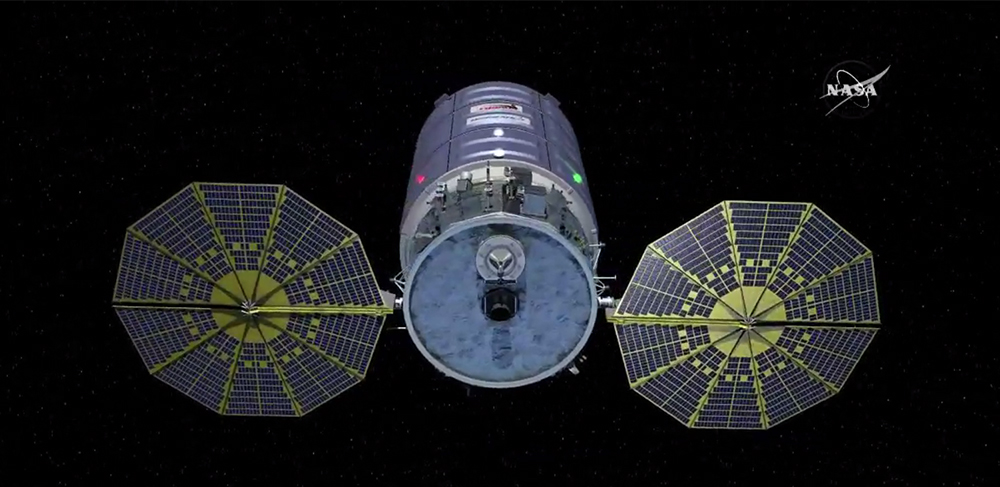
Orbital ATK’s Cygnus spacecraft, which lifted off on an Antares rocket Oct 17th (two days before Space Day) carrying 5,290 pounds of cargo for NASA to the International Space Station.

phaeno_tn

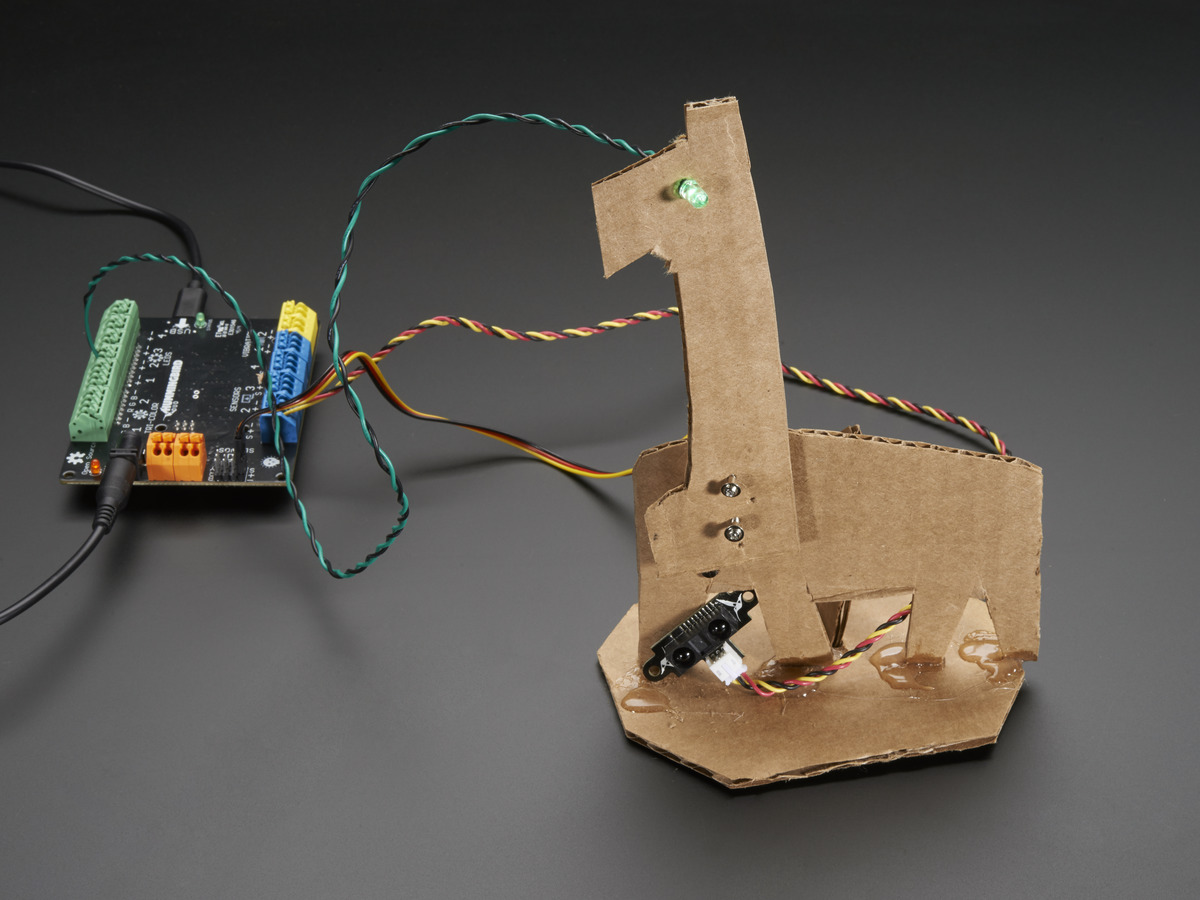
The little bot that runs on Arduino, could be part of a bot swarm!

bot-challenge-tn

Autonomous Collective Systems Lab let students program and run robots in a Rover obstacle avoidance challenge
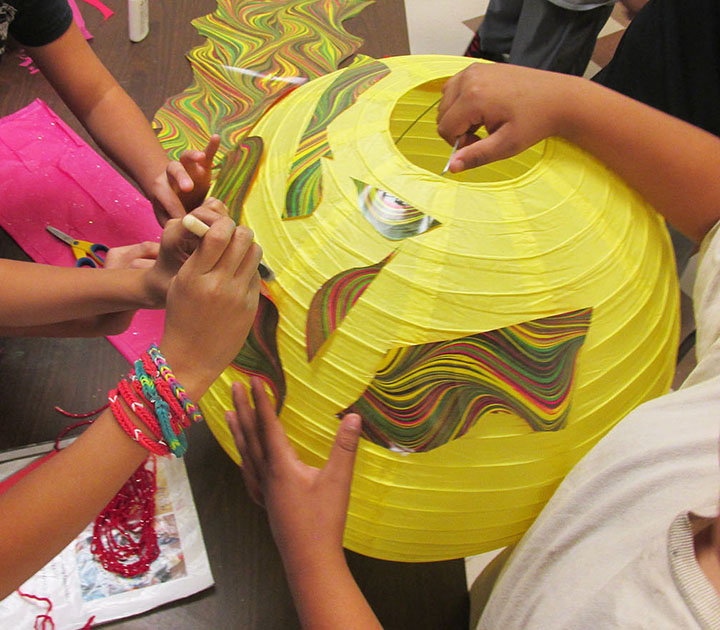
lets-make-planets_tn

Hands-on session on planets and what ‘designing’ a new planet might involve.

spaceday-starlab-tn

StarLab, the inflatable planetarium was here for Kindergarten, 1st and 2nd grades.
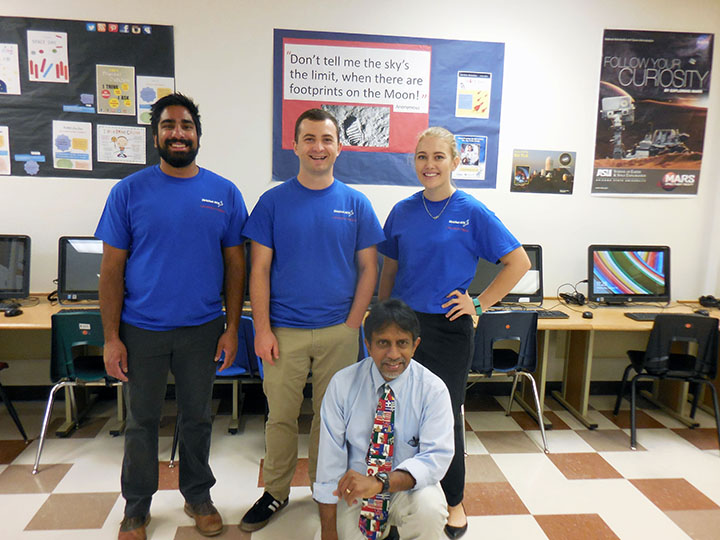
orbital-atk-team_tn

My third year of collaborating with the Orbital ATK team

spaceday-asu-teams_tn

Arizona State University’s teams


team-starlab_tn

StarLab team from ASU

What do we tell our children (about dirty politics)?

Did you feel like you needed to take a shower after watching  the recent debates? Or do you feel like you don’t want to mention the word ‘election’ at the dinner table for fear of dredging up unsavory topics?

‘Adults behaving badly’ might sum up what we have been witnessing these past few months.

I’ve tried to explain to young people who ask, that:

  • This is not how most grown-ups behave – you know, hurling around ugly epithets; using vulgarities, slurs…
  • Political campaigns are unfortunate war games people play, hence ‘battleground’ states, attack strategies.
  • In the 4-year gaps between the these ugly wars, try to not do as they do.
  • The phrase ‘anyone can become president’ is something we are no longer proud of.
  • Though Gallup holds that 75% of Americans identify with a Christian religion (Pew Research says 70.6%) there is nothing very Christian about this process

Aren’t you waiting for this spectacle to be over?

Skype with Jet propulsion Lab’s Dr. Ashwin Vasavada

Last evening, Orbital’s Antares rocket lifted off for the International Space Station. Today the Chinese launched their own ‘March 2F’ rocket with two astronauts headed to their own separate Space Station.

So it is fitting that tomorrow for Space Day, our 4th grade students will Skype with Dr. Ashwin Vasavada, project scientist at the Jet Propulsion Lab in Pasadena, CA. He will talk about engineering design, as a preface to their making and deploying a model of the Phoenix lander.

The Lander looks something like this, but will be made to scale including the parachute, and several models will be tested outside!


It ain’t heavy- it’s my phone. Or camera. Or computer.

How much lighter could phones get?

If you thought the ‘brick phone’ was a quaint monstrosity, consider what a 130-pound phone must have been. And this is what it looked like.

Not exactly for the pocket, eh?

Yes the early global phone, around 1991, comprised a few suitcases for a satellite dish, a transmitter and the handset. Great read by journalist Walter Barranger, of the New York Times who used one of these.

In the same vein, anyone remember using a video recorder that comprised a heavy box in a case with a strap? This was connected by a cord to the actual camera that weighed about 20 pounds.

Or a ‘portable’ computer that was about the size of a small microwave? This was the Apple Color Classic. I feel silly recalling how I lugged this through several airports.

All set for SPACE DAY this week with rockets, rovers and StarLab

Getting back after Fall break with a big event this Wednesday, SPACE DAY. It’s my 5th year of bringing space science to our students from Kindergarten to 6th grade. Fascinating how things fall into place, thanks to the amazing support I get from the scientific community around us.

I am delighted to have Orbital ATK, a global leader in aerospace, conduct sessions for us, with many other groups. Today was supposed to be the launch of Orbital’s Antares rocket carrying cargo up to the International Space Station. The launch has been postponed for tomorrow, and should dock at the space station on SPACE Day – Wed Oct 19th!

Our keynote speaker will be Dr. Jim Rice, a NASA astrogeologist.

Sessions will cover these topics:


It’s settled then: There won’t be an oxymoron in the White House

For all the debate prep, no one could have contained Donald Trump as he hurtled toward the precipice, sliding on the rocks of loose talk. In the end, despite fancy slogans, websites, and stage props, something as basic as good communication skills makes or breaks a leader.

A free, seemingly easy-to-master, tool should be handed to someone of Donald Trump’s personality with a warning: “May cause user to implode.” Just like Twitter, a microphone could also be a dangerous tool. Indeed, many before him have been dispensed into the heap of disgraced leaders and also-rans because of a hot mic, or a video capture, or even a spool of tape.

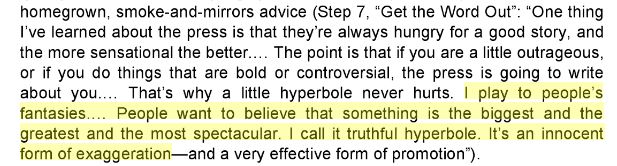
Another interesting thing about Trump was his penchant for ‘truthful hyperbole’ – a term he used in his book, The Art of the Deal, which, to be fair was ghost-written.

quote

But as is evident now, truthful hyperbole, a classic oxymoron, is the long fuse that led him to where he is, an outcast of the party he represents.

Citizens vote for leaders who articulate their hopes and needs. Thankfully voting for an oxymoron was not an option.

Footnote worth listening to: Nixon’s tape archive recording where he and his staff discuss ”lying to a base.’

Invent, create and have fun with BirdBrain robotics

Micro-controllers are at the heart of many of today’s robotics kits.

This one, called the Hummingbird (with a pedigree derived from Carnegie Mellon labs), is designed for engineering and robotics activities for students from ages 13 and up.

I wish I could afford one of these for my computer lab, since it is an on-ramp to teaching students programming languages such as Python and Java. Or as CMU describes it, the micro-controller turns ‘crafts’ into bots.

And what’s a micro-controller for the uninitiated?

It is the decision-making part of a device, and could control sound, light, movement, and work with Bluetooth and WiFi. Our microwaves and phones have micro-controllers. We had a session on micro-controllers earlier this year.
Teaching young people to understand and tweak these devices could lead them toward higher problem-solving disciplines.

SPACE DAY – Our 5th year of ‘slipping the surly bonds of earth’

In 2012, when I put together Mars Day at our school, I could tell there was a huge appetite for all things space-related. After all, the Mars rover ‘Curiosity’ had landed on the red planet a few months before.

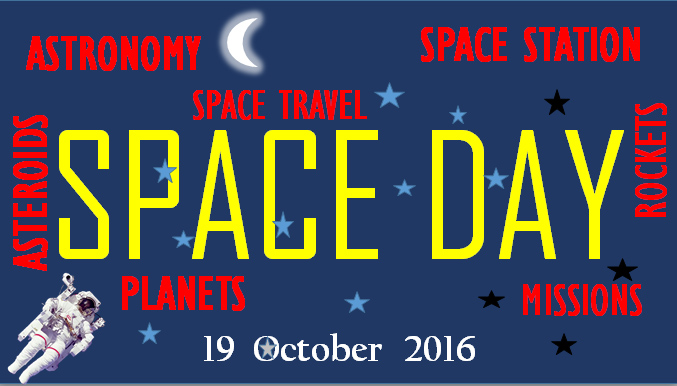
space-dayThis year, our 5th year, we are broadening our lens, so to speak. We are calling it SPACE DAY. It is on Oct. 19th at Salt River Elementary.

I am so fortunate to have so many groups supporting me. From a NASA scientist, to Orbital ATK (formerly Orbital Science), and several groups from the School of Earth and Space at Arizona State University. Also a team who keeps bringing back StarLab, the inflatable planetarium. But wait, there’s more – a surprise guest from the Jet Propulsion Lab (JPL), the NASA group prepping for Mars.

There are several break-out sessions, some that will happen concurrently. We may even have a few real rocket launches outside! This year two of my colleagues will  conduct hands-on sessions that add art and design to the mix. My goal has always been to add more of the ‘A’ to the S.T.E.A.M programs.

Almost every week it’s hard to escape news of audacious new programs pertaining to vehicular designs, space colonies, cosmonauts, or discoveries about comets, asteroids, and planets –the ones we know, and those that are still to be named.

One day of the year just scratches the surface, don’t you think?

From ‘cardboard’ to fabric, wearable VR gets more affordable

Ever since those ‘cardboard’ VR headsets came out, I’ve been waiting to see how augmented and virtual reality would be adopted. One big drawback was the cost of the competitive headsets, and of course the phone.

Now it looks like Google has fired back with Daydream, a low-cost ‘fabric’ headset that could put the technology within reach of the rest of us.

Conveniently, the Daydream headset (which works with the Google phone, ‘Pixel’) was designed to be ‘dumb’ – as in minus the electronics. The phone does the hard work, not the headset. I wonder what could follow cardboard and fabric?


Your ‘rights’ aren’t much under Twitter’s Terms of Service

I’m amused at what Twitter packs under ‘Your Rights;’ in its Terms of Service.

“By submitting, posting or displaying Content on or through the Services, you grant us a worldwide, non-exclusive, royalty-free license (with the right to sublicense) to use, copy, reproduce, process, adapt, modify, publish, transmit, display and distribute such Content in any and all media or distribution methods (now known or later developed).”

In other words, it says, soon after it says “You retain your rights to any Content you submit, post or display…” etc, it lets you know that you have no control over what it does with any content you tweeted, whether it be pictures, ideas of comments.

But hey, when one uses a free communication platform, one doesn’t get it for free. As we remind young people, you pay for the ‘free’ service in one way or another.

Let’s just rename Terms of Service, ”Cost of Service.”