This morning my nephews, Nikhil and Shenal, surprised me with a a video of a robotic device they built from scratch.
You’ve probably seen STEM projects that involve making bots or mechanical arms using batteries and sensors. This whatchamacallit does not require electronics. Just cardboard, pins, and syringes.
As a teacher, there are three things I love about this project:
They don’t read off a script!
The commentary is a conversation, building drama (including a mini count down) as the brothers wrestle with the device
Simple explanation of the scientific principles – about levers, the ‘power’, and traction
I like how the claw seems to have a life of its own – good choice of camera angle!
This is what the Maker Space movement encourages, to build, test, fail, redesign, and demonstrate. Their ‘lab’ is their kitchen table!
A week like no other, when an airline, a fizzy drink and the White House faced the wrath of citizens.
Here are the three apologies.
The Pepsi Apology
“Pepsi was trying to project a global message of unity, peace and understanding. Clearly we missed the mark, and we apologize…we did not intend to make light of any serious issue. We are removing the content and halting any further rollout. We also apologize for putting Kendall Jenner in this position.”
The United Airlines Apology
“The truly horrific event that occurred on this flight has elicited many responses from all of us: outrage, anger, disappointment. I share all of those sentiments, and one above all: my deepest apologies for what happened. Like you, I continue to be disturbed by what happened on this flight and I deeply apologize to the customer forcibly removed and to all the customers aboard. No one should ever be mistreated this way.” Oscar Munoz, CEO Read the full statement here.
The Sean Spicer Apology
“In no way was I trying to lessen the horrendous nature of the Holocaust….I was trying to draw a distinction of the tactic of using airplanes to drop chemical weapons on population centers. Any attack on innocent people is reprehensible and inexcusable.”
Brand storytelling can be too fixated on featuring celebrities, weaving them in for name recognition, rather than for something they represent.
So why did Pepsi take this latest tack with Kendall Jenner? After all it had decades of insight, having used people from Michael J Fox to Michael Jackson. (Remember this one, in which Michael J Fox braves traffic, and rain?)
Inserting Jenner into a protest movement means nothing to Millenials. Unless Pepsi assumed they would fall for the fake anti-establishment story line. (Throwing in a head scarfed photo-journalist into the mix.) Or they thought most young people would like to see a can of soda solve a street crisis. Maybe they were trying to borrow from the iconic image of that calm activist in Baton Rouge who walked up to armed police.
Writer Eric Thomas called out the lame Pepsi ad as “the holy grail of offensive media.” He dissected, frame by frame, what Pepsi got so wrong. He noted that as storytellers, we owe it to ourselves to “fight for more understanding” –and by this he means coming up with course corrections for other storytellers. “Millennials have hyper-advanced B.S. detectors,”warns Thomas.
To me there was positive that emerged out of this brand story. The hoi polloi detected the B.S. and told Pepsi in no uncertain terms.
I’m not sure what books Syrian President Bashar al-Assad is supposed to have read while he was in medical school in Damascus, but I’m itching to blame his professors in London for not giving him some compulsory reading.
Or what if Robert Mugabe had read Robert Frost? Or Joseph Stalin had read Joseph Conrad? Would it have changed the course of history?
Just asking!
Actually my April column in LMD is on this. And I got some recommendations from some literary types here and in Sri Lanka. The Remedial reading list for brutal dictators includes:
Is writing a dying skill? It appears to me that good writers are in short supply – analytical writers, storytellers, creative writers.
I am talking up writing and publishing in my school because I see the huge gap between what people read, and what (or how) they write. Young people read Dr. Seuss, but hardly take a stab at poetry. They may binge watch on Netflix, but never consider a screen play, or even coming up with a skit. They consume the news, but seldom look at the nuts and bolts of news writing, features, or Op-Eds.
You want to write? Here are a few places to start.
Khan Academy has a wonderful lesson on the craft of storytelling, from developing character traits, to building a story. Here is a link to the Khan Academy lesson.
WriteTheWorld, an organization I have been talking to, has a very interesting Poetry and Spoken Word Competition. It’s open to students between the ages of 13 and 18. And there are prizes. $100 for the first prize! More details here.
Magazine Writing is a niche young people don’t often consider. Writer’s Digest always features helpful ideas on how to get started, and where to look for work.
So here’s ASU’s (School of Earth and Space Exploration) version of TED Talks – KEDTalks.(In case you’re wondering, KEDstands for ‘Knowledge-Enterprise-Development.’)
Perhaps, SpaceX and AirBnb are already holding talks on this!
I came across an excellent primer for students on How to Spot Fake News. It simplified a few things we (and students) could do to check if a story is credible.
In teaching Photoshop a big part of it is to get students to create something that seems plausible, but ‘fake.’ This week, one of my 6th graders worked on an animal face-off and was amazed at how real a photo-montage might seem, even though it was a silly cat-fight.
Back to the Common Sense Media article. It lists six things to check for:
Who made this?
Who is the target audience?
Who paid for this? Or, who gets paid if you click on this?
Who might benefit or be harmed by this message?
What is left out of this message that might be important?
Is this credible (and what makes you think that)?
I found a more insightful primer from Washington Post (Video below), which provided more ways to validate a story or an image. Such as:
Yes, many images we see are so heavily doctored that we turn a blind eye to the fact that they are not exactly real. So my hope is that by Photoshopping images themselves, students might pay a little more attention to the visuals coming at them from media platforms they use.
And that’s not even getting to the language used to pitch the story or idea, learning to look for clues in the craft of the writer, which is another topic entirely.
Last week I was contacted by ‘FIRST Global‘, an organization launching an Olympic-styled robotics event in Washington, DC, in July 2017. They were keen to see students from Sri Lanka represent their country.
I have been talking to organizations in Sri Lanka about this, and wanted to summarize details of the endeavor.
FIRST Global is the brainchild of serial entrepreneur, Dean Kamen, whose organization holds several robotics competitions for schools across the country. My school participates in it, and I have been the robotics coach since 2012. But this event is different, and stretches its global footprint to reach out to every country on earth, and empower students in engineering and science.
The Goal: To ignite a passion for Science, Technology, Engineering, and Mathematics (STEM) among the more than two billion youths across the world.
Dates: 14 – 18 July, 2017
The Requirement: High-school students (ages 15 – 18) who would build and program a robot from a provided kit (hardware and software)
Team: Could comprise 3 students, plus a coach
What I like most about this event is that it fosters a new international movement among future STEM leaders who will use the ‘competition’ as a springboard for global collaboration not just in robotics but in the emerging fields within science and technology.
The Robot Challenge: The focus this year is on Water. More specifically access to clean water.
For this, the robot table at the competition will be set up with challenges solving the global water crisis.
This could be similar to how the ‘missions’ are set up on the board for the other FLL competitions (2016 wasAnimal Allies, in 2015 it was Trash Trek etc) in which the robot to accomplish as many missions as possible within two and a half minutes.
For students who might want to contact me, here is one of the videos that explain the hardware that will be available to design their own bot. If you need more information, please contact me at publicradius at gmail.
It’s impossible to miss the conspiracy theories swirling around us whether it’s politics, technology or pop culture. You may have heard of Google News, delivering fake news snippets via a Google Home speaker.
Perfectly timed, because this month my LMD column you’ll find my wacky take on conspiracy theories, including the many tall tales concerning the Illuminati.
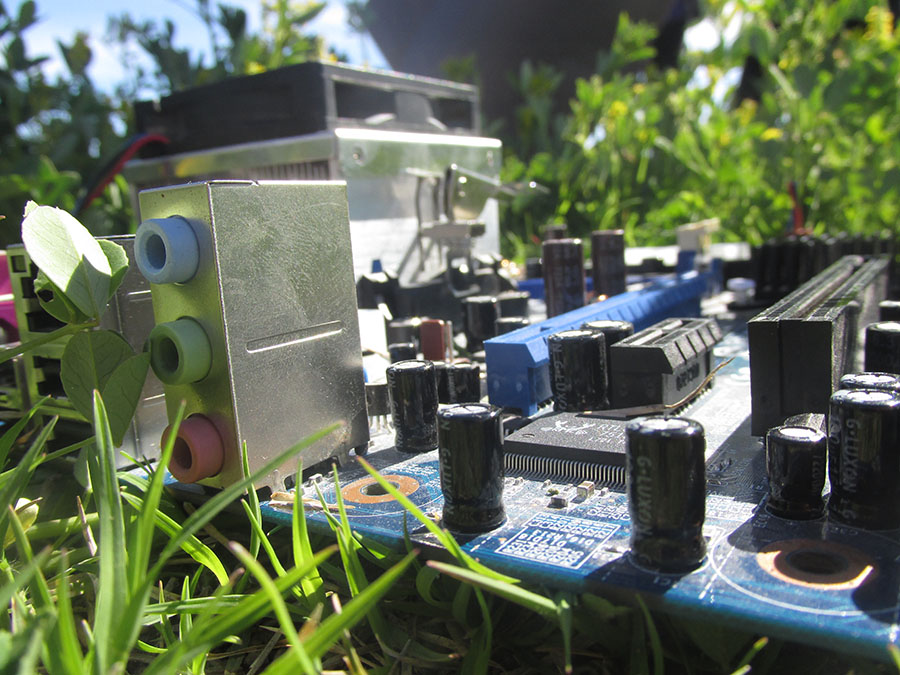
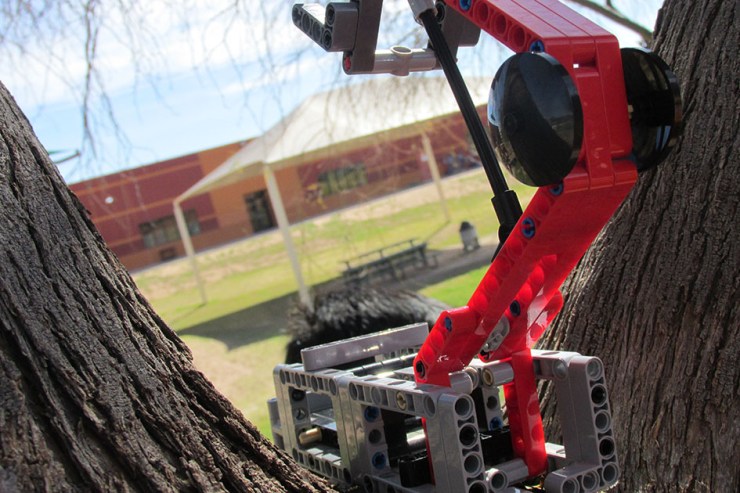
Here’s a batch of pictures taken by my students yesterday. Cameras may seem ‘old school’ but there’s always an interest in the basics of aperture, lighting, and perspective. In my Ed-Tech class, 5th and 6th graders can’t seem to have enough of this, as the results show.
An accidental homage to Silicon Valley?
Digital City?
Two very different perspectives of a robotic arm
There are much more! Who knows what ideas they will come back with after Spring Break?
 The United Airlines Apology
 Actually
 I am talking up writing and publishing in my school because I see the huge gap between what people read, and what (or how) they write. Young people read Dr. Seuss, but hardly take a stab at poetry. They may binge watch on Netflix, but never consider a screen play, or even coming up with a skit. They consume the news, but seldom look at the nuts and bolts of news writing, features, or Op-Eds.
 Perfectly timed,


 Hoipolloireport
