Airbags on lamp posts – Signs of the times

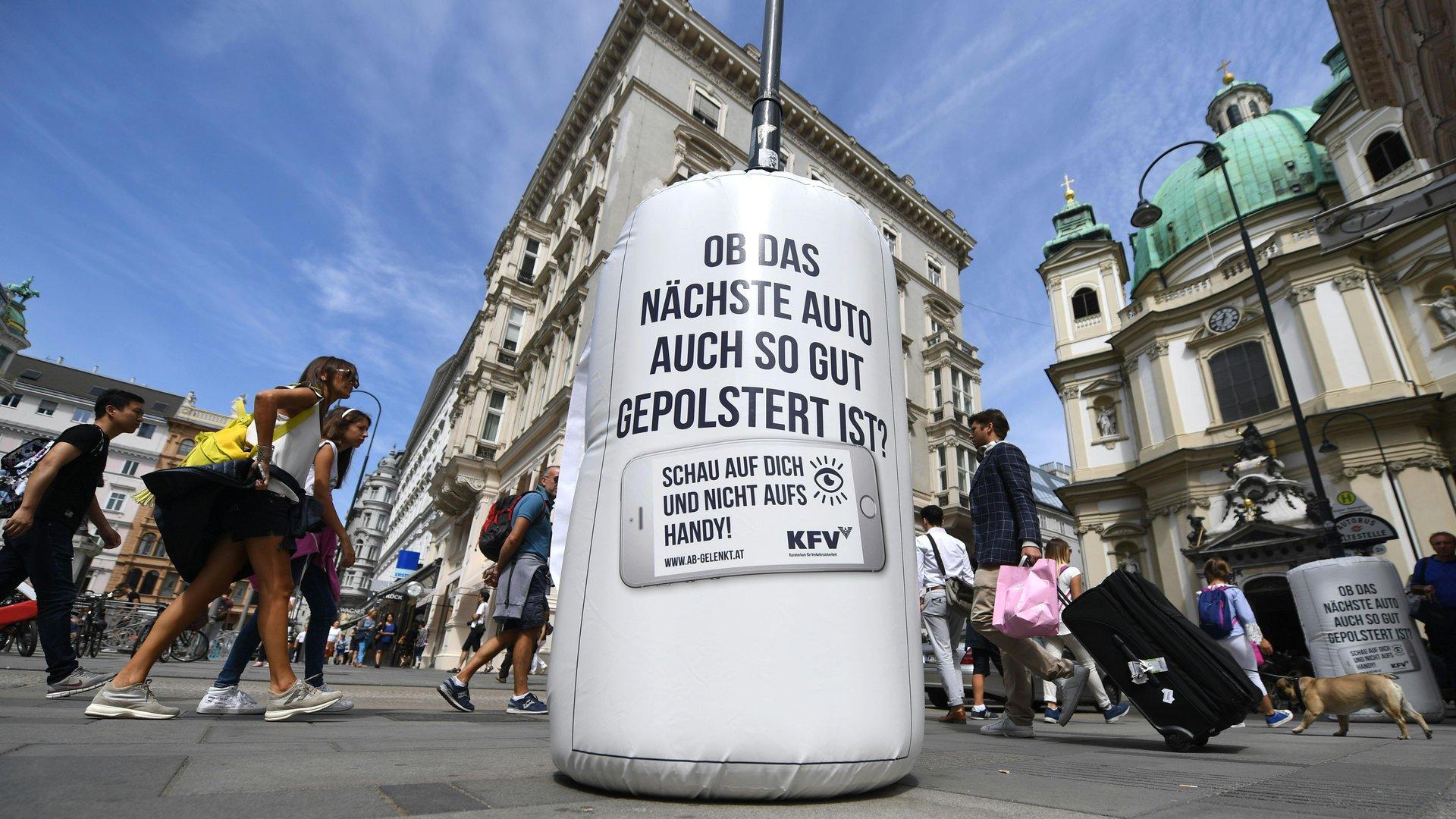
This sounds so funny I thought it was a parody. But on checking, it appears that authorities in Salzburg, Austria have installed airbags on lamp posts. To prevent people (tourists) from hurting themselves as they walk around staring at their phones.

If ever there was a head-thumping situation to counter head injuries. Worth a read just to come to terms how far phone usage has come.


Cyber-warfare – a new definition is overdue

Used to be that cyber war was considered actions of an adversary to take down a system using the Internet. Like crippling a financial system, hacking into and holding hostage a web site, compromising power and communication grids etc. That definition  is really old now!

As authorities uncover Russian interference – specifically the work of trolls, fake social media accounts, and even advertising piped through Facebook, Twitter and Google – we should understand that cyber warfare is more subtle, and has outgrown the old definitions. It is about disrupting the behaviors, and messing with the minds of citizens. Before we show our irritation with foreign culprits, we should be unhappy with how we citizens are easily manipulated by what is online.

The glue that holds us together appears to be easily dissolved by what passes for ‘information.’ As the Philadelphia Inquirer story reveals, we are experiencing high-tech cracks and wedges to undermine us. They worked because of a critical mass of people who unthinkingly re-tweet and share posts and sponsored content. Content that few care check where the source of the post is.

Consider this sponsored ad (featured in the Philadelphia Inquirer story). It looks so silly, and poorly crafted that you’d think any person with some common sense would not even read it, let alone pass it along to others. Variations of these include chain-letters, and memes that no one knows the origin, but often accompanies a statement like “Could I hear an amen?”

For the record I never respond with an amen, for two reasons. The word is a statement of approval or concurrence reserved for prayer. It’s not the linguistic equivalent to the Like button. Also, someone’s rant does always not require public approval to make it more valid. You can still be a friend whether or not you agree with someone’s pet peeve. And for heaven’s sake (pun intended), don’t Like or re-tweet this post unless you a read it in its entirety.

Cyber war is no longer just about attacking hardware or infrastructure. It’s about unhinging us through the things that pass through the pipes that connect our hardware. It’s not about a denial of service, but about a denial of common sense.
Fighting Technoference? Buy a goldfish

I brought up the word earlier –Technoference. It’s one of those Urban Dictionary words that smacks us in the forehead but eventually creeps into our vocabulary –like ‘Dweeb,’ ‘Fudgel’ and ‘Thunking.’  So I decided to devote my Nov column in LMD magazine to it.

So what’s Technoference, you ask?
Besides having to actually read the damn column, I’m betting you already experienced it. Have you ever had a conversation with a teenager, only to have her pause you in mid-sentence and pull out a phone to fact-check something? Thought so!

Once you get off your Snapstreak, let me know your thoughts on it.

Your input matters as robots with facial expressions and emotional intelligence emerge

What might you get if you affix an android head onto a metal and plastic life-size body? More than a bobble-head, for sure. especially if there’s a whole bunch of robotics, plus artificial intelligence under the hood.

The android known as Sophia debuted at the Future Investment Initiative, an event with speakers as varied as Richard Branson, to Nicolas Sarkozy, to Maria Bartiromo. Indeed Sophia made recent headlines because Saudi Arabia granted it ‘citizenship’ – whatever that means. Let that sink in for a moment – giving civic status to a machine.

Hansen Robotics, the workshop where Sophia was built has several models. A bald-headed Han, a 17 inch tall boy robot called Zeno, and a full-sized animatronic, Albert Einstein. These bots use facial tracking, natural language processing, and their creators plan on developing Emotional Intelligence for Einstein.

Robotics is a double-edged sword. I cover robotics, help train students, and often talk of being alert to where all this could be headed. Governments, labs, schools, policy-makers and ethicists should be joining the debate. (Recall Elon Musk and others sounded a warning that AI could threaten human civilization.) It shouldn’t be a conversation dominated by those in technology alone.

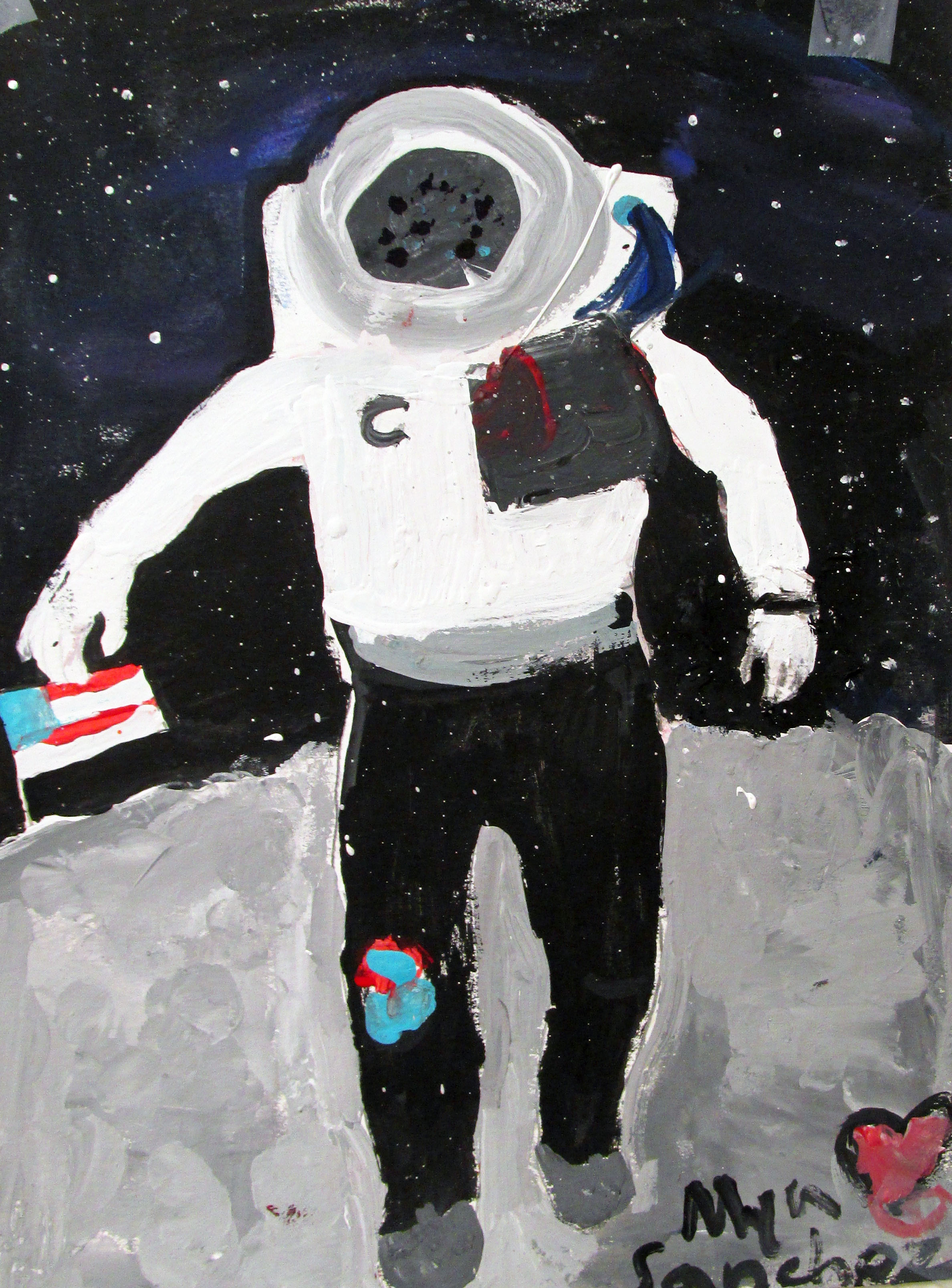
Spacesuits – Designed by kids

It always surprises us teachers when students do something outside the guidelines. It’s easy to preach the outside-the-box cliche, but what happens when they color outside the lines – defy the rubric, so to speak?

I asked one of our presenters to help judge the entries from students. The contest challenge was to ‘design a spacesuit of the future.‘ No other limitations except nothing could be bought from a store. The scientist who designs satellites for a living, had a hard time picking 3 entries. So did my Specials team.

Some students interpreted the ‘rules’ and used recycled material. One took the whole astronaut approach, with a  diorama. Some focused on the breathing apparatus – after,all they do hear that the air on Mars is not exactly fit for consumption! So here’s what we got. The 1st place went to an entry made entirely of water bottles and tin foil – to the right of the spacesuit (which was the prize.)

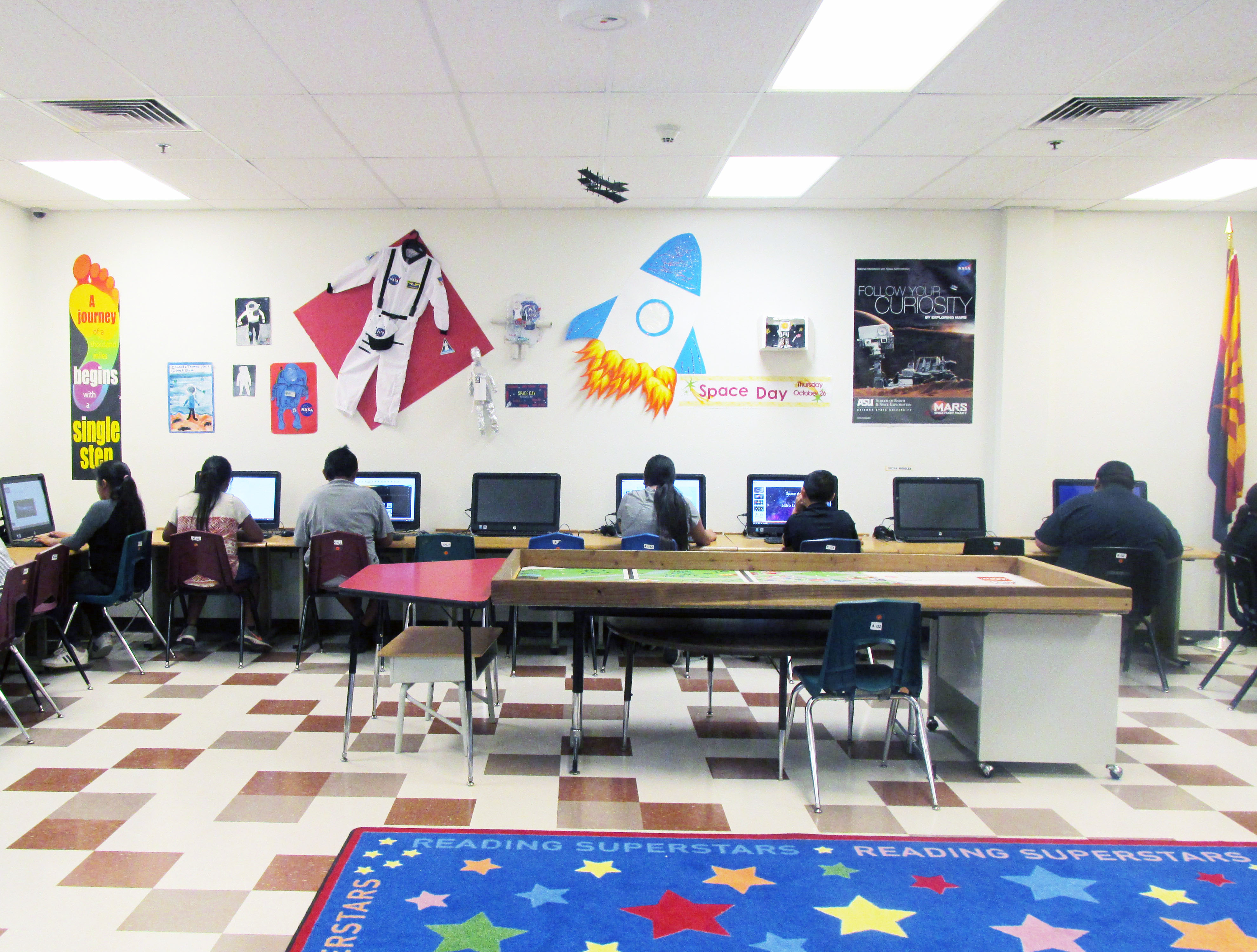
Space Day at Salt River Elementary

So today is Space Day! Our 6th year, Space Day is turning out to be quite an event!

This year we have two keynote addresses from NASA scientists:

Dr. Jim Rice,  Co-Investigator on the Mars Exploration Rover Project. His work has involved mission experience working on the Mars Odyssey Orbiter and Lunar Reconnaissance Orbiter Projects, the Mars landing site selection for every NASA Mars Mission since Mars Pathfinder in 1995. he is currently involved in manned missions back to the Moon and Mars.

Dr. Ashwin Vasavada, is the Deputy Project Scientist working on the mission of the Mars Curiosity rover. He helps lead an international team of over 400 scientists. His work has involved geologic studies of Mars with regard to surface properties, volatility, and climate history.

Other sessions will be specific to grade levels:

  • Robots in space
  • Planets & Liquid Nitrogen
  • Food in Space
  • Moon rocks
  • Rockets and launches
  • Satellites Communication in Space
  • Small-scale satellites

We could not have done this without the support of:

  • Challenger Space Center
  • NASA
  • Orbital ATK
  • ASU – School of Earth and Space exploration
  • ASU – Collective Systems Laboratory
  • SpaceTrex


Robots vs Teachers. Expecting a standoff?

I’ve got this poster in my class that says “Technology won’t replace teachers. But teachers who use technology will probably replace teachers who do not.”  

It raises a few of eyebrows.

So I was intrigued by a story in Education Week last month about how ‘intelligent tutors’ could upend Teachers’ jobs. The story cites an EdTech professor at the Harvard’s Grad School of Education. Christopher Dede says, “AI changes teaching, yes, but more important than that, AI changes the goals and purposes of teaching.”  Besides the reference to Artificial Intelligence are references to a ‘Tutor Machine,’ cognitive tutoring, and ‘Intelligent Tutoring Systems’ or ITS.

I’m not surprised this discussion is veering into the AI realm. It’s not just about data, but about knowing when to intervene. It will nudge teaching away from the ‘factory’ model and into a consultative approach.

The old guard armed with rubrics and lecture notes will cry foul. The robots are not going to walk into our classrooms anytime soon. But technologies could emerge to phase out robotic teaching methods.

Starry, starry, nights worth watching!

No, not Vincent’s. This is courtesy of the heavens. Particularly the meteor shower from Orion, and debris from Halley’s comet.

Of course one must stay up past midnight until dawn on Friday and Saturday. Unfortunately one needs less light pollution to experience the shower.

I’m interested in this because, by some coincidence, around the week of my annual SPACE DAY event in school, we always seem to have a gift from above. It puts things in perspective.

For best places to watch,you could check this ‘Dark site finder.‘  Unfortunately Phoenix area, and Colombo, seem not dark enough.


An NASA observatory, a Nobel Prize, and an asteroid named after him. Quite a guy!

Looking into Google’s celebration of the birthday of astrophysicist Subrahmanyan Chandrasekhar, I was fascinated by the man’s career that spanned from home schooling in Madras, to Cambridge, to Chicago.

Carl Sagan was his student! His uncle also had won a Nobel!

Chandrasekhar’s propensity for research was unstoppable – he apparently investigated a fresh field of study each decade!  His Nobel Prize for Physics came in 1983.

As for the observatory, the Chandra X-Ray Observatory is the third of NASA’s ‘great observatories’ –after Hubble and the Compton Gamma Ray Observatory.