“Negotiating with Jell-O” and other zingers

Sometimes a zinger in a speech captures the essence of all the other verbiage put together.

Consider these:

“I get it, I get it. We’ve got to address the elephant that’s not in the room.”

(Hasan Minhaj, host of the White House Correspondent’s dinner this year.

It got better, especially with the rest of the thought aimed at president Trump who did not attend:

“The leader of our country is not here. And that’s because he lives in Moscow. It is a very long flight.  


“I served with Jack Kennedy. I knew Jack Kennedy. Jack Kennedy was a friend of mine. Senator, you’re no Jack Kennedy.”                  

                                                                                                             Lloyd Bentsen

The context was the VP debates; Dan Qayle had  likened himself to JFK and was treated to a delicious zinger by  Bensten.

Negotiating with Trump ‘like negotiating with Jell-O’

Senate Democratic Leader Charles Schumer


Voice assistants I love to unplug, and smart fridges I really don’t need

I’ve had some fun with Alexa. The matter was settled over the Christmas break: We can do without AI in our home.

I had previously written about it here. And featured voice assistants in my last tech column, “I spy with my little AI.” I reference how creepy it could get should an AI enabled device such as Alexa, Google assistant or even Siri eavesdrop on our private conversations. AI devices after all are supposed to do our bidding, not spy on us. But there’s a fine line between passively listening and spying.

So when we discovered that an AirBnB we rented over the break provided an Amazon Echo speaker, it got to the point where (after a few rounds of asking Alexa random questions and finding ‘her’ quite annoying) I unplugged it and put the darn thing away.

It was no surprise then to hear that at the Consumer Electronics Show (CES) in Vegas,  several new breeds of AI devices were unveiled, designed to respond to human inclination to suddenly want to talk to hardware. Such as the smart refrigerator by LG that ‘talks’ to a smart oven etc.

Which makes me wonder: Just at the time when we have plenty of research pointing to the correlation between being too plugged in, and being extremely socially disconnected, we have the tech sector pushing products that seem to exacerbate the issue. I don’t need a smart fridge, thank you very much – I just need a painless way to talk to an LG service rep (25 minutes on hold, seems customary) when my fridge behaves badly.

And speaking of snooping devices, here’s something that is advertised as being able to monitor a home. A clothes hook with a hidden camera. Creepy? Or is it the sign of (the Internet of) things to come?

Do you trust Apple? Or buy it’s half-baked PR?

Many, many years ago I decided I would no longer support or use Apple products, however ‘convenient’ and cool they were. Most iPhones and Macs before that were overpriced; we as a family decided against them. (My first PC was an Mac. Today I could by three fast PCs for the price of that Mac I owned up to 1996.)

So now, as Apple products come under withering scrutiny, such as the ‘speed throttling’ or battery issue, I wonder why people still put up with a terribly unethical company. There have been plenty of scandals that signaled to customers something was awry  – from the iPad Chinese scandal, to the more recent one that smells of ‘Planned Obsolescence’ (an old marketing ruse).
Transparency is not its strong suit – secrecy is is built into its DNA after all. Including workplace secrecy. But Apple seems to understand human psychology, and knows that a shiny new object is enough to deflect bad business practice. If you read the company’s disingenuous apology, it sounds like it was hammered out by a group of ghost-writers in a tavern filled with corporate lawyers. So while there will be lawsuits and pressure from governments, it could ride this out.

So my question is, if you’re an Apple user do you ‘like‘ the company, and distrust the brand? Or is it the other way around?

When space exploration looks like Sci-Fi

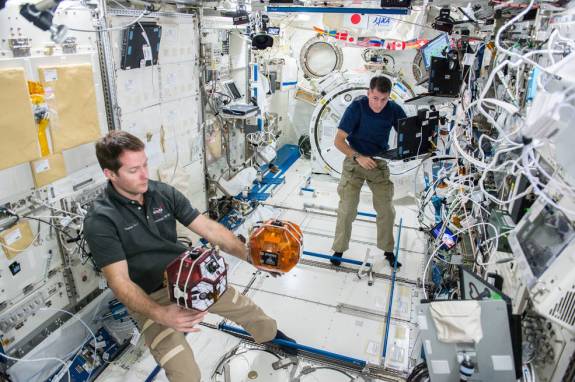
One part Star Wars and two parts Arthur C. Clarke, one of the new things being tested in space is something called ‘Spheres.’

It is the name for three small “free-flying satellites” on board the International Space Station. Students in middle school have been getting involved in using SPHERES (which is an acronym for ‘Synchronized Position Hold Engage and Reorient Experimental Satellite’) in micro-gravity experiments. One of the goals of SPHERES has been to see if these small satellites could one day solve the problem of space debris, apart from other future space missions.


Arthur C Clarke was the earliest proponent of communication satellites. His 1945 Proposal was on Geostationary Satellite Communications. This March would be the 10th anniversary of Clarke’s passing.

Making Coding relevant

We’re building up to a week of Coding in a few weeks; this will dovetail with Digital Learning Day. So I’m kicking off the new year with an introduction to the different kinds of ‘codes’ in use, some of which we take for granted: Morse, Braille, even the simple icons we used to call ‘highway code.’ And of course, HTML.

This week I’m focusing on QR Codes, and how we barely notice them. On ID cards, and even at checkouta – the Walmart pay feature, for instance. IKEA too has been testing something similar.

So as we lead up to several  events in Jan and Feb my students will create and test QR Codes – embedding them in a report. Perhaps work on a design for a T-Shirt for Martin Luther King Jr. day next week, and Digital Learning Day in February.

Meanwhile, this use of a code to demonstrate the connection between analog content and digital is very interesting.

While you weren’t watching Amazon CEO is in the space race

Jeff Bezos was once known for books, when Amazon was the world’s largest online book store. That was in 1994.

He had been recently investing in robotics, and also acquired Whole Foods. But flying under the radar has been his space company, Blue Origin, building and testing rockets. It is  what they call a rocket system, with a reusable, stage-one booster. It can take up to 100,000 pounds into space. This Apollo-sized rocket (much taller the Falcon rockets from SpaceX) is one of the few contenders in the space tourism business. Possibly a moon landing soon!

It may be a space race, but Bezos is taking it slow for now, to get it right.

Fake news – Old model recycled for digital age

Before we called it Fake News, it was called propaganda. Or just plain dirt.

The New York Times has a great story on the roots of Fake News. (I’ve always disliked the term; it suggests there is such a thing as ‘authentic news.’) When information is manipulated, and planted, and spread, it is not just fake but spurious. The Rand Corporation calls this the ‘Firehose of Falsehood‘ propaganda model.

It’s features are:

  • High-volume and multichannel
  • Rapid, continuous, and repetitive
  • Lacks commitment to objective reality
  • Lacks commitment to consistency.

The firehose brings in information from so many sources that it tends to consume and compromise the bandwidth of attention we have to process the information.

But while we pay attention to malicious actors who spread falsehoods, let’s not be blinded to other ways fake news, falsehoods and propaganda spread. In a much older analysis of news and propaganda (Manufacturing of Consent, 1998) Noam Chomsky revealed how systemic propaganda is part of the business model of newsmaking. He identified ‘filters’ in the media embed propaganda and bias.

Fake news is just a new digital iteration of what we’ve had, and blissfully ignored before. Everything old is new again!


Social media warning – This time from former Facebook exec

Didn’t you suspect the backlash was coming? Is Chamath Palihapitiya right?

The former Facebooker (someone I’ve featured before) gets to the heart of the matter. Calling out the addictive nature of social media –what he calls the “dopamine-driven feedback loops.” He doesn’t mince his words. Listen to his interview and see what you think.

A few days ago I expressed my disgust:

Indeed, we need to call out social media when it is not social, and in fact becoming thoroughly anti-social. We need to aggressively educate our younger generation before they climb on board this seductive train.

Or as Chamath says, we need a ‘hard break‘ from these tools.

Targeting 6-year olds. Facebook, how low could you go?

It’s shocking –but no surprise– to see how young children are being sought after as social media customers.

“Today, in the US, we’re rolling out a preview of Messenger Kids, a new app that makes it easier for kids to safely video chat and message with family and friends when they can’t be together in person.”

Sure Facebook’s release is sprinkled with words like ‘safer,’ ‘standalone’ and ‘controlled.’ It probably went through many, many iterations to make sure it addressed the hot-button issues. But let’s not be fooled as to what the real deal is: To groom younger customers to expand and dominate the base.
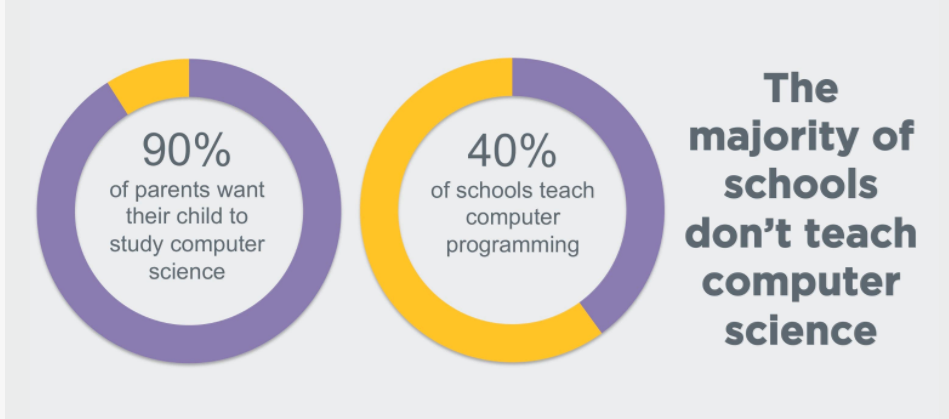
We like to see the research that they lean on, which they say led them to fill the need to allow kids to connect.
Facebook, if you want to have ‘thought-provoking conversations’ with parents, talk to any Montessori school, and they will tell you how and why their kids are becoming disconnected. (I am cross posting this from my wife’s Montessori school website.)

Gifs, masks, drawing tools, and stickers don’t constitute social media. Nor do they nurture connections!

C’mon, Facebook!

Read what others have to say:

‘Hour of Code’ and Digital Natives

During Hour of Codea global event to promote coding skills this week, we strive to ramp up digital literacy.

But what constitutes digital literacy? There are many definitions.

Microsoft looks at it through an ICT lens – where ICT means ‘Information Communication Technology.’ But evidently there is much more it encompasses. How about building ‘digitally inclusive communities’ as is defined by the Institute of Museum and Library Services?

It goes beyond simply learning how to be safe online, or managing one’s Instagram page. It’s about teaching young people, beginning in elementary school, the ‘literacy’ for being successful in civic or economic spaces. It’s a mistake to assume that ‘Digital Natives’ are automatically, or inherently competent in these areas.

I have previously cited Common Sense Media writer, Jessica Laura who makes the point that just as anyone who has grown up speaking English, still takes English classes, those growing up digital, still need to learn about digital literacy.

The folks behind Hour of Code often talk about the need for foundation skills related to problem-solving, logic and creativity. Similar to how all students learn about photosynthesis, they ought to also understand how algorithms and coding underpins how their world works – or does not. There are 500,000 current job openings in the US that require computer skills, they say.