International Ping-Pong Space Station

Space could be fun (OK, except for dehydrated food) especially if they let you play a few games. All in the line of testing out how some materials behave in micro-gravity.

One of my colleagues lets students work on NASA projects, such as making a glider out of a shoe-box, or growing vegetables in space-like conditions. Her students are currently working on how ‘toys in space’ might perform.

So in this line of thinking, there’s Scott Kelly, who’s spending a year in space, playing ping-pong with a water droplet. If only he played against, say Sergey Volkov or Timothy Peake (UK). That would make it a more realistic international playoff.

So kids aren’t playing with rubber bands and string anymore?

True story: Recently I took a small group of students to visit a lab, and while breaking for lunch on some garden benches, they began climbing the trees nearby. They were getting a bit noisy when a lady walking by stopped and looked up into the branches. I thought I would get asked to get them to ‘behave’. But the lady smiled and said loudly to others passing by, “Look! look! children are playing on trees again!”

It took me a few seconds to figure out what she was really saying – that having seen so many kids today plugged into screens, it’s thrilling to see them having fun scampering up trees. (Side note: this was outside a Mars Space lab in Tempe, Arizona, and we were on a field trip to see a whole lot of technology!)

Drawing from : 7th period: Feed a Fish Wikispaces page Click on image to visit this class project page

I keep this in mind when I introduce students to new technologies. Last week, I began a lesson on animation, and as subject matter, I returned to the ‘Rube Goldberg Machine.’ We don’t always need screens for this. (Unless we need to check out the many Rube Goldberg contests like this.). How could we turn students into makers, and innovators, problem-solvers and scientific thinkers?

A Rube Goldberg Machine (or ‘contraption‘) teaches us a lot about levers, gravity, kinetic energy, and chain reactions among other things – such as precision, iterative design, and learning from failure. All it takes is some lengths of wood, string, paper cups, shoe boxes, old clothes hangers, marbles and/or ping-pong balls, rubber bands and cardboard tubes.

I like to get them to ‘design’ their machine first, and see what they come up with – then set them on a building mission! We could use a drawing app, but paper and pencil work just fine!

Image on right – One of the manyprojects from a 7th grade class – found here

Google’s ‘Expedition’ project visits Arizona

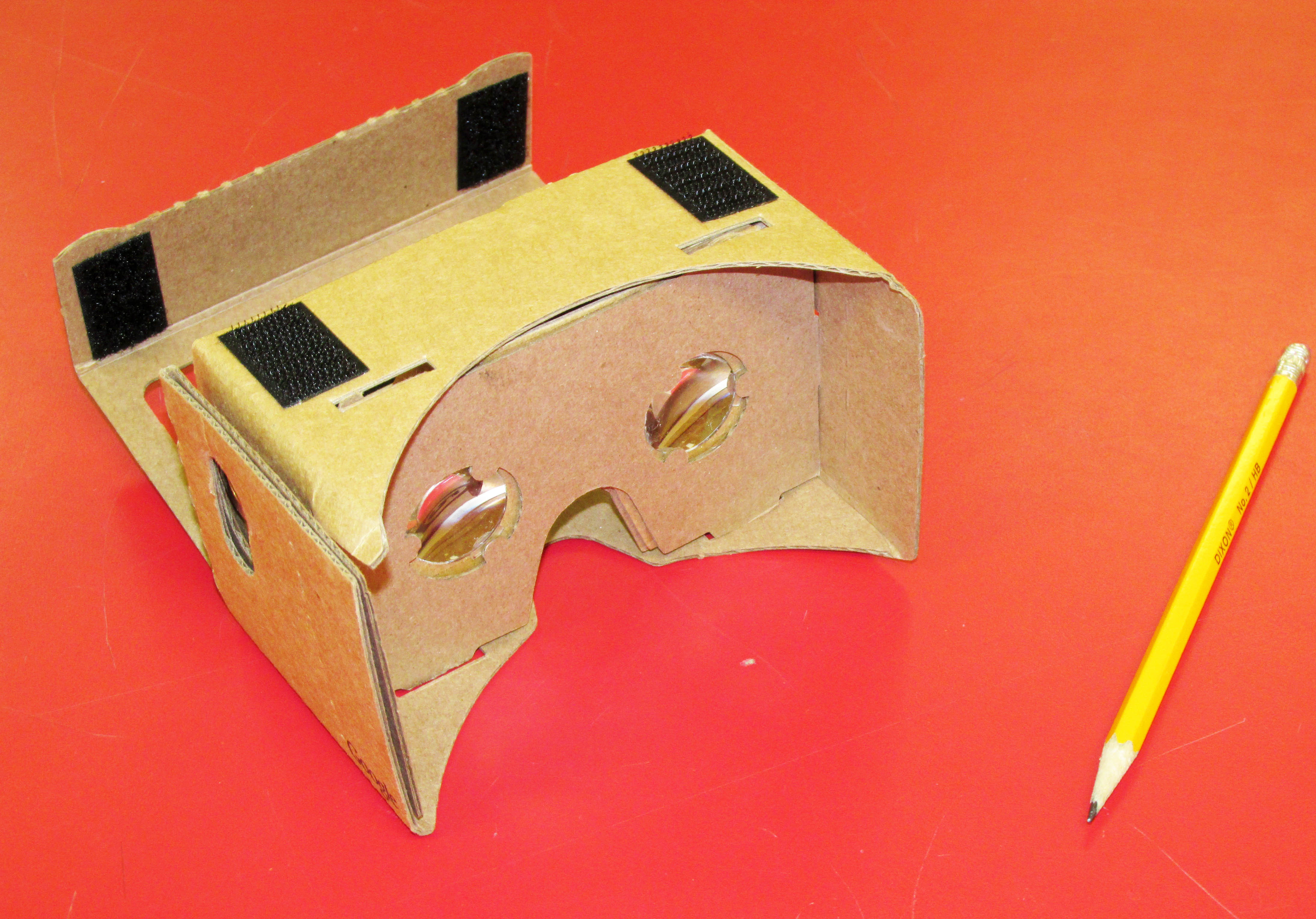
So I’ve got ‘Google Cardboard’glasses ready, and I’m excited to hear that Google will be here in Arizona this week. It’s part of their roll out of Google Expeditions – a classroom project using virtual reality. A few weeks back I applied to have them come out and run VR sessions, so –fingers crossed — I’m hoping my school gets picked.

So what’s Google Expeditions? There’s a good explanation here on this EdTech site, EdSurge. The Google team is visiting selected schools in the US, Australia, New Zealand, the UK, Brazil, Canada, Singapore and Denmark. Each school will get an Expeditions kit – probably a VR ‘Cardboard’ headset, and apps. I noticed that the ‘expeditions’ feature a wide range of topics from ancient civilizations and rain forests, to space and historical events.

Think of it Expeditions as a virtual field trip, or more appropriately, an immersive experience that you could not get out of a text book – something I touched on in the recent Sri Lanka STEAM workshops for teachers.

Science and Tech Workshop in Sri Lanka

Just got back from a short trip to Sri Lanka, where I conducted two workshops for teachers.The first was in Maharagama on Dec 15th & 16th. The second workshop was in Kandy on Dec 18th.

Here are some stories about the workshops:

Much thanks to my co-presenters:

  • Dr. Paul Funk – Engineer, US Dept. of Agriculture, New Mexico (Via Skype)
  • Ruben Gameros – Autonomous Collective Systems Laboratory, Arizona State University (Via Skype)
  • Scott Logan – Montessori International School, Mesa, Arizona (Via Skype)
  • Lal Medawattegedera – Lecturer, Open University of Sri Lanka
  • Nalaka Gunewardene – Science writer, author, trustee of the Science and Development Network
  • Nazly Ahmed – Web App Dev at Social Seed Media

Also the two Keynote Speakers:

  • Dr. Ajit Madurapperuma – Dir. Of Information Communication Technology, ICTA
  • Dr. Nalin Samarasinha – Astrophysicist at Planetary Science Institute in Tucson, Arizona (Via Skype)

Finally, thanks to the American Center in Sri Lanka who made this possible – especially Joshua Shen.


DSC01238

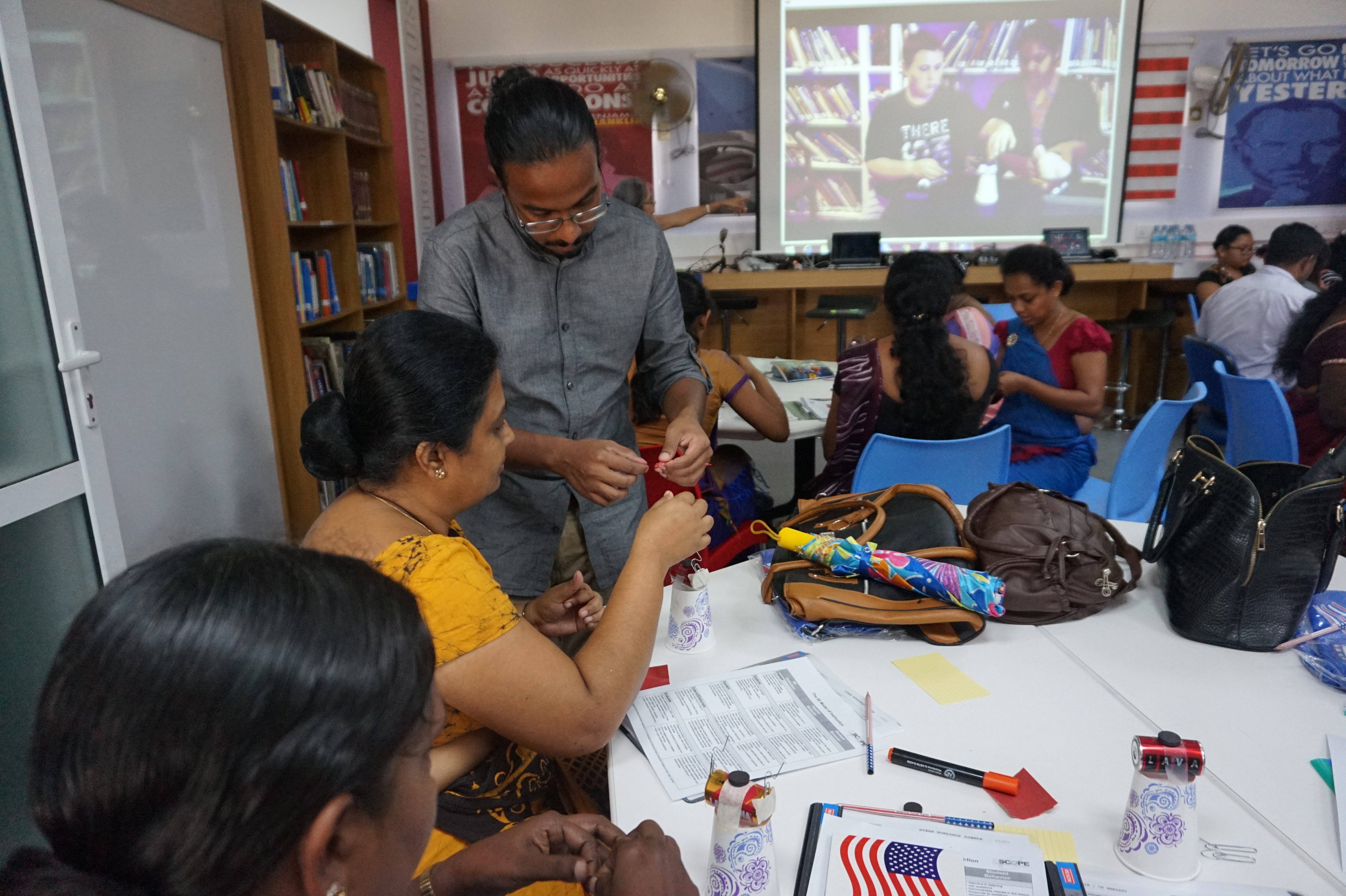
Hands-On Engneering – Spaghetti Tower Challenge


DSC01270

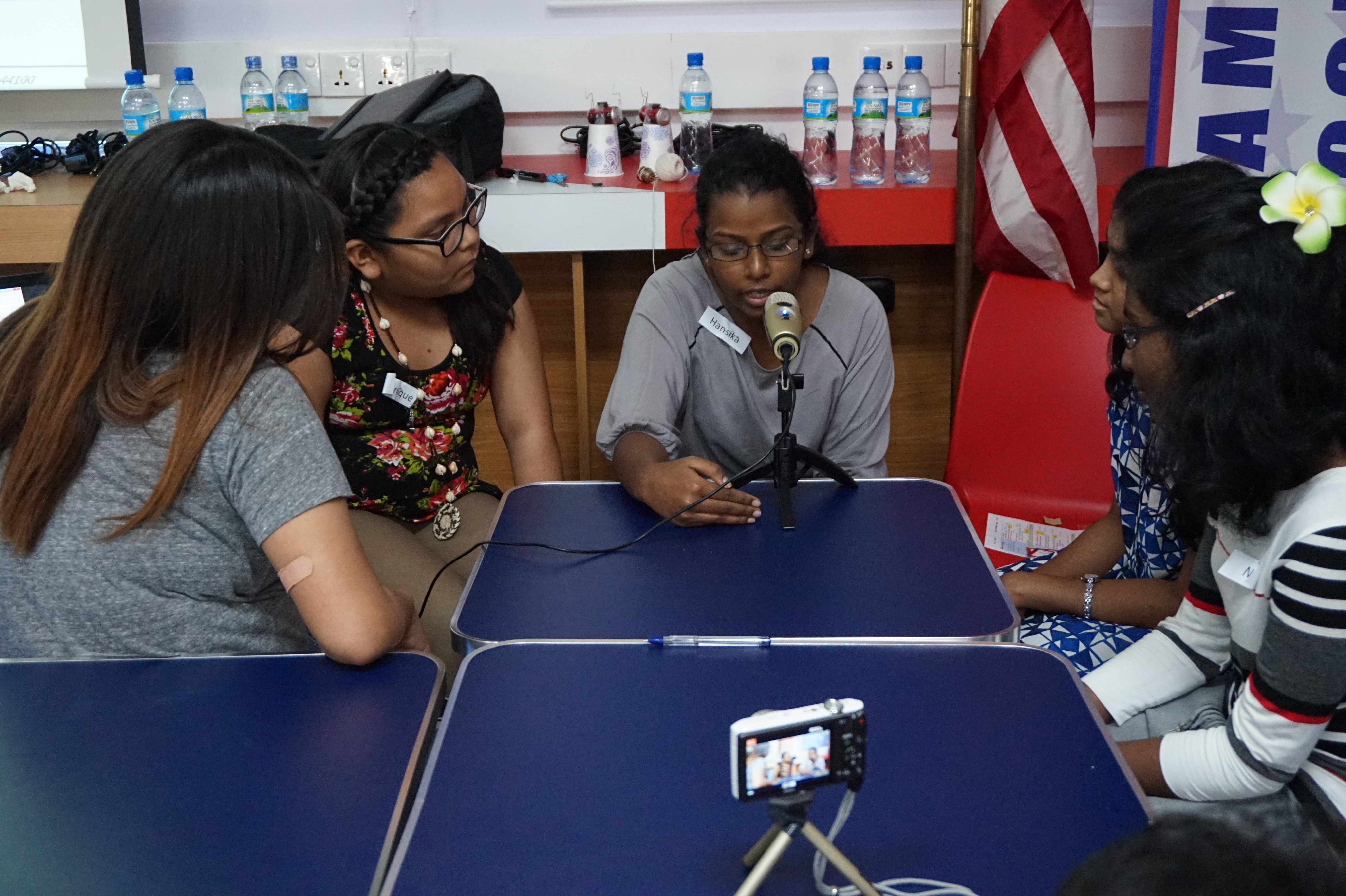
Hands-on session on Audio Recording

Scot Logan & Students

Hands-on session on Motors and Electro-magnetism

Scott Logan & students at Montessori International School, teach class – via Skype

DSC01361

Aaron Fernando facilitates session

DSC01402

Using audio and video for content creation

DSC01415

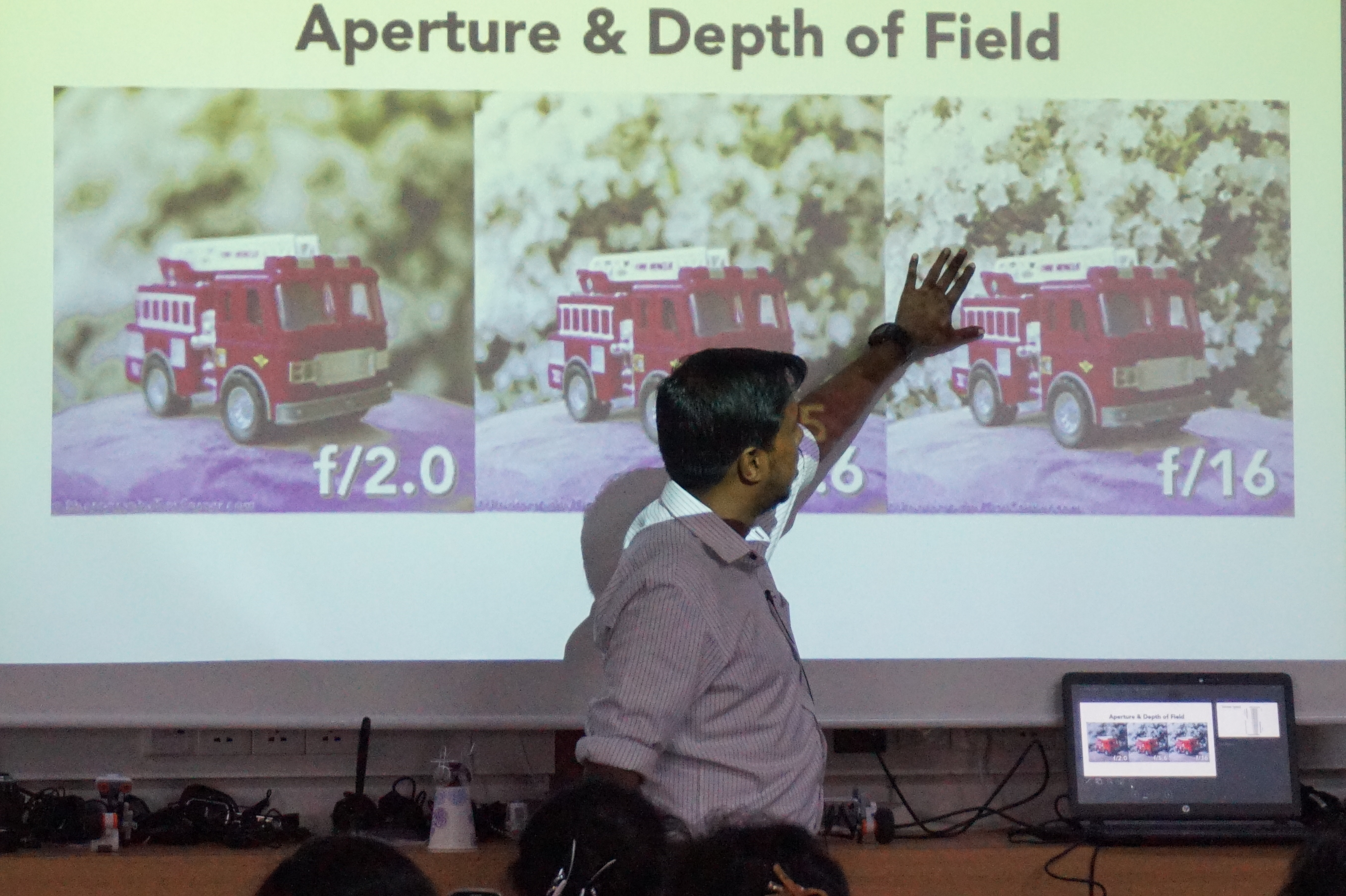
Photography in Science – From SLRs to GoPro

Nazly Ahmed, Social Seed Media explains Depth of Field

DSC01246

Engineering & Problem Solving – Building a Solar Oven

Paul Funk, US DOA

NalakaG

Teaching Science Writing

Nalaka Gunewardene

Cardboard 2

Future Ready Classroom – Google Cardboard & Augmented Reality

DSC01419

Future Ready Classroom – Teaching Robotics

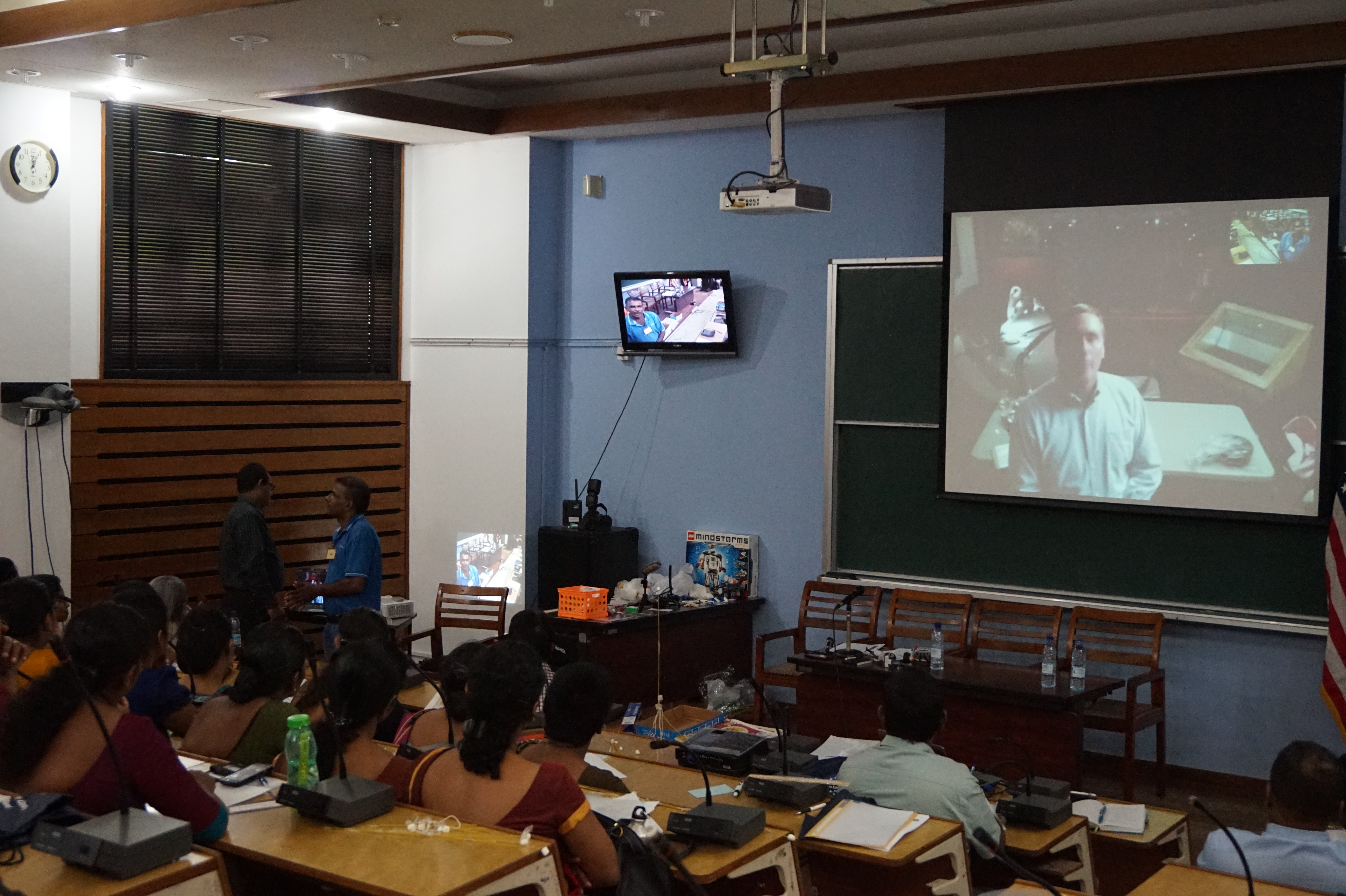
Ruben Gameros, ASU, teaches class on robotics – Via Skype

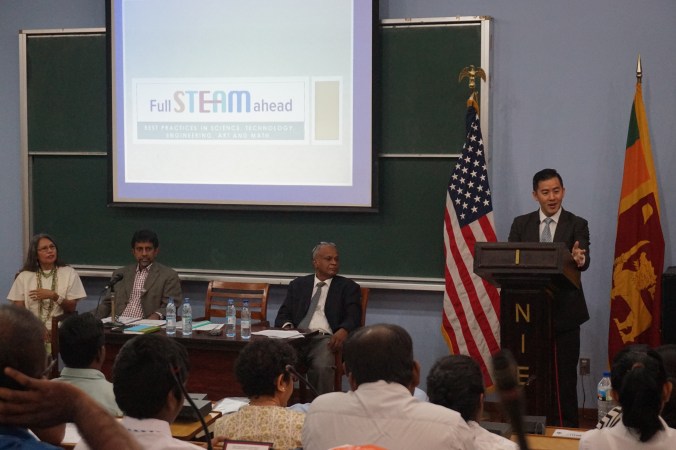
Joshua Shen - STEAM Workshop Introduction

Joshua Shen  Delivers Opening Address

STEM Student Ambassdors to visit Sri Lanka

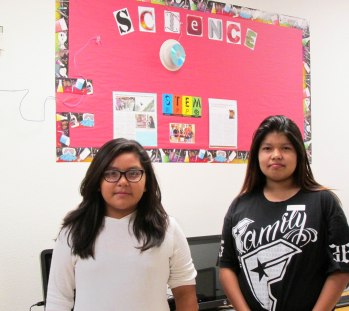
STEM Ambassadors - Salt River Elementary 2Two students from my school district have been invited to visit Sri Lanka as ‘STEAM Ambassadors‘ in December.
They will represent the Salt River Pima-Maricopa Indian Community at two workshops for teachers on Science, Technology, Engineering, Art and Math. The workshops will be held in Colombo and Kandy.

The students are:

  • Dominique Grey, a sixth-grade student at Salt River Elementary.
  • Haley Smith, a seventh-grade student at Salt River High School.
  • Maria Chavez, the school’s Parent/Community Involvement Specialist, will accompany them, as well as one parent of each of the students.

Listen to the story here, on KJZZ.

Sri Lankan teaches GoPro to my class (Never mind the time the difference)

Nazly_profileThanks Nazly Ahmed, for taking the time to teach a 35 minute class to my 4th graders this morning. It was 8:45 am Arizona time, and 9:15 Pm in Colombo, Sri Lanka. But what’s a few time zones when it comes to learning from experts?
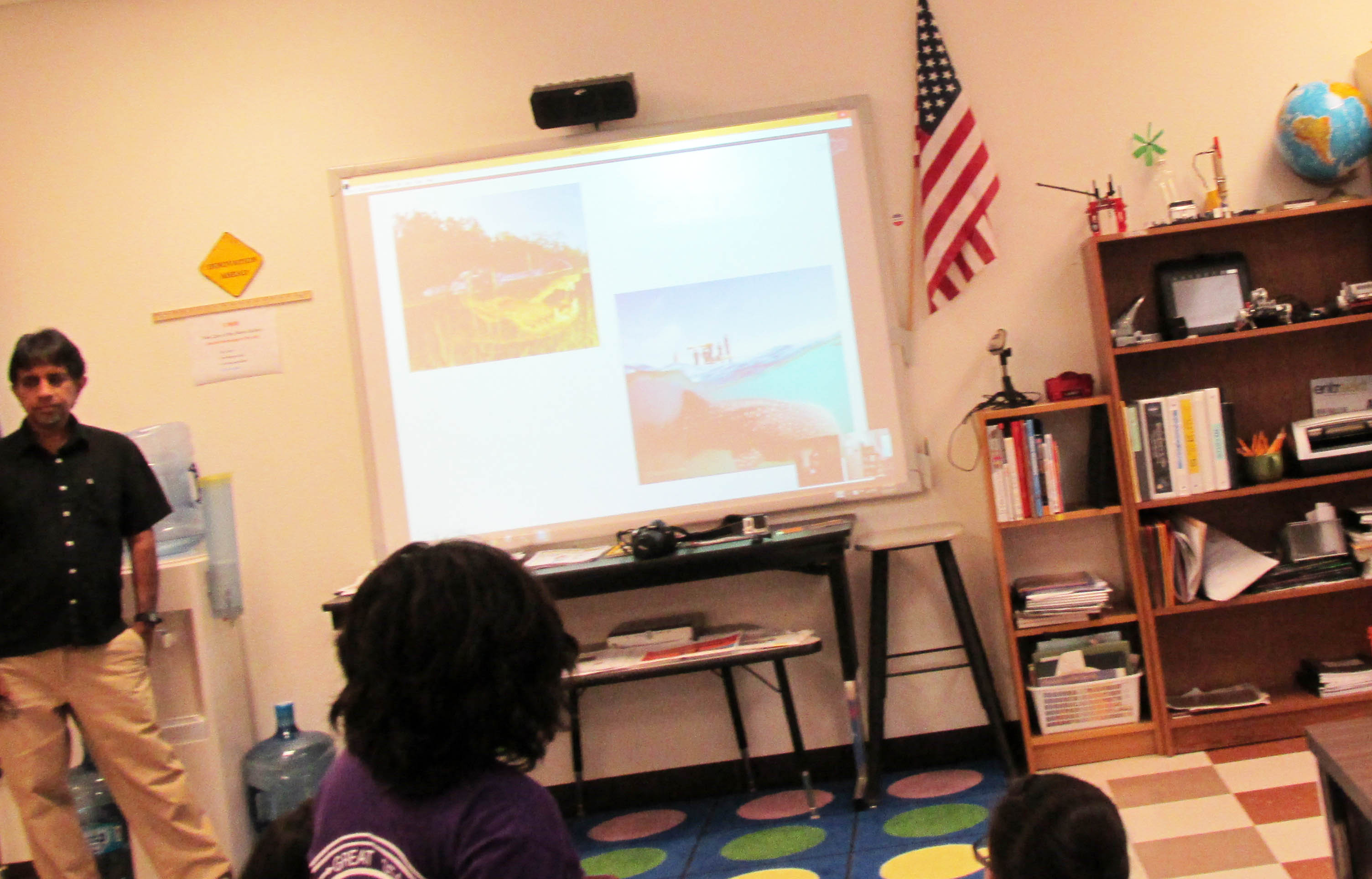

This technology class was a bit of a ‘planned surprise’ for them. Some have even seen a GoPro in action. I happen to have one in class, so before I introduce the hardware, I wanted to bring in a user to talk about it. There were three cameras in class – not counting the one on the PC for our Skype call. Nazly used screen-share from his end, to explain different camera perspectives. Forget drones with cameras. We watched the flight if an eagle mounted with a GoPro!

And students wanted to engage, so the class was (nicely) interrupted by many questions. One student volunteered to document the session on a regular camera. Everyone said they wanted to work with the GoPro, which will be in a forthcoming class.

Now if I could only find an eagle that’s willing to participate in an Ed-tech experiment 🙂 

GoPro class


Learning to avoid cameras – from TV reporters

I love cameras. I hate cameras. Are you like me?

I take a lot of pictures, and often avoid being in them (a photo-catcher’s prerogative!). But sometimes we can’t avoid being in them. (photo-radar, group shots…)

This week, I have to be part of a series of STEM videos that I am putting together. I was looking for ways to not be on camera 90 percent of the time. Ergo, the table-top presentation.

In the TV news business, it’s called Continuity and Cutaways.‘  A well-practiced art we are oblivious to. It works like this:

  1. Anchor introduces story, and station ‘cuts away’ to reporter.
  2. Reporter on camera takes over for a few seconds.
  3. Video cuts away to scene of story – the so-called B-roll footage. The reporters voice (arguably on ‘A-roll’) runs over the video and maintains continuity
  4. Studio cuts back to reporter, who wraps up story in a few seconds.

In total the reporter is on camera for a fraction of the time. Our brains fill in the gaps, and make us believe we were being addressed face-to-face. I hope to really shrink that fraction. Let’s see.

Note: For a good understanding of the cutaway and B-roll, read Steve Johnson’s explanation here.

When science works, machines break, and coffee cups burn

In teaching technology we like to say that it’s OK mess up the first time. This is counter to how we like things to run smoothly – neat transitions, good closures etc. A formula, in other words. Even when doing a demo, you probably want your audience to see the end result.

earthquake-simulatorBut I’ve realized that in many lessons – life lessons, not class lessons– the worst thing you could do is to have something perform flawlessly.

Take this ‘Earthquake ‘simulator’ we built here. The plan was to simulate tectonic plate movement that brings down buildings. This was for our STEM Night, which happened on 21st April. A rickety contraption that would shake-rattle-and-roll using a power drill. We quickly ran into a few issues. The wheel you see here was cracking.With two hours to go to the ‘earthquake challenge’ we implemented Plan D – Duct tape. Which looked messy, but it worked. In a sense, I loved that uncertainty; an opportunity to tell students that this ‘problem-solving’ stuff we go on about, is real, even for us.

The next day, FOX 10 News showed up. More issues, with the weather guy and a camera pointing at our ‘machine’.

  • Problem #1: The drill that drove the wheel, had been taken home!
  • Problem #2: Reporter Cory McClousky wanted to repeat the ‘quake’ and of course, it failed. On camera. Nice!
  • Unrelated issue. Behind the earthquake simulator was the solar oven we used the previous day. I had left my coffee cup inside while we were waiting. A solar oven, in case you haven’t heard can reach up to 250 degrees in 30 minutes. So does the plastic cap, as you can see here, which warped out of shape.

You cannot plan these things. What looks bad, actually informs the story. McClusky’s parting line about the solar oven was: “We’re burning coffee cups in here…” Indeed. You can’t touch this.
STEM Night 2nd Red Camera (12) Solar baking After

FOX 10 News | fox10phoenix.com

 Cory Goes Back to School