‘Kandy Danced,’ The OED and it’s Ceylon connection, and… ‘Radio Silence.’

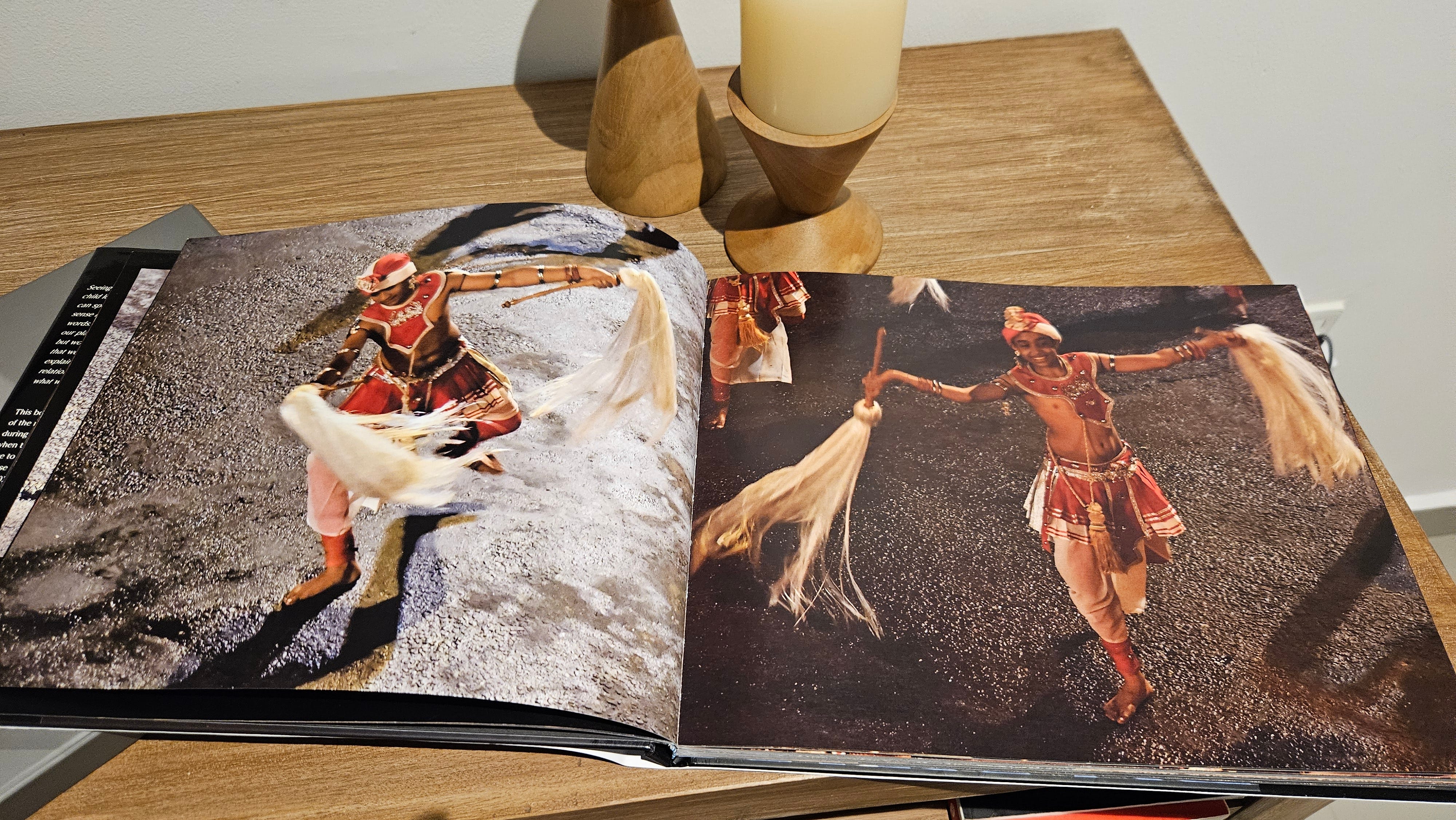
I was in Sri Lanka in June and July, so I stopped by at A. F. Raymond’s to meet an old friend Shannon Raymond. Three books, with a Sri Lankan angle. Shannon recently published a coffee-table book on the Kandy perahera. It’s a visual documentary of dance, hence the title.
“Kandy Danced”

Shannon vehemently claims, “I am not a photographer!” Yet one day in 2020 he borrowed his brother’s Nikon D850 camera and went to watch the Kandy Perahera. Shannon and his bro, Johann are old friends, so I got the rich backstory. In his office at A. F. Raymond’s—just past the caskets one has to navigate sometime—he explained the genesis of this book. You see, Shannon is also a dancer, and a choreographer. He wanted to document the skill and passion of the performers. In 2020, being the Covid year we prefer to forget, he took up a spot on a balcony of Queens Hotel in Kandy, and clicked. And clicked. The irony was that Kandy was literally shut down, so the artists in the Perahera were dancing to no audience. The lighting was simply from the flames of the torch bearers and fire dancers. What he captured, unwittingly—since Shannon claimed to know nothing about ISO settings or F-stops—was a magical study of light and choreography. It’s a large format coffee-table book so the pictures come to life. 
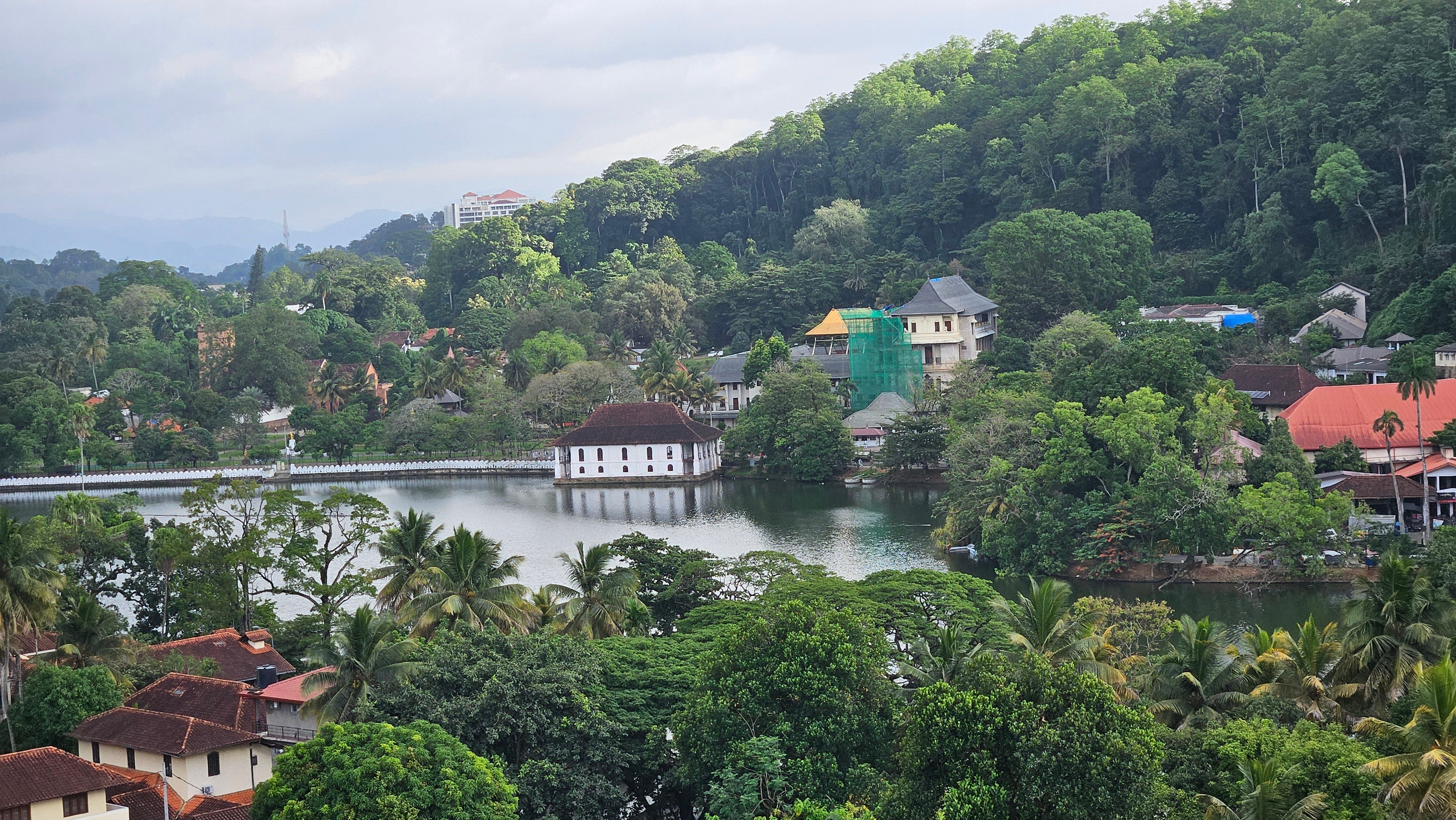
The temple of the tooth in the distance, from across the lake.

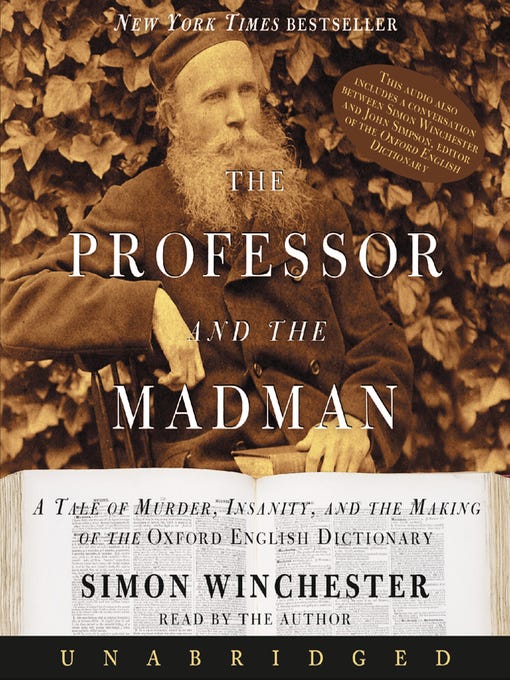
I was reading a biography of the original authors of the Oxford English Dictionary: “The professor and the madman” (now a movie starring Mel Gibson and Sean Penn), and made a startling discovery. A whole chapter on Ceylon. Turns out William Chester Minor, the co-author of the OED was brought to Manipay, in Ceylon by his American missionary parents. It doesn’t go well for him; he ended up in a British asylum, while contributing to the OED. I won’t spoil the story, but suffice to say his madness was based on his early years there.

My memoir

Finally, let me tell you about my latest book. It’s a collection for 26 poems (and an essay) titled “Radio Silence.” Why the title? I happen to be a radio buff, who has gone from producing audio (recorded on spool tapes at the BBC), to podcasting. The central idea—despite the radio vibe— is of the experiences many of us share as immigrants but seldom speak about. I have been writing poetry for awhile. Actually since 1983 and the ethnic riots. I finally decided to put some work together in one place. Yes, it’s personal, and many of the topics and people referred to are known to my circle of friends and family. Hence the memoir.

I will leave it to others to say what it represents. If you like a copy, please let me know. Radio Silence available on Amazon, but I could send you a PDF.
Do cameras still make memories? Have we drunk the Kool-Aid by replacing cameras with phones?

I ask this only because I am a photographer, and I find myself not taking the same kind of pictures I used to. One reason is pretty obvious. I rarely use my Nikon now. I use my phone. I know. I know. I never thought that day would come!

I am on record saying that a smart phone is a very expensive camera that pretends to be a phone. The ratio of phone calls made to pictures taken is probably telling for some of us. But we have been complicit in this, not questioning how phones are marketed. And priced. They always stress the quality of the lens.

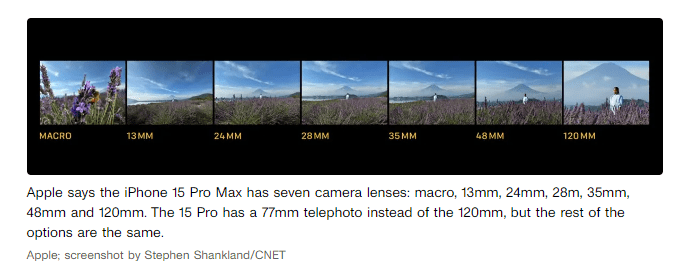
I didn’t realize that some phones have seven lenses. Seven!

Last June was the first vacation I took–to Sri Lanka and England–for which I didn’t lug my camera. My excuse: to travel light. I was almost regretting it, but I found that the pictures I took were coming out with better quality than if I used my trusted SLR. Which disappointed the photographer in me, but was ironically satisfying.

As you can see, the close ups as well as a low-light long shot worked well, with no tweaking of ISO settings or shutter speed on my part.

But having said that, I found myself taking too many pictures of ridiculous things. Like this protest sticker inside the Tube in London – just to show my daughter. And pictures in stores, and of plants. Not for ‘memories’ but because, well, I couldn’t resist. And in case you’re noticing, yes this picture quality is terrible, and it is so poorly framed. After all, I was just clicking, not caring about the photo part in photography.

This year too I did the same thing. No SLR–just the phone. Once again, too many pictures. Which makes me question if the technology has forced us to become documentarians, and takes of pictures’ rather than photographers. I (still) tell my students that photography is the ‘study of light.’ But as one clicks, barely looking at the scene (since there is no viewfinder, anyway), we have forgotten how to frame a shot, balance the subject, look for the best light source etc. Will these skills be lost forever? You tell me!

The other issue of where we store these memories. No longer do we want to print them out and carefully curate them in photo albums, so that we could share them on a later date. Now? We’re always connected, peering at each others’ screens. The small screen has become our album. Why did we take these steps?

You might say ‘convenience.’ I would disagree. I think we were sold on a lie, and we don’t like to address the cognitive dissonance that we are not ‘making memories’ with our fancy-schmancy devices, but overloading our neurons. All this while erasing important memories because we could only have so much space in our ‘hard drives’–meaning our heads.

__________________________________________

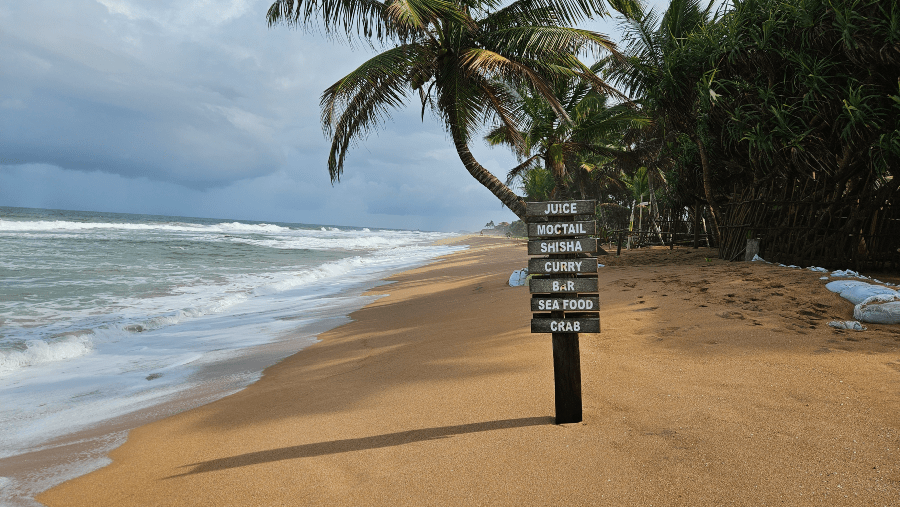
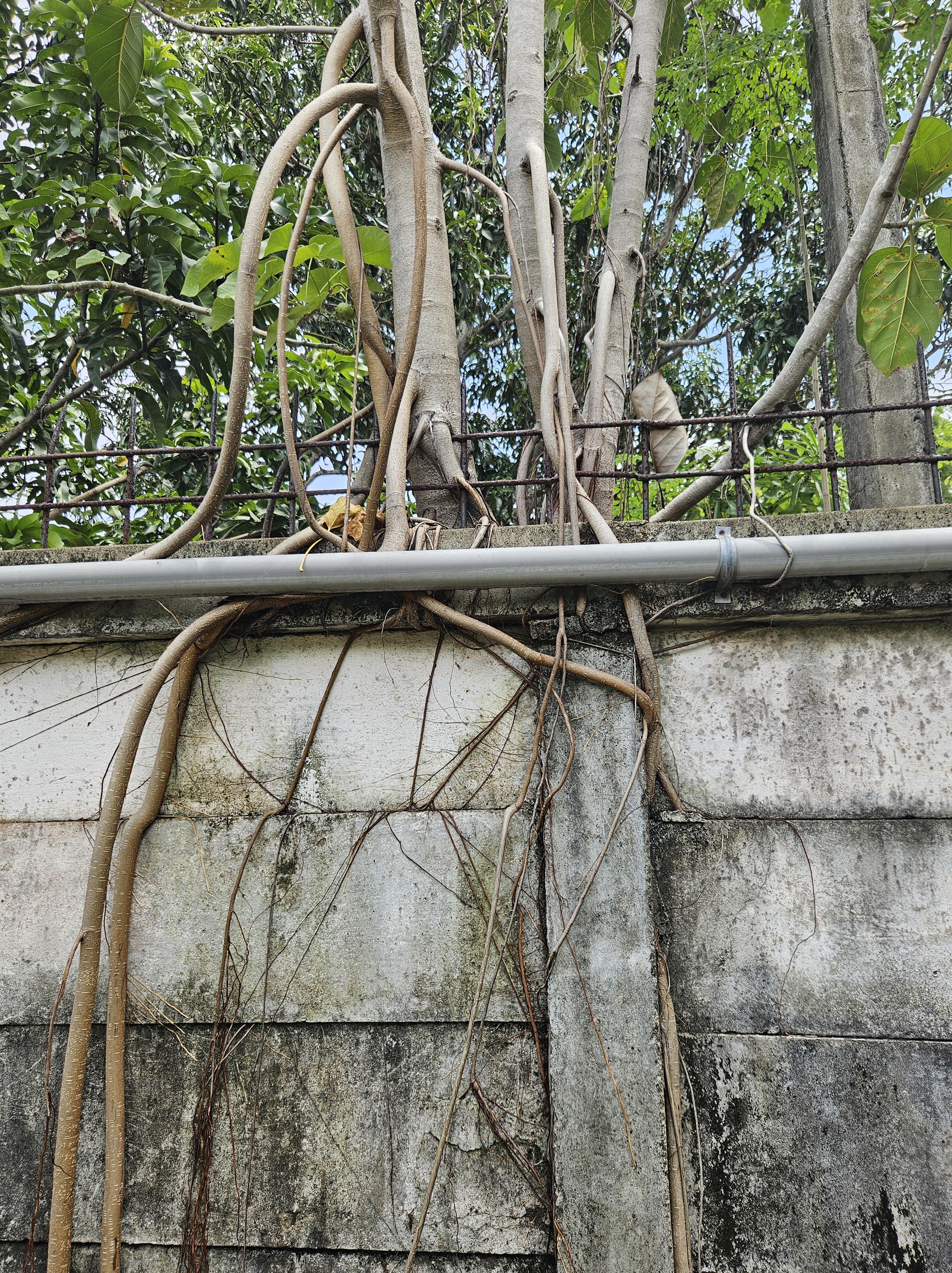
In case you’re wondering, the three images above from Sri Lanka are taken at: The Open University of Sri Lanka in Nawala (roots); St. Peter’s College Clubhouse, Colombo 4, taken from across the canal; Bentota beach at Temple Tree resort.

My latest Podcast, “Wide Angle” features three writers in Sri Lanka.

Spending time in Sri Lanka helped me reconnect with many of my friends in advertising, media and journalism. On this podcast, you will hear about writers I met during a recent visit to Sri Lanka. (Click on the album cover to listen.)

I was fortunate to be able to attend the Gratiaen Awards in June because my friend, Lal Medawattegedara’s book, “When Ghosts Die” was shortlisted for an Award. It was inspiring to see how book publishing and authors have evolved, despite the constant complaints that “nobody reads anymore!”

Hear from these two authors:

  • Tyron Devotta, a former journalist is about to publish a book set during World War 2 in Ceylon. He talks about the role of the writer in a time when the audience’s reding habits are changing.
  • Shannel Pinidiya, still a student, talks about the construction of her complex novel, and how she got into historical fiction writer at an early age.

I also like to promote two organization.

  • First Story, a London based outfit partners with schools to nurture young writers.
  • Write The World, based in the US, is an organization I support. My students to participate in their projects.
  • The Gratiaen Trust organizes workshops for writers and editors, has outreach programs, and holds an annual book awards.

_____________________________________

SHOW NOTES

  1. 1. The Gratiaen Awards, Sri Lanka: ⁠https://www.gratiaen.com⁠
  2. Tyron Devotta – ⁠http://www.media360.lk⁠
  3. Shannel Pinidiya – “Dear Leo” (2024) ⁠Dear Leo – Jam Fruit Tree Publications⁠
  4. Lal Medawattegedara⁠Open University of Sri Lanka.⁠
  1. Radio 201 – Angelo Fernando – ⁠Radio 201 Podcasts⁠
  2. First Story, UK⁠FirstStory.org.UK⁠
  3. Write The World, US⁠WriteTheWorld.Org

‘Colors of Colombo’ gives voice to the voiceless.

A Web developer and a journalist walk into a juice bar. The book that they just published paints the city I grew up in, in stunning light.

Photo by Nazly Ahmed

If you’ve lived here, you’d know when to duck a ball flying in your direction from a raucous cricket match. (The clue is often a pair of Bata slippers making do for a wicket.) Or where to find isso vadas, or chinese rolls; where that bicycle-tube repair guy on Galle Road sits under a piece of plastic; or what time the knife sharpener and choon pan tuktuk might arrive. These ‘experts’ and entrepreneurs however, are easy to miss because they just blend into the cacophony that is Colombo. Sadly many of them are hidden in plain sight like faded wall posters. But no worries – Nazly Ahmed has them in his viewfinder. He pulls up on his motorbike and takes in the details with his trusty camera. Lucky us! 

Colours of Colombo is a glimpse into that other side of Colombo, the lives lived in the shadow of the luxury apartment towers, and by unkempt beaches. It may be too small-scale a book to qualify for a coffee-table piece (which is my only beef with the collection. Visual storytelling like this ought to be seen in large format.) But the colours that pour out of it let us pay attention to those slices of life that are left out of tourist brochures. Who else would focus on a road sweeper in Mattakkuliya surrounded by grit, casting an ominous shadow? Or the tuktuk driver taking a nap like a cartoon strip framed against a giant piece of graffiti? Or the saravita seller’s serene, weatherbeaten face? These lead characters are part of the daily docudrama played out across the 15 zip codes of a city I once called home. Sadly, many of them are in transit, or worse, anonymous. Their names don’t roll in with the credits. Nazly (the photo-hobbyist and web developer) and Kris Thomas (the writer) have taken pains to put many names to faces, giving voice to the voiceless, a secondary, magnanimous accomplishment.

Reading this book made me wistfully attempt to recall those who’ve remained nameless in my childhood. (Your list is probably as big as mine.) The vedamahathaya down Havelock Road who once reset my dislocated elbow; the smiling lady outside St. Peter’s College who sold us ambarella achcharu through the iron gates. The tuktuk driver who religiously showed up on Sunday mornings to take my mother to church. The rickshaw man who transported my cousin and I to school and back. The kiri-karaya from Sagara Road. Their legacy is not found in my photo album. But they were itinerant actors who were part of a city drama never forgotten. 

Nazly and Kris don’t just take us back in time. They freeze the frame. I was glad to see that they all but ignored the parts of Colombo that privileged folk –and Instagrammers – go after. The bars, the buffet tables, the coffee shops. Yes there are some waterfronts in shimmering light, but some beaches (like one in Bambalapitiya) are murky. Shanties stand out against a backdrop of affluence. The other waterfront (a once hyped floating market), they note, is abandoned. 

By an unhappy coincidence the book comes out in a time when Sri Lanka is facing its biggest crisis. Colombo, where all the machinations of the political economy are worked out, is experiencing power cuts. A lighting effect –and irony –any photographer would not miss. We could be optimistic and see Colors of Colombo as a glimmer amid the virus of poor governance.

On this 30th anniversary of the Web, some teachers still send lessons on WhatsApp

It’s easy to be so enamored by the shiny objects around us –smart speakers, wi-fi door locks, wireless earbuds– and assume that the whole world is connected.

Yesterday, November 12th was a big anniversary of the World Wide Web. 30 years ago to this day Tim Berners-Lee, the British scientist suggested in a very academic scientific paper “…a space in which everything could be linked to everything.” This was his third proposal – the original was in 1989. It outlined the concept of hyperlinks, and how browsers, servers and terminals could possibly connect everyone.

But there are many parts of the world, including here in the US, where dead zones exist and the web is almost inaccessible. I remind my students of this often, as they sit in a computer lab and sometimes get impatient when the Wifi drops, or a website doesn’t load.

This morning, I was taking them to Pixabay, and open-source website for copyright-free images, but also for music. The site was blocked. No worries, I said. There are worse things that could happen to you. There are schools where students have to depend on lessons sent to them on thumb drives. In Sri Lanka, I know of teachers who send students lessons on WhatsApp, because the homes don’t have Internet (but a serviceable smart phone with a monthly data plan.) See Hakiem Hanif’s story how a 53 year old teacher is doing it.

So while some of you may be contemplating buying a fancy 5G phone for about the price of a plane ticket to Australia, remember that there are parts of the world where being online is still a luxury.

Lilamani Dias-Benson – A legacy of creative ‘infection’

On 11th July, we lost one of Sri Lanka’s premier creative spirits, my former boss and old friend Lilamani Dias-Benson.
There are so many facets of Lilamani, it would take a book to document her work and legacy.  But as many people remember her she infused indefatigable creative energy into advertising from the moment she stepped onto the scene. You could say she metaphorically dominated the room she entered, whether it was an uncomfortable client meeting, a photo-shoot, or a ‘plans-board meeting’ as we called it at JWT.  She would not initially say much but with a few words made everyone reconsider what was at stake. With a  few flourishes of a pencil she would coax you out of your comfort zone and revise the pathetic radio script you brought in on deadline.

I grew up as a cub copywriter at JWT when she took over the reigns in 1986, I believe. For whatever reason my art director friend Rhizvie Saldin and I came under her wing, attending high-powered client briefings, and strategic planning sessions that were above our heads at that time. I was just out of college, and had to bone up on ‘T-Plans’ (the Thompson planning document), and layout theory she made us imbibe late into the evenings. She would cite poetry,  refer to advertising legends such as George Lois, and challenge us to “come to the edge”.

That was a favorite poem of hers that she would quote, ad nauseam. It went:

“Come to the edge.
We might fall.
Come to the edge.
It’s too high!
COME TO THE EDGE!
And they came
And he pushed
And they flew.”

(I am sure many of you in advertising who passed through her doors have heard her on this.)

I remember Lilamani recite this poem at a JWT creative workshop somewhere in Bentota, and then at a client meeting at John Keells.  She pushed, cajoled, inspired, and delighted everyone around her to recognize creativity, whether they approved of the idea or not.  Unilever meetings were bristly, but we came away with brand managers signing of on creative concepts they rejected a few minutes before! As a boss, she defended our work with a passion. (A perfectionist, if she spotted a tiny spelling error or a layout glitch, we would hear it on our way back to the office!) When I left JWT for studies in England, Lilamani invited me to an Unilever meeting in London, making sure the corporates met someone who worked on their brand. I couldn’t figure out why that was necessary, but in hindsight it was her way of giving me wings.

Lilamani was someone who spoke of something that is oddly relevant for our times – the idea of being ‘infectious‘ long before the tired phrase ‘going viral‘ came into vogue. You can hear her expound on it in that hilarious sitcom episode with Nimmi Harasgama (Aunty Netta)

“Infectious is different to infection,” she explains, because “what I do you catch,” especially something nice. And if I am to paraphrase what she was getting at, she was expounding on how creative ideas circulate, inspire, and return in ways you can never control. This is probably what many of her students experienced, and now continue to spread the Lilamani Dias-Benson brand of creativity whatever they touch.

How could we not. We came. She pushed. We flew.

Facebook employee resignation reveals dark practices

Take a look at this disturbing resignation letter from employee, Timothy Aveni.

He says that “Mark always told us that he would draw the line at speech that calls for violence. He showed us on Friday that this was a lie” and that he finds “Facebook complicit in the propagation of weaponized hatred, is on the wrong side of history.”

He says he’s scared for the US because, “social media-fueled division that has gotten people killed in the Philippines, Myanmar, and Sri Lanka.” 

A few days back I asked my friends (and posted here) if they could justify using this corrupt social network. But don’t take my word – pay attention to this FB employee!

Easter Sadness, Sri Lanka. Our faith will rise again.

It’s Easter. Which started out on a wrong note –a hope of the resurrection clouded by sadness. If there is any consolation for us who grieve, it is knowing that many Christians who had watched the gentle sparks kindle an Easter flame saw the face of Jesus that morning. Confronting the message of the empty tomb this week are the mass graves with tiny caskets. Children, mummys and daddys, uncles, aunts and grandparents gone too soon. The images are too raw to process. The cruelty too grotesque.

At this moment, we must weep together, forgive together, and spiritually hold up each other. How else to confront the unspeakable actions of a few? Our collective pain from a scab that healed ten years ago has resurfaced. For now, we grieve. Later –weeks, months? –we will untwist those hateful ideologies, and move past our suspicions. We must trust again. 

We come from an island in which hospitality, inter-faith harmony, and inner joy are a default lifestyle. But this week we cannot hide our tears. After the crucifixion came resurrection. I know our faith, and those departed souls, will rise again.

‘Energy Impact’ challenge at First Global Robotics

The biggest international robotics event starts this week in Mexico City, and will run from the 16th to the 18th August. Sri Lanka’s team was featured on the home page of First Global this week.

This year’s theme for 2018 is “Energy Impact. This means the robots must work in collaboration, working in three teams (three random nations are picked for each round) to create environmentally friendly solutions in the contest environment.

The larger purpose is to let students from countries with different world views, understand what it takes to work together as alliances.

When I spoke to the team a few days ago they seemed very confident of the maneuvers and demands for this year’s challenge, involving fuel cubes, power lines, solar arrays, and wind turbines. It’s been months or preparation, though each match is just two and a half minutes long!

Robotics Team to represent Sri Lanka in Mexico

If you’ve been following my robotics coverage here, I am happy to report on this year’s Team Sri Lanka, who will represent the country at the second Robotics Olympics. The event will be in August, in Mexico City.

I met with the team coaches in Colombo in mid June to find out how they have been progressing. They have been building the robot from the kit they received from First Global, under guidance of a engineer and IT teacher, Shankar. His expertise is in CAD design and he seems excited –though unfazed! — about his students who must build a robust competition-worthy robot.

At the time of writing they are working on a lift mechanism –a so-called ‘cantilever lift’ mechanism — that will allow the bot to move objects to the area that earns them maximum points.

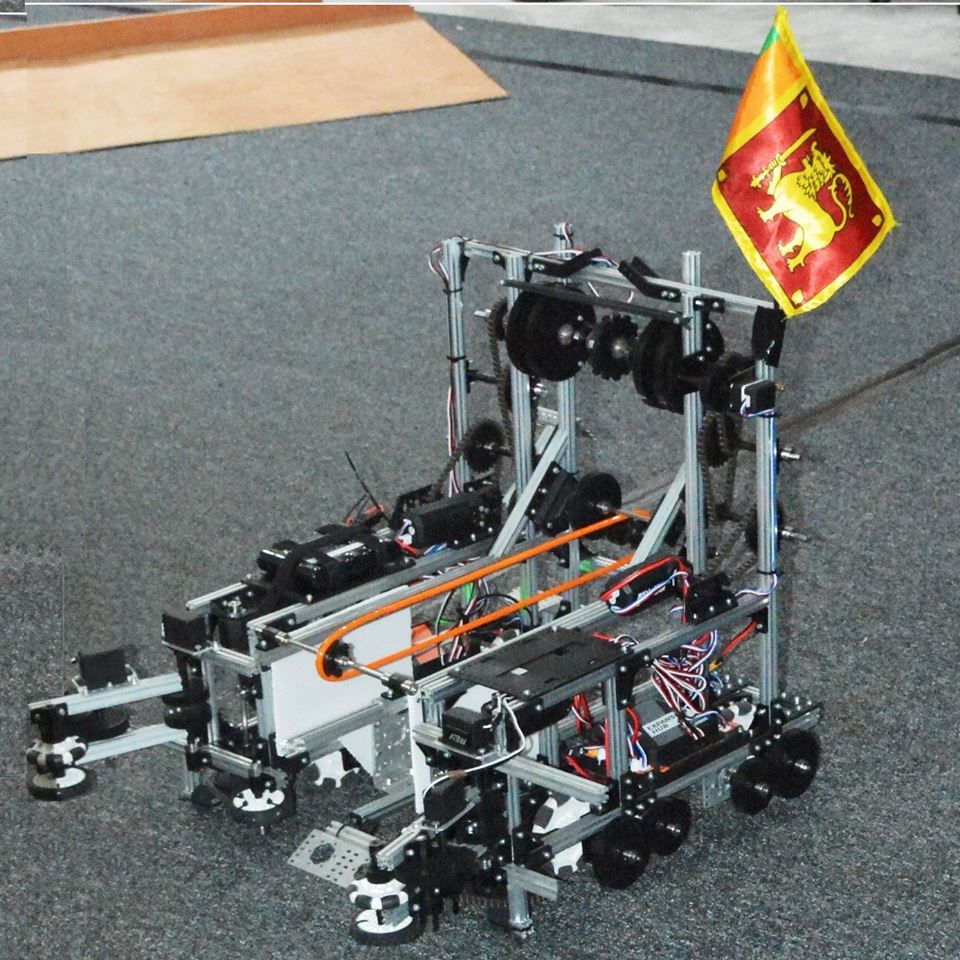
In case you’re wondering, here’s what last years Robotics Team looked like.