Could Fitbit smartwatch take over iPhone territory?

Though I will never wear an activity tracker. I’ve been very curious about the smart wristband / ‘wearables’ business. Especially the territory Fitbit has been moving into.

Sure, most people will be awed by Fitbit’s ‘SpO2’ sensor, for instance. But despite the clinical USP (to keep tabs of ones oxygenated blood), there are some features that blur the lines between an activity tracker and a smart watch; a wearable that can make contact-less payments via NFC, minus a phone.

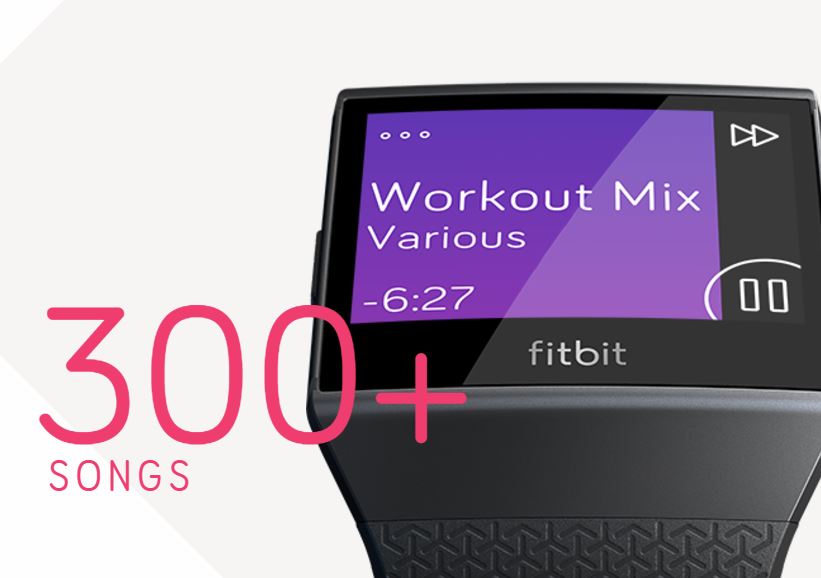
There’s also the music feature. A smart watch that could store music could be a game changer. With Bluetooth and WiFi (and GPS) who knows what territory it might lead this ‘wearable’ into? Will it motivate some to leave their phone behind? Would that mess with the iPhone eco-system?

The other reason I’m curious about this wearable is, I plan to use Fitbit as an example in an upcoming class. It’s a class about the Internet, and the connectivity it provides. And the hardware and software that run on the infrastructure students take so much for granted. Following up on last week’s look at Virtual Reality, nothing like bringing up the much-hyped Internet of Things.

Hashtag’s Birthday today – When lowly keyboard symbol became a celeb

Ten years ago, how did you refer to this # symbol? Most people I knew called it the ‘pound sign’ and we barely used it. Except for street addresses (it felt sleeker than the old-school abbreviation “No”) as in #33 Clifford Place.

Ten years ago, we had other things that grabbed our attention. FB had just bragged about 30 million users. Virginia Tech happened, the iPhone had been launched, and the global economy was teetering.
So what were you doing on Aug 23rd, 2007? Where were you working? How did you communicate? I am curious to see how my friends were doing when the hashtag emerged.

Another eclipse crowd-sourcing project captures sounds, not pictures

My wife and I were discussing the eclipse –her two-and-a-half year old Montessori students had been excited about it!– and wondered if animal behavior was being tracked.

So it was a pleasant surprise when I saw Ruben Gameros’ post today on FB about his participating in the Purdue University ‘sonic effects’ project. Their “huge, continental scale” project was to study how animals will respond to the solar eclipse. Using acoustic sensors (from Alaska to Puerto Rico) they invited citizen scientists to collect data –acoustic behavior of  birds, crickets, cicadas, and frogs.

Why record sounds? Purdue researchers are looking at if animals that are typically active during the day stop making sounds during an eclipse. Among other questions:

  • Are there patterns for birds, insects, mammals, amphibians, and even fish?
  • Are the changes in the circadian cycles different in coniferous forests, temperate deciduous forests, grasslands, and coastal ecosystems?
  • Is there a difference in behavior in the total eclipse zone compared to areas that are in the 90%, 80%, 70% and 60% or less zones?

Caltech had a different crowd-sourced project calling for eclipse-related animal behavior. It called for young scientists to make 3 observations during the event, and record it via a special App. It was supported by a teacher webinar, and a web-chat.

I wish students across the country would have been motivated to do more than look for the umbra and penumbra. Or dodge the event, entirely. (One school I know cancelled the viewing even after they ordered glasses.)

Two flavors of ‘Ice Cream’ to the Space Station!

The Dragon capsule delivered several technologies and experiments (6,4000 pounds of it) to the International Space Station. But it also delivered ice cream to the astronauts on board. So what’s a few scoops, for those folks who travel at 17,000 miles an hour for several months!

Also, in a geeky twist, it is also delivering another flavor, so to speak: ‘ISS-CREAM‘ – the acronym for ISS Cosmic Ray Energetics And Mass. It is a balloon-borne instrument that “measures the charges of cosmic rays ranging from hydrogen up through iron nuclei, over a broad energy range.” Clear as mud. (a balloon carrying ISS-CREAM) But very cool, huh?

As for the docking, as I mentioned in a previous post about the robotic arm and the maneuver, it is pretty cool! Humans need robots – and some ice cream now and then.

Yes, you’re being tracked! Unless you change your phone’s default settings

Have you ever left a restaurant and received a message on your phone asking you to review the service? It’s very creepy. But it’s also what agree to when we use certain phone features or an app. (Sure, the app is ‘free’ but we pay for it by allowing some organization to grab our data, and /or track us.)

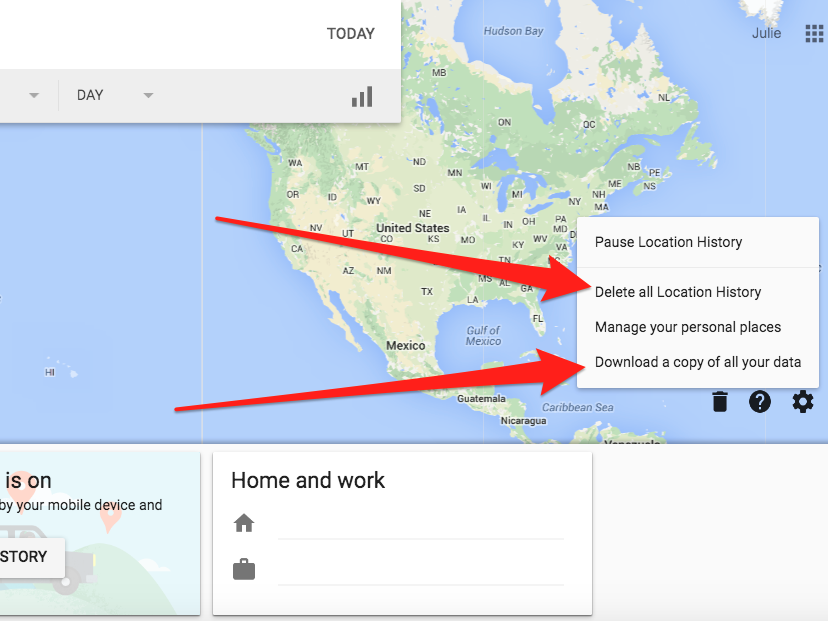
If you haven’t already done this, try Google Maps Timeline once you are logged in to Google. It pulls up a map of where you’ve been. It lets you click on each date in the past few weeks, and (if your location setting was on) you’ll see how Google has recorded exactly what time you stopped at any address, and left. So if you crossed a border, it will give you precise times when you passed through the border.

Of course this information is supposedly private. Or at least the Personal Identifiable Information (or PII) is. Of course you could –or rather should do these things:

  • Change your default settings on your phone.
  • Go into Google’s settings and delete your location history.
  • Avoid using clicking on the location icon if you could help it.

But we often forget. Or worse, think this information is harmless.

This is the kind of information that students ought to know. Not just to become paranoid about Google, but to become more aware of our data. Especially when it seems like logging into Instagram and Snapchat is a pre-teen default setting in itself.


Itchy fingers, clumsy tweets

Donald Trump’s (ab)use of his Twitter account will one day be looked at by historians in about the same way archeologists scrutinize cave paintings.

Back in April, when I was working on my June column for LMD, I had this sense that Trump’s clumsy (but some would say strategic) tweets would be worth focusing on.  Besides the political and international furor swiring about them, there are lessons in them tweets for anyone using social media.

And that was even before he bestowed upon us covfefe.


Robotics update: Team Sri Lanka’s progress

Back in March, I wrote a post here about a call to schools in Sri Lanka that might be interested in participating in the first ever Robotics Olympics.

The Team has been busy working on the challenge, which involves designing and programing a robot that could solve a water problem. They comprise: Ali Anver, Akash Gnanam, Amjad Hamz, Vinidu Jayasingh, Ishini Gammanpilla

The event: An international gathering of 160 countries, hosted by FIRST Global
The Goal:  To ignite a passion for Science, Technology, Engineering, and Mathematics (STEM) among the more than two billion youths across the world.
Dates: 14 – 18 July, 2017
The Challenge: The teams will work in ‘alliances’ as in the real world, using the robot to solve a global water crisis, specifically called ‘H2O Flow’. Which in and of itself is fascinating because unlike other tournaments, success is not based on individual skills alone. They must work as an international community. This is, after all, the Robotics Olympics!

Could they be social minus the media? Dire mental health finding

If you have teenagers, you know the dilemma. How do we get them to make connections without a device?

A subset of this includes:

  • How do we keep the phone away from the dinner table?
  • At what time should all devices be off in the home?
  • Is there a good reason to allow my daughter to use Snapchat? Or Instagram?*

As someone who once conducted workshops on how to adopt social media, I feel it is my responsibility to now warn young people about the unintended consequences of trying to be ‘social’ via a screen. We don’t need research to tell us that a generation could be experiencing serious issues very soon if we thrust smart phones into their hands, and hope for the best.

This research just in: Mental health and Instagram. 

Conducted by the Royal Society for Public Health in the UK, it has young people using words like ‘fake,’ ‘intimidating,’ and ‘superficial’ to describe platforms such as Instagram and Snapchat. The report explains how:

  • Young people say that 4 of the 5 social media channels make their feelings of anxiety worse!
  • A phenomenon called ‘Facebook Depression‘ which involves being ‘constantly contactable’ and having unrealistic expectations of reality. I had never heard of such a phenomenon, though suspected this existed.
  • FoMo (Fear of missing out) is also a thing, and is another cause of distress, something adults are just getting to know about.
  • There are indeed opportunities, despite the dire warning this report sends out.

Not many young people realize that Facebook owns Instagram and WhatsApp. 

‘Customers Not Cargo’ act thanks to United Airlines

You’ve heard of ‘cattle class‘ – the seating area most of us are herded into?

After last week’s horrible incident in which a doctor was dragged, bloodied and asked to get off a United Airlines flight, congresswoman Jan Schakowsky plans to introduce legislation “that would end the practice of involuntarily ‘bumping’ passengers from oversold aircrafts once and for all.” Likewise in the senate, Chris Van Hollen is introducing a similar ‘Customers Not Cargo’ bill.

The gist of it is that an airline which oversells a flight for business reasons has to come up with a business solution (not a law-enforcement one) to make sure the flight is emptied of the excess passengers who paid for that spot, anyway.

Now I’m not sure we need to have laws to ensure businesses treat customers with respect. But if you’re like me having been adequately bruised, and given the cattle prod, you’d agree they had this coming. Especially the folks who wax about the ‘friendly skies.’ (The Leo Burnett-inspired slogan dates back to 1965, and was brought back in 2013.)

Note the ad on the right. About embarking at Chicago. As the 1960s headline promised, the airline would later ‘catch’ Dr. Dao not far from the gate at Chicago O’Hare. The body copy goes further to suggest being friendly is catching. Hmmm)

Bonus Reading: Read the business evolved between United’s and Continental Airlines merger Wired Magazine