Cabinet secretary: “I am not a professional blogger”

A cabinet secretary may not come across as your typical blogger, or PR person. But Mike Leavitt’s blog at the Department of Health and Human Services turns that stereotype on its head.

This morning, he was on a Kaiser Family webcast about why he blogs, how he finds time to do it (answer: sometimes on a stair-master in the gym.) Also how his organization looks at new media exercises like this. Some quotes:

  • “I speak my mind. I am just not reckless about it.”
  • “I am not a professional blogger … I have been taken under the wing of more seasoned bloggers.”
  • “information goes where people are, and public policy makers should do the same.”
  • “A secretary is the spokesperson. Too many HHS spokespersons could be a problem.”
  • “My blog is not a literary masterpiece –that is not my goal.”
  • “I choose the topic – not a reporter.”
  • “I choose the words – not a reporter.”

Leavitt was quizzed about moderated comments and the media reading his blog, and it was evident that he is much more interested in the unfiltered voice and format of the blog than being reduced to a sound bite, and being subject to the media filters. It reminded me of Sun Microsystems’ Jonathan Schwarz’s comment some years back that he decided to maintain his own blog because he was tired of being strained through the media filters.

Leavitt was a bit shaky on the audience question about whether he would promote his staffers to blog. (See quote above.) Which was odd for someone who embraces the democratized medium like this, and wants to hold on to the megaphone. That sounds like what a PR department would say.

I took it as a comment that suggests he is still thinking about this. Some blogger would/should take him under his/her wing on that one.

Media measurement: a ‘good pulse check’ for communicators

How do you reach someone who’s fixated on print publications, and a digital nomad who’ll only scan the headline and the first few sentences of your story, online? What happens when both these people constitute your target demographic?

Johna Burke, VP of BurrellesLuce pried open that black box at the IABC Phoenix lunch seminar this afternoon. The “Four Generations” approach to media measurement means the Gen Xers and Millennials have to be reached –and tracked– in the same sweep as the Traditional and the Boomers.

It means PR practitioners and communicators should start paying attention to the core values, and what make these audiences tick. It’s not just about targeting (for marketing) but engaging them (for internal communications.) Media measurement is a “good pulse check” to understand how to best reach and manage these diverse generations, said Burke. For Millennials for instance, she recommends managers personalize their work and even their benefits package because one size does not fit all in their world. There were lots of other insights about measuring the outcomes based on this approach and the metrics.

Sidebar: There were echoes of the ‘social technographic profile‘ made popular by Forrester analysts Charlene Li and Josh Bernoff in their blog, and their book, Groundswell.

If you are interested, a condensed version of Johna’s presentation, “Four Generations of Audience, Four Generations of Media–One Approach to Media Measurement,” can be found at Bulldog Reporter.

Quotes for the week ending 5th July, 2008

“”We are all Hussein.”

New York Times, reporting on how people are adopting Barack Obama’s middle name to counter those who are using it in a negative way.

“Twitter is the public square. Lots of noise, little signal. Blogs are like a speech. Signal, but little noise.”

Fast Company article on the power of Twitter, highlighting Tweets from Robert Scoble’s Tweetstream.

“Google is the perfect example showing reputation does not correlate with ad spending,”

Robert Fronk, senior VP-senior consultant, reputation strategy, at Harris Interactive.

“In this election the internet is for the Democratic Party what talk radio was for the Republican Party in the last 15 years”

Derek LaVallee, VP-U.S. public affairs practice at Waggener Edstrom, on research showing digital media preference of 18-35 year olds.

“I’m not retiring until every American agrees with me.”

Rush Limbaugh, quoted in the New York Times, in a story on his $400 million contract with ClearChannel.

“Twebinar”

A mashup of a name for a webinar (which itself is a mashup) and conversations talking place via Twitter before, during and after a webinar, attributed to Chris Brogan.

“Police wnt u to fight crime w/txt msgs.”

Headline for a story in USA Today, about Louiville, Florida police opening a text messaging tip line for teens to report crime.

“Your Personal Brand may be doing much more harm than good… to others.”

Mitch Joel, on a cautionary note about how people in an organization embracing social media should not expect others to have the same passion for it.

Three Gold Quills for Arizona

Congratulations to Rachel Pearson, Mary Ehlert, ABC; and BDN Aerospace who brought home Gold. The Gold Quill awards were made at the IABC international conference in New York last week.

  • Rachel won a merit award for the Scottsdale Convention and Visitors Bureau‘s 2007 Annual Meeting in the category of Special Events – Internal or External.
  • Mary won a merit award for the Arizona Department of Health Bureau of Tobacco Education and Prevention. The category was for Economic, Social and Environmental Development.
  • The BDN Aerospace marketing team won a merit award for the MD Helicopters Ad Campaign. The category was for advertising using conventional media.

IABC Gold QuillsGold Quills recognize best practice in areas such as marketing communications, corporate communications, benefits communication, digital communication, branding, special events, podcasts, publications, annual reports, recruitment and writing. Not surprisingly, the Gold Quills attract local and international entries from agencies, photographers, graphic designers, strategic planners, creatives and even students.

Stuntman in New York targets journalists, us

The stunt by a French daredevil tells us something about how far someone would go to ‘create awareness’ and target the media. Forty-five stories to tell his story.

Alain Roberts climbed the brand new New York Times building right to the top. No harness, no ropes. Just a banner in his hand which he hung out with his message –and a web address — about global warning.

What does it tell us about sending a message? Guerrilla marketing is quite tame compared to ‘culture jammers’ like Mr. Roberts and street artists like Bansky. They have figured out that it doesn’t require a grand media buy to take the message public. Banski’s ‘art’ (left) is stark, much cheaper than a billboard, and always packs a good story.

In Roberts’ case, he was literally taking the message to The New York Times which of course, carried the story. And a video clip. How could they resist? The story was right outside their window! They updated the story online too as a second man attempted to climb the building.
The banner, and the risky act of disobedience was for the audience outside. Two audiences. One guy and a banner. A funky web site. Lots of stories.

How far do you go to tell your story?

Grade your Press Release – if you have the stomach for it

There’s a neat web service for checking to see if your Press Release is full of #!*! or if it carries standard elements such as contact numbers, URL’s and keywords that match up with links.

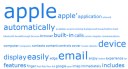
Word Cloud based on iPhone's Press Release in 2007It’s called Press Release Grader. A cut-and-paste site that grades your release instantly.

What I liked most about it was the visual rendering of a Word Cloud, which displays words larger if they are used more often etc. It also points to gobbledygook words –there were 7.

Since Apple’s iPhone 2.0 is all the rage this month, I used one of the first iPhone releases from January 2007 about ‘reinventing the phone.’ It got a grading of 44 out of 100, and had the readability level for a 3-year undergraduate.

You can see the report here.

I don’t think the value of this is to score high, or to gloat, but to get you to understand what you could be missing, or overdoing. What constitutes a perfect press release? No human or piece of software could tell you that. There are guidelines and must-haves that a ‘Grader’ like this will help you remember to use. But as my friend and author Linda VandeVrede reminds us, a press release should serve the one audience it is targeting: the media.

Taking risks with popcorn popping cellphone video

“Why would the internet lie?” says someone at the end of a failed attempt to ‘test’ if cellphones could produce enough energy to pop corn kernels.

They were responding to the hilarious video on YouTube that has all the hallmarks of being authentic –poor resolution, shaky camera. The unspoken hypothesis: cell phones could have the same effect as a microwave. And you hold it close to your head?

Not just hilarious, but a wicked -un-marketing speak for strategic- way to send a message without actually issuing a press release that cell phones may fry your brain. Not just wicked, but viral.

Some feel cheated. Some suggest it is sneaky “murketing.” Whaddya expect? This was on YouTube, not the Discovery Channel! “We knew they were fake, the only mysteries were the “how?” and the “why?”” said WIRED’s Charlie Sorrell -who later confirmed that the folks behind the fake popcorn were from By Cardo Systems, maker of bluetooth headsets for motorcycle riders.

So what does this tell us about marketing?

1. Viral marketing doesn’t follow the rules. Does the fact that it is a hoax (disproving the preposterous idea that cell phones are lethal microwaves) take away from the need for Cardo’s products? In the old brand world, the answer would have been yes, so please kill the idea. In a few days, by ignoring these rules Cardo will have the kind of word of mouth advertising many brands would die for.

2. Viral marketing takes risks. Cardo probably knew enough about comparisons that have been made between a bluetooth frequency and cell phones frequency -both operate on the same range as microwave ovens. Bluetooth is just a weaker transmitter.

3. Viral marketing energizes others. People were very anxious to debunk it, but had to upload their videos about it! To borrow a point Charlene Li and Josh Bernoff advocate in their book, Groundswell, the new rules mean you need to ‘energize the groundswell.’

What you say could come back to bite into your book tour!

This is a statement disparaging a former White House insider who wrote a book criticizing the White House. But there’s a catch.

“Well, why, all of a sudden, if he had all these grave concerns, did he not raise these sooner? This is one-and-a-half years after he left the administration. And now, all of a sudden, he’s raising these grave concerns that he claims he had. And I think you have to look at some of the facts. One, he is bringing this up in the heat of a presidential campaign. He has written a book and he certainly wants to go out there and promote that book. Certainly let’s look at the politics of it.”

It sounds a LOT like the person being attacked is Scott McClellan, former White House press secretary. The problem is, the person saying it is McClellan! He is talking about another tell-all book by Richard Clark! On March 22nd, 2004.

“And now, all of a sudden, he’s raising these grave concerns that he claims he had.”

Public records are a brilliant thing. But in this age of access, and the ability to drill into search engines and databases that capture history, what you say from a public or private podium feeds your data cloud.

Quotes for the week ending 7 June, 2008

“Marketers are horrible at getting close to customers …they say they want it, but they don’t”

Charlene Li, VP-Principal Analyst, Forrester Research, in Advertising Age which picked here as one of the Women to Watch

“But neutrality and readability are two vastly different things; neutrality doesn’t make an article inherently understandable. That’s what an editor does.”

Shel Holtz on the value of good editing, and the role of professionally produced encyclopedias.

“Additive or Core Ingredient? Putting Social Media in the Mix”

Topic at “OMMA Social” a one-day event on social media, on June 23rd.

“Copy gets in the way.”

Seth Godin, on why it is important to use the discipline of the classified ad –paying by the word- when crafting ad copy.

“It’s hard to imagine a public confession more extraordinarily frustrating or profoundly unsatisfying.

Leonard Pitts, syndicated columnist, on Scott McClellan’s book What Happened dealing with White House deception.

“We’re getting treated like air freight.”

Robert Mann, aviation consultant, on the possibility that airlines may adjust ticket prices according to a passenger’s weight.

“When a newspaper moves online, the bundle falls apart.”

Nicolas Carr, writer and member of Britannica’s Editorial Board on the economics of culture and media.