When Microsoft ‘draws’ as good as a Sharpie

When I tell students that Word or PowerPoint is a versatile tool, and not just for typing of creating slides, I never know what to expect. Such as how some of them have mastered the ‘Curve’ tool in the Shapes menu.

Here’s one. Looks like a pen-and-ink sketch, doesn’t it?

goku_student_drawing2


It gets better! Because this is about animating.  The student’s storyboard in PowerPoint  just kept growing!
goku_student_drawing    
goku_student_drawing3

goku_student_drawing4

Farewell to our quintessential Rocket Man, John Glenn

John Glenn was quite a guy. You don’t find many role models like him these days. The ones you could hold up for kids as examples of someone pushing the boundaries of science. He was the first American to orbit the Earth. To me he stood out as someone who put in the grunt work most people miss.

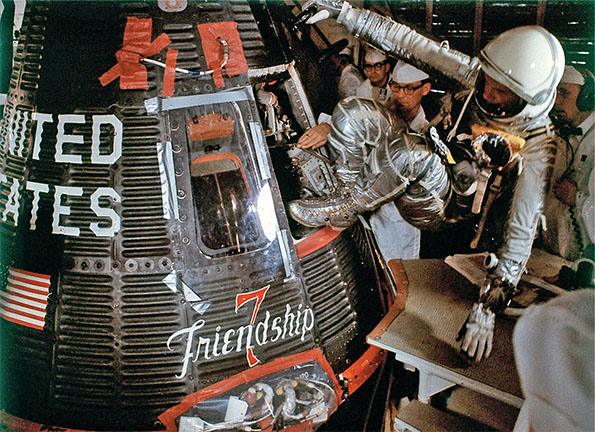
It’s easy to forget that before he climbed aboard ‘Friendship 7′ spacecraft on Feb 20th 1962 for his short (4 hrs, 55 mins, and 23 secs) flight, John Glenn was a fighter pilot.*

The story not often told is that before re-entry, NASA’s Mission Control told Glenn “not to jettison the retro-rocket package after firing” in order to better hold the heat shield in place. In other words, “Wait and see – you are part of the experiment!”

At the Smithsonian’s Air and Space Museum, standing beside Friendship 7, one marvels at the courage it took to climb into this over-sized tin-can in the interest of science, not knowing what might happen when being hurled into an orbit around the Earth at 17,000 mph.

john-glenn

John Glenn passed away today. He was 95.

* He flew missions in World War II, Guam, and Korea, and later served his country as a senator for 25 years. He even got back to space, briefly for a flight on the Space Shuttle.

Entertaining ourselves out of Math

What killed our interest in math?

Is it our love for instant gratification? Or was it our ability to outsource our left brain to ‘calculating machines?’

No excuses are good enough. After all, the country that created the first graphing calculator, Japan, ranks 5th place in Math in the ‘PISA’ test (Programme for International Student Assessment), which tests Mathematics, Reading and Science among 15-year-olds in 72 countries. The test is administered every three years. In this latest ranking, the US, unfortunately is nowhere in sight.
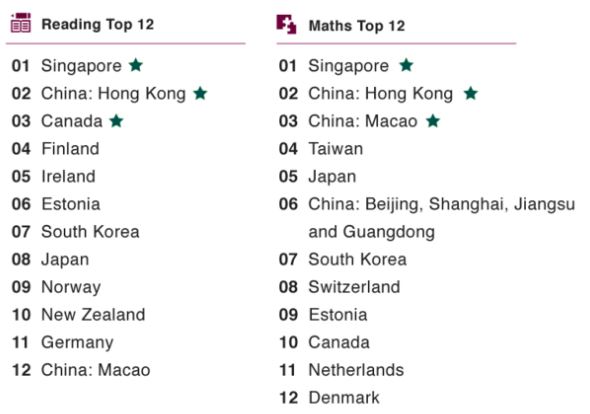
pisa-rankings-2016In Math, we are way below Malta, the Czech Republic and Vietnam and some 40 other nations. In Reading, we rank 24th, with countries such as Estonia, and Macao doing better. Singapore tops Math, Reading and Science. What killed math in the US?

I only ask this question because we are in the midst of student evaluation, and I am seeing an increase in student’s interest in programming. Yes, math is hard, but we seem to be entertaining ourselves to death, with ‘watching’ more than doing. Coding, and using mathematical concepts requires students to work through a problem. An ‘algorithm‘ is after all a mathematical construct.

This unhappy news of declining performance comes despite us having excellent hands-on, interactive resources such as Khan Academy. One recommendation is to “teach a lot less but focus at much greater depths,” says the director of education and skills at OECD.

Buried deep in the report are some good indicators of what works in the successful countries. It says, for instance that

students score higher in science when they reported that their science teachers “explain scientific ideas”, “discuss their questions” or “demonstrate an idea” more frequently.

and that raising students’ expectations of working “in a science-related occupation” have greater bearing on the outcomes than material and human resources.

Translated. Investing in new books or fancy devices won’t move the needle unless schools empower (and hire) teachers who could passionately ‘explain’ and ‘discuss’ the subject matter.

Planning for Star Wars class for ‘Hour of Code’ next week

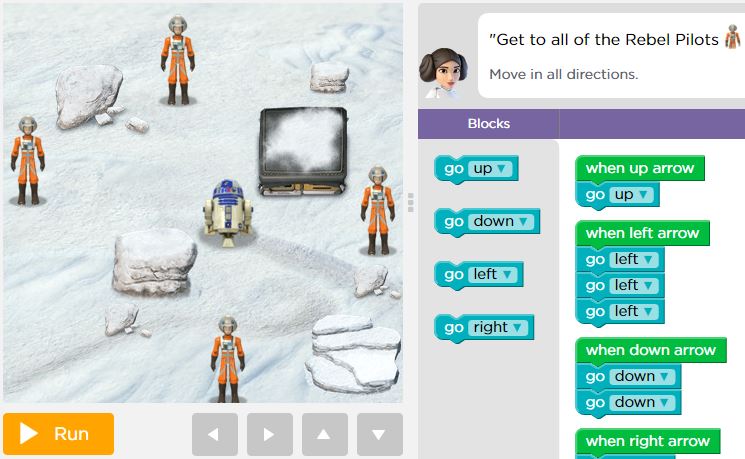
I wish I had had the opportunity to learn JavaScript. But it’s never too late, since I can learn it while teaching some programming next week. You know, ‘He who teaches, learns twice‘ and all that!

hour-of-code-star-wars

I’m doing this because it is Computer Science Education Week from Dec 5 – 11 with a focus on the ‘Hour of Code‘. (It is also the week when I have to take my ‘Lab’ to the classrooms, while the computer lab is being used for NWEA evaluations.)

The ‘Hour of Code’ folk have added new tutorials featuring, Star Wars. Something my students are focusing on for an Image Manipulation class this week. It helps to have Kathleen Kennedy (seen in the video below), producer of The Force Awakens explain how programming is very much a part of movie production today.

Students will specifically learn to program a game in which BB8 must be sent on missions to recover objects and deliver messages.

In case you are interested, Hour of Code has several social media outlets, including

Twitter https://twitter.com/codeorg
Facebook https://www.facebook.com/Code.org
Instagram https://instagram.com/codeorg
Tumblr https://blog.code.org

Photoshopping the White House

No, this is not another fake news alert. It’s a teaching moment, however.

The subject matter is appropriate. While teaching Photoshop and image manipulation, it’s a perfect time to be teaching students how to become critical consumers of information often seen through imagery. And spot when someone has been tinkering with the truth.

student-4

The class begins with the ‘conspiracy’ around the 2003 Space Shuttle explosion, by looking closely at the Photoshopped images. We also look at doctored images of public figures.

When they get to the computers, their challenge is to add to, or ‘enhance’ fountains on the White House lawn.

Here’s are a couple of examples. student-3

Take a guess. How many fountains are really there on the North lawn?

Pictures from Space Day – Rockets, Satellites, Stars and Bots

This event couldn’t have been better timed. Unbeknownst to me, October 19th was a day that space pioneer, Robert Goddard had called his “Anniversary Day” — the day he thought that it just might be possible to humans to break free of gravity and travel to other planets.

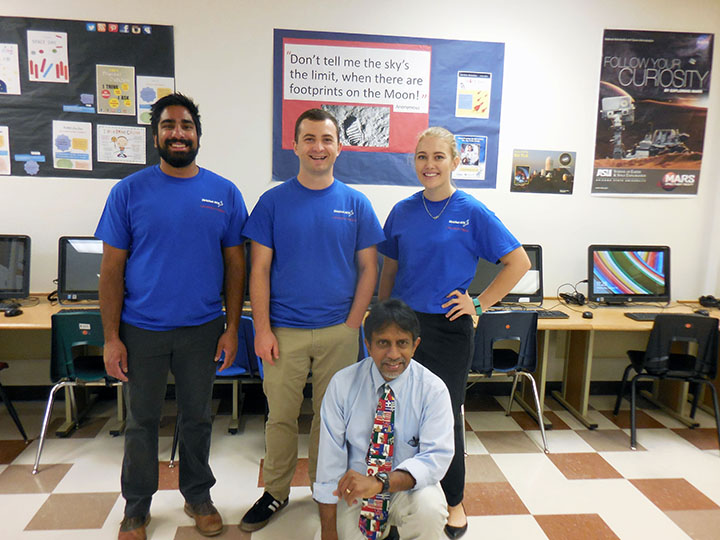
Oct 19th, last Wed, turned out to be a day filled with hands-on experiences for our students who got to hear about (and see) rockets, small-space satellites, robots that could some day work in ‘teams’ or swarms on a distant planet, how to design a landing craft and parachute like the Phoenix Mars Lander, and of course sit inside a portable, inflatable planetarium

Here are some of the highlights in pictures.

spaceday-rocket-launch-tn

SpaceTrex Group from ASU launched a rocket and talked about Small-space satellites

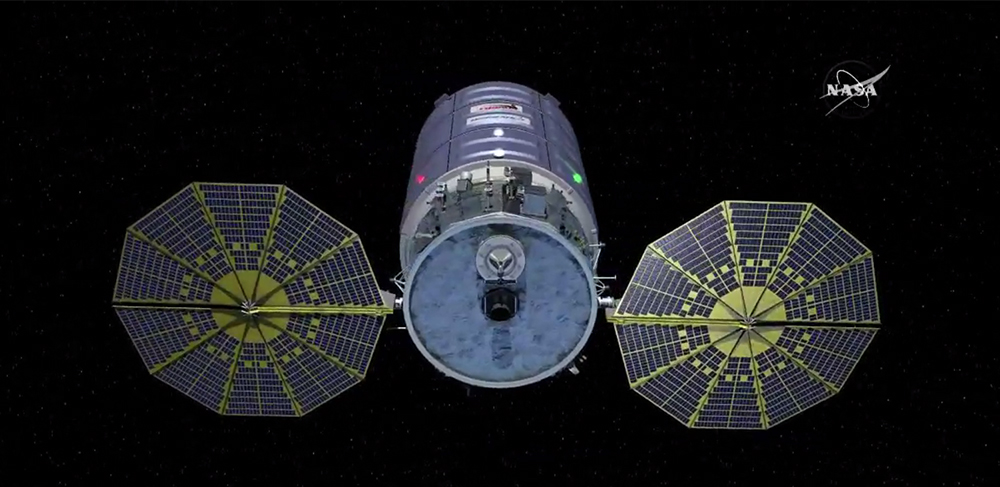
Orbital ATK’s Cygnus spacecraft, which lifted off on an Antares rocket Oct 17th (two days before Space Day) carrying 5,290 pounds of cargo for NASA to the International Space Station.

phaeno_tn

The little bot that runs on Arduino, could be part of a bot swarm!

bot-challenge-tn

Autonomous Collective Systems Lab let students program and run robots in a Rover obstacle avoidance challenge

lets-make-planets_tn

Hands-on session on planets and what ‘designing’ a new planet might involve.

spaceday-starlab-tn

StarLab, the inflatable planetarium was here for Kindergarten, 1st and 2nd grades.

orbital-atk-team_tn

My third year of collaborating with the Orbital ATK team

spaceday-asu-teams_tn

Arizona State University’s teams


team-starlab_tn

StarLab team from ASU

Skype with Jet propulsion Lab’s Dr. Ashwin Vasavada

Last evening, Orbital’s Antares rocket lifted off for the International Space Station. Today the Chinese launched their own ‘March 2F’ rocket with two astronauts headed to their own separate Space Station.

So it is fitting that tomorrow for Space Day, our 4th grade students will Skype with Dr. Ashwin Vasavada, project scientist at the Jet Propulsion Lab in Pasadena, CA. He will talk about engineering design, as a preface to their making and deploying a model of the Phoenix lander.

The Lander looks something like this, but will be made to scale including the parachute, and several models will be tested outside!


All set for SPACE DAY this week with rockets, rovers and StarLab

Getting back after Fall break with a big event this Wednesday, SPACE DAY. It’s my 5th year of bringing space science to our students from Kindergarten to 6th grade. Fascinating how things fall into place, thanks to the amazing support I get from the scientific community around us.

I am delighted to have Orbital ATK, a global leader in aerospace, conduct sessions for us, with many other groups. Today was supposed to be the launch of Orbital’s Antares rocket carrying cargo up to the International Space Station. The launch has been postponed for tomorrow, and should dock at the space station on SPACE Day – Wed Oct 19th!

Our keynote speaker will be Dr. Jim Rice, a NASA astrogeologist.

Sessions will cover these topics:


Invent, create and have fun with BirdBrain robotics

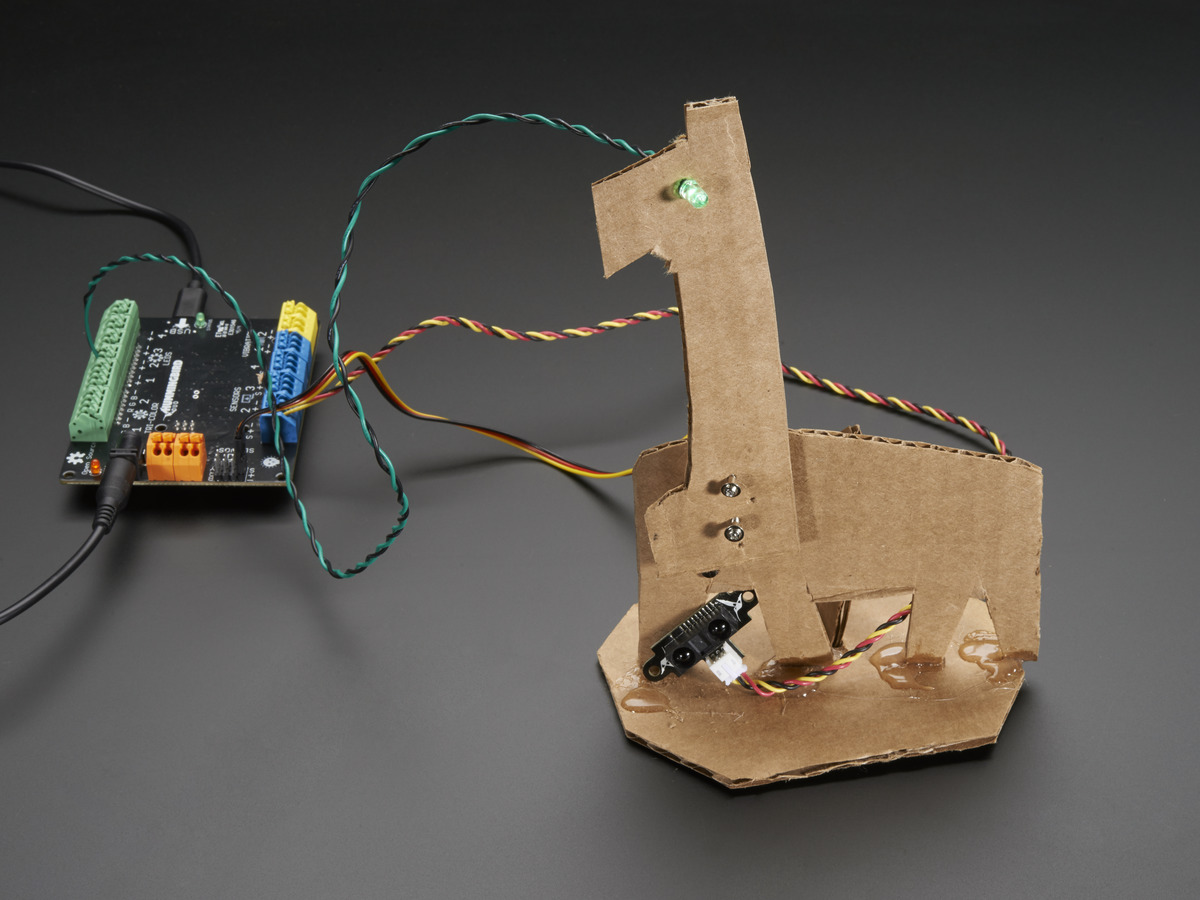
Micro-controllers are at the heart of many of today’s robotics kits.

This one, called the Hummingbird (with a pedigree derived from Carnegie Mellon labs), is designed for engineering and robotics activities for students from ages 13 and up.

I wish I could afford one of these for my computer lab, since it is an on-ramp to teaching students programming languages such as Python and Java. Or as CMU describes it, the micro-controller turns ‘crafts’ into bots.

And what’s a micro-controller for the uninitiated?

It is the decision-making part of a device, and could control sound, light, movement, and work with Bluetooth and WiFi. Our microwaves and phones have micro-controllers. We had a session on micro-controllers earlier this year.
Teaching young people to understand and tweak these devices could lead them toward higher problem-solving disciplines.

SPACE DAY – Our 5th year of ‘slipping the surly bonds of earth’

In 2012, when I put together Mars Day at our school, I could tell there was a huge appetite for all things space-related. After all, the Mars rover ‘Curiosity’ had landed on the red planet a few months before.

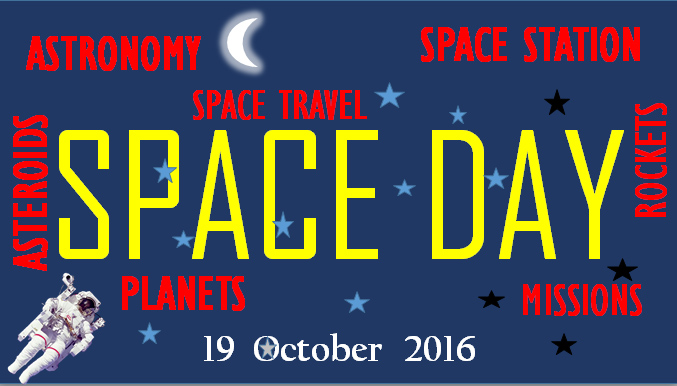
space-dayThis year, our 5th year, we are broadening our lens, so to speak. We are calling it SPACE DAY. It is on Oct. 19th at Salt River Elementary.

I am so fortunate to have so many groups supporting me. From a NASA scientist, to Orbital ATK (formerly Orbital Science), and several groups from the School of Earth and Space at Arizona State University. Also a team who keeps bringing back StarLab, the inflatable planetarium. But wait, there’s more – a surprise guest from the Jet Propulsion Lab (JPL), the NASA group prepping for Mars.

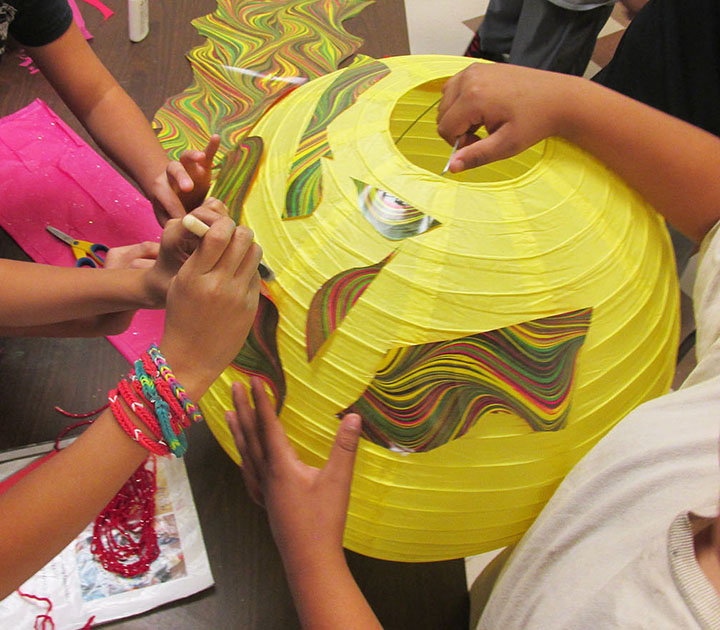
There are several break-out sessions, some that will happen concurrently. We may even have a few real rocket launches outside! This year two of my colleagues will  conduct hands-on sessions that add art and design to the mix. My goal has always been to add more of the ‘A’ to the S.T.E.A.M programs.

Almost every week it’s hard to escape news of audacious new programs pertaining to vehicular designs, space colonies, cosmonauts, or discoveries about comets, asteroids, and planets –the ones we know, and those that are still to be named.

One day of the year just scratches the surface, don’t you think?