Going bats! How robotics makes science exciting

When I am asked what we do in robotics, I tend to answer it with something about ‘making science relevant and exciting.’ Not the about how it is fun to build, or why programming is a 21st century skill etc. which is also accurate.

ruben-gameros-visit-4

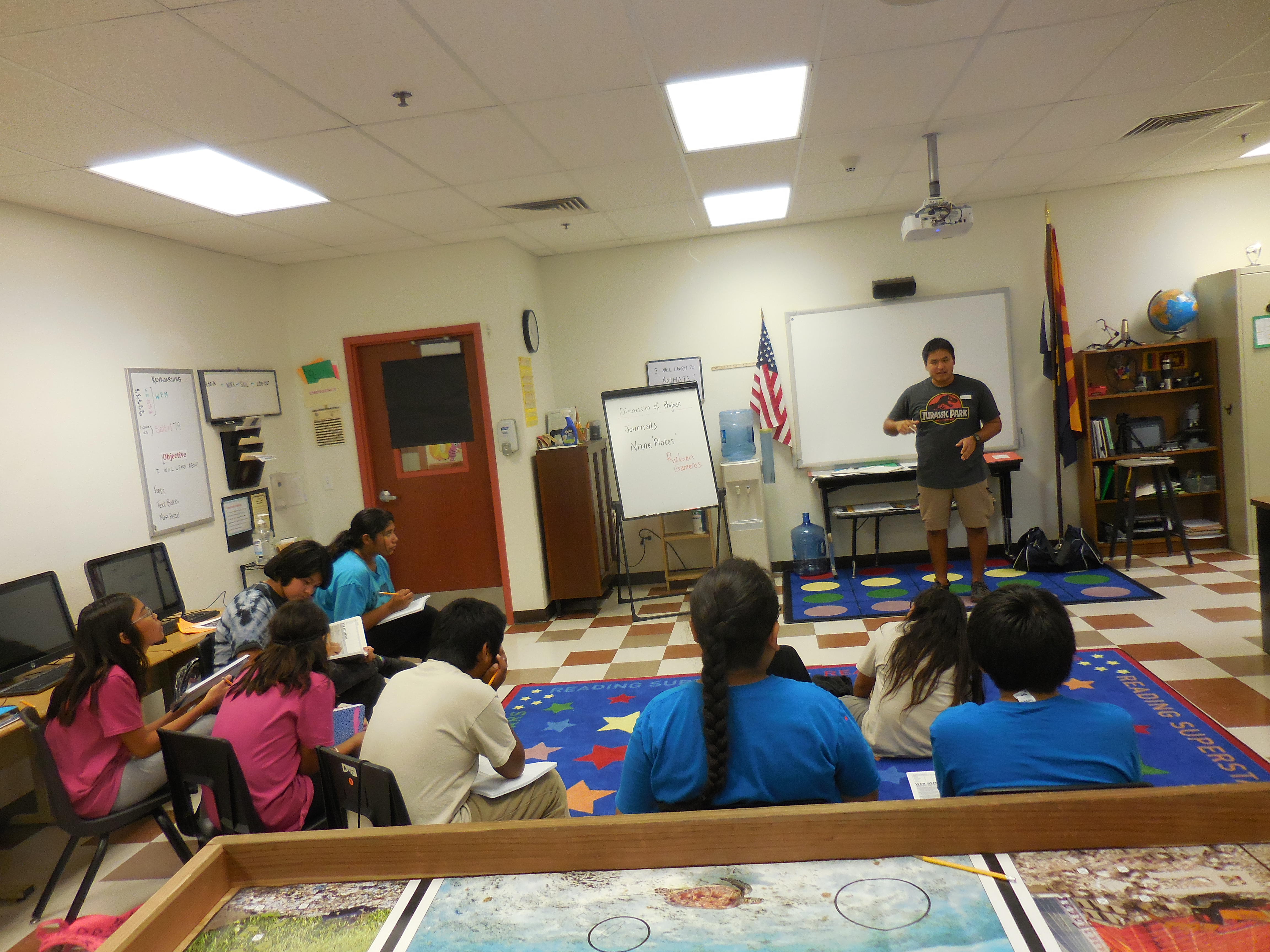
This Tuesday, I had ASU researcher and robotics mentor Ruben Gameros kick off a brainstorming session with my robotics team. The topic was ‘animal-human interaction.’ I loved how Ruben got the students thinking of ‘animal’s that are often not on their radar: bats, bees and insects.

Bat’s after all are mammals, with amazing navigation skills. They also help our survival in ways that often go unnoticed. Ruben is familiar with ‘critters’ for another reason. He works in a field of bio-mimicry, and swarm robotics!

In Robotics, investigating, journaling, and ‘core values’ matter

This week, we selected members who applied to our Robotics club. That’s right, we have an application process which involves a short test, an interview and a contract (the code of conduct) they sign and agree to practice.

Why such a process? Robotics is an after-school club at my school but I wanted members to realize what they were getting into. It’s not just building and playing with Legos. I have done this for 5 years now, and found out that the real value for students is when they get their hands around the broader scope of robotics. They learn to be researchers, problem-solvers, journal-keepers, programmers, and ‘mission specialists.’ They must also become good presenters of their work.

This year, the focus (‘Animal Allies‘) is on Animal-Human interaction. What happens when animals and people interact? Are there problems they could identify, and solve? As FLL recommends, could the solution be beneficial to animals and humans?

If you’re starting out with a team it’s important to know that many of the previous themes have nudged students towards a ‘win-win’ solution.

At the tournaments, teams will be judged on three areas

  • Core Values
  • Project
  • Robot Design

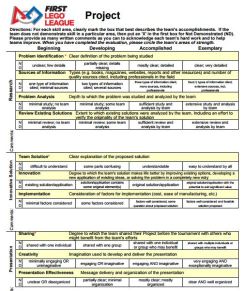
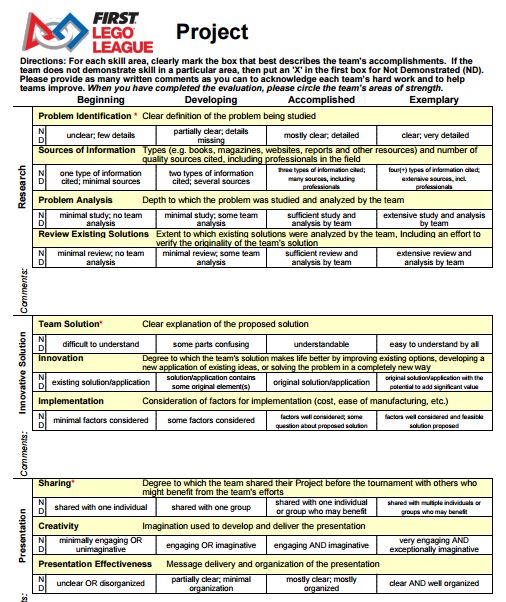
rubric-project

A little neglected fact is that winning the Robot game will not earn the most points. But as we coaches all realize, the robot game is what eats up most of the meeting time. It’s also worth looking at the rubrics for each of these three categories:

Just the Rubric for the Project (right) involves:

  • Problem Identification, Sources of information, Problem Analysis, Review of Existing Solutions.
  • Team Solution, Innovation, Implementation.
  • Sharing, Creativity, Presentation Effectiveness.

In other words, getting into robotics means learning to become an investigator, a problem-solver, learn to be an effective communicator of the science you worked on. It’s exciting to see 5th and 6th graders step out of their comfort zones to do this!
Robotics 2016 challenge guessing game begins

Each year, as we wait for details of the FLL Robotics challenge, some teams begin speculating what the specific challenges might be on the tournament table.

FLL had announced the theme, ANIMAL ALLIES. If we were to look into the crystal ball, there could be ‘missions’ around animal rescues, conservation and human-animal bonding.

Previous themes have been: Conservation, Education, Health, Ageing populations, Food, and Catastrophic Events.

Animals will certainly fire up elementary school students, especially in the research project. As for the missions, here is how one team speculates what the table-top missions could be, with detailed builds!

AS the FLL puts it, ANIMAL ALLIES season will be all about young people collaborating to solve a real-world problems. That’s the part I like about the FLL. It creates a rich, evolving context for students who could see bots as part of society they inherit and –most importantly, will influence.

8th Grader (robotics student) composes Opera music

Just saw the story that one of my former students, Sialik King, who also took a lead role in our robotics team, has gone on to compose music.

She was featured on NPR affiliate, KJZZ.

One of the songs, One Day at a Time, sounds like a classic opera song – supposedly reminiscent of Madame Butterfly or The Barber of Seville. The Opera is part of a move to incorporate American Indian stories in ‘micro-operas’ of  8-12 minute duration. Composers Raven Chacon, and Michael Begay were commissioned by Arizona Opera, the Grand Canyon Music Festival, and the Heard Museum for this.


Baxter, Sawyer, Tina, SIRI. Is this our future?

Baxter and Sawyer are brothers in arms, so to speak. They are collaborative, follow instructions, and adaptable to their surroundings.

They also happen to be robots. I find it interesting that they have human names, although they are industrial bots. No mistake they are meant for the factory floor, and not cute or friendly robots that are also coming of age elsewhere. Rethink Robotics, which manufactured them says they are “trained not programmed.” It quotes a professor who says his “long range aim is to try to achieve human level artificial intelligence. So the Baxter would be like a person, maybe not a full-fledged adult.”

  • Baxter is a 2-armed bot, and is described as “the safe, flexible, affordable alternative to outsourced labor and fixed automation.”  It weighs 165 pounds.
  • Sawyer is a one-armed fellow, and is called a “collaborative robot designed to execute machine tending, circuit board testing and other precise tasks.” It weighs just 42 pounds

Why I find this interesting is that we have begun to look at robots in humanistic terms, and this paves the way for them to be ‘invited’ into our homes some day soon. If you don’t believe me ask those who love their Roomba, the robotic vacuum cleaner.

How long will it be before we have a Homework robot, and an automated, (two-armed, hopefully) Personal Assistant? Low maintenance, too –no need for company benefits. Some people who use SIRI may say they already have one of those! Chat bots are also in the news now – like the Iranian bot, endearingly known as Tina.

Humanoid devices are also the stuff I have begun writing about elsewhere.

Science and Tech Workshop in Sri Lanka

Just got back from a short trip to Sri Lanka, where I conducted two workshops for teachers.The first was in Maharagama on Dec 15th & 16th. The second workshop was in Kandy on Dec 18th.

Here are some stories about the workshops:

Much thanks to my co-presenters:

  • Dr. Paul Funk – Engineer, US Dept. of Agriculture, New Mexico (Via Skype)
  • Ruben Gameros – Autonomous Collective Systems Laboratory, Arizona State University (Via Skype)
  • Scott Logan – Montessori International School, Mesa, Arizona (Via Skype)
  • Lal Medawattegedera – Lecturer, Open University of Sri Lanka
  • Nalaka Gunewardene – Science writer, author, trustee of the Science and Development Network
  • Nazly Ahmed – Web App Dev at Social Seed Media

Also the two Keynote Speakers:

  • Dr. Ajit Madurapperuma – Dir. Of Information Communication Technology, ICTA
  • Dr. Nalin Samarasinha – Astrophysicist at Planetary Science Institute in Tucson, Arizona (Via Skype)

Finally, thanks to the American Center in Sri Lanka who made this possible – especially Joshua Shen.


DSC01238

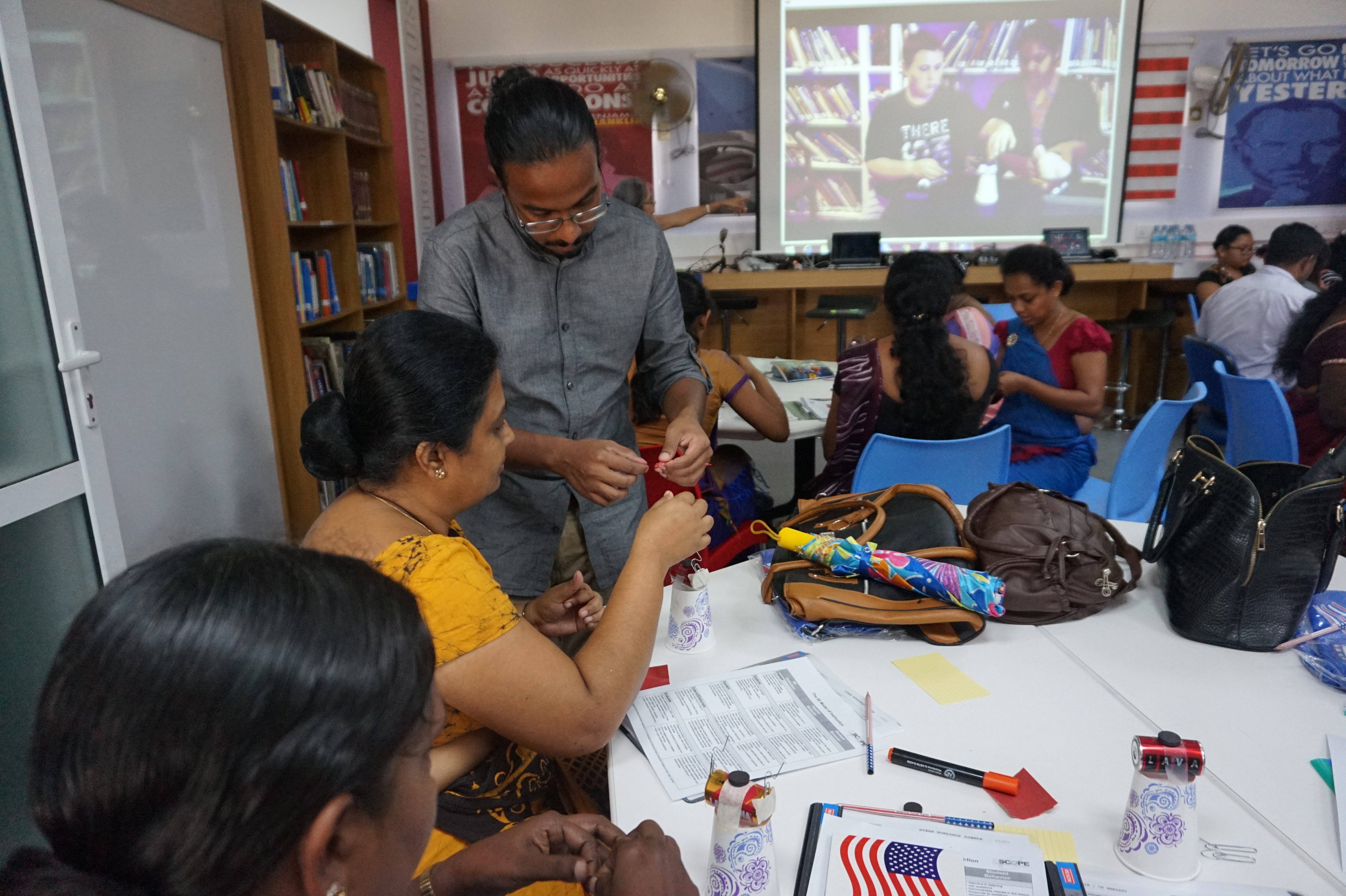
Hands-On Engneering – Spaghetti Tower Challenge


DSC01270

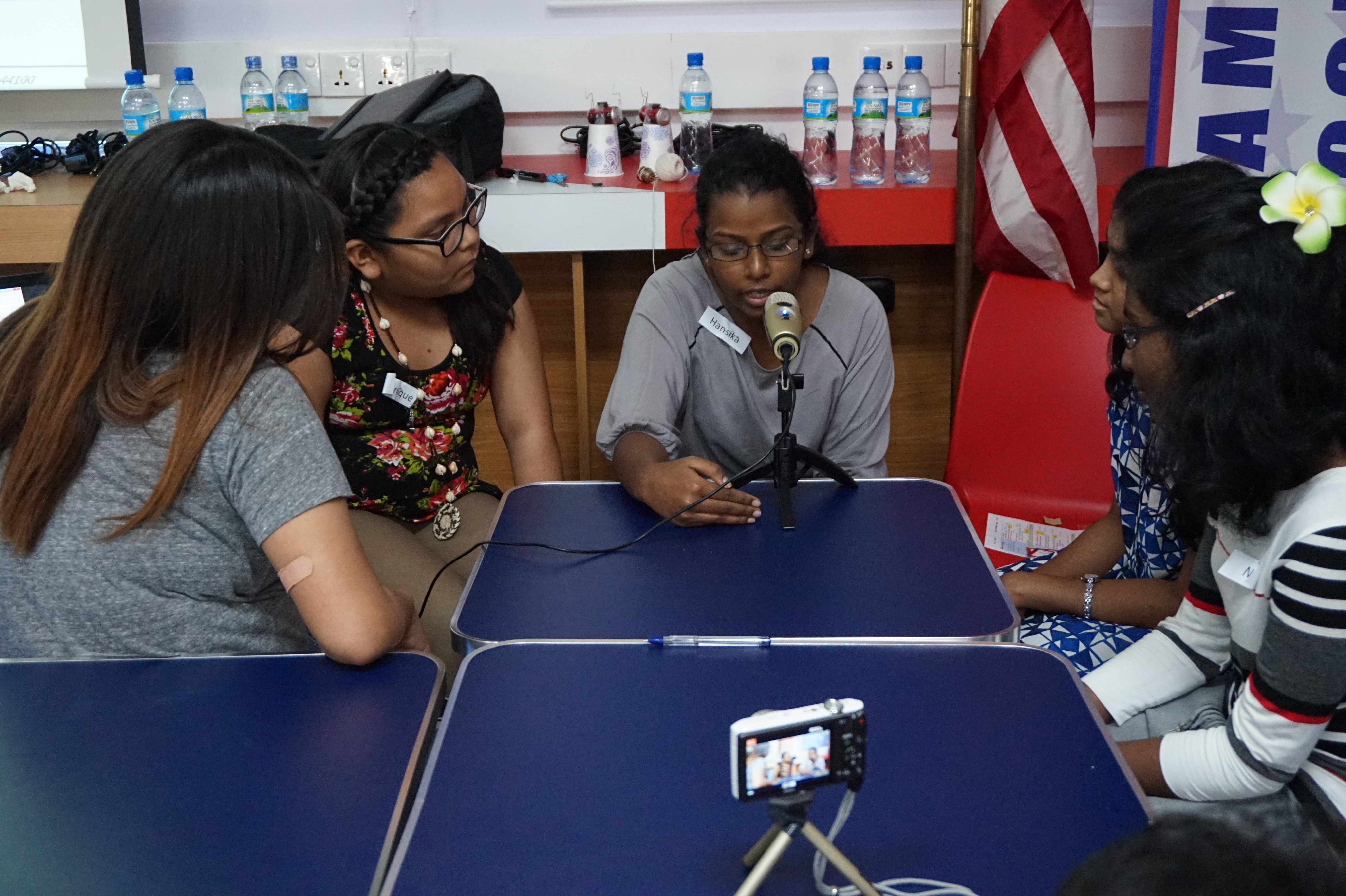
Hands-on session on Audio Recording

Scot Logan & Students

Hands-on session on Motors and Electro-magnetism

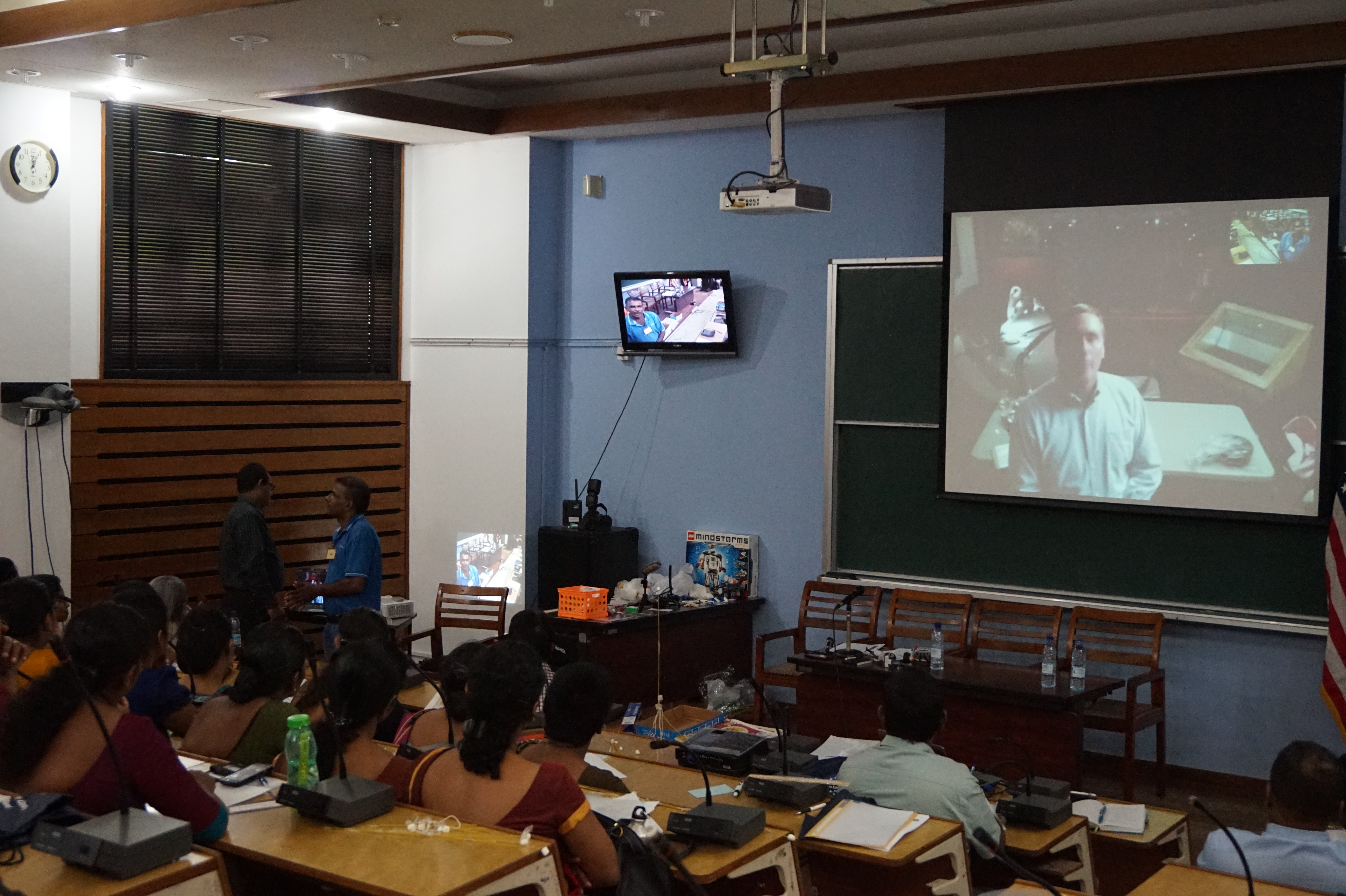
Scott Logan & students at Montessori International School, teach class – via Skype

DSC01361

Aaron Fernando facilitates session

DSC01402

Using audio and video for content creation

DSC01415

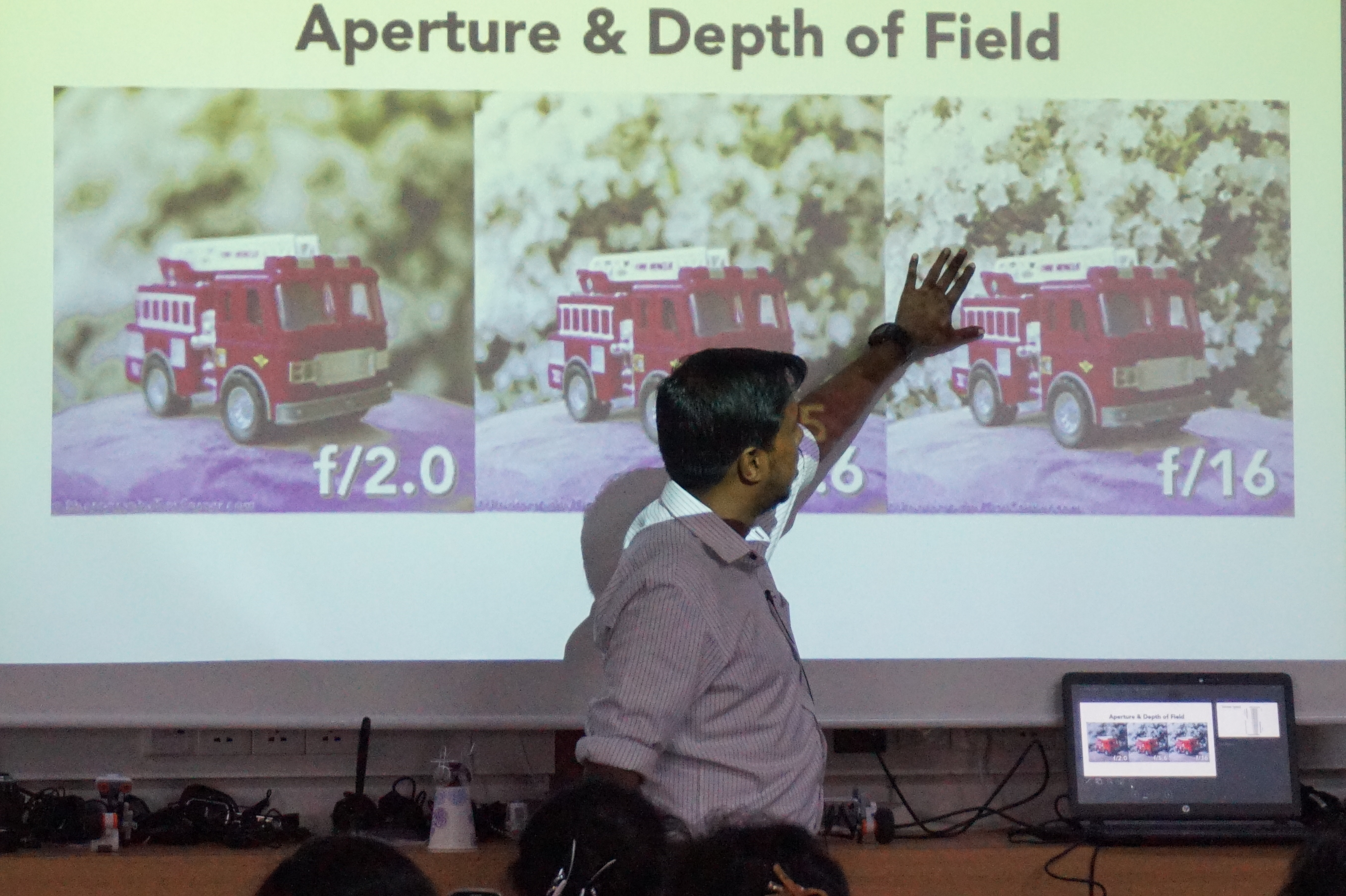
Photography in Science – From SLRs to GoPro

Nazly Ahmed, Social Seed Media explains Depth of Field

DSC01246

Engineering & Problem Solving – Building a Solar Oven

Paul Funk, US DOA

NalakaG

Teaching Science Writing

Nalaka Gunewardene

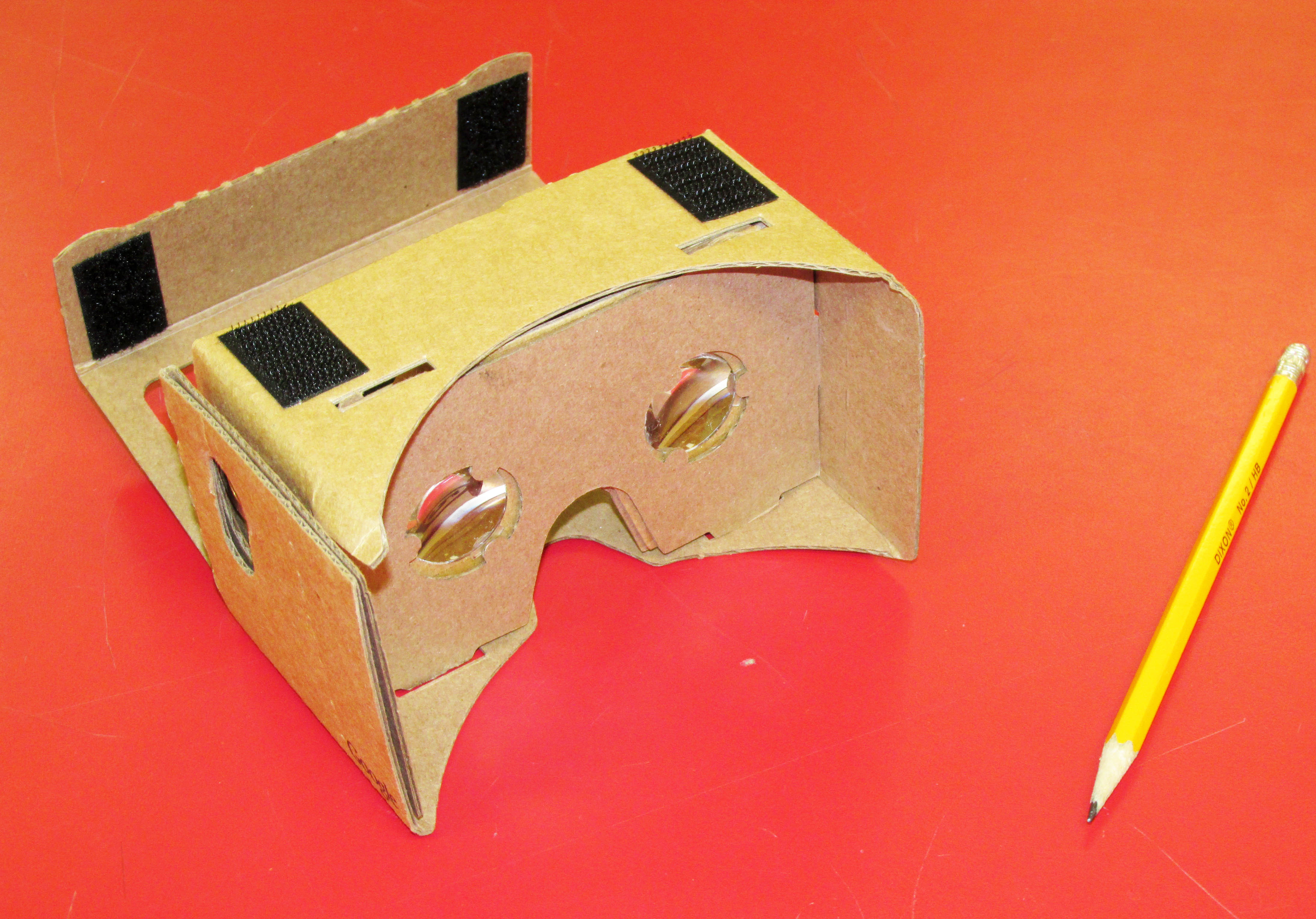
Cardboard 2

Future Ready Classroom – Google Cardboard & Augmented Reality

DSC01419

Future Ready Classroom – Teaching Robotics

Ruben Gameros, ASU, teaches class on robotics – Via Skype

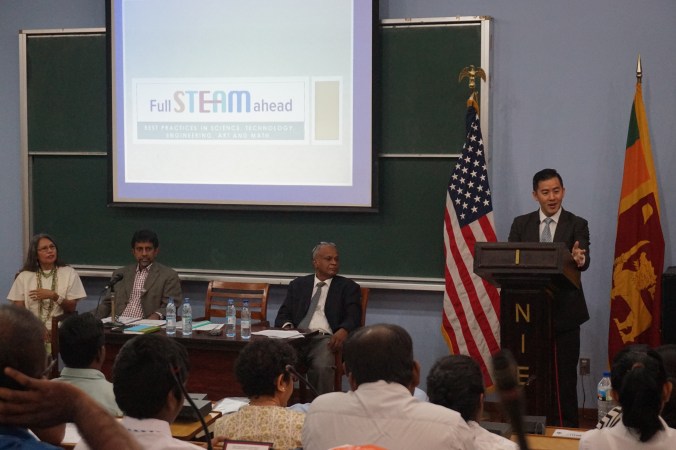
Joshua Shen - STEAM Workshop Introduction

Joshua Shen  Delivers Opening Address

So many (scientific) ways to use a GoPro!

If you saw The Martian, you couldn’t miss the GoPro cameras strategically placed where Mark Watney (Matt Damon) hast to talk to other humans who were mostly absent.

It’s not exactly a webcam, but a powerful tool to ‘journal’ an activity a whether it is extreme sport, or something technical. I’ve started off using a GoPro in robotics, and it was quite revealing how the camera sees a manoeuvre.  I am now considering a class about the camera itself.

For this there will be two three cameras at work, in fact. The first, will be a webcam because of the expert I am going to bring in, via Skype. He will demo a GoPro and ‘teach’ us how to turn a GoPro into a scientific inquiry tool.WE will be using one in class as well.

The GoPro on Mars didn’t seem contrived – or a blatant product placement —  since some have actually been used in Space before. In real space, that is, and not on a movie set. And it has also gone to on some breathtaking missions — in a balloon, for instance.

Here’s one of my favorites. What a great way to demonstrate the surface tension of water, by making the camera a part of the experiment, while acting as a journaling device!


The GoPro is obviously switched on, and what’s really smart is how the editor of this video reverses the perspective. We finally see the scientists (the astronauts) through the scientific object (a submerged camera), and the water bubble acts as another distortion lens!

What would Annie Leonard say to Robotics students

If you’ve never watched “The Story of Stuff” now may be a good time. It’s about the ‘materials economy.’ I have used this as a great way to communicate, using simple language, and a great ‘story’ format. Including, great stick figures!

It deals with how (or why) stuff end up where they do – from toxic waste in a river, to social problems around villages where diamonds are mined. The former, as we have seen in this country, involves graphic images such as this picture below. The latter is a story in TIME magazine last week on Blood Diamonds.

This year the ‘Story of Stuff’ will be a must-see piece for all robotics teams around the world. Annie Leonard stumbled on this and researched this about a decade ago, and it is still relevant. If you have 21 minutes to spare, watch this!

If I could invite Ms. Leonard to speak to my robotics students, I wonder what she would tell them about following the ‘trek’ of ‘stuff that becomes trash.