Martin Sensmeier visits school as Native American Recognition week kicks off

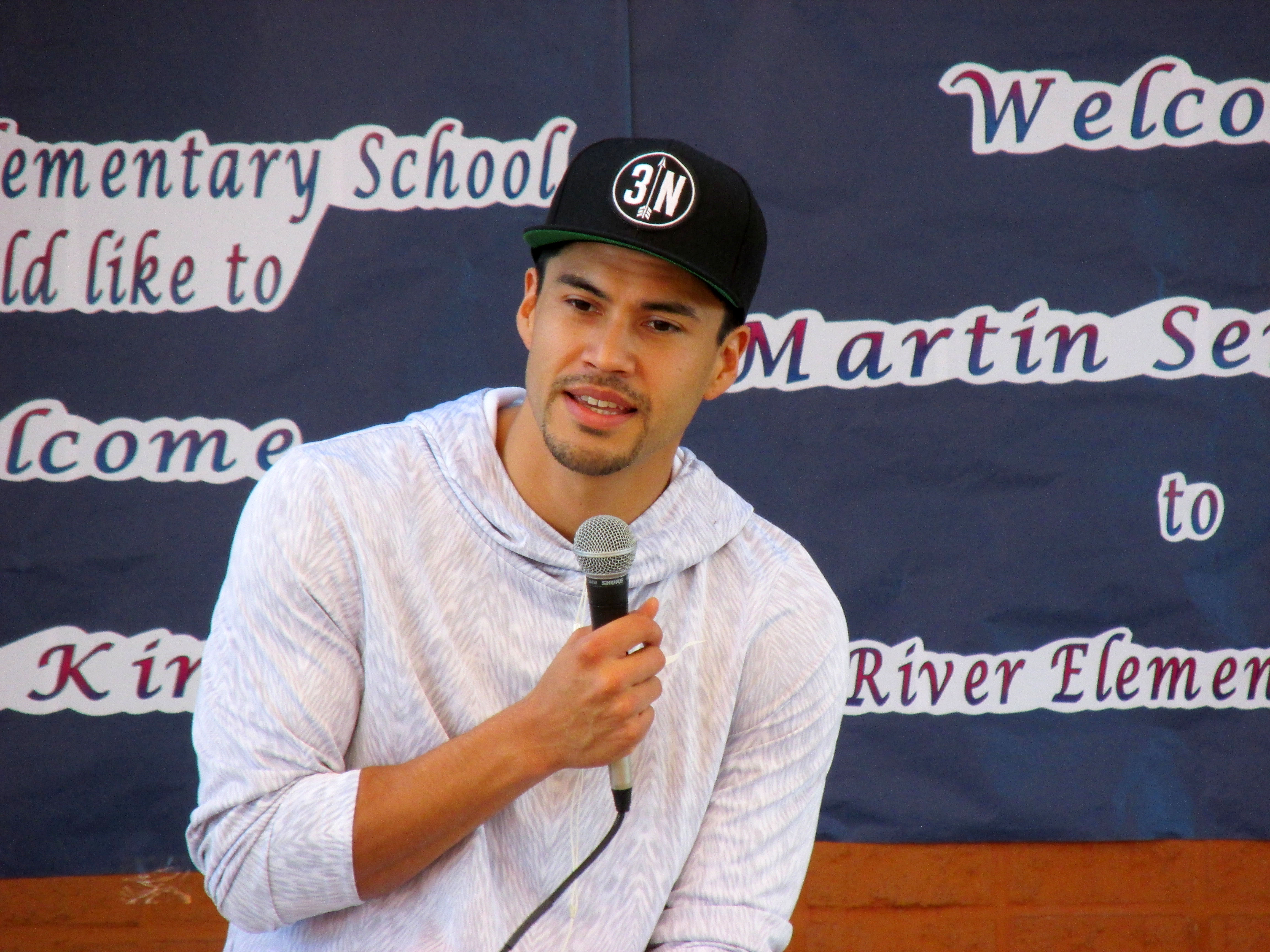
Last Thursday, we had a visit from Martin Sensmeier, the actor who plays Red Harvest in The Magnificent Seven.

The 31-year old Native from Alaska, spoke to our students about how perseverance in the face of rejection got him where he is. Beside his acting interests, he shared with us his passion for helping youth, and how he has partnered with Nike in support of the N7 Fund.

The Nike Air Native N7 brand was inspired by the wisdom of the ‘Seven Generations’ –how our decisions impact the seventh generation. The fund supports Native American and Aboriginal tribes in health programs.

martin-sensmeier

How the Internet is working against us, but no-one seems to care

Plenty of studies, and many critical thinkers have weighed in on how the Internet, once heralded as a gift to society, is not exactly working in our broader interests.

“World Peace” game proves kids can problem solve (without Apps)

A friend sent me a link to this story of a “World Peace Game” played by 4th graders. Sorry it’s not as fancy as MineCraft, or pointless as Pokemon. What I love about John Hunter’s concept is that there is no “win” and that it truly demonstrates how students can learn, sans smart devices.

If you need some background to this, watch John Hunter’s Ted Talk. You’ll be blown away.

One of the best performance reviews a teacher could get is what one of Hunter’s students says: “My brain, when I come back from his class, it feels like ‘jelly’ –it learned sooo much.”

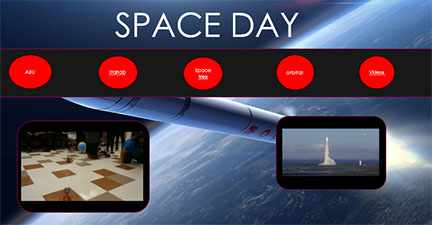
Young web ‘designers’ in 5th and 6th Grade


website2
It’s exciting to be able to teach kids what it means to ‘design’ a web site, and see what they come up with.

I’m not talking about the coding part of the site, but the navigation, layout and content. So much has changed since I worked  on web sites and web content ten years ago. Especially with site builders at Wix and Weebly, or even GoDaddy.

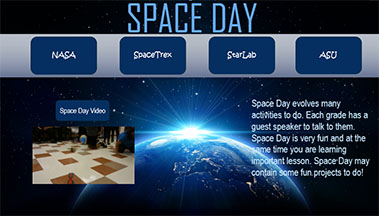
So before website3I introduce students to online site builders, I let them play with design components, using PowerPoint. Yes, PowerPoint!
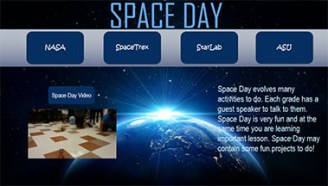
It’s a quick way to build navigation tabs, work on color and fonts, and eventually embed hyperlinks and video.

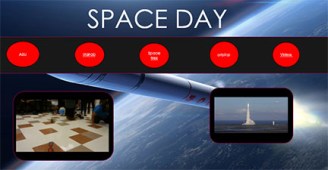
Here is some of the work of 6th grade, building a site for Space Day, the school event we just concluded.

Likewise the 5th grade is working on a website for Freedom Tower, a project they began in September. website4
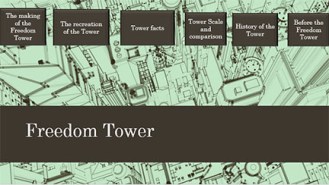
Later they would be using Photoshop for image manipulation, and create and edit shapes and buttons etc. Much later, when we move into audio recordings, and podcasts, I may have them return to their web sites and add voice files using Audacity.

But for now they experiment with bevels, shadows, and other effects that enable navigation.

UPDATED:
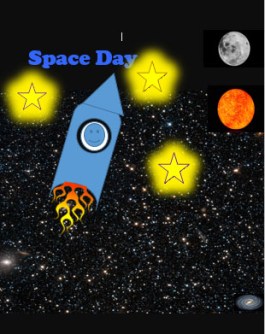
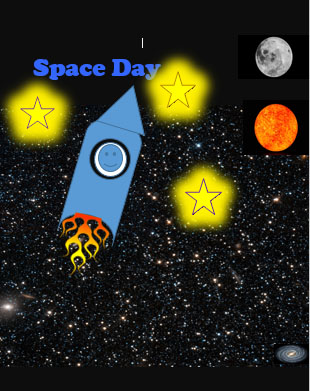
spaceday2Design is not just for 5th and 6th Grade. To address the Arizona CCRS Standard, S1.C4.PO 1: “Use digital creativity tools to create original works” I let 2nd grade students work with shapes, colors and also contrast and perspective.

Here is one student’s poster for the same event, using Microsoft Word.
 

Is there a ‘Maker’ in you?

Given how we’re being swamped by all things digital, don’t you long for a life with more hands-on experiences? I’ve written about (and visited) ‘Maker Spaces‘ that have been popping up in cities.

If you need inspiration, check out Intel’s ‘America’s Greatest Maker’ series. It will blow your mind to see a movement picking up steam that had young people becoming inventors and ‘makers.’ It is a TV show (similar to ‘The Voice,’ or ‘America’s Got Talent’), and a resource for learning the basics with plenty of how-to videos.  Watch someone who did just that.

“Inventing is really cool, because you don’t need a factory, you don’t have to be a certain age… as long as you have the right tools, and the right people to seek out.”  Shubham Banerjee, Maker

Also worth looking at is a fellow named Paulo De Souza who came up with the idea of equipping ”bees with backpacks” – um, tiny sensors. He has been addressing one of the world’s biggest problems, a diminishing bee population –or ‘colony collapse‘ as scientists call it.

Another great space for the movement is Maker Faire at Makerfaire.com

maker-faireFrom Art, and Arduino, to Fashion and Robotics and everything in-between, this annual festival has been instrumental in getting people to go out into their garages and tool sheds and discover their creativity. Like our ‘STEAM’ activities, but even beyond it, this it’s a fascinating trend!

There was a time when we did repair our own shoes (which lasted almost a decade), and build our own tree-houses (instead of ordering one from Walmart). There is a maker in each one of us, paralyzed by our fixation on apps and shiny new objects.

Pictures from Space Day – Rockets, Satellites, Stars and Bots

This event couldn’t have been better timed. Unbeknownst to me, October 19th was a day that space pioneer, Robert Goddard had called his “Anniversary Day” — the day he thought that it just might be possible to humans to break free of gravity and travel to other planets.

Oct 19th, last Wed, turned out to be a day filled with hands-on experiences for our students who got to hear about (and see) rockets, small-space satellites, robots that could some day work in ‘teams’ or swarms on a distant planet, how to design a landing craft and parachute like the Phoenix Mars Lander, and of course sit inside a portable, inflatable planetarium

Here are some of the highlights in pictures.

spaceday-rocket-launch-tn

SpaceTrex Group from ASU launched a rocket and talked about Small-space satellites

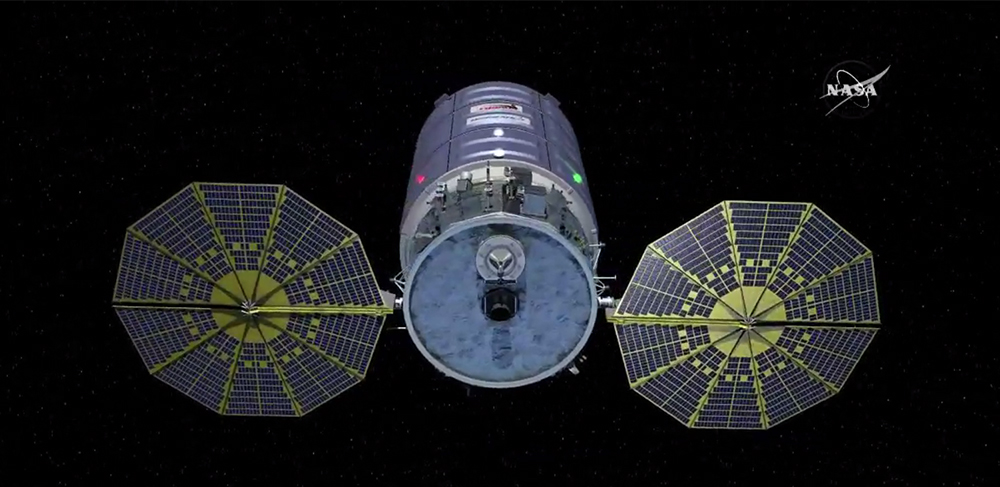
Orbital ATK’s Cygnus spacecraft, which lifted off on an Antares rocket Oct 17th (two days before Space Day) carrying 5,290 pounds of cargo for NASA to the International Space Station.

phaeno_tn

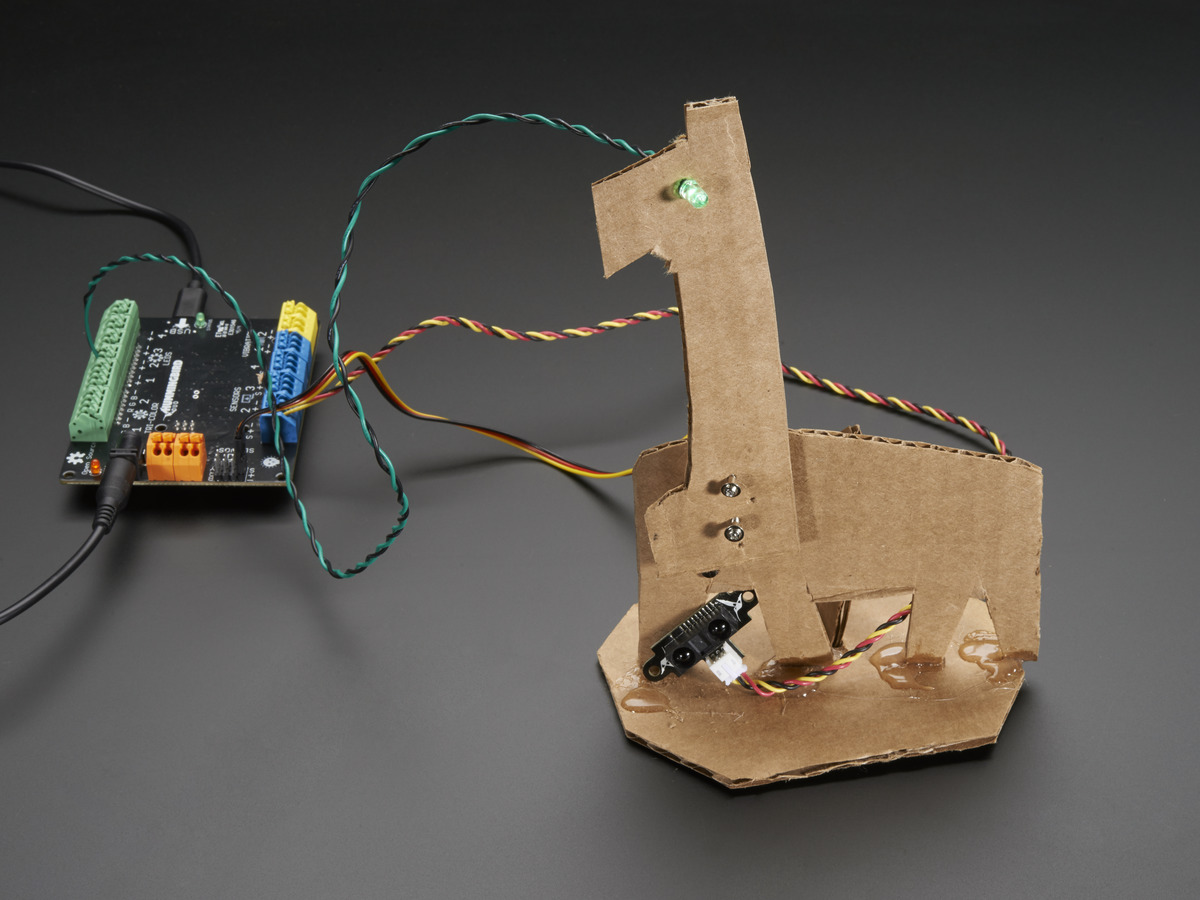
The little bot that runs on Arduino, could be part of a bot swarm!

bot-challenge-tn

Autonomous Collective Systems Lab let students program and run robots in a Rover obstacle avoidance challenge

lets-make-planets_tn

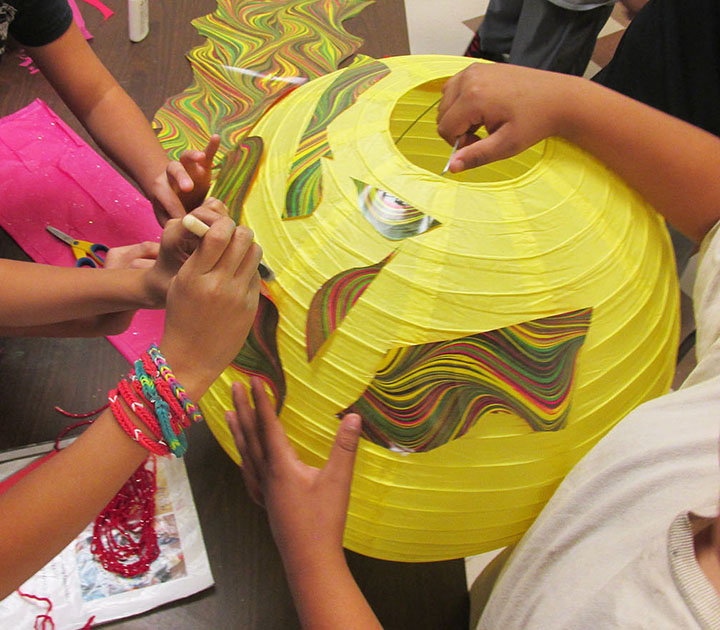
Hands-on session on planets and what ‘designing’ a new planet might involve.

spaceday-starlab-tn

StarLab, the inflatable planetarium was here for Kindergarten, 1st and 2nd grades.

orbital-atk-team_tn

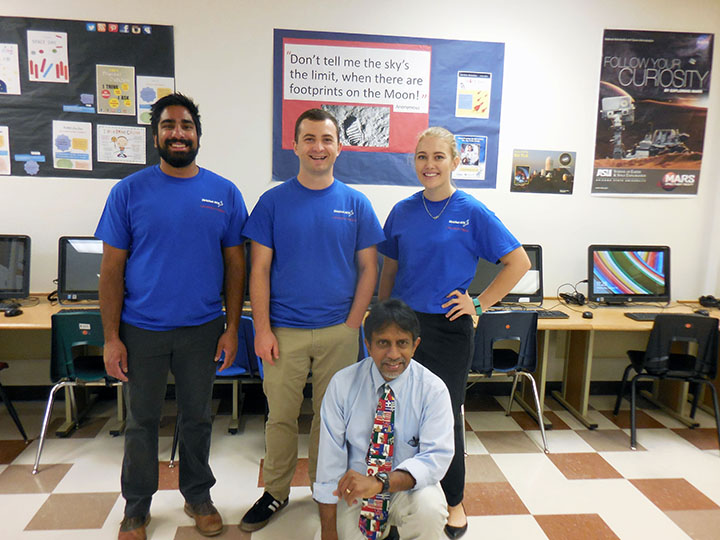
My third year of collaborating with the Orbital ATK team

spaceday-asu-teams_tn

Arizona State University’s teams


team-starlab_tn

StarLab team from ASU

Skype with Jet propulsion Lab’s Dr. Ashwin Vasavada

Last evening, Orbital’s Antares rocket lifted off for the International Space Station. Today the Chinese launched their own ‘March 2F’ rocket with two astronauts headed to their own separate Space Station.

So it is fitting that tomorrow for Space Day, our 4th grade students will Skype with Dr. Ashwin Vasavada, project scientist at the Jet Propulsion Lab in Pasadena, CA. He will talk about engineering design, as a preface to their making and deploying a model of the Phoenix lander.

The Lander looks something like this, but will be made to scale including the parachute, and several models will be tested outside!


All set for SPACE DAY this week with rockets, rovers and StarLab

Getting back after Fall break with a big event this Wednesday, SPACE DAY. It’s my 5th year of bringing space science to our students from Kindergarten to 6th grade. Fascinating how things fall into place, thanks to the amazing support I get from the scientific community around us.

I am delighted to have Orbital ATK, a global leader in aerospace, conduct sessions for us, with many other groups. Today was supposed to be the launch of Orbital’s Antares rocket carrying cargo up to the International Space Station. The launch has been postponed for tomorrow, and should dock at the space station on SPACE Day – Wed Oct 19th!

Our keynote speaker will be Dr. Jim Rice, a NASA astrogeologist.

Sessions will cover these topics:


Invent, create and have fun with BirdBrain robotics

Micro-controllers are at the heart of many of today’s robotics kits.

This one, called the Hummingbird (with a pedigree derived from Carnegie Mellon labs), is designed for engineering and robotics activities for students from ages 13 and up.

I wish I could afford one of these for my computer lab, since it is an on-ramp to teaching students programming languages such as Python and Java. Or as CMU describes it, the micro-controller turns ‘crafts’ into bots.

And what’s a micro-controller for the uninitiated?

It is the decision-making part of a device, and could control sound, light, movement, and work with Bluetooth and WiFi. Our microwaves and phones have micro-controllers. We had a session on micro-controllers earlier this year.
Teaching young people to understand and tweak these devices could lead them toward higher problem-solving disciplines.

SPACE DAY – Our 5th year of ‘slipping the surly bonds of earth’

In 2012, when I put together Mars Day at our school, I could tell there was a huge appetite for all things space-related. After all, the Mars rover ‘Curiosity’ had landed on the red planet a few months before.

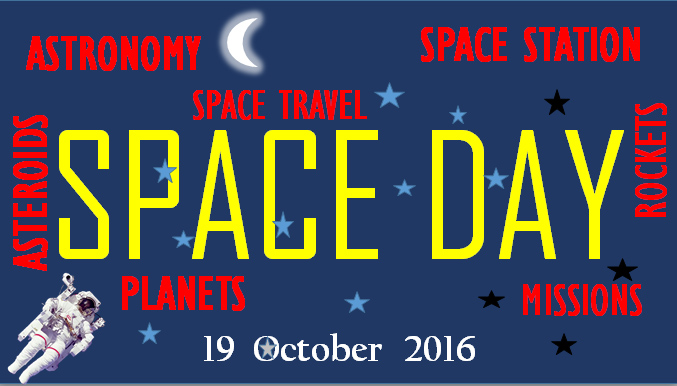
space-dayThis year, our 5th year, we are broadening our lens, so to speak. We are calling it SPACE DAY. It is on Oct. 19th at Salt River Elementary.

I am so fortunate to have so many groups supporting me. From a NASA scientist, to Orbital ATK (formerly Orbital Science), and several groups from the School of Earth and Space at Arizona State University. Also a team who keeps bringing back StarLab, the inflatable planetarium. But wait, there’s more – a surprise guest from the Jet Propulsion Lab (JPL), the NASA group prepping for Mars.

There are several break-out sessions, some that will happen concurrently. We may even have a few real rocket launches outside! This year two of my colleagues will  conduct hands-on sessions that add art and design to the mix. My goal has always been to add more of the ‘A’ to the S.T.E.A.M programs.

Almost every week it’s hard to escape news of audacious new programs pertaining to vehicular designs, space colonies, cosmonauts, or discoveries about comets, asteroids, and planets –the ones we know, and those that are still to be named.

One day of the year just scratches the surface, don’t you think?