Kids take to design as Digital Learning Month kicks off

sculptDon’t you wish you could have learned in elementary school what kids have access to now?

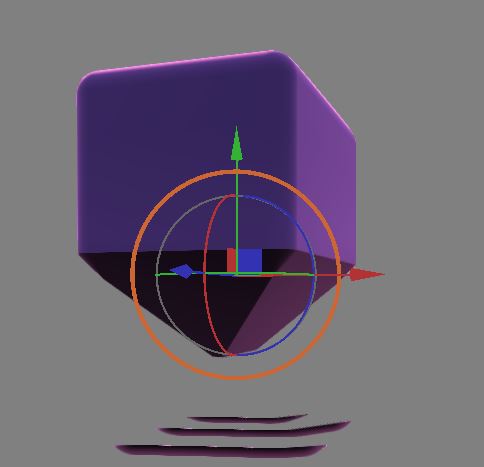
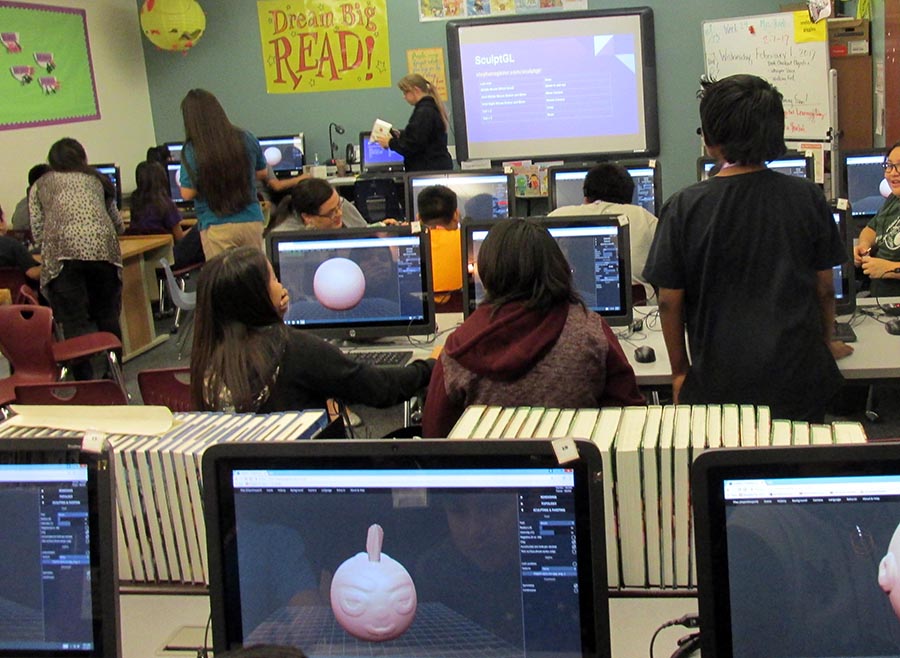
That was one of the comments of a designer from TimeFire VR, speaking of how excited she was to see 6th graders quickly learn how to use SculptGL. It is a powerful open source CAD program for 3D sculpting. (I created this in just 2 minutes, having no experience!)

Of course there is much  more work to be done and TimeFire showed us how we could to get there, with Blender, another open source application. This being Digital Learning Month, we will dlday1have time to get deeper into CAD and 3D sculpting. I’m planning to ask TimeFire to come back for an encore session soon.

I like to thank John Vise for making this happen. Specially to Jessica, Rainy, and Ariana for showing us the exciting software, and future career possibilities.


Yes, we can be tracked! What students learned at Digital Learning Month kickoff event

Thank you, Fred von Graf for conducting a highly interactive session for our 5th grade students last afternoon. It was the kickoff to our Digital Learning Month in February.

dlday-tnTo a packed room of students and teachers, Fred asked them what social media platforms they use, and provided some cautionary stories of how to protect themselves from hackers, trolls and anyone with rudimentary search skills. He spoke of the dangerous side of oversharing, using same gamer handles and aliases across multiple platforms.

What I liked most about Fred’s presentation was that he avoided the geeky terms (no mention of Phishing or spoofing or doxxing), while explaining quite simply, how someone could find out sensitive and private information about you.

“Some people think of social media as a popularity contest,” said one student, commenting on a case of a someone grabbing information off people and posting it to his YouTube channel. Some spoke about how tagging children could reveal too much information about the family. Teachers shared their safe practices, such as not providing the location of when a picture was taken, or doing it after one leaves the location.

Overall, the room was brimming with insightful thoughts and suggestions, sparked by Fred’s topic, and style of presentation. He summed up, by bringing up oversharing, about seeking ‘Likes’ and the ‘addiction’ that could results from these self-gratifying practices. “You want that attention, and it becomes so easy to say ‘my privacy isn’t that important, let me put this out there’ ,” he said.

VR, 3D modeling, and social media to kick off Digital Learning Month

Digital Learning Day is on Feb 23rd, but this year we are kicking off a whole month of digital learning at Salt River Elementary.

Tomorrow, our students will learn from designers and programmers what being digital means.

3D Sculpting & VR. Students will learn from designers and animators at TimeFire VR Inc what 3D mesh sculpting and painting on 3-D models involve. An exciting hands-on sessions using Blender, and SculptGL. They will also experience what these virtual worlds look like through VR goggles.

Do’s and Don’ts of Social Media. Students will learn from Web3Mavens how to ‘Think like a programmer’ and navigate the world embedded with –or rather overlaid by — social media, particularly Facebook, Snapchat, Instagram, Wikipedia and YouTube.

And there’s much more in store during February!

Do we have space for Makerspaces and tech shops?

Some days I wish I could convert part of my computer lab into a Makerspace. After all I have re-defined it as a Computer and Technology Lab, so it would be appropriate to have other technologies. Like a metal cutter, or workbench to build things – such as making a speaker out of an Altoid tin, or rudimentary printing such as silk-screening.

I thought of this again after getting into a discussion with a teacher visiting our school from New Zealand this week. She spoke of how curriculum there includes woodwork, needlework and many hands-on activities.

She was not been aware of Makerspaces, but mentioned a parallel well-organized movement called Mens’ Sheds – run by retired people so that anyone could take up a new skill.

Makerspaces here are great places for students with rudimentary engineering products in mind, for say a science fair. They are open to anyone and are often free. Some school libraries are carving out makerspaces for 3-D printing.

I’ve visited one in Mesa, Arizona called HeatSync Labs. Love the name!

I’ve still to visit the TechShop in Chandler where you could learn CAD drawing, or how to build a (guess what?) Bluetooth speaker!


When Microsoft ‘draws’ as good as a Sharpie

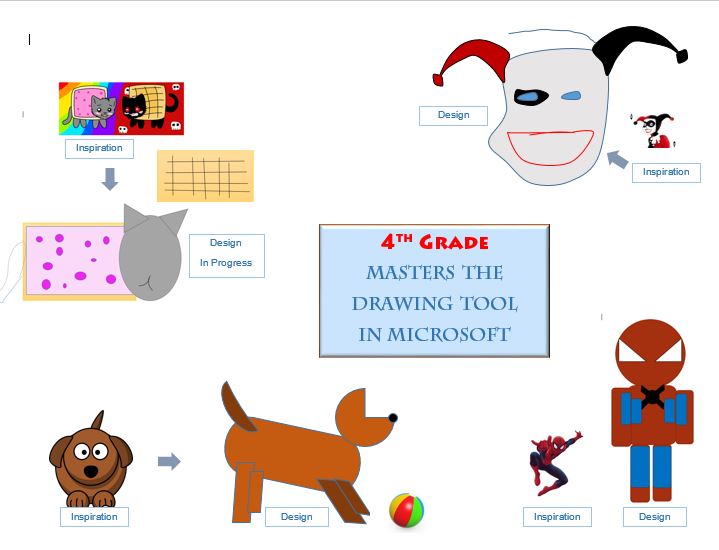
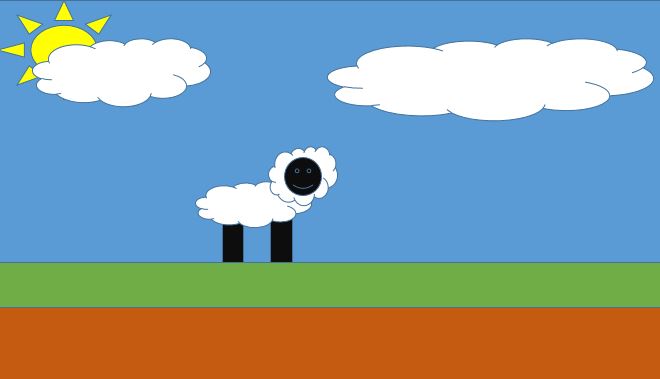
When I tell students that Word or PowerPoint is a versatile tool, and not just for typing of creating slides, I never know what to expect. Such as how some of them have mastered the ‘Curve’ tool in the Shapes menu.

Here’s one. Looks like a pen-and-ink sketch, doesn’t it?

goku_student_drawing2


It gets better! Because this is about animating.  The student’s storyboard in PowerPoint  just kept growing!
goku_student_drawing    
goku_student_drawing3

goku_student_drawing4

Robotics team researches Dakota Access Pipeline for FLL project

When our robotics team picked the controversial Dakota Access Pipeline (‘DAPL’) for their research this year, they never imagined a solution to the standoff would come days before they presented it.

It did.

Yet the insight they bring is even more powerful. But how does an oil pipeline relate to this year’s theme, Animal Allies?

Click to Enlarge

A quick thumbnailThe controversy began over a 1,170-mile  underground oil pipeline crossing 4 states (N. Dakota, S. Dakota, Iowa and Illinois). It had been approved by the U.S. Army Corps of Engineers, but as Native American opposition gathered momentum (with activists from several tribes, including a group from the Salt River Pima-Maricopa Indian Reservation) president Obama stepped in, and the pipeline was stopped.

As for the robotics project: It is on the impact of the ‘dirty pipeline’ on animal life. They will present a case for how water and the land are sacred to the Native American people. And how it could adversely impact animal life.

The ‘problem’ may have a political solution. But their project board looks at deeper issues than that, as you could see in their brainstorming session earlier in October.

img_0972


Entertaining ourselves out of Math

What killed our interest in math?

Is it our love for instant gratification? Or was it our ability to outsource our left brain to ‘calculating machines?’

No excuses are good enough. After all, the country that created the first graphing calculator, Japan, ranks 5th place in Math in the ‘PISA’ test (Programme for International Student Assessment), which tests Mathematics, Reading and Science among 15-year-olds in 72 countries. The test is administered every three years. In this latest ranking, the US, unfortunately is nowhere in sight.
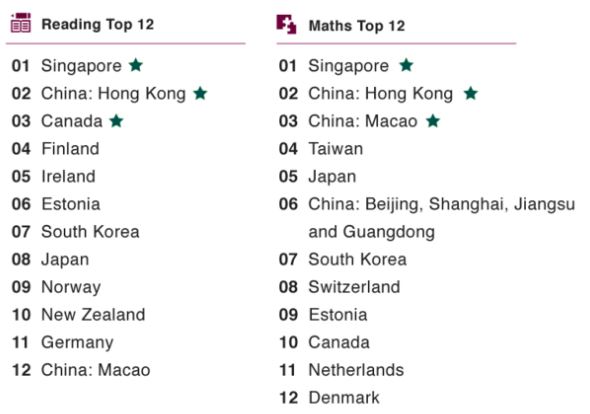
pisa-rankings-2016In Math, we are way below Malta, the Czech Republic and Vietnam and some 40 other nations. In Reading, we rank 24th, with countries such as Estonia, and Macao doing better. Singapore tops Math, Reading and Science. What killed math in the US?

I only ask this question because we are in the midst of student evaluation, and I am seeing an increase in student’s interest in programming. Yes, math is hard, but we seem to be entertaining ourselves to death, with ‘watching’ more than doing. Coding, and using mathematical concepts requires students to work through a problem. An ‘algorithm‘ is after all a mathematical construct.

This unhappy news of declining performance comes despite us having excellent hands-on, interactive resources such as Khan Academy. One recommendation is to “teach a lot less but focus at much greater depths,” says the director of education and skills at OECD.

Buried deep in the report are some good indicators of what works in the successful countries. It says, for instance that

students score higher in science when they reported that their science teachers “explain scientific ideas”, “discuss their questions” or “demonstrate an idea” more frequently.

and that raising students’ expectations of working “in a science-related occupation” have greater bearing on the outcomes than material and human resources.

Translated. Investing in new books or fancy devices won’t move the needle unless schools empower (and hire) teachers who could passionately ‘explain’ and ‘discuss’ the subject matter.