Could Fitbit smartwatch take over iPhone territory?

Though I will never wear an activity tracker. I’ve been very curious about the smart wristband / ‘wearables’ business. Especially the territory Fitbit has been moving into.

Sure, most people will be awed by Fitbit’s ‘SpO2’ sensor, for instance. But despite the clinical USP (to keep tabs of ones oxygenated blood), there are some features that blur the lines between an activity tracker and a smart watch; a wearable that can make contact-less payments via NFC, minus a phone.

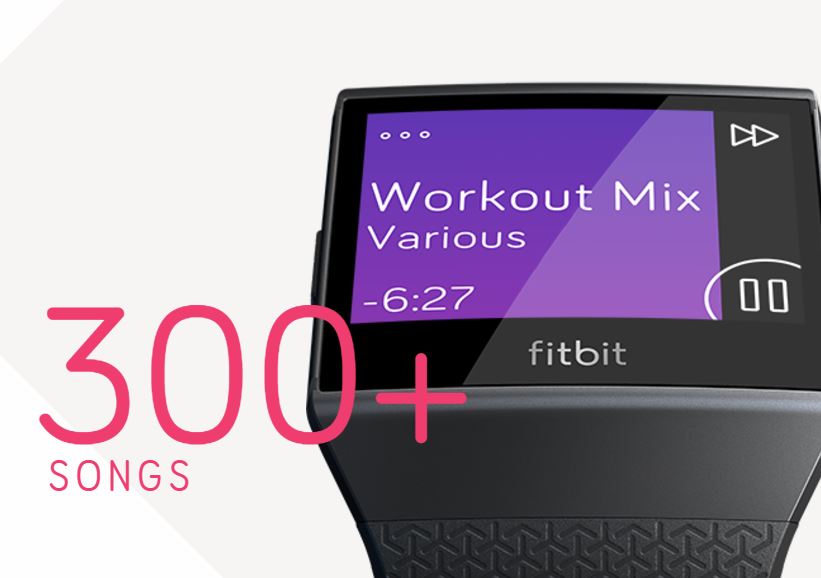
There’s also the music feature. A smart watch that could store music could be a game changer. With Bluetooth and WiFi (and GPS) who knows what territory it might lead this ‘wearable’ into? Will it motivate some to leave their phone behind? Would that mess with the iPhone eco-system?

The other reason I’m curious about this wearable is, I plan to use Fitbit as an example in an upcoming class. It’s a class about the Internet, and the connectivity it provides. And the hardware and software that run on the infrastructure students take so much for granted. Following up on last week’s look at Virtual Reality, nothing like bringing up the much-hyped Internet of Things.

Another eclipse crowd-sourcing project captures sounds, not pictures

My wife and I were discussing the eclipse –her two-and-a-half year old Montessori students had been excited about it!– and wondered if animal behavior was being tracked.

So it was a pleasant surprise when I saw Ruben Gameros’ post today on FB about his participating in the Purdue University ‘sonic effects’ project. Their “huge, continental scale” project was to study how animals will respond to the solar eclipse. Using acoustic sensors (from Alaska to Puerto Rico) they invited citizen scientists to collect data –acoustic behavior of  birds, crickets, cicadas, and frogs.

Why record sounds? Purdue researchers are looking at if animals that are typically active during the day stop making sounds during an eclipse. Among other questions:

  • Are there patterns for birds, insects, mammals, amphibians, and even fish?
  • Are the changes in the circadian cycles different in coniferous forests, temperate deciduous forests, grasslands, and coastal ecosystems?
  • Is there a difference in behavior in the total eclipse zone compared to areas that are in the 90%, 80%, 70% and 60% or less zones?

Caltech had a different crowd-sourced project calling for eclipse-related animal behavior. It called for young scientists to make 3 observations during the event, and record it via a special App. It was supported by a teacher webinar, and a web-chat.

I wish students across the country would have been motivated to do more than look for the umbra and penumbra. Or dodge the event, entirely. (One school I know cancelled the viewing even after they ordered glasses.)

Google’s Eclipse megamovie worth watching

For those of us who cannot watch the eclipse today in North America, there’s a fascinating project that would document it. Google has worked with UC Berkeley (Eclipse Megamovie) and  has recruited 1,000 volunteer photographers and amateur astronomers for the event. Volunteers must download the Berkeley-created app for this.

The eclipse will last from 9.05 am Pacific, to 4.09 pm Eastern.

So for instance, in Scottsdale, Arizona (as is evident, we are outside the ‘path of totality’) the moon’s shadow will cover just 63.3% of the sun. It all begins at 9:14 am and will continue for 2 hours 46 minutes. Peak time of the eclipse will be 10:34 am.

I found it interesting to read that damage to the retina would only occur is someone looks directly at the sun before or after totality without the protective glasses. Thankfully, those who cannot watch the event live have the citizen-sourced megamovie.

Classroom sans borders, now that Google Classroom is for everyone

I liked the original Google Classroom, for how it simplified how a learners could belong to a ‘class’ even though they may not be in the same building. Or country.

But the latest improvements to Classroom take it further, letting anyone who plans to teach create a lesson and connect with students. I just created a class as an experimentt. It’s a class on Writing and Publishing — the basis for a project this summer.
Lots of potential in how they hand over the tools to engage students, and receive feedback.It’s evident Google is staking its claim on a sector ready for disruption. Especially since Khan Academy has prepared the ground for it.

As the New York Times put it, Google has practically out-maneuvered Apple in the education market. More than half the nation’s primary- and secondary-school students now use Google education apps, it says.

Yes, you’re being tracked! Unless you change your phone’s default settings

Have you ever left a restaurant and received a message on your phone asking you to review the service? It’s very creepy. But it’s also what agree to when we use certain phone features or an app. (Sure, the app is ‘free’ but we pay for it by allowing some organization to grab our data, and /or track us.)

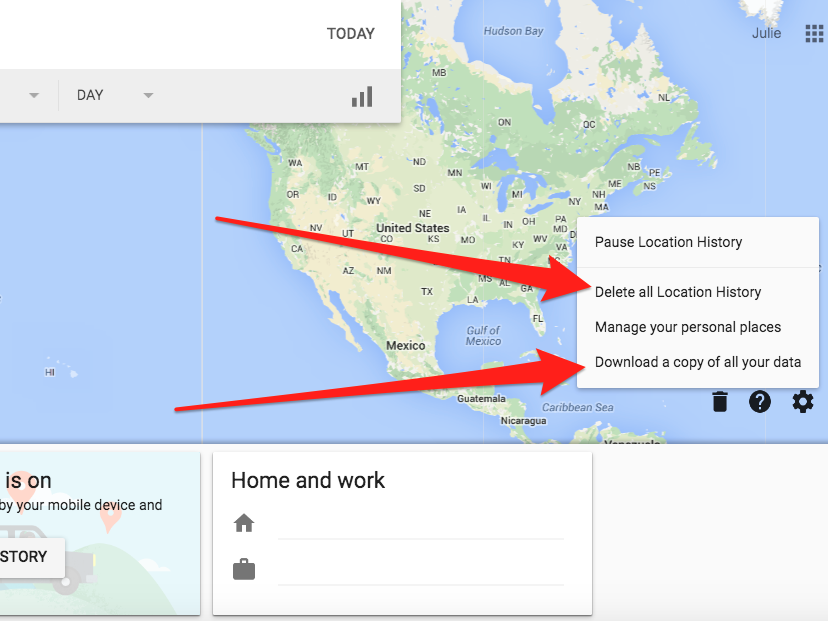
If you haven’t already done this, try Google Maps Timeline once you are logged in to Google. It pulls up a map of where you’ve been. It lets you click on each date in the past few weeks, and (if your location setting was on) you’ll see how Google has recorded exactly what time you stopped at any address, and left. So if you crossed a border, it will give you precise times when you passed through the border.

Of course this information is supposedly private. Or at least the Personal Identifiable Information (or PII) is. Of course you could –or rather should do these things:

  • Change your default settings on your phone.
  • Go into Google’s settings and delete your location history.
  • Avoid using clicking on the location icon if you could help it.

But we often forget. Or worse, think this information is harmless.

This is the kind of information that students ought to know. Not just to become paranoid about Google, but to become more aware of our data. Especially when it seems like logging into Instagram and Snapchat is a pre-teen default setting in itself.


Robotics Olympics highlights. Team Sri Lanka returns

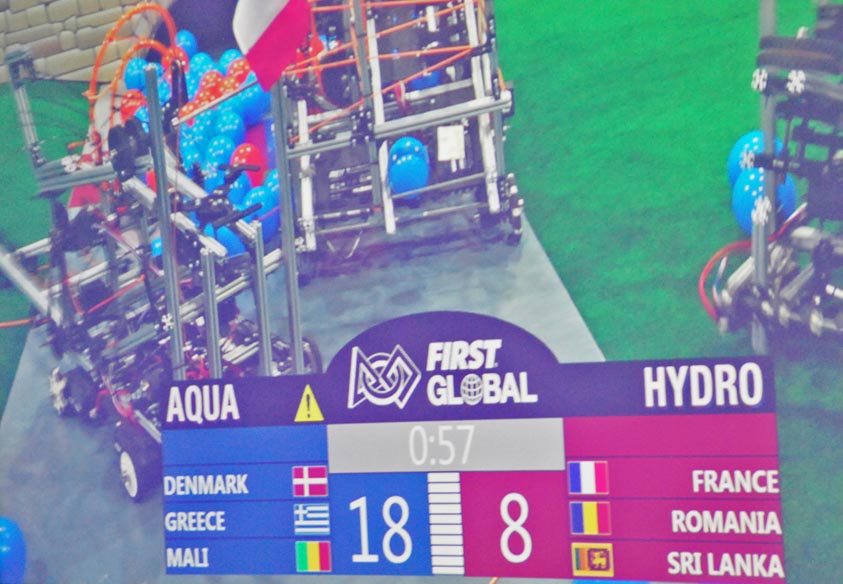
Washington DC’s humidity hovered around 90 percent when the competition began on 16 July. Team Sri Lanka’s four students were sweating bullets for different reasons. In a crowded basement, parked between Senegal and Sudan their 20-wheel steel robot needed some repair work.

The bot that they built in secret in a classroom in Colombo (they called it ‘Area 52’) arrived with a warped axle and damaged omni-wheels. Two hours before departure the airline forced them to repack the 23-kilo microwave-sized contraption into two boxes. The next day the motor failed –not an uncommon problem among teams here.

But they did take on the world! In this competition, designed by FIRST Global like the Olympics, each team worked in ‘alliances’ – groups of three country teams. It was fascinating to watch each team, battling cultural and language barriers (and jet lag and sleep) work through the constraints and perform. My family and I were so proud to be there supporting them.

They did quite well in strategy and design of the bot. In terms of rankings they were placed 138th out of 163 teams – beating the US, France, and Russia. When you consider they had just 9 weeks to prepare for this (many teams had at least 12 weeks), it was quite a feat.

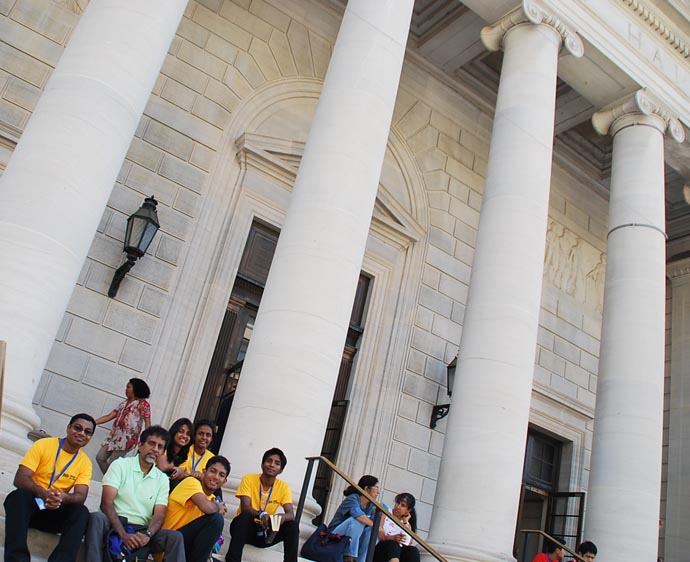
Kudos to coach Dilum Rathnasinghe who took on such an unthinkable task. The team comprised: Ali Anver, Ishini Gammanpila, Vinidu Jayasekera and Akash Gnanam

Here are some images from the 163-team, 157-nation Robotics Olympics.  Read previous post here.


If only schools can be like this!

I just interviewed Kris Canekeratne, CEO of Virtusa, a 20,000-strong global business consulting and IT outsourcing company headquartered in Massachusetts. Among the many strands we talked about, I was fascinated by his take on learning, and how schools ought to be the ‘ignition’ for curiosity.

“Students have an innate proclivity to curiosity,” he says – no different how engineers are inherently curious, with problem-solving and design thinking as part of their skill set. If only we could design schools to be the spark plugs of knowledge! It’s time we began exposing students to Big Data, Nanotech, AI, user experience, and gamification, he says, instead of teaching them how to memorize material just to pass exams.

To this end, here’s an example of design-thinking class at a Charter School in Berkeley, California.

Team Sri Lanka head to International Robotics event in DC

I like to break to the news about a story that has been in the works since April. Sri Lanka was invited to participate in the first ever International Robotics event, billed as the Olympics of Robotics. It is organized by First Global, an extension of FIRST Robotics, by Dean Kamen, a serial entrepreneur The event will be from July 16 to July 18th.

The team (4 students) received the robot kit from FIRST Global in April. Given the short time frame, they have been moving mountains to build, program and test the robot. I have been in touch with the coach and the school while they have been prepping for this. More details will follow.

Meanwhile, here’s a look at the team testing some of the working parts of the robot.

Summer boot camp: SLRs, Robots, and a Solar Oven

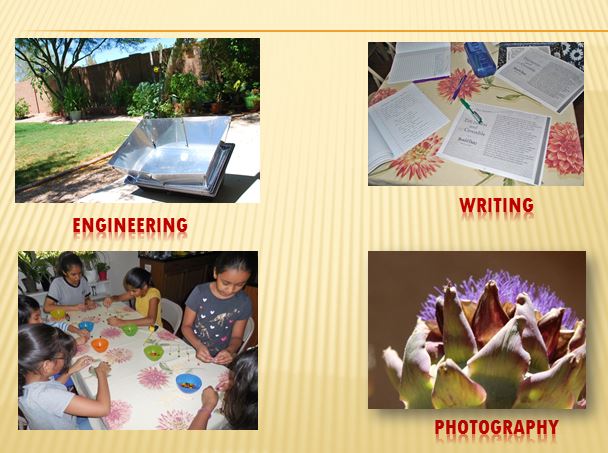
Last week, students at the summer boot camp I conducted here at Li’l Sprouts Montessori got to work with different technologies. From building robots and circuits, to using cameras and a solar oven. They also used one of the oldest ‘technologies’ that tend to be overlooked – pencil and paper.

But besides motors, and learning the software (to program the robot below) students also learned about engineering design, using toothpicks to build a bridge and a tower.

They did a fair amount of writing, maintaining their journals each day. They worked on essay writing, a news story, and poetry.

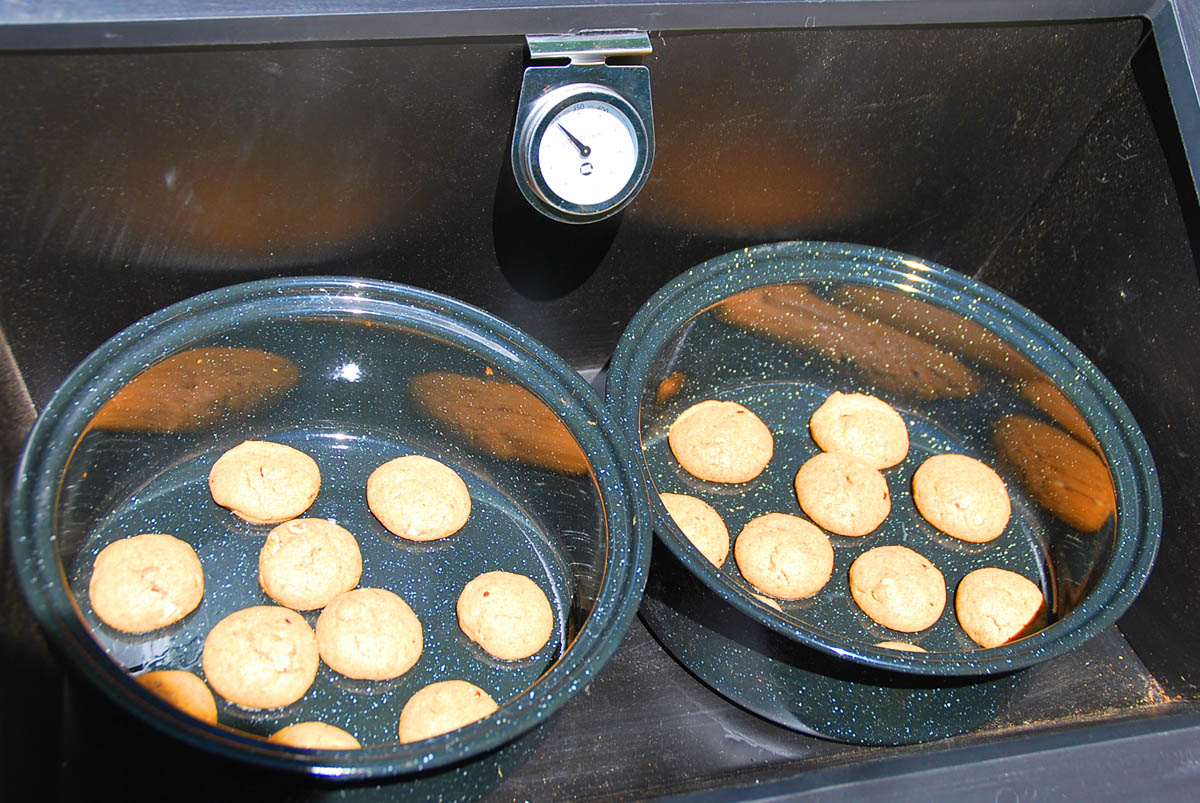
On the final day I introduced them to the solar oven, and Tanu helped them bake cookies. One batch got done in just over 30 minutes!