Eat More Kale! (Just don’t brag about it)

If someone threatens to sue you for using a common word, whom would you go to for redress?

Well, if you’re a writer, or a mom-and-pop business owner, you may not be able to afford a team of lawyers. You may not think that a common word such as ‘think’, ‘eat,’ or ‘whisperer’ could get you into the cross-hairs of a team of copyright lawyers. But we live in such times.

Last week I spoke to Bo Mueller-Moore, someone who didn’t understand all of this. Bo is a Vermont-based folk artist who became an accidental T-shirt designer.

We grow kale (as you could see here) in our back yard. This story resonated with me. He comes across as a folksy, genial gentleman who might be the least likely chap to threaten a 1,615-restaurant business.

One of his shirts that he sells (he originally made three for farmer John down the street) read ‘Eat More Kale’. But a corporation began claiming the rights to the words ‘Eat’ and ‘More’ and thought that Eat More Kale would confuse its customers.
Bo has been imprinting t-shirts since 2000, and this is not the first time Chick Fil-A has come after him. (It dropped its earlier case after someone from his town sent them a polite letter saying they were going after the wrong kind of person who was no threat to them.).The company’s product? Chicken sandwiches. Sandwiches!

Last year the lawyers sent him the second cease-and-desist letter. This time Bo decided he was going to fight it another way, in another court –the court of public opinion. Which is located …in the realm of social media.

He took to Facebook, and YouTube, and has garnered thousands of fans.

Now I like Chick-Fil-A, and its sandwiches are one of my daughter’s favorites. But I can’t for the life of me imagine why they would think that a small T-shirt business, especially a short slogan promoting kale would ‘confuse’ me as a customer. Bo’s not a lawyer, but he summarizes his defense as plain and uncomplicated as a head of kale: “You can’t eat anything I sell.”

Oddly enough, while you hear of similar cases (Facebook, apparently tried to own the word ‘book,’ and Apple tried to make claims on the word ‘pod’) others who common English words don’t always get into this kind of trouble. Denny’s restaurant is currently using the word ‘whisperer’ to promote its fare.  The series of videos is called ‘Skillet Whisperer.’ (The word whisperer immediately conjures up the movie Horse Whisperer, doesn’t it?) Some folks in Wisconsin have a website called Eat More Cheese. Now they are definitely in the food category, even though a slice of cheese is a far cry from a piece of chicken.

If I were a PR agency advising Chick-Fil-A, I would tell them stop wasting their budget on expensive legal advice and allocate a tiny portion of that to a dude in the office who would listen to the awkward chicken-unfriendly conversations going out there in the blogosphere.

Better still, it could try to repair the relationship and channel the conversations away from anti-chicken talk. How?

How about a seasonal chicken sandwich with Kale instead of lettuce? That would be a nice gesture to the farmer John’s of this world. It may be wise to look back at how United Airlines got the ‘message’ when Dave Carrol took his story to YouTube, and did an admirable job of tuning in, and toning down the voice of an angry customer plus his millions of fans.

Gimme a grilled, spicy chicken-kale sandwich, Chick Fil-A. I’ll eat mo. I promise!

PS: My wife grows eggplant, parsley, and chilli peppers. On her behalf, eat more eggplant! Eat more chillies! Eat more kale, too!

Since students are digital, are classrooms too analog?

I just spoke to a parent of a student, frustrated that the standard in a so-called ‘high achievement’ school seems to be dropping. The unspoken question seems to be “why are schools still stuck in the Reading, Writing, “Rithmetic rut?” Or, as some wonder, why are schools not educating the whole child?

A reports earlier this month in TIME magazine, Why it’s time to Replace ‘No Child Left Behind’ is enough to make one agitated!

Many studies say that rut in question, is an obsessive exam mentality that needs an overhaul. School systems have become fixated with preparing children to pass exams, but don’t have the resources to prepare them for the other exam out there –the exam known as Life! Which is exactly what that parent was anxious about.

US policymakers have been alerted to this.recent Harvard study of student achievement on global perspective (EducationNext.Org) found that unless we fix math and reading skills, the outlook in the global economy looks grim.

Not that this is exclusively an US problem.

Europeans, too are worried. A recent study on how education and training is meeting the needs of the digital world and the European economy (‘The Future of Learning: Preparing For Change’) say that schools need to make a fundamental shift if Europe is to remain competitive.  Students will need to be competent in “problem solving, reflection, creativity, critical thinking, learning to learn, risk-taking, collaboration, entrepreneurship.”

Should we take our curriculum back to the drawing board?  Should we redesign the classroom?

Yes, but... If there are is one thing I am frustrated about, it is the rush to plunk computers in front of students, and think this will solve all our problems. The argument goes like this. Our kids are digital natives, so getting them to take down notes on ruled paper, and listen to a teacher is not the best way to engage them.

I work in digital and analog environments, and have been a big advocate of bridging the gap between these two realms. That does not mean replacing one with the other. A tablet will not automatically make a child collaborative and yearn for deeper knowledge, just as (to paraphrase an old saying) owning a library card will not automatically make a person well read. Preparing students for a 21st century workforce requires us to make them much more than just digital. The European JRC European Commission study calls for education to be more “personalized, collaborative, and informalized.” One could write an entire paper on these three areas.

Sure let’s redesign the classroom, but let’s not discount the importance of a value added teacher who brings extra-curricular knowledge into his/her material. In fact, the term ‘High Value Added Teacher’ is now being used by one Harvard study –see video below.

Also, on a more optimistic note, there’s a great experiment about  ‘Active Learning Classrooms’ worth watching. I like how it is not just the students, but the teacher who is adapting to the new learning classroom as well. Inspiring video!

2011 dominated by people rather than technology

It’s impossible to overstate how tumultuous a year 2011 has been.

Every year we seem to think that we have been shaken, twisted around, rudely awakened. Usually it’s about technology. But usually it’s about some life-changing technology, or a new ways of doing things. Refreshingly, this year there was a large human dimension to it, some of which I covered here on this blog.

It was as if we were looking through a camera and switching between two filters:  Pro-democracy and Anti-terrorism. But we also saw a share of media events, some even about the media!

  • The people’s revolutions in Tunisia, Morocco, Egypt, Russia, Libya…
  • In a surprising move, the US captured and killed of Osama Bin Laden — ten years after he declared war on the US.
  • Then there was Occupy Wall Street, a movement pooh-poohed by many but seemed to catch on, franchise-like, sprouting  arms, posters, and megaphones…
  • The shooting (and amazing recovery) of congresswoman Gabby Giffords dominated the early part of the year. At least here in Arizona.
  • The media scandal in the UK rocking Rupert Murdock’s empire.
  • The Kate and William extravaganza in the media -a.k.a. the royal wedding.
  • The earthquake, tsunami and nuclear disaster in Japan in April.
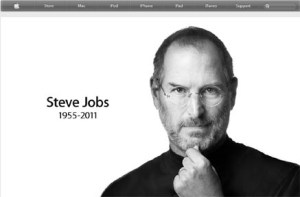
  • The passing away of Steve Jobs –perhaps slightly exaggerated as an ‘event’ (even on this blog!) But it made us consider how one man could have impacted so many.
  • Aung Su Kyi returned to the political arena, registering to run in upcoming elections

Human Microphones thwart heavy-handed bans

I’ve always been tempted to play with IABC‘s tagline, “Be Heard.” Do we business communicators really want to be the noise makers and talking heads? Or do we rather want to be the ‘inside voice’ of business strategy?

That’s why when I first began paying attention to the ‘Occupy” movement (OWS and its franchises  Occupy Oakland, Occupy Denver, Occupy Phoenix etc) I argued that we shouldn’t be too hasty to think of them as a fringe movement craving  just to be heard. Hard to pigeon hole, it was too easy to dismiss them because they didn’t fit the model of activist movements. I was reminded of  something innovators have reminded us from time to time. Disruptive ideas do not stem from existing templates. Marshall McLuhan put it well when he observed “I don’t know who discovered water, but it wasn’t a fish.”

Watching OWS evolve, it is interesting to see how they are inventing a  new template for being heard. Make that being taken seriously. They may be leaderless, but have found ways to have their own media team, financial system, and trademark bids. And I don’t mean media in the way we tend to think of it -the kind that come with a lens, a ‘like’ button, or segmented followers.

Much of the media we see being used in these movements are crude hand written signs.

When OWS group figured out that since electronic speakers and microphones are banned in public places (or require special permits) they created what’s known as the ‘Human Microphone’ –basically humans, en mass, repeating something a speaker says so that the sentences get carried across vast spaces of crowds. It sounds like a messy echo, but it is richer than the echo-chamber.

They have also begun another remarkable project in amplification: they are printing their own newspaper. Ok, that’s not new media. But it’s old media in a brand new way. (The fact that it is called, provocatively, the ‘Occupy Wall Street Journal’ may be a brilliant stroke of creativity.) But what really interests me is how they could do it with no real editorial hub, no newsroom, heck, no editor! (CORRECTION: See comment from Jen Sacks, below.)

There’s a livestream, of course, and someone who amounts to a news anchor.

How will this change media? Even if you’re not directly working in the media how this movement works with the groundswell will become one of the most lasting tutorials for anyone wanting to be heard.

“The world has lost an amazing human being.”

Hard to forget, the first PC I ever owned was the Apple Color Classic*.

But apart from giving many of us in advertising and marketing a simple (as in non-geeky) on-ramp to computing, we remember him for his vision, and his humanity.

I found this statement from him, made in 2005.

No one wants to die. Even people who want to go to heaven don’t want to die to get there. And yet death is the destination we all share…

…Death is very likely the single best invention of Life. It is Life’s change agent.”


*I have not used a Mac for the past 15 years. 

Hippies or hipsters protesting? Is it the seventies all over again?

‘Peace through protest’ may sound the flavor of the month, or at least the theme of 2011, considering that peaceful uprisings overturned dictators during the so-called Arab Sprint.

But it reality, this is just the old recipe, delivered to our table on new tableware.

I watched a History Channel documentary on Nixon last night, and just seeing the short powerful segments when they cut away to the anti-Vietnam movement across the country made me realize this. You could cut-and-paste the present protest on Wall Street. Except for the bandanas and peace tattoos of the seventies, the similarities are striking.

People are fed up with their politicians (81 percent of Americans are dissatisfied with the way the country is being governed; confidence in Congress has dropped). They believe that the best way to send them a message is to show up on the street with hand-painted signs and chants.

OK, so we do have web sites, Twitter hash tags (#occupywallstreet) and Facebook, but it is easy to give too much credit to the mechanical tools of movements.

  • It does help when Salman Rusdie helps out with a tweet.
  • It does help when there is speculation that the Nobel peace prize this year may recognize Arab activists.
The revolution will not be televised.   But just watching the images, and the live stream makes you wonder if the hipsters have taken notes from their predecessors.
But what does this kind of speech, and technique forebode? Watch!

Browsers will take Augmented Reality mainstream

Rory Cellan-Jones, tech correspondent at the BBC reports on how Augmented Reality is now available in public spaces such as Trafalgar Square.

It ends with a skeptical person saying what many have used before about new developments. The person, of course is one of the Ladygeeks, who says that ionly people with a lot of time to kill will use something like AR. I was immediately reminded of the 1943 comment, “I think there is a world market for maybe five computers.” That was an observation by Thomas Watson, who was the chairman of IBM, no less.

http://news.bbc.co.uk/player/emp/external/player.swf

While it is too early to tell if AR will go the way of Second Life, which became a nice experiment and somewhat fad, it is too early to write it off as pointless, or too geeky.

Especially with the new Augmented Reality browser, Wikitude, that has already started appearing in some smart phones. Before the browser came along, you could download an application such as Layar that works with the iPhone and Android.

You don’t need to be technically savvy to use interact with AR. The camera in a smart phone, laptop, tablet even iPod is all you need. The browser does the rest. Says Wikitude, “By using the camera, simply hold up your smartphone and explore your surroundings. Wikitude will overlay the camera’s display and the objects you look at with additional interactive content and information.”

Soon there will be many browsers, such as Wikitude. Another good browser called Argon was out earlier, and was developed by Blair MacIntyre, at the School of Interactive Computing at Georgia Tech. When that happens, it won’t be people with time to kill who begin using it. As organizations, cities, libraries, and media and entertainment companies begin to see the value in layered, augmented information, how we think of AR will change.

Activists know this: Posters are magnets for media coverage

Capturing a sound byte used to be a great way to thread a breaking story. News organisations such as NPR, or BBC for instance use the formula well. Some use it to balance a story, others, to tilt one in favor of a point of view it wishes to hold up.

Audio is also a great way to capture the ambiance of a particular environment. A machine grinding away on factory floor, a call to prayer from a far away minaret, children on a playground…

So why is it that the poster is suddenly making a comeback? It’s one dimensional, after all!

I think of it as a powerful tool not only because of what it says but how it is displayed. In other words, there is more contextual detail that surrounds a poster that adds to the story, even though it is a frozen moment. Two things come into play that make a poster powerful:

  • The image is at once analog (when printed) and digital (when photographed and preserved in a digital stream).
  • The message feeds a story because it tends to be connected to a human who holds it up, or a group of people in which it seems to be rooted

There is a third element – mystery. The unknown or un-clarified details take on greater significance, goading our curiosity, and our need to fill in the gaps of the larger story.

The protests in the past few weeks in Egypt  demonstrate this. From the simple pen sketches, to the large-font messages to the administration:


No face here, but the reference to another country adds a new dimension to political intrigue in the region.

Adding more context, a paper poster is just another element to counterpoint the heavy machinery around it!

Once upon a tree –powerful outdoor activism

What does this look like?

Sure, a dead tree. But what did it give up its life for? Hint: It’s part of an outdoor campaign for forest conservation in China.

You’ll never rip open a pack of chopsticks again, just to play with it in a restaurant.

I just can’t resist campaigns like this where words become unnecessary. The trees were made from 80,000 pairs of used chopsticks, and ‘planted’ in public squares.

However if you prefer words, interactive outdoor is so much more powerful than some of the boring, static billboards we see around town for business schools, restaurants, movies.  Check this out: passers by are encouraged to text in their message, and watch as the words get changed to display it.

A working model of ‘Social Capital’

I’ve been indulging in Wikis a lot this year.

I wrote quite a bit on the topic here and elsewhere, recently. And his Monday I was in charge of the wiki portion of what amounts to the launch of the first open source business development plan in Sustainability, for Arizona. More about this here.

So on Wednesday, when I visited Gangplank to get a better sense of this remarkable working environment I could not help notice the parallel.

If Gangplank is a piece of software, it would most probably be a Wiki!

It’s a a true collaborative space, whose ‘permanent residents’ (independent businesses) don’t pay rent, though they get to use the utilities, the workspace, conference rooms, wifi etc for no charge. Derek Neighbors, co-founder of Gangplank and our guest on the radio show this week, prefers to call this an investment in ‘social capital.’ It reminded me of another semi-financial term used in the book Groundswell –how collaboration earns a person ‘psychic income.’

But to get back to the topic of wikis, if you consider how much time has gone into Wikipedia –approximately 1 million man hours, according to Clay Shirky-– it is a model that works even among largely anonymous people. So of course it world work when you get a room filled with creative people.

Just step into Gangplank, and you’ll see a working model -or a ‘use case’ if you prefer another geeky term!