IABC Phoenix – Social Media Presentation

blogtitle.jpgIf you attended the Writers’ Group workshop on social media and blogging, here is the presentation. Thank you to the IABC, and Suzanne McCormick, for inviting me to speak.

I realize we sped through a lot of material, so please feel to contact me if you have any follow up questions.

Incidentally, if you are interested, my colleague Dan Wool spoke about the same topic on Wednesday at the PRSA luncheon. Dan has a wonderful perspective of social media. If you haven’t already, do subscribe to the RSS feed of ValleyPRBlog.

Should Obama brush off plagiarism, or “turn the page?”

Maybe Barack Obama did “borrow” words from Massachusetts governor. It brings up two interesting questions:

  1. How much of what we use in communication should we attribute?
  2. How fast should we come back and apologize?

He called it “too big of a deal,” but as recent history has shown us, plagiarism has been quite a deal. From Dan Brown (Da Vinci Code) to Kaavya Viswanathan (How Opal Mehtha got kissed…) to journalists who inadvertently use material without attribution.

“Certainly plagiarism can have degrees,” notes Steve Buttry. And in case you’re looking for attribution,it’s a quote from the American Press Institutes‘s web site, in an article “When does sloppy attribution become plagiarism.” He goes on to say, “For the most part, sloppy attribution is to plagiarism as manslaughter is to murder.

As Plagiarism.org suggests, it’s good to attribute:

  • whenever you use quotes
  • whenever you paraphrase
  • whenever you use an idea that someone else has already expressed
  • whenever you make specific reference to the work of another
  • whenever someone else’s work has been critical in developing your own ideas.

That the accusation comes from the Clinton campaign, makes sense. She is running out of brand differentiation, and will turn to the department of dirty tricks –even though she has lifted lines from Obama such as “Yes we will!” that echoes his “Yes we can!“The ‘academic’ rebuttal -explaining the circumstances of the borrowed words– is never good enough. Considering how anything you say in an election campaign can and will be mashed up, Youtubed and turned into a Swiftboat attack, this could be grave stuff.

Just apologize, and let’s “turn the page,” no matter who strung those three words first!

Social Media Resume –its about time

Today’s jobs find job seekers because of the profiles and filters they set up long before the job search begins. For HR managers, Google searches and the ability to look at social media profiles of potential candidates short circuit the time between making a short list and making a decision.

I recently had a great discussion with Mike McClary about the rising importance of a social media profile, and the declining returns of a resume. I had written about this for a student newsletter, and it was waiting to be expanded on. Mike, a podcaster, blogger and writer is deep into this stuff. We started calling this resume 2.0 phenomenon the “Social Media Resume” or SMR. (I know it’s gonna compete with the Social Media Press Release.)

The structure of a boring, chronological resume is trapped in the old media world, swirling with ‘resume words’ rather than key words, using chronology, rather than highlights, depending on hype rather than hyperlinks. Isn’t that really odd? It’s the equivalent of sending someone a fax of a print out of he storyboard of your award-winning video, when you could easily send her the URL on YouTube.

The SMR could be enhanced to include links, and new media element. But it’s not even about the layout. Your SMR could be a dynamic thing, a collective impression based on the digital tracks you leave behind. These could be comments on a blog, trackbacks to yours, a Twitter or Jaiku comment, a paper published in college, announcements in a hometown paper about your recent appointment to a board, a lawsuit (in your favor, hopefully), being named on a top ten list, or a book review on Amazon. I just stumbled on the fact that my technology column is picked up by Amazon, and appears in edocs. Amazing!

The old media resume doesn’t allow for this adaptation. Like branding in the 1.0 world, it was all about push, looking cool, and impressive. Personal branding in the web 2.0 world is all about the pull, and about the web of influence you have built around yourself through feedback, activism, networking and participation.

The resume has not been pronounced dead, but it is on life support. The SMR will soon fill its place.

That’s my story, and I’m sticking it in my social media resume…

Rewriting your job description?

The new media will rewrite your job description before your boss does. That’s the reality of many professions, particularly those connected to or dependent on information industries –and which aren’t?

Change is hard, and threatening. Digital culture is fraught with problems as I noted in my assessment of The Cult of the Amateur, but that does not mean we ought to fear or reject it.

Jeff Jarvis, a professor in journalism makes an interesting point (Fighting the future) about naive and dangerous thinking within J-schools right now, about the kind of experimentation newsrooms in print and electronic media need to indulge in to participate in the era of democratized content.

Most jobs today require collaboration and sharing, but digital culture is making us do it in newer ways. Almost every meeting I sit in includes a discussion about setting up a wiki. Photo sharing isn’t just for amateurs or for building albums to share with grandma. Many of the Pros are on to this. I found this picture (on the left) covering the recent California fires. It’s from a collection of images by Alex Miroshnichenko, a freelance photographer based in Southern California, who’s made them available on Flickr. In case you cannot recognize it, it’s a melted stop sign.

Speaking of sharing, Christopher Sessums director of the office of distance education at the University of Florida is someone who blogs on EduSpaces, a social networking site around education. His job description goes as: “Coordinating resources for faculty & administrators to produce online degree programs & courses.” But he refers to himself by two words: “change agent.” His thinking is indeed all about adapting to change, writing on topics such as the future of knowledge portals – how library web sites need to be a cross between Wikipedia and Amazon.

“Imagine a space where librarians upload mp3s, pictures (png, jpg), text (links to texts, outside sources/links), movies (mpg, mov, wmv). Associated with each file “pile” is a place for users/librarians to add comments, additional links, photos, user feedback/conversation.”

More like chief disruptor.

What does your job title say about you? Seat warmer or change agent?

Quotes for the week ending 28 Dec, 2007

“She was wearing a Rolling Stones T-shirt, the one with the sassy tongue sticking out.”
Syndicated columnist, David Ignatius, recalling the young Benazir Bhutto, as a cub reporter at Harvard.

“When we do foolish things, they come back around to bite you.”

Arizona Republic reader commenting on the ‘mistake” a Mayo Clinic doctor made in using a cell phone to photograph the tattooed “member” of a patient.

“We bring an energy-sapping debate to a close.”

Warner Music CEO, Edgar Bronfman in a message to employees about making available music in MP3 format on Amazon.com.

“They didn’t want to be part of the conversation; they wanted to be the topic of the conversation.”

Todd Defren on the bastardization of social media where a company like to mark off the check box, but unwilling to engage with people.

“Women must not only be presenting the news, they must be making the decisions that determine what gets broadcast in the first place.”

Katherine Rake, director of the Fawcett Society, commenting on a study that found under-representation of women in newsrooms.

“w00t

Merriam-Webster’s 2007 word of the year, voted by readers. The word, comprising two zeros between the letters w and t, is an interjection, an expression of joy similar in use to the word “yay,” says MW.

“I have been thrilled, and a little surprised, by the genuine disbelief that a cabinet level agency could have started a legitimate blog complete with criticism and contrary opining.”

Heath Kern, editor of Dipnote, the State Department blog that began in 2007.

Quotes for the week ending 8 Dec, 2007

“You’ve got one full inbox and an angry writer.”

John Biggs, at CrunchGear.com, on a post asking PR people to stop lying.

“You wouldn’t worry about Christmas becoming too commercial in Bethlehem – they couldn’t afford it.”

Graffiti artist, Bransky, on his use of his guerrilla technique to promote tourism in Bethlehem, as the city attempts to get more visitors to Bethlehem around Christmas. Bransky’s controversial “art” has included an image of a soldier being frisked by a little girl.

“His message was we should not judge color of skin, but content of character — artistic character.”

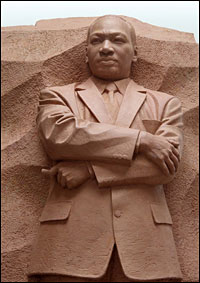
Harry Johnson, the head of the MLK Memorial Foundation, rejecting critics angry that a Chinese national was chosen to create the 30-foot sculpture of Dr. Martin Luther King on the National Mall in Washington, D.C.

“This is what happens when a startup gets a controlling PR belief system. Steve Jobs can pull that off. Not many companies can.”

Robert Scoble on Facebok’s silence about its Bad Beacon PR

“We missed the right balance.”

Mark Zuckerberg, apologizing for the feature in Facebook that made a user’s purchasing information public without their opting in for the service.

“attention Edelman, please train clients how to listen.”

Jeremiah Owyang, on his advice to Walmart’s PR agency, Edelman, with Walmart’s attempt to get things right this time. Edelman and Walmart were badly burned with a fake blog or flog last year.

Do you reveal your age if you don’t text?

There are two things that reveal your age these days. Do you wear a wrist watch, and do you use text messaging?

I thought about this when asked to contribute an article to a student newsletter last week, pondering what could someone out of college for over twenty years say to someone who prefers text messaging over talking on the phone.

I am not being cynical here. The kids we are going to hire, and ‘”empower” are more versed in some of the things we have no clue about, even though we have lots of anecdotal evidence that they don’t “get” Twitter, blogs and Wikis.

Heck, these are people who enter an annual event called the National Texting Championship. There’s a WIRED article on this, about how one thirty-something guy asked if he could use his cell phone’s T9 feature. He was booed.

In case you aren’t a texter, T9 is the ‘predictive texting’ feature (based on nine keys) that people-who-miss-QWERTY (us) think is cool, because it sort of guesses what dictionary words we’re going to use. At least two words in the preceding sentence would have stumped T9.

If you’re curious about my answer to the two age-related questions, it’s yes and yes.

Quotes for the week ending 24 November, 2007

“This isn’t a completely new business model; cellphone companies have offered similar deals for a while, but this is the first time I’ve seen this approach applied to mobile broadband.”

CNet review of Amazon’s new service claled “Amazon Whispernet,” to support it’s sleek new eBook reader called Kindle. The cost of wireless browsing books at Amazon is built into the product.

“Copywriters wrote copy. Art Directors directed art … But what’s also needed is the evolution of €”the next iteration. But what does this look like? An Information Architect who completely grasps Human Computer Interaction but can also think fluidly €”can do things like rapidly create prototypes, facilitate user testing, understand visual design and occasionally write copy. This kind of individual possesses a multi-dimensional creative brain that has evolved over time.”

David Armano, VP of Digitas, guest writing for Influential Marketing, a blog by Rohit Bhargava.

“We’ve always joked the holiday is like the running of the bulls … This year it will be the fast-walking of the bulls though because we have implemented a crowd control…”

Matt Maestas, manager of Target in Tempe, Arizona, on how the mad rush of shoppers would be managed on Black Friday, the day after Thanksgiving.

“The wireless industry can’t be an extension of the Internet because wireless bandwidth is finite. It’s a fixed resource, and it is shared bandwidth. The more people who use it in a given area, the less data speed they have.”

Andrew Seybold (on The Lehrer Rerport) commenting on Google‘s plan to enter the wireless industry. Google’s Eric Schmidt countered that this was the same argument made about the Internet years before.

Do portfolios matter?

How do you evaluate a Creative person you are about to hire?

I once told someone that the best way to judge a Creative is not from a portfolio, but to ask the candidate what’s on his/her wall space.

At the risk of being simplistic, I like to say that creative people fall into two categories. Those who put up project lists on their wall (so that they stay on top of things,) and those that have all kinds of stimulating material (so as to stay connected to things.)

Unlike a portfolio, that many of us maintain in analog or digital formats (or both,) a work space cannot be faked. At least not for a long time. The former displays a great sense of order: neatly stacked folders, pencils in place, and zero coffee stains on their desks. Also this: bland work. The moment you see “trophies” dominating the workspace you know there’s something else about the person’s work style. I’m not talking of awards on the filing cabinet, but framed artwork (of aforementioned bland work,) that shout “I’ve made this happen. Respect me. Kneel down before me..”

But there’s another kind of creative. The person who rips out an ad or a quote from Wired and pins it on the wall because it sparks something. Someone who brings back odd bits and bobs from a hike, a picture of funny sign, a made-up word from Seth Godin scrawled on a sticky note, a URL that he/she cannot stop talking about…

This is the kind of person I was reminded of when I came across this brilliant post by David Armano of Digitas about an “Information Architect.”

He cites Tim Brown of Ideo who calls this new kind of creative person a “T-shaped” person. Fits perfectly with my “portfolios are dead –giveaways” theory.

“We look for people who are so inquisitive about the world that they’re willing to try to do what you do. We call them “T-shaped people.” They have a principal skill that describes the vertical leg of the T — they’re mechanical engineers or industrial designers. But they are so empathetic that they can branch out into other skills, such as anthropology, and do them as well. They are able to explore insights from many different perspectives and recognize patterns of behavior that point to a universal human need. That’s what you’re after at this point — patterns that yield ideas.”

Empathetic. Universal. Approachable. If only the world had more of these types.