“Folks were tweeting 5,000 times a day in 2007 … Today, we are seeing 50 million tweets per day—that’s an average of 600 tweets per second”
Twitter blog, charting the popularity of micro-blogging that created a 1,400% growth spurt last year.
“That Wacky Mahathir!”
Headline of a post by the Hugh Downs School of Communications at ASU, on the statement by Mahathir Mohamed, former PM of Mayalsia (who said earlier this year of the US that “If they can make Avatar, they can make anything.”)
“This award celebrates the fact that, in today’s world, a brave bystander with a cellphone camera can use video-sharing and social networking sites to deliver news.”
Judges for the George Polk Awards in journalism who honored a work produced anonymously, in a new category (videography) the video, of Neda Agha-Soltan, the young woman who was shot during antigovernment protests in Iran. This was the first time in the 61-year history of the awards that an anonymous person was recognized.
“You won’t be set up to follow anyone until you have reviewed the suggestions and clicked..”
Google. in a blog post on the buzz about Buzz. It said the company had heard the feedback –outcry, really– loud and clear about what Gmail users thought of the new social media feature. Google immediately changed the ‘auto-follow’ model to ‘auto-suggest’ and apologized.
“misleading, confusing and disingenuous,”
Plaintiff’s claim against Facebook’s new privacy settings –in a lawsuit filed in US District Court for the Northern District of California in San Francisco
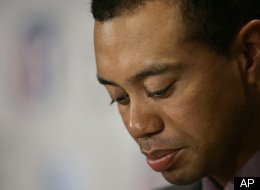
“My real apology to her will not come in the form of words; it will come from my behavior over time.”
“Ask etymologists who work for any common language dictionary … and they will tell you that all dictionaries cannot Prescribe means, but instead only Describe meanings that are already being ascribed through common usage.”
“For those who don’t find that good enough or revealing enough at this point, well, maybe they have their own issues.”
Michael Wilbon, sports reporter for the Washington Post about, commenting on Tiger’s apology, calling it ‘pretty powerful stuff.’
Russell-Oliver Brooklands, responding to a discussion in Melcrum’s Communicators’ Network (via LinkedIn) about the use of the word “fulsome”
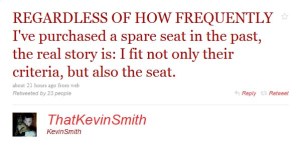
I am a big fan of Southwest Airlines, have talked-up and written about them before. So it’s confusing why this incident had to happen. (Variously referred to as the ‘too fat to fly’ snafu).
So while it was time Southwest explained what the policy was –a so-called ‘Customer Size Policy that they explained here — it was not winning anything. After-the-fact PR and damage control is not going to clean up the mess. United Airlines learned it very recently. Sure Mr. Smith has great tweets and some 1.6 million followers.
But you have to assume every passenger is a Kevin Smith with a network, and a voice, and an audience, even if it is an audience of a few dozen followers.
“Right, I think I’ve got it. It’s a mixture of Facebook’s more intimate networking and Twitter’s broadcast style.”
Rory Cellan-Jones reviewing Buzz, the social application from Google
“It is not the first time Google has tried to launch a social network.”
BBC.co.uk on Google taking on Facebook and Twitter
“Ashton Kutcher, who is famous for being married to Demi Moore, who is famous for having been married to Bruce Willis, is its high priest. This is the avatar of our new global culture. Wow.”
“I’m not tied to the term “citizen journalism … it’s going through an evolution. We’re just adding another voice.
Amra Tareen, CEO of Allvoices.com a citizen journalism who says that that in this period of displacement in journalism, the community judges the value of content.
“The whole country watches the Super Bowl, the whole country knows the score, and we get it wrong? Preposterous. Unbelievable. Embarrassing.”
Dennis Finley, Editor of a Virginia newspaper, the Pilot, on accidentally publishing a story that had probably been a placeholder for a possible win by the Colts over the Saints.
“Your paper makes a HUGE error and I am supposed to pay you $79 for a corrected framable(yes I am a Saintas fan)version!”
Reader responding to the Editor who also wrote that the the ‘error’ in question, in print, could be ordered from the web site for those who buy sports fronts suitable for framing! The reader continued: “Do the accountable thing and make the reprint available for free..I know when pigs fly right. WHO DAT!”
“Now, we all know that whether someone liked or disliked a spot is a bad proxy for effectiveness.”
Michael Learmonth, in AdAge, commenting on the high popularity of Google ad than ran during the Super Bowl –popular among among online audiences, that is . He also noted that “online popularity can start to wag the dog offline.”
“What people need to understand is that Forrester is an intellectual property company, and the opinions of our analysts are our product. Blogging is an extension of the other work we do — doing research, writing reports, working with clients, and giving speeches, for example.”
“Aren’t we all already swimming under copious amounts of status updates and shared media coming from services like Facebook, Twitter, LinkedIn, MySpace, Foursquare, etc.? Do we need another social filtering system?”
Jesse Hempel, at Fortune, underwhelmed by Google’s Buzz.
In this episode I interview Mara DeFillippis, CEO and founder of the Green Chamber of Commerce, who talks about her take on the Triple Bottom Line –she puts Profit befiore Planet and People, for a good reason.
Anyone dabbling in communication tends to stoop at the altar of speed and instant gratification. They seem similar, but they are not. Speed of response or implementation is a critical component for some organizations, some industries.
Speed, in today’s world, is a given. If you’re in customer service and you don’t respond fast to an inquiry, you lose a lead. If you don’t respond to a complaint, you risk turning a small hiccup into a major snafu.
Instant gratification is a different animal. We gloss over what it really involves by regarding it with such clicles about ‘delighting the customer’ etc.
But what I am interested in is a hybrid of speed and instant grat. Especially the ability to deliver targeted information to mobile devices, since we are beginning to use our phones not just as lap-top replacements, but as a means to interact with content related to our professional and personal lives.
Custom QR code I created for Public Radius
That’s why I like the idea of Quick Response Codes – QR Codes. I covered it in a recent column for a magazine (IABC’s Communication World).
If it sounds too geeky, it’s not. Actually it’s more user-friendly than a typical bar code. Unlike a bar code you embed it with information that is linked to content you point it to somewhere on a server or blog. That content could be any digital file, such as a PDF, podcast, video or photo album.
Updated: The QR code on the left is something I created for my company, Public Radius. Many of these codes can be photographed by a cell phone that seamlessly connects the device to content. Some of them require an initial download of an app. Some work without it –like a short code.
So many Super Bowl ads, so little attention to go around. I’ve always been saying these ads are a total waste of time. Do you really care if the Clysedales didn’t appear in a spot? (Apparently we do. They polled that question -and created a Wikipedia entry for them. Really!)
So, speaking of polling, I have to say that the $130 million Census campaign –never mind the cost of making the Bowl ad– is worth a second look. Especially with the cost of running the ad being in the neighborhood of $2.5 million.
“We’re advertising again,” the Census chaps say, observing what we all know that the Bowl is “rare, in that viewers are just as tuned in to see the commercials as the program itself.”
And yes, there’s the media-relations effect: Run the ad, get editorial comment. The famous carrot that says viewers will rush online once they watch the ad, because it that’s how TV –practically on life-support, tethered to the Net –works today.
But after they dispense with the popular wisdom about buzz and multiplier effects (perhaps after so many meetings with its agency, DDB) they note in true Census-boys style that “If just one percent of the folks watching the Super Bowl had their minds changed to mail back a census form they would have otherwise ignored, it helps save the taxpayers between $25-30 million in expensive follow up costs to collect these forms later.”
???
Translation: Watch ads, adjust your attitude toward being asked personal questions, save the country a boatload of cash, help us pay our agency.
I get that, Department of Census. No need to repeat this point about 3 times in your blog and press releases.
Yes, I mentioned a blog. This is where this campaign gets interesting because the obscenely expensive ad is supported with richer slices of content, some of which is embedded in social media channels. I like the fact that the Director of the Census is blogging, that there’s a Road Tour Blog and lots of space devoted to answering the questions people ask that make of break a census. The Flash site may be a tad too addy, but it documents stories, a la Story Corps, of ordinary people. The YouTube channel has plenty of video outtakes. The Flickr site has snapshots of an America few of us see every day. This one on left is supposedly at a Lutheran Church in Richmond, California. Thai dancers! The 5,000 fans on Facebook must mean something. and there’s Twitter just in case you miss all other channels.
So with all of this content so well thought out, is the cost of a Super Bowl ad really worth it? I liked the ad, but the greatest ad is not worth being tossed into a space filled with products and services that only seem to lust for eyeballs and water-cooler talk.
There are plenty of other ways to get buzzy, even if that was the objective. As Erik Qualman observes, why not use Facebook and Twitter to GET people to answer those darned 10 simple census questions, and not be entangled in “a $340 million boondoggle“? Because that not feasible, why not use social media to incentivize people to fill out their forms. If the media-as-a-repeater argument is important, why not let 300 million people start something that the media will talk about. (Rather than feed this controversy.)
Once again I’m working on a story about how journalism is getting bolder in its experimentation with new media. Not just looking for new ways to distribute content, but for creative ways to provide us with richer context around stories.
So much has been taking place in blog-like, search-enhanced journalism that’s it’s almost becoming a standard.
“Reverse Psychology: Chinese Knock-Off Firm to Sue Apple Over iPad”
Fast Company, on Shenzen Great Long Brother Industrial company claim that the iPad is a knockoff of its P88 model, presented six months prior at the IFA
“It’s time to find your voice and get an online printing press.”
 “Folks were tweeting 5,000 times a day in 2007 … Today, we are seeing 50 million tweets per day—that’s an average of 600 tweets per second”
 “This award celebrates the fact that, in today’s world, a brave bystander with a cellphone camera can use video-sharing and social networking sites to deliver news.”
 “My real apology to her will not come in the form of words; it will come from my behavior over time.”
 “The whole country watches the Super Bowl, the whole country knows the score, and we get it wrong? Preposterous. Unbelievable. Embarrassing.”
 In this episode I interview Mara DeFillippis, CEO and founder of the Green Chamber of Commerce, who talks about her take on the Triple Bottom Line –she puts Profit befiore Planet and People, for a good reason.
 The YouTube channel has plenty of video outtakes. The
  Once again I’m working on a story about how journalism is getting bolder in its experimentation with new media. Not just looking for new ways to distribute content, but for creative ways to provide us with richer context around stories.
 “Was he a talk-show host masquerading as a politician? Or a politician masquerading as a talk-show host?”
 Hoipolloireport