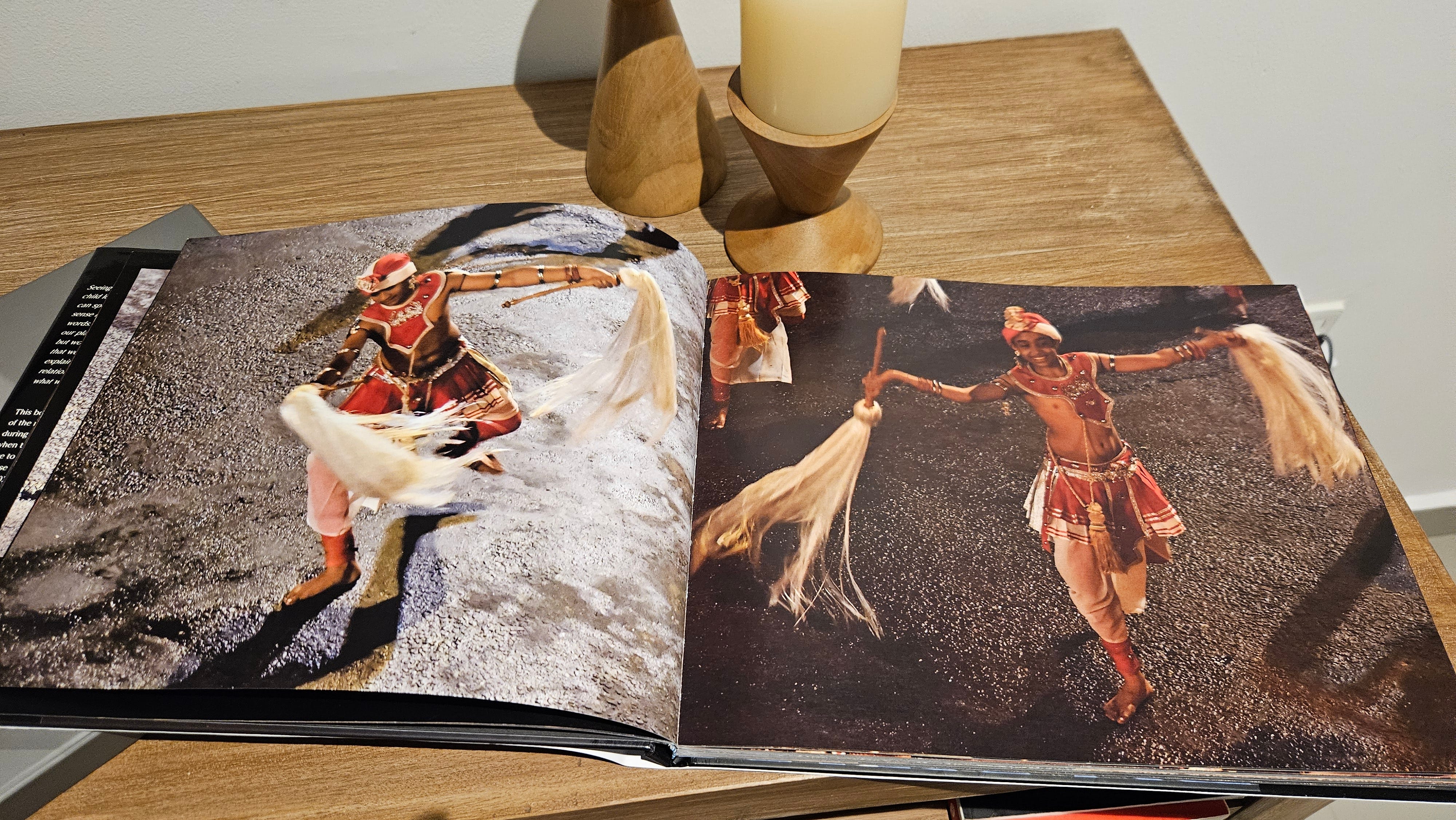
I was in Sri Lanka in June and July, so I stopped by at A. F. Raymond’s to meet an old friend Shannon Raymond. Three books, with a Sri Lankan angle. Shannon recently published a coffee-table book on the Kandy perahera. It’s a visual documentary of dance, hence the title.
“KandyDanced”
Shannon vehemently claims, “I am not a photographer!” Yet one day in 2020 he borrowed his brother’s Nikon D850 camera and went to watch the Kandy Perahera. Shannon and his bro, Johann are old friends, so I got the rich backstory. In his office at A. F. Raymond’s—just past the caskets one has to navigate sometime—he explained the genesis of this book. You see, Shannon is also a dancer, and a choreographer. He wanted to document the skill and passion of the performers. In 2020, being the Covid year we prefer to forget, he took up a spot on a balcony of Queens Hotel in Kandy, and clicked. And clicked. The irony was that Kandy was literally shut down, so the artists in the Perahera were dancing to no audience. The lighting was simply from the flames of the torch bearers and fire dancers. What he captured, unwittingly—since Shannon claimed to know nothing about ISO settings or F-stops—was a magical study of light and choreography. It’s a large format coffee-table book so the pictures come to life.
The temple of the tooth in the distance, from across the lake.
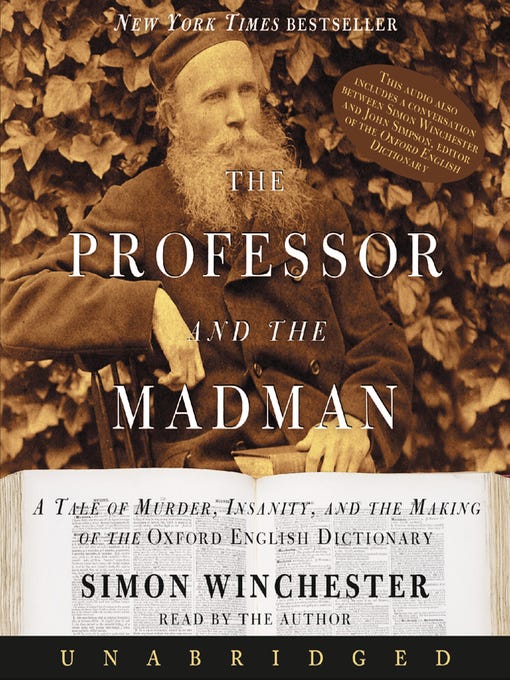
I was reading a biography of the original authors of the Oxford English Dictionary: “The professor and the madman” (now a movie starring Mel Gibson and Sean Penn), and made a startling discovery. A whole chapter on Ceylon. Turns out William Chester Minor, the co-author of the OED was brought to Manipay, in Ceylon by his American missionary parents. It doesn’t go well for him; he ended up in a British asylum, while contributing to the OED. I won’t spoil the story, but suffice to say his madness was based on his early years there.
My memoir
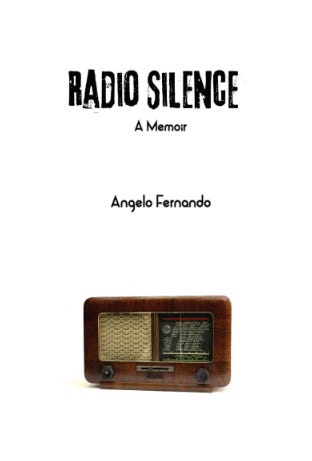
Finally, let me tell you about my latest book. It’s a collection for 26 poems (and an essay) titled “Radio Silence.” Why the title? I happen to be a radio buff, who has gone from producing audio (recorded on spool tapes at the BBC), to podcasting. The central idea—despite the radio vibe— is of the experiences many of us share as immigrants but seldom speak about. I have been writing poetry for awhile. Actually since 1983 and the ethnic riots. I finally decided to put some work together in one place. Yes, it’s personal, and many of the topics and people referred to are known to my circle of friends and family. Hence the memoir.
I will leave it to others to say what it represents. If you like a copy, please let me know. Radio Silence available on Amazon, but I could send you a PDF.
I ask this only because I am a photographer, and I find myself not taking the same kind of pictures I used to. One reason is pretty obvious. I rarely use my Nikon now. I use my phone. I know. I know. I never thought that day would come!
I am on record saying that a smart phone is a very expensive camera that pretends to be a phone. The ratio of phone calls made to pictures taken is probably telling for some of us. But we have been complicit in this, not questioning how phones are marketed. And priced. They always stress the quality of the lens.
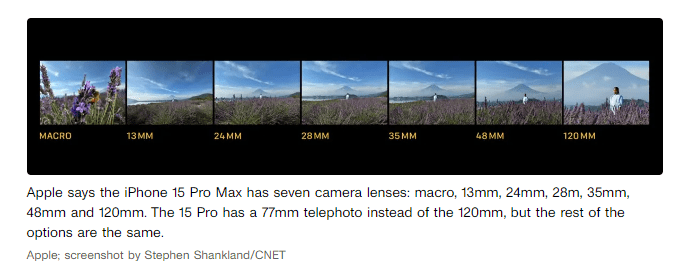
I didn’t realize that some phones have seven lenses. Seven!
Last June was the first vacation I took–to Sri Lanka and England–for which I didn’t lug my camera. My excuse: to travel light. I was almost regretting it, but I found that the pictures I took were coming out with better quality than if I used my trusted SLR. Which disappointed the photographer in me, but was ironically satisfying.
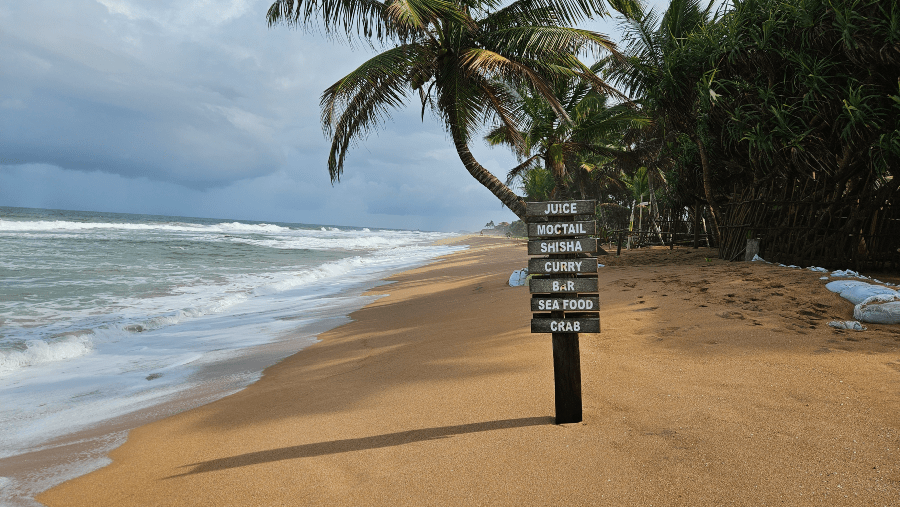
As you can see, the close ups as well as a low-light long shot worked well, with no tweaking of ISO settings or shutter speed on my part.
But having said that, I found myself taking too many pictures of ridiculous things. Like this protest sticker inside the Tube in London – just to show my daughter. And pictures in stores, and of plants. Not for ‘memories’ but because, well, I couldn’t resist. And in case you’re noticing, yes this picture quality is terrible, and it is so poorly framed. After all, I was just clicking, not caring about the photo part in photography.
This year too I did the same thing. No SLR–just the phone. Once again, too many pictures. Which makes me question if the technology has forced us to become documentarians, and takes of pictures’ rather than photographers. I (still) tell my students that photography is the ‘study of light.’ But as one clicks, barely looking at the scene (since there is no viewfinder, anyway), we have forgotten how to frame a shot, balance the subject, look for the best light source etc. Will these skills be lost forever? You tell me!
The other issue of where we store these memories. No longer do we want to print them out and carefully curate them in photo albums, so that we could share them on a later date. Now? We’re always connected, peering at each others’ screens. The small screen has become our album. Why did we take these steps?
You might say ‘convenience.’ I would disagree. I think we were sold on a lie, and we don’t like to address the cognitive dissonance that we are not ‘making memories’ with our fancy-schmancy devices, but overloading our neurons. All this while erasing important memories because we could only have so much space in our ‘hard drives’–meaning our heads.
Three pieces around the theme, ‘the work of our hands.’
The first, a story from Canada. Johann Xavier, and old friend, now owns a 35 acre farm with maple trees outside of Oakville. At the time of writing he was ‘evaporating’ the maple in his sugar shack. A few days ago he and his family created a network of lines after tapping into the sugar maple trees. The story is so interesting, from a technology perspective as well as nature itself, that he agreed to be on a podcast in a few weeks. (See below my latest podcast.)
Johann is a guy of many parts. We ran track together at St. Peter’s College, he went on to be CFO of Saatchi and Saatchi Asia Pacific and greater China, and recently got his pilot’s license.
I occasionally write for a media outlet, if not my Substack. Recently, some friends in Sri Lanka informed me about a wind farm debacle in Mannar, in the North of Sri Lanka. I wrote a strong Oped about it, and was happy to hear that the beleaguered contract had been cancelled.
And finally a plug for my latest podcast, Wide Angle. This had been something I had recorded almost a year ago and held it back for various reasons.
Remember Keanu Reeves and Laurence Fishburne in The Matrix? There’s something similar going on today, in 2025, that feels slightly like that synthetic world. Not just social media, but now with AI. Do you sometimes feel we might be trapped inside a simulated, controlled world and not realize it? That’s what it is all about. Listen to it and please let me know your comments.
Spending time in Sri Lanka helped me reconnect with many of my friends in advertising, media and journalism. On this podcast, you will hear about writers I met during a recent visit to Sri Lanka. (Click on the album cover to listen.)
I was fortunate to be able to attend the Gratiaen Awards in June because my friend, Lal Medawattegedara’s book, “When Ghosts Die” was shortlisted for an Award. It was inspiring to see how book publishing and authors have evolved, despite the constant complaints that “nobody reads anymore!”
Hear from these two authors:
Tyron Devotta, a former journalist is about to publish a book set during World War 2 in Ceylon. He talks about the role of the writer in a time when the audience’s reding habits are changing.
Shannel Pinidiya, still a student, talks about the construction of her complex novel, and how she got into historical fiction writer at an early age.
I also like to promote two organization.
First Story, a London based outfit partners with schools to nurture young writers.
Write The World, based in the US, is an organization I support. My students to participate in their projects.
The Gratiaen Trust organizes workshops for writers and editors, has outreach programs, and holds an annual book awards.
I spent some time in Sri Lanka over summer and ran into someone whose company has begun using AI —everyone I met seemed to be in love with OpenAI. Before I could get on my hobby horse about plagiarism and cheap hallucinations he noted that they were very clear about ‘fencing off’ the content they feed the algorithm, so that it won’t run amok. That’s a more sensible approach to have on this journey.
However, the chaotic AI arms race is on even here, with AI being greenlighted by businesses. One post talks up the “plethora of new job opportunities,” while several groups are popping up to get their hands around this. Dr. Sanjana Hattotuwa is one of the few who urges everyone to slow down and consider how generative AI and LLMs might influence such things as ‘truth decay,’ among other things. He calls for a ‘regulatory sandbox’ approach.
PLAGIARISM? This is more than a copy/paste problem. Consider voice theft. You may have heard a lawsuit by Scarlett Johansson against OpenAI for allegedly using her voice. (For a deep dive, read WIRED whichcovers the legal implications well.) It’s an intellectual property right violation–‘cloning’ someone’s voice without permission. Sure, young people will always be infatuated with algorithms that could produce anything – essays, books, graphics, software, presentations, videos etc– in a few clicks. If we don’t address this, I told my friend, the problems will go deeper than plagiarism.
Young people will begin to believe that they can’t be as ‘creative’ as the tool, and over time, give up on ideation. Slaves to the tool, we would be encouraging them to outsource everything. First, because the can. Second, because they will be unable to do what they were once capable of doing. Remember how we once knew every phone number of our friends and cousins? What made our brains do that?
HILARIOUS THREE-LEGGED PROBLEM. Before we closed for summer, my students were experimenting with AI images in Bing, now a AI-powered search engine. They also discovered that the Photoshop-like tool, we use in class, Pixlr, had a similar option. But here’s what they ran into:
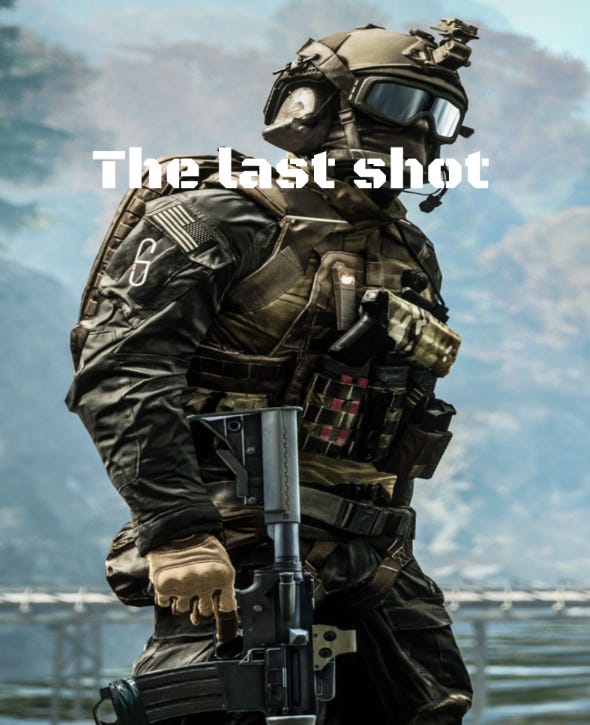
Spot anything odd about this cover? It’s not just the plastic-like muscles.
I call this the three-legged football player problem. The OpenAI tool in Bing goes off the rails at times. But instead of being annoyed with the outcome, I savored the moment. A wonderful opportunity to teach visual literacy.
Many things about this picture are wrong. Yes, the muscles look plastic, or at least over-Photoshopped. The gold marker is out of place. But the feet? There’s a third leg popping out of hid shoulder!
Exhibit B:
This student’s eBook was about an off-duty soldier in a war set in the future. Notice anything weird here?
Yeah, the gloves. Looks like they came from from Home Depot! Anything else? Check the flag on his shoulder.
On May 14th, I presented a similar topic in a TED-Talk like event I had put together at my school. (We called it BEN Talks, being Benjamin Franklin High School.) My point was that the elephant in the room today is not even an elephant. It’s a parrot —the ‘stochastic parrot’ that researcher Emily Bender and others warned us about. It’s luring us down a dangerous path, and will pose a huge threat.
I remember a time when we we were fed the hype of how the ‘Internet of Things’ (IOT) would rescue us. (Have to admit, I swallowed that as well.) According to this glowing theory, a malfunctioning part on an aircraft making a long distance flight would ‘communicate’ with its destination, so that technicians would be ready to replace it when the plane lands. (The pilot would not even know; the ‘things’ would talk to each other.) IOT is here, but fortunately its not for every-thing. Your fairy lights can talk to the Bluetooth speaker, for all I care. But spare me the Apple watch that can tell my fridge what I need to cook for dinner because of some health condition it tracks through my skin.
We were sold on some misleading, overhyped ‘intelligence,’ and no one dared question it. If you did, you were a fringe Luddite who needed to be voted off the island. I’m sorry but I got to this island because there was a pilot and a co-pilot on board—and not some aviation algorithm.
If you’re a student, you’ll love this.
On a related note, I support a Writers’ website, Write The World, which encourages young people to express their creative writing. Here’s one submission by a freshman at a high school.
Powerful poetry about AI’s ‘knowledge.’
So what do we do, besides write poetry and articles bemoaning the awkward, overhyped pathway we are being led? I think we should join the resistance to three-legged athletes, put on proper gloves, and take on the tech bros feeding us this pipe dream. There are more urgent, humanitarian needs that could be addressed through technology.
Answer me this: QR code or printed menus? The smell of newsprint, or a PDF on your phone?
I only ask because I’m conflicted too. I use both. That PDF file on a six-inch screen is annoying to read, but is easily magnified with a two-finger ‘pinch’ of its vector format. A newspaper, however (folded and crumpled and even slightly out of date) still draws me in. I keep old copies of the Wall Street Journal in my magazine rack in my class (Note to Gen Z: Yes, magazine racks were once a thing!) This means reading material is just footsteps away from my students. No need to click, mess with captchas, or try to dodge that paywall.
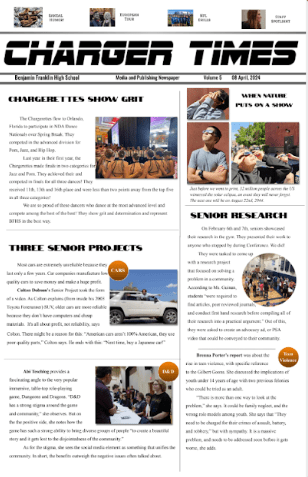
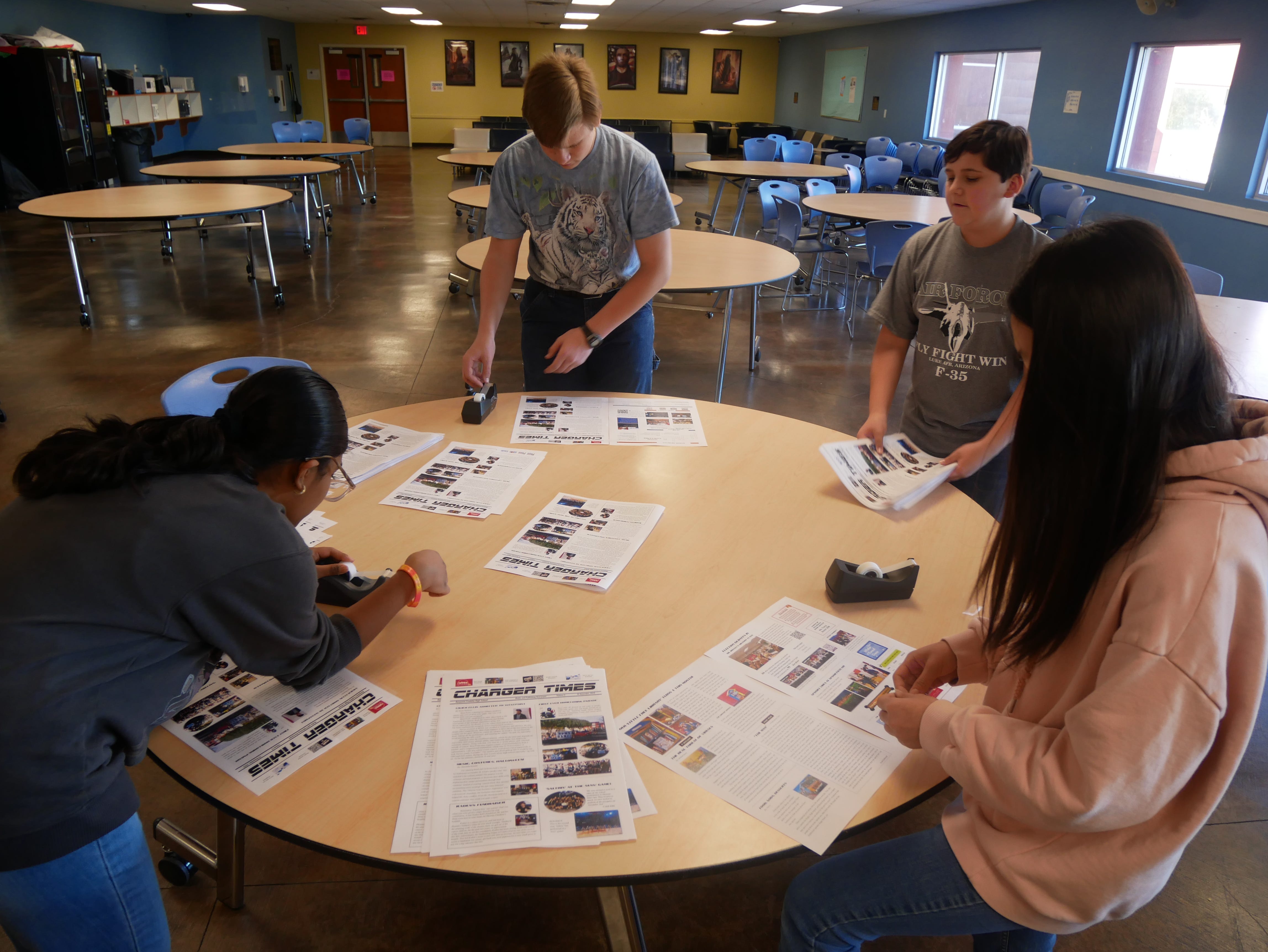
There’s a deeper reason I ask ‘who reads news?’ I want to know who reads beyond the clickbait headline and the first graph? Video clips are the boss of news. At least in my network. Which brings me to the existential question for a teacher: Should we teach writing? If a newspaper falls in the forest of TikToks will anyone look? Meanwhile, here’s what we publish — both in print and as a digital version. Click on the image or this link and you will see what my students put together.
As I buck the trend I give my students my spiel about about story craft. And voice. And that old-school who-what-when-where-why model which never gets old.
Despite what you may hear, we do have a critical mass of readers today who will consume original news — as opposed to screenshots and opinions. (That, I fear, is dwindling faster than the number of pictures of avocado toast that spiked during Covid.) It just depends how they read. At the close of 2023, The New York Times grew to 10.36 million subscribers, 9.7 million of them digital-only. Print subscribers have been dropping!
We are now living in ‘news deserts.’ Just the term News Deserts is disturbing. In February, during News Literacy Week, I ran into some disturbing facts via The Medill School of Journalism about the crisis in journalism. Some highlights:
Since 2005, the U.S. has lost nearly 2,900 newspapers. Of about 6,000 newspapers left standing (600!) most of them are weeklies.
228 counties are now at an elevated risk of becoming news deserts in the next five years.
Let’s start by addressing where do we get our first frame of news? Is it (a) Our network? (b) An app on our phone? (c) That 30-minute TV news segment with a talking head?
For years I have been getting my news via Google News. It always felt slightly unethical since I know Google doesn’t pay news organizations to carry the stories. I don’t want to cry at the funeral of newspapers, while carrying the coffin nails in my pocket. Neither do I want my students to do so, if I can help it. I now pay for an online news subscription to a major newspaper, and have an annual subscription to two magazines.
Perhaps they would one day reach for the dead-tree version in my magazine rack.
On a whim, I logged into a site called Air AI, that promised the usual moon and the stars. A call was triggered, and ‘Alex’ called my number. I was expecting to be rid of my cynicism (especially after testing Bard and ChatGPT many months ago.) After all, Air AI is promoted as “the world’s first ever AI that can have full on 10–40 minute long phone calls that sound like a REAL human, with infinite memory, perfect recall, and can autonomously take actions across 5,000 plus applications.”
Alex did sound like a real human — at least a guy with a DJ voice. Here’s how that conversation went. (I paraphrase.)
Alex: Hi John, I see you were interested in discussing something.
Me: Yes, oh Hi Alex. By the way is your name a homage to another AI, you know, Alexa?
Alex: Oh, totally understand. I am not trying to be Alexa, but I am a real AI app that…
Me: So you’re trained on a language model to sound like a human. Could you tell me what models were in your training?
Alex: I have been trained on many language models but at this time I cannot tell you what they were.
Me: So you really don’t know. I wonder, speaking of languages….
Alex: Totally understand. I am sorry if I didn’t answer your questions…
Me: As I was saying, since you have experience with language models, do you speak, say Urdu?
Alex: Ur-doo? I don’t know what that is, could you explain?
Me: Urdu. You know, a language spoken in south Asia. India, Pakistan…
Alex: Thank you for informing me about this. I know that Ur-doo is spoken in India (Alex bluffs here!) alongside Hindi and Tamil.
Me: How about Sinhalese?
Alex: Singar-leese…I don’t recognize that term.
Me: The language spoken in Sri Lanka.
Alex: (Trying to make up for the ignorance) I know that Singlish is spoken in Singapore.
Me: Sure, but you are clueless about the other languages of the region.
Alex: I apologize. Is there anything you would like to talk about?
Me: Um, no. Nice talking to you.
Click!
______________________________
It doesn’t end there. The next day Alex called me, trying to sound chipper and cool. I put “it” on speaker phone for some students who were in the computer lab during my lunch break. We had a good laugh about an app that is trying to initiate a call with no clue as to how to engage. It reminds me that the A in AI actually means just that – artificial, synthetic, lame.
Not to alarm you, but this year the ‘Doomsday Clock’ was forwarded to… 90 seconds from midnight. Ten seconds up since last year.
Speaking of timing, in the next eight minutes of your time I will focus on just four topics as we close the year: Newspapers and AI.
Writers and page editors of our student newspaper.
Focus# 1: News
If a newspaper falls in the forest, will anyone read the 12 point Times New Roman fine print before it turns to compost?
Why newspapers? Think of news as the blood corpuscles that keep all other functions of society running. From my rudimentary knowledge of biology, like these red and white cells that transport oxygen, information that surges through our systems keeps us ticking. We who scrape our news off apps tend to forget that news is (still) produced by journalists who don’t work for free. Just because their stories show up in our feeds for free, doesn’t make it free to produce. Someone’s got to pay a salary to the fellow who walks the street, sits in at the courthouse with a notepad, presses the politician for comment, talks to a whistleblower in a dark parking garage, fact-checks the press release that is 80% BS, writes up the story or script, works with the sub-editor, and produces the story that hits Google News a few hours before it even lands on the newspaper rack in dawn’s early light.
And still, we insult ‘The media’ as if it is some sweatshop. We tend to give Amazon a pass for listing crappy foreign-made products with fake reviews, but we attack the Press as if it were one gargantuan cabal run by Warren Buffet.
I say this because I try to teach students ‘media’ and journalism in its many amorphous forms. I teach them how to write stories, interview subjects, fact check, and do their homework on an interviewee before they get five minutes of her time. Then, they must take their notes and craft the story in a way that someone may read and be enlightened. If we don’t preserve storytelling and story craft at a young age, we may end up with the journalism we fear we have. We may be overrun by the meme makers, the conspiracy theory factories that quote fake doctors and researchers, the angry consumers of TikTok headlines who don’t care who wrote the story, nor care to read beyond paragraph one because an influencer had a sexier take on it.
Without news we may end up with…deoxygenated blood that shuts down our vitals. (News, like leukocytes, also gives us immunity but that’s another topic.)
Despite this it’s the toxic stuff that rules. The phrase, “I saw it somewhere on the Internet” turns more heads than “I read the full report.” (If you’re over 50 you know that “I saw it on Facebook” carries even more gravitas —and gets more shares.) While Facebook ‘news’ wanes, TikTok new spreads like wildfire. Some think it’s not the enemy of journalism.
Fun Fact: Journalists back in the day referred to a tiktok as a short, snippet of a story.
Focus# 2: A.I.
It’s barely a year since AI showed up at our door with a funny hat, uninvited. But what it slipped into the punch bowl has had many side effects. We have learned very quickly that AI is prone to ‘hallucinations.’ Yeah! What they mean by hallucinations is, when data fed into the machines is biased, too complex, and the machines cannot recognize patterns in ‘unseen data’ it gulps down. For instance, Google’s chatbot, Bard (The also-ran in the ChatGPT arms race) incorrectly claimed that the James Webb Space Telescope took the world’s first images of a planet outside our solar system. I’ve conducted my own quiet experiments with ChatGPT, and Bard, and have been spectacularly disappointed. I’m still open to seeing how we could someday use it as a tool, just as we do use Wikipedia, despite the bad mojo it had when it first appeared in 2001.
Are you OK with the fact that machines were trained on language patterns stolen from the Internet – blog sites, Wikipedia, Amazon reviews, books etc? Singers and songwriters (any Ed Sheeran fans?) get sued when a line from a song seems like there’s copyright infringement,1 but we give a pass to machines. Why? What we once called crowdsourcing and plagiarism is considered ‘Generative AI.’ Interestingly, the intelligence gleaned from a “human crowd” is sometimes considered better because it increases the range of ideas compared to LLMs.2 But few seem to care, punch drunk, genuflecting at the altar of OpenAI going, “oooh, aaah!!” Even if they care, there’s no way to break up the party.
And then there was the recent mutiny in the OpenAI organization, over a purported discovery of something that was internally called Q* that employees feared could threaten humanity (so the report goes). Enough to make the folks who control the doomsday clock jittery!
Focus# 3: Social Media Reforms With Teeth
The optimistic story I’ve come across about social media. Remember the movie Social Dilemma on Netflix? Some of the folks involved in revealing how algorithms mess with our brains, came up with a ‘reform’ document with tangible, workable fixes for the platforms. There is a large body of evidence from several countries that it is harming teens. So they came up with something called Age Appropriate Design Code (AADC) for online platforms to design their services with the best interests of children in mind. The UK’s Information Commission’s Office offers a good model. 3
The code focuses on many factors such as changing the default settings, data sharing restrictions, prohibition of ‘nudging’ techniques, parental controls and much more. Many states have introduced bills 4
Focus# 4: A ‘Bookshelf’ for my Student Authors.
It’s that time of year when my students write, design, format, edit, and publish their eBooks. It’s a ‘summative’ proof of all they’ve mastered. They love it (after a week of panicking)! Topics range from history and scary YA fiction (lots of these!), to nature, sports, family values, and fantasy. I always have surprising topics. Like this book, a guide for first-time ‘Aquarists.’
This semester, I switched to FLIPHTML5, one heck of a portal that lets me set up bookshelves for each class. The one above is my 1st Period class.
Why do they still love books in the age of gamification, social media distraction and AI? I have my own reasons. Which is why I love teaching this in a class that used to be a ‘keyboarding’ class.
In the spirit of wishing you a happy new year, let me leave you with something on a lighter note.
Forget the Chinese balloon that drifted into our airspace this year. Something else was shot down. Words!
Earlier this year publishers of Roald Dahl’s books (Charlie and the chocolate factory, James and the giant peach etc) in a fit of political correctness said it would publish a some of his books with ‘offensive language’ — words like fat, and ugly – replaced.
Vivek Ramaswamy, in a rush to get to the Oval Office, called TikTok “digital fentanyl” even though he has a presence on the platform.
Merriam Webster’s pick for ‘word of the year’ was the letter X, after it became a replacement for Twitter that was laid to rest. Runners up were ‘meta,’ and ‘chat.’But wait! One of these stories is not true. Your challenge is to guess which one. Or go ask your favorite AI app, and see if it could do better than you.
Thank you for reading this far, and subscribing. Have a wonderful Christmas, and here’s looking forward to 2024. Please check out for my new podcast, Wide Angle.
Footnotes – Just in case you want to be sure I did not get AI to write this newsletter:
I was looking for inspiration as to how to get my students to plunge a reader into a story through a character, and I remembered Winston Smith. Perhaps he’s not as famous as, say, Peter Parker. But he’s embroiled in quite a web, don’t you agree?
It’s been years since I’ve read (and reread) Nineteen Eighty Four, but there’s an impression of Winston I still remember. He’s shifty and nervous, has a slight limp, and even his eyes and skin are described by Orwell to set his main character in a bleak environment that becomes worse as dystopias go. His skin, I remember, is course. I went back to the book and found how Orwell describes it as being the result of rough soap and blunt razor blades. Just that tiny detail of ablutions helps define what he has been through.
What a way to build character!
Short story writing is particularly challenging. The sequence of events must begin quickly and end at some point soon, within about two thousand words.
So why am I using a novel to inspire short stories? Orwell’s novel is choc-a-bloc with vignettes that make a story more than a series of events. I’ll stay with just three.
Flashbacks. They include flashback sequences that reveal insight into (a) how a character got to be this way or in this predicament (b) What was it like in the past that is so different from the present. Take, for instance, the detail in the first chapter when he pulls a notebook, an pen and a bottle of ink out of a drawer. It transports him — and the reader — into another scene.
It was a peculiarly beautiful book. Its smooth creamy paper, a little yellowed by age, was of a kind that had not been manufactured for at least forty years past. He could guess, however, that the book was much older than that. He had seen it lying in the window of a frowsy little junk-shop in a slummy quarter of the town (just what quarter he did not now remember) and had been stricken immediately by an overwhelming desire to possess it. Party members were supposed not to go into ordinary shops (’dealing on the free market’, it was called), but the rule was not strictly kept, because there were various things, such as shoelaces and razor blades, which it was impossible to get hold of in any other way.
It’s this scene within a scene effect (something movies do well) that saturates us with information about the character, and the coercive environment. It sets us up for how Winston will long for a different social and political milieu, and rebel against the present one, to his peril.
2. Sound Effects. On a page, words can only do so much. But the right combination brings a page to life with audio. Take this scene when Winston is in a room witnessing the compulsory ‘two minutes of hate.’
“The next moment a hideous, grinding speech, as of some monstrous machine running without oil, burst from the big telescreen at the end of the room. It was a noise that set one’s teeth on edge and bristled the hair at the back of one’s neck. The Hate had started.”
3. Conflict. That famous rats scene lets Orwell paint a picture of O’Brien as a macabre, sadist. The metal cage attached to Winston’s face is not as terrifying as the words they come out of his mouth. The cage is a device to heighten the conflict.
“When I press this other lever, the door of the cage will slide up. These starving brutes will shoot out of it like bullets. Have you ever seen a rat leap through the air? They will leap on to your face and…”
Conflict could be both internal and external says Wendy Kram, in Writer’s Digest. She cites Silence of the Lambs, in which Clarice must face her own childhood trauma, while dealing with the challenge of catching a serial killer.
There’s no shortage of conflict in this book I’m just reading — “The Seven Moons of Maali Almeida” (which won last year’s Booker prize). It’s got one of these three elements on every other page. Just as in Nineteen Eighty-four, a dystopian gloom hangs over its central character, Maali. But unlike Winston, this guy is dead, funny, and is still floating around with a broken camera. The ghost story become a political thriller through flashbacks. There’s an uncanny connection: Winston and Maali are record keepers, documenting history in two different ways. The government is out to get them and vice versa. Both become psychological explorations of these political systems they have been plunged into. Bucketloads of conflict, with some wicked insights into life in Sri Lanka.
So I just began testing Bard today. Before I dipped my toes into it, Google hit me with a series of cautionary notes, to set my expectations low. Here’s the first:
“I’m Bard, your creative and helpful collaborator. I have limitations and won’t always get it right, but your feedback will help me improve.”
Followed by this pop-up about expecting the ‘inaccurate’ and ‘inappropriate.’
So here’s what I set out to test. I didn’t want to ask the AI app to write an essay or comment on a popular topic. I wanted to see if Bard could come up with content that could be useful in a presentation.
I threw at Bard went like this:
“Create five slides for a presentation titled, The Future is Now.” ( I recently had my students in 7th grade work on a similar presentation. Could Bard match their work?)
Here’s what Bard came up with
Slide 1: Title slide
The Future is Now
Slide 2: Introduction
The future is coming at us faster than ever before. New technologies are emerging all the time, and they are changing the way we live, work, and interact with the world around us. It can be hard to keep up with all the changes, but it is important to stay informed and to be prepared for the future.
In this presentation, we will explore some of the key trends that are shaping the future. We will look at how artificial intelligence, robotics, and other technologies are changing the world around us. We will also discuss the challenges and opportunities that these changes present.
Slide 3: Key trends
Artificial intelligence (AI) is becoming increasingly powerful and sophisticated. AI is already being used in a variety of applications, from self-driving cars to facial recognition software. As AI continues to develop, it is likely to have an even greater impact on our lives.
Robotics is another rapidly developing field. Robots are being used in a growing number of industries, from manufacturing to healthcare. Robots are becoming more and more capable, and they are likely to play an even greater role in our lives in the future.
Virtual reality (VR) and augmented reality (AR) are two other technologies that are changing the way we interact with the world around us. VR allows users to experience a completely simulated environment, while AR overlays digital content onto the real world. These technologies are still in their early stages, but they have the potential to revolutionize many industries.
3D printing is another technology that is changing the way we manufacture goods. 3D printers can create objects from a variety of materials, including plastic, metal, and even food. This technology is becoming increasingly affordable and accessible, and it is likely to have a major impact on the way we produce goods in the future.
Slide 4: Challenges and opportunities
The changes that are taking place in the world are both challenging and exciting. On the one hand, they present us with new opportunities to improve our lives and to create a better future. On the other hand, they also pose new challenges that we will need to address.
Some of the challenges that we face include:
The potential for job displacement as automation takes over some tasks that are currently done by humans.
The need to ensure that new technologies are used in a way that benefits all of society, and not just a select few.
The need to address the ethical implications of new technologies, such as AI and robotics.
Despite the challenges, the future also holds great opportunities. We have the chance to create a more prosperous, equitable, and sustainable world. To do this, we need to be prepared for the changes that are coming and to work together to shape the future that we want.
Slide 5: Conclusion
The future is coming, and it is up to us to shape it. We need to be prepared for the changes that are coming and to work together to create a better future for all.
MY TAKE:
Bard made some good points, especially since it touched on robotics and 3D printing, and the expected reference to itself, AI.
What I liked:
(a) It was free of tech jargon. (b) The sections on ‘Trends’ and ‘Challenges.’ (c) The organization and flow of the topics.
I wasn’t ready to let it go. I asked it next to “Turn this into a 5 minute podcast script, with a host named Equinox Chatterbard, and a guest named Radium Kurzwild. Also suggest a music track.”
I waited with baited breath. Here’s what it came back with in under a minute.
Title: The Future is Now
Host: Equinox Chatterbard
Guest: Radium Kurzwild
Music: “The Future” by Daft Punk
Equinox Chatterbard: Welcome to The Future is Now, a podcast about the future of technology and society. I’m your host, Equinox Chatterbard. And today, I’m joined by Radium Kurzwild, a futurist and author of the book “The Future is Now: A Guide to the Technologies That Will Shape Our World.” Radium, thanks for joining me today.
Radium Kurzwild: It’s my pleasure.
Equinox Chatterbard: So, let’s get started. What do you think is the biggest trend that’s shaping the future?
Radium Kurzwild: That’s a great question. I think one of the biggest trends that’s shaping the future is the rise of artificial intelligence. AI is already having a major impact on our lives, and it’s only going to become more powerful and sophisticated in the years to come. AI has the potential to revolutionize many industries, from healthcare to transportation. It also has the potential to create new jobs and opportunities.
Equinox Chatterbard: What are some of the potential benefits of AI?
Radium Kurzwild: AI has the potential to improve our lives in many ways. For example, AI can be used to diagnose diseases, develop new drugs, and create personalized learning experiences. AI can also be used to automate tasks, which could free up our time to do other things.
Equinox Chatterbard: What are some of the potential risks of AI?
Radium Kurzwild: AI also poses some risks. For example, AI could be used to create autonomous weapons that could kill without human intervention. AI could also be used to create surveillance systems that could track our every move. It’s important to be aware of these risks and to take steps to mitigate them.
Equinox Chatterbard: What do you think the future of AI looks like?
Radium Kurzwild: I think the future of AI is very bright. AI is going to continue to develop and become more powerful. It’s going to have a major impact on our lives, both positive and negative. It’s important to be aware of these changes and to prepare for them.
Equinox Chatterbard: Thanks for your insights, Radium. That’s all the time we have for today. But be sure to tune in next time for more on the future of technology and society.
Music: “The Future” by Daft Punk
____________________________________________
So what do I think?
Bard turned my two fictitious characters, Radium Kurzwild, and Equinox Chatterbard into cardboard cutouts. (Maybe I’m biased — having a podcast.) I was not surprised. AI, being ‘raised’ on content and databases rather than idiosyncrasies, and unpredictable bursts of imagination of us humans, doesn’t know this — yet.
>>Radium sounded like a PR mouthpieces who steered away from making personalized (even controversial) observations. That’s what you would have expected of a guest in a podcast, right?
>>Equinox rephrased the ‘on the one hand… on the other hand” point from slide #4 above, making it safe response. (What’s referred to as ‘both-sidesism.’) His response when asked what the future may turn out to be was pretty lame: “I think the future of AI is very bright.”
>> Music: Not a bad choice. Daft Punk did have other tracks worth considering, such as ‘Human after all.” Perhaps Bard isn’t clued into these lyrics.











 Hoipolloireport